
























Gjør som tusenvis av andre bokelskere
Abonner på vårt nyhetsbrev og få rabatter og inspirasjon til din neste leseopplevelse.
Ved å abonnere godtar du vår personvernerklæring.Du kan når som helst melde deg av våre nyhetsbrev.

This textbook provides a solid introduction to the theoretical and empirical aspects of environmental economics and their links to environmental policy. In this second edition, all chapters have been updated and restructured, and new sections have been added to reflect a greater focus on climate policy.Starting from the need to balance the social costs of pollution against the financial costs of emission abatement, the book discusses the major issues that arise in the context of environmental policy - such as the potential and limitations of monetary valuation of the environment (and in particular the contingent valuation method) and the design of environmental policy. With regard to the choice of environmental policy instruments, the book focuses on the price-based instruments preferred by economists, i.e., environmental taxes and emissions trading, discussing in detail not only their many advantages but also their drawbacks.The second edition especially focuses on green industrial policy as a complementary measure to price-based instruments, the distributional effects of environmental policies, and the resulting challenges for political feasibility. Moreover, the book deals extensively with international environmental problems, in particular climate protection, which is a global public good that will be underprovided when certain countries refuse to cooperate and contribute. Approaches to overcoming this underprovision are described in far more detail than in the first edition, both theoretically and empirically - in particular by assessing the functions of the many international environmental agreements in this field. Finally, a new chapter considers adaptation strategies, especially in the water sector, as an additional pillar of climate policy.
This open access book explores the intriguing narrative of Nikola Corporation's startup journey in this insightful case study, examining its rapid ascent and subsequent decline from both a narrative and argumentative perspective. Founded by Trevor Milton, Nikola initially garnered investor interest with promises of a cleaner, sustainable alternative to diesel trucks. However, the company's surge in valuation was short-lived, as accusations from a short seller triggered a trust crisis, exposing alleged deception and raising doubts about the company's technology claims.This case study particularly focuses on the nuances of startup communication, emphasizing the critical importance of effective and trustworthy strategic communication for emerging tech ventures. It provides an in-depth look at the methods and tools necessary for startups to navigate initial skepticism and data limitations without exposing themselves to potential crises. Key insights include crafting compelling startup stories while maintaining trustworthiness, meeting investor information needs in an argumentatively convincing structure, recognizing the risks of blind faith in charismatic founders, and implementing internal checks and balances to safeguard against deception.Nikola's story serves as a cautionary tale, offering valuable lessons for entrepreneurs, investors, and scholars alike. This comprehensive examination sheds light on the challenges faced by startups dependent on emerging technologies and ambitious promises, making it an indispensable addition to the reading list of entrepreneurs.
This book offers a modern approach to the theory of continuous-time stochastic processes and stochastic calculus. The content is treated rigorously, comprehensively, and independently. In the first part, the theory of Markov processes and martingales is introduced, with a focus on Brownian motion and the Poisson process. Subsequently, the theory of stochastic integration for continuous semimartingales was developed. A substantial portion is dedicated to stochastic differential equations, the main results of solvability and uniqueness in weak and strong sense, linear stochastic equations, and their relation to deterministic partial differential equations. Each chapter is accompanied by numerous examples. This text stems from over twenty years of teaching experience in stochastic processes and calculus within master's degrees in mathematics, quantitative finance, and postgraduate courses in mathematics for applications and mathematical finance at the University of Bologna. The book provides material for at least two semester-long courses in scientific studies (Mathematics, Physics, Engineering, Statistics, Economics, etc.) and aims to provide a solid background for those interested in the development of stochastic calculus theory and its applications. This text completes the journey started with the first volume of Probability Theory I - Random Variables and Distributions, through a selection of advanced classic topics in stochastic analysis.
This book provides a concise yet rigorous introduction to probability theory. Among the possible approaches to the subject, the most modern approach based on measure theory has been chosen: although it requires a higher degree of mathematical abstraction and sophistication, it is essential to provide the foundations for the study of more advanced topics such as stochastic processes, stochastic differential calculus and statistical inference. The text originated from the teaching experience in probability and applied mathematics courses within the mathematics degree program at the University of Bologna; it is suitable for second- or third-year students in mathematics, physics, or other natural sciences, assuming multidimensional differential and integral calculus as a prerequisite. The four chapters cover the following topics: measures and probability spaces; random variables; sequences of random variables and limit theorems; and expectation and conditional distribution. The text includes a collection of solved exercises.
"Fascinating details and anecdotes accompany this engaging account of the emergence of dramatic new ideas and forms in music over the centuries..."David Politzer, winner of the 2004 Nobel Prize in Physics."A thought-provoking, stimulating, and highly original exploration of deep metaphorical links between music and physics...Highly recommended."Prof. Ian Stewart FRS, author, What¿s the Use?"An astonishing book!"Tristan Murail, composer and co-creator of the "spectral" technique.Have you ever wondered about the connection between Pauli's exclusion principle and Schoenberg's dodecaphony? Or the symphonic echoes of Heisenberg's uncertainty principle in the compositions of Stockhausen and Cage? This book not only poses these questions but skillfully uncovers the artistic answers, exploring interdisciplinary connections that bridge the gap between modern physics and contemporary music. Dive into philosophical discourses on time, witness the metamorphosis of Boolean algebra, bits, and qubits into musical notation, and discover the limitations of the 12-tone scale mirrored in the speed of light. The author's unique methodology offers a fresh perspective, linking the language of mathematics and physics to the creation of musical scores.This book transcends the boundaries of physics and music, revealing the inevitable fusion of modern physics and avant-garde music in the twentieth century. Through meticulous research, the author showcases the profound impact of revolutionary ideas such as quantum physics and relativity on all aspects of life and demonstrates that modern physics and contemporary music were born not out of chance¿their emergence and development were inevitable events. Delving into the historical accounts, he explores the musical endeavors of great physicists like Max Planck and Albert Einstein, unraveling the quantum entanglement of physics mirrored in the extended techniques of contemporary music and unveiling the musical universe of Werner Heisenberg through captivating personal encounters with his descendants.Crafted for general readers and seasoned experts alike, the book maintains clarity and style, ensuring accessibility without sacrificing depth. This pioneering exploration not only draws connections between modern physics and music but also serves as a unique bridge for scientists, musicians, and the curious general audience. Requiring no formal background in physics or music, the book is a compelling read for those intrigued by the uncharted territories where science and art converge, offering a concise and illuminating journey into the shadows of the void.
What was the role of economists and economics in the making of the European Union? This book sheds light on the activities of a particular type of economic experts: the macroeconomic modellers of the Directorate General for Economic and Financial Affairs (DG II), who built multi-country macroeconomic models of the European Economic Community. These models aim at studying the macroeconomic interactions between national economies and at providing insights about the effects of coordinating (or not) national economic policies. The book documents the origins, challenges, and progress made by DG II¿s experts through building these models.This book provides insight into the influence of multi-country models on modern economics. It will be relevant to students and researchers interested in the history of economic thought and the development of macroeconomic policy.
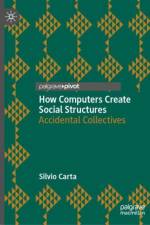
This book introduces the idea of accidental collectives: the grouping of people that occurs as a by-product of the automated work of computers. Software has a growing influence in our lives automating and optimising mundane, time-consuming and repetitive tasks. In doing this, groups of people are automatically created as the result of classification and data analysis. Once grouped by the invisible agency of software, people interact and establish new relationships, generating new collectives and communities. With the support of case studies and real-life examples, this work explores the accidental nature of the generation of new social groups and questions the role of software in social interactions.
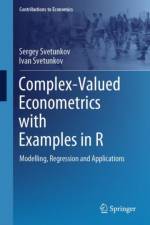
This book explores the application of complex variables to econometric modeling. Providing a thorough introduction to the theory of complex numbers, it extends these concepts to develop complex-valued models that enhance the accuracy and depth of economic forecasting and data analysis. From simple to multiple complex linear regression, the monograph discusses model formulation, estimation techniques, and correlation analysis, supported by examples in R.This comprehensive guide is a useful resource for students, researchers, and practitioners aiming to apply advanced mathematical techniques to tackle complex real-life problems, making it a useful tool for enhancing predictive analytics in business, economics, and finance.
"Sabrina P. Ramet and Torbjørn L. Knutsen, previously co-authors of German Moral and Political Philosophy, have returned with a second collaborative volume, this time examining the Anglo-American Enlightenment. Their new book is succinct, insightful, and easy to read. The book is a valuable addition to academic literature."- Vladimir ¿or¿evi¿, Associate Professor, Mendel University, Czechia "Key Thinkers of the English, Scottish and American Enlightenments will be a must-have item for me and my students. The authors have shown that not only Spinoza, Locke, Hume, Jefferson, Madison, Paine, and Kant but also Algernon Sidney, Francis Hutcheson, Adam Smith, and Mary Wollstonecraft are our contemporaries, thanks to whom we better understand ourselves and the world we live in."-Stanis¿aw Obirek, Professor of Humanities, University of Warsaw, Poland. "What is Enlightenment? Like the metaphor of vision presupposed by the question, the typical short answer - "reason, liberty, rights" - has been formative for the Western tradition since the end of the seventeenth century. In this learned book, the authors resist any shorthand interpretation. They historicise the narrative and trace how Enlightenment thinkers across the Atlantic articulated radical ideas of social change which continue to inspire and vex us 350 years on."- Silviya Lechner, Chair of the Department of Political Science, Anglo-American University in Prague, and Visiting Senior Research Fellow, King's College London. This book analyses the Anglo-American Enlightenment, showing how the ideas developed first by John Locke and Algernon Sidney spread to the New World and influenced and were reflected in the thinking of James Madison and Thomas Jefferson, among others. Sabrina Ramet is Professor Emerita at The Norwegian University of Science & Technology, Norway.Torbjorn Lindstrom Knutsen is Professor Emeritus at The Norwegian University of Science & Technology, Norway.
This book examines the issues arising from British contested history by looking at how it came to be constructed, how it developed, and how attitudes over time have begun to change towards it. It considers how this narrative was first created through the writing of British history. It explores the private spaces of the court, the political places of the state, and the public places of the street. Beyond British shores this history has also been enacted through international heritage sites when objects were removed and taken back to Britain. Conclusively, it explores how the historic spaces of a maritime city, has further entrenched an already complex history of the nation. How this research brings new insights into this field is by looking at it through the lens of place, space, and the spatial turn. The underlining research questions are: What role does place and space play in historical constructions of the past? How do place and space contribute to contested history? How can these places and spaces be re-appropriated and reused, and endowed with new meanings?
This book presents observations, experiences, and practices that work or don't work in different areas of business analysis ¿ combining the lessons learned with how to avoid potential pitfalls.Four areas were identified that constitute the greatest project challenges and the most frequently occurring problems in the work of a business analyst: strategic analysis, business analysis process planning, requirements engineering, and solution implementation. These areas hence build the main chapters of this book. Each of them begins with a brief introduction explaining the essence of the respective area and presenting the most important information. They are further divided into sections describing specific topics, where tips and recommendations are presented. Most sections begin with a guiding thought - a quote provided by an expert or a short hint based on the author¿s 20 years of experience. At the end of each chapter, case studies and/or checklists are provided facilitating the planning and implementation of business analysis practice in a project.This book provides readers with suggestions, ideas, and conclusions regarding selected aspects of business analysis - in particular, discussing challenges and recommendations regarding the application of specific methods, practices in specific usage contexts. It will be most beneficial to professionals who already have a basic understanding of the fundamentals of business analysis and will be able to relate theoretical knowledge to practical examples of project applications. Readers who are just entering the field of business analysis will also benefit by gaining insights how to avoid basic mistakes or risks.
This book is intended for students, academics, authors, and research-oriented professionals to store, organize, and manage their references for research papers, theses, dissertations, journal articles, and other publications. Its purpose is to educate readers about effective use of information technology in reference management - the process of storing, managing, retrieving and citing scientific references. It also provides step-by-step instruction on using EndNote, a popular reference management software.Since the publication of the third edition, substantial changes have taken place in the field of reference management. EndNote has released a new version - EndNote 21. The web-based knowledge databases such as Web of Science Core Collection, Scopus, and Google Scholar are also being used far more frequently. The fourth edition of EndNote 1-2-3 Easy! incorporates updated instructions and screenshots to ensure that the readers continue to find this a user-friendly book providing accurate and reliable information.For first-time users of EndNote 20, this book is a comprehensive and well-illustrated instruction manual for getting started, including detailed instructions on installation, creating reference libraries, and ultimately creating complete and accurate citation-based bibliographies necessary to achieve successful peer reviewed publications. For existing "power users" of current and earlier versions of EndNote, this book provides quick and easy access to a comprehensive compendium of nuanced and advanced features of this powerful software, with an emphasis on providing greater ease and control in coordinating and curating research materials and bibliographies with research collaborators and scientific writing teams.
This book provides a detailed account of Julián Marías¿s metaphysical anthropology with the ultimate aim of offering a coherent and systematic analysis of Marías¿s argumentation for claiming that the conscious hope for Christian salvation through resurrection ¿ and with it the hope that Jesus Christ did actually resurrect, and more generally the hope that Christian revelation is true ¿ is justified not because the certainty or the likelihood that this salvation will, as a matter of fact, actually occur, but because this hope amounts to a self-affirming exercise, a conscious endorsement of human reality, and as such a sign of authenticity.
This open access book assesses the consequences of contemporary economic and political crises for intergovernmental relations in Europe. Focusing on the crises arising from the Covid-19 pandemic, climate change, surges in migration, and the resurgence of regional nationalist movements, it explores the shifting power balances within intergovernmental relations¿ systems. The book takes a comparative analytical perspective on how intergovernmental relations are changing across Europe, and how central governments have responded to coordination challenges as recent crises have disrupted established service delivery chains and their underpinning political and bureaucratic arrangements. It also examines the relationship between recent crises and the sub-national resurgence of territorial politics in many European countries. The book will appeal to those with interests in public administration, sub-national governance and European politics.
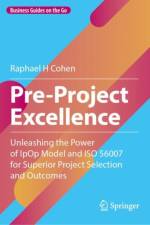
This guide complements traditional project management by focusing on the critical pre-project stage. It addresses a major challenge: only 12% of projects finish on time and within budget, often due to poor initial pre-project analysis. This leads to wasted resources. The content offers proven best practices for implementing ISO 56007 recommendations, enhancing project calibration, selection, and overall success rates.Liberating innovators from the constraints of traditional business plans, the guide suggests, along with ISO 56007, a "Concept/Opportunity Case" as an investor-friendly alternative. This template is rooted in the robust IpOp Decision Tree, an ISO 56007-recommended checklist of 11 fundamental questions to thoroughly address essential decision-makers' concerns. This rigorous method ensures reliable project selection and optimal resource allocation.The IpOp Model serves as a structured roadmap, enabling project managers and innovators to transform ideas into compelling projects. It provides clear guidance for making informed decisions, whether to pivot or abandon projects that aren¿t viable. By following ISO 56007 recommendations, the IpOp Model helps navigate uncertainties and manage critical project factors effectively.Ideal for decision-makers, project managers, executives, professionals, intrapreneurs, and entrepreneurs engaged in project management and innovation, this guide is an essential tool for any pre-project analysis and for turning innovative ideas into successful projects.
The textbook provides students with insight into and overview of the basics of social research on music. It addresses the Who, What, When, Where, Why, How of music research through four perspectives from the sociological study of music: a historical survey of the social study of music (when), theoretical points of view (what), and methodological (how), and pragmatic aspects (who, why & how). The other Ws (where and why) are included within the four main perspectives. The four perspectives ¿ history, theory, methodology, and practice ¿ are complementary. Some of the names included in the theory and practice of music are also listed as a part of the history of music sociology, and vice versa. In this way, the book encompasses what Howard S. Becker has conceptualized as an art world, Kurt Blaukopf as musical practice, and Christopher Small as musicking. Covering all the relevant details yet concise in structure, this book is ideal for students of the sociology of music, musical education, musicology and of arts and aethestics.
In this book, Thomas Svolos tests the claim that a practicing psychoanalyst is afforded a unique perspective on issues of politics, social and cultural affairs, trained, as they are, to look out for that which is not readily transparent to a patient. This might be something opaque, something bizarre even, something that is part of the experience of the patient that they are not conscious of, what Sigmund Freud and Jacques Lacan called, at different points in their work, desire, libido, or, jouissance. It argues that by taking account, in one way or another, of desire, libido and jouissance, we might find another dimension to political, social and cultural matters, a dimension that is present, but generally opaque, to those who deal with them.In a series of original texts and edited dialogues, brought together for the first time, this lively and accessible work offers novel insights on topics ranging from race, climate change and partisan politics, to science fiction and Bruce Springsteen. It will appeal to students, scholars and those with a general interest in psychoanalysis, politics, cultural studies and critical theory.
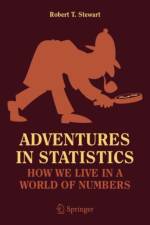
This book is about how statistics play a role in life, whether in business, psychology, biology, economics, or just about anything short of basket weaving. You cannot make a trip to the doctor, watch a football game, or even go to the grocery store without some statistic staring you down. Your age, weight, and cholesterol make you a high risk for diabetes ¿ the chance that your team will win the game is 12.5 percent ¿ 4 out of 5 dentists like this toothpaste. What does it all mean? Adventures in Statistics: How We Live in a World of Numbers tells you what all those numbers mean. But the book does not spit out a bunch of mathematical formulas; the book tells stories. Stories that explain statistics through popular culture, sports, and history.Yoüre confused about that false positive warning in that drug commercial, the 2007 comedy Juno explains how medical tests ¿ including pregnancy tests ¿ fail and why. Not clear about what your coworkers are talking about when they say, ¿black swans.¿ the 1997 blockbuster Titanic makes sense of the concept.Adventures in Statistics: How We Live in a World of Numbers shows how professionals in medicine, business, politics, sports, and many other fields use numbers. So, just about everyone would gain from reading this book, perhaps even basket weavers.
The exciting discoveries and newest revelations in the field of archeoastronomy present fascinating examples of the importance of astronomy to the ancient Maya Civilization. Through technological advancements made in the archeoastronomy community, this book will allow you to uncover a time capsule from an ancient past. In a clear and comprehensible manner you will read about art and architecture from various important Maya cities, drawn from diverse time periods and from different geographical areas of Mesoamerica. The topics covered include new findings in wide variety of fields; including the history's of astronomy, science, art, architecture, literature and religion. You will explore in this book how the motions of the heavens were closely watched and notated by Maya astronomers and how those celestial objects determined the patterns of everyday life, religious rites, community festivals, agriculture, even birth and death! This book will open your mind to a deeper awareness and an even greater admiration for the Maya ingenuity in preserving their astronomical knowledge and passing it on to assist future generations. These latest findings will broaden our perception of the Maya cultures of the Pre-classic and their development through the Classic period and the remarkable changes that occurred throughout their 3000 years of history.
This open access book presents state-of-the-art insights on transdisciplinary work towards societal transformation. It provides theoretical and practical guidance and tools, applicable across diverse empirical settings. The book supports researchers and practitioners, especially those early in their careers, to navigate dilemmas inherent in transdisciplinarity for transformation. The book serves as a valuable resource for (graduate) educational programs in any field open to transformation-oriented transdisciplinary collaboration. It comprises three sections: Design & Evaluation; Diversity & Inclusion; Roles & Competences. Each section includes a chapter on theoretical advancements, multiple empirical chapters presenting insights from various fields and contexts, and practical guidance conducive to engaging in high-quality, just and equitable transdisciplinary processes directed at sustainable transformation.
This book aims to help psychology students build their skills to conduct research and analyses using Microsoft Excel¿s Data Analysis Toolpak. Concise yet comprehensive, this accessible textbook walks students through basic research methodology, central tendency, variability, standardized scores, t-tests (independent and related samples), One-way Analysis of Variance (between-groups and repeated measures), the Pearson correlation, and Chi Square analyses. Each chapter includes examples of research questions to be addressed, the rationale for the analysis, a step-by-step analysis of the dataset in equation format and using Microsoft Excel, and how to present results in APA (7th Edition) style.The extensive didactic material encompasses end-of-chapter questions, learning outcomes, sidebar boxes with common mistakes to avoid, and biographical sketches of those who developed research methods and statistical techniques. Students and instructors will also benefit from a companion website where PowerPoint slides and additional exercises, datasets, and resources are available. Ideal for undergraduate psychology courses, this textbook can also be of use for those interested in learning more about statistical research and its practical application at university and beyond.Test your knowledge with questions and answers about the book with Springer Nature Flashcards.
This book provides a concise but thorough introduction to partial differential equations which model phenomena that vary in both space and time. The author begins with a full explanation of the fundamental linear partial differential equations of physics. The text continues with methods to understand and solve these equations leading ultimately to the solutions of Maxwell's equations. The author then addresses nonlinearity and provides examples of separation of variables, linearizing change of variables, inverse scattering transform, and numerical methods for select nonlinear equations. Next, the book presents rich sources of advanced techniques and strategies for the study of nonlinear partial differential equations. This second edition includes updates, additional examples, and a new chapter on reaction-diffusion equations. Ultimately, this book is an essential resource for readers in applied mathematics, physics, chemistry, biology, and engineering who are interested in learning about the myriad techniques that have been developed to model and solve linear and nonlinear partial differential equations.In addition, this book: Includes MATLAB code to help the reader visualize, provide analytic solutions, and help better understand the theory Provides exercises, figures, tables, and worked examples to enhance reader understanding Presents previously unpublished material using functional analysis, including the Hartman-Grobman Flow Theorem
This book offers a comprehensive overview of formulation applied within the mental health nursing context. It presents a contemporary outlook on the role of the mental health nurse, exploring and reflecting on the foundational values-based and person-centred principles of mental health nurse education and practice. Through this timely and accessible textbook, the authors demonstrate how a variety of theories can be used to enhance formulation in practice, ensuring mental health assessment and intervention are meaningfully connected to support patient recovery. Including service user experiences and viewpoints throughout, each chapter also benefits from tailored discussion points to enable learners to develop critical thinking around formulation. An invaluable guide to the field, it provides a clear, up to date and thought-provoking overview of formulation, essential for students and practitioners in clinical psychology or psychotherapy, as well as clinicians working in all areas of mental health and social care, psychology, therapy, and counselling.
Either/or thinking is a major stumbling block to human development and understanding. In this book Kelso & Engstrøm offer a whole new way of looking at the world, awakening a ¿sixth sense¿ that people didn¿t realize they had. It draws on the profound relationship between nature¿s many complementary contraries and the paradigm shifting science of coordination called Coordination Dynamics. The human brain~mind, through the multi- and metastable modes of its coordination dynamics, gives rise to a sentient faculty called the squiggle sense. Nature's contraries are perceived not only as opposing polar states, but as coexisting complementary tendencies, symbolized by the squiggle (~). Use this book to nudge your brain~mind into its metastable mode again and again, to better perceive the complementary dances of contraries, and to transcend the detrimental narrow-mindedness of polarized, either/or thinking. As a "Metastabilian" you can wield your squiggle sense to enhance and advance your life!
This book introduces an intuitive, self-sustained oscillator model and applies it to describe some of the most critical performance metrics of LC oscillators, such as phase noise, entrainment, and pulling. It also covers the related topics of magnetic coupling and inductor design. The author emphasizes the basic principles and illuminates them with approximate calculations, adopting a design-oriented approach that imparts intuition and complements simulations. This book constitutes a novel and fresh perspective on the subject and can be helpful to electrical engineering students and practicing engineers. It also serves as a bridge between the mathematical treatises of the subject and the more practical circuit-oriented approaches.
This book revises and expands upon the prior edition, The Navier-Stokes Problem. The focus of this book is to provide a mathematical analysis of the Navier-Stokes Problem (NSP) in R^3 without boundaries. Before delving into analysis, the author begins by explaining the background and history of the Navier-Stokes Problem. This edition includes new analysis and an a priori estimate of the solution. The estimate proves the contradictory nature of the Navier-Stokes Problem. The author reaches the conclusion that the solution to the NSP with smooth and rapidly decaying data cannot exist for all positive times. By proving the NSP paradox, this book provides a solution to the millennium problem concerning the Navier-Stokes Equations and shows that they are physically and mathematically contradictive.
This book presents a collection of latest case studies on augmented reality (AR) and virtual reality (VR), extended reality (XR) and metaverse applications in various industries. AR, VR, XR and Metaverse are changing the business landscape, providing opportunities for businesses to offer unique services and experiences to their customers. The case studies explore business uses of the technology across multiple industries such as healthcare, tourism, hospitality, events, fashion, entertainment, retail, education and video gaming. The volume includes solutions of different maturities as well as those from startups to large enterprises thereby providing a thorough view of how AR, VR, XR and Metaverse can be used in business.
Do you want to know how to integrate environmental, social, and governance (ESG) data into business valuation? This book will help you do so step-by-step.The book primarily aims at reaching two types of audiences: practitioners and students in finance (graduate and undergraduate level). Practitioners in finance will find interest in the book, as it will give them access to academic knowledge in a format that suits them. Academic research has made substantial advances in the field of business valuation and ESG. The book intends to transform this knowledge into practical and rigorous methodologies for taking ESG into account when valuing a company. Graduate and undergraduate courses have recently developed in business schools, universities, and engineering schools. These courses usually directly refer to academic articles or valuation companies' website documentation, but not to academic books. Therefore, the book will allow students to have access to centralized and organized information about business valuation and ESG.Readers without prior knowledge of business valuation will be guided through the ESG integration process. They will first be introduced to the concept of value and the reasons for incorporating ESG into the value. They will then learn simple financial methods to value firms and see step-by-step use cases. For instance, the reader will learn how to value a firm in the renewable energy sector using cash flow and multiple valuation methods. After building knowledge of standard business valuation, readers will better understand ESG data and ratings. The reader will then learn how to integrate ESG into business valuation using cash flow and multiples approaches. Again, the reader will be able to replicate these methods as the book will provide practical cases for integrating ESG data in business valuation. Finally, for the readers that intend to go a bit further, they will learn about the academic research advances in ESG and businessvaluation.
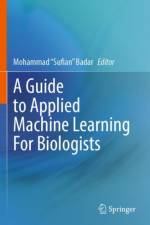
This textbook is an introductory guide to applied machine learning, specifically for biology students. It familiarizes biology students with the basics of modern computer science and mathematics and emphasizes the real-world applications of these subjects. The chapters give an overview of computer systems and programming languages to establish a basic understanding of the important concepts in computer systems. Readers are introduced to machine learning and artificial intelligence in the field of bioinformatics, connecting these applications to systems biology, biological data analysis and predictions, and healthcare diagnosis and treatment. This book offers a necessary foundation for more advanced computer-based technologies used in biology, employing case studies, real-world issues, and various examples to guide the reader from the basic prerequisites to machine learning and its applications.
Abonner på vårt nyhetsbrev og få rabatter og inspirasjon til din neste leseopplevelse.
Ved å abonnere godtar du vår personvernerklæring.