


















Gjør som tusenvis av andre bokelskere
Abonner på vårt nyhetsbrev og få rabatter og inspirasjon til din neste leseopplevelse.
Ved å abonnere godtar du vår personvernerklæring.Du kan når som helst melde deg av våre nyhetsbrev.

This book offers a synopsis of the pathophysiologic basis of nuclear medicine and molecular imaging. It concisely relates anatomic, physiologic and pathologic aspects to the scintigraphy of each organ system.
Automatic Control with Interactive Tools is a textbook for undergraduate study of automatic control. Providing a clear course structure, and covering concepts taught in engineering degrees, this book is an ideal companion to those studying or teaching automatic control. The authors have used this text successfully to teach their students.By providing unique interactive tools, which have been designed to illustrate the most important automatic control concepts, Automatic Control with Interactive Tools helps students overcome the potential barriers presented by the significant mathematical content of automatic control courses. Even when they have previously had only the benefit of an introductory control course, the software tools presented will help readers to get to grips with the use of such techniques as differential equations, linear algebra, and differential geometry.This textbook covers the breadth of automatic control topics, including time responses of dynamic systems, the Nyquist criterion and PID control. It switches smoothly between analytical and practical approaches. Automatic Control with Interactive Tools offers a clear introduction to automatic control, ideal for undergraduate students, instructors and anyone wishing to familiarize themselves with the fundamentals of the subject
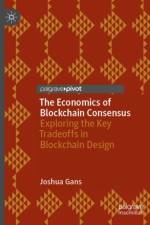
Blockchain technologies have been rapidly adopted for the creation of cryptocurrencies and have been explored for a myriad of applications. While this is of important economic interest, the computer science behind how blockchains operate to provide security and provenance has been largely inaccessible to economists. This book is a bridge between the computer science and the economics of blockchains.The focus is on the value and the achievement of blockchain consensus; that is, how distributed and independent nodes are able to reach an agreement on what the current state of digital ledgers, that are the product of blockchains, are. The book shows that the goals of computer scientists in designing blockchains place very high weight on security beyond what an economist trained in game theory and mechanism design would require. It shows how blockchains can be redesigned to account for key economic trade-offs, and will be of interest to researchers and students of economics, financial technology and computer science, alongside policymakers.
This book provides a clear and concise explanation of withholding tax and how to leverage best practice to generate improved investment performance. It gives practical guidance to financial service firms and investors to help them understand the issues involved, trends and practicalities of maximizing returns on investment.Most of the $200 billion of withholding tax lost by investors annually is due to lack of awareness and not asking the right questions of their brokers and custodian banks. Financial institutions are also increasingly being held to a higher standard by investors for provision of withholding tax services because of the impact it can have on portfolio performance. This book seeks to raise awareness of the issues and provide more detail about how the system works and what challenges and changes readers should expect in the future.
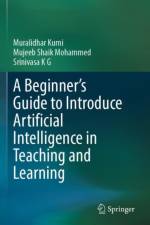
This book reimagines education in today¿s Artificial Intelligence (AI) world and the Fourth Industrial Revolution. Artificial intelligence will drastically affect every industry and sector, and education is no exception. This book aims at how AI may impact the teaching and learning process in education. This book is designed to demystify AI for teachers and learners. This book will help improve education and support institutions in the phenomena of the emergence of AI in teaching and learning. This book presents a comprehensive study of how AI improves teaching and learning, from AI-based learning platforms to AI-assisted proctored examinations. This book provides educators, learners, and administrators on how AI makes sense in their everyday practice. Describing the application of AI in ten key aspects, this comprehensive volume prepares educational leaders, designers, researchers, and policymakers to effectively rethink the teaching and learning process and environments thatstudents need to thrive. The readers of this book never fall behind the fast pace and promising innovations of today¿s most advanced learning technology.
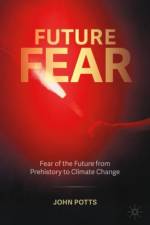
This book places the contemporary fear of climate change in historical perspective, showing that throughout human history the dominant perspective on the future has been one of fear. Across a broad historical sweep, the book describes the varied means employed to predict and control the future: magic, religion, science, and technology. Future Fear traces fear of the future from prehistory to the present, culminating in the contemporary fear of imminent climate change catastrophe. Consideration is also given to hope in a more positive future, revealing that visions of the future have often been a mingling of fear and hope.
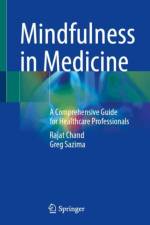
This book provides healthcare professionals with a comprehensive guide on how to implement effective mindfulness programming and tactics in their practices and at their institutions. It is designed to fill a gap in the field by providing practical, evidence-based information and guidance for both our patients and ourselves - tailored to the specific needs of healthcare professionals.The book is structured in a practical and sequential manner, each chapter building on the information presented in previous chapters. The guide begins by introducing the concept of mindfulness and its history, followed by an in-depth examination of the benefits of mindfulness meditation for both patients and healthcare professionals. Subsequent chapters delve into the specifics of implementing mindfulness programming within individual patient interactions, practices and medical institutions -- including the selection of the appropriate mindfulness techniques, staff training, and measurement of programming effectiveness. Finally, Mindfulness in Medicine addresses the broader potential impact of mindfulness in contemporary medicine, providing readers with the knowledge we need to make informed decisions about incorporating mindfulness into our work. Mindfulness in Medicine demonstrates the potential of mindfulness meditation to improve patient outcomes, reduce stress and burnout among healthcare professionals, and promote a more holistic approach to medicine.This is an essential guide for any healthcare professional interested in incorporating mindfulness into our practices, careers, and personal self-care tactics.
Philosophical thinking allows itself to be nourished by seemingly non-committal exercises of thought but at the same time seeks forms of irrefutable knowledge. Because of this focus on both the subjective and the universal, philosophy also falls for the lure of the ¿what-if?¿ question. What if two legendary artists, writers or philosophers, who did not know each other, did enter into a conversation? In this book, Stéphane Symons outlines an (im)possible conversation between Swiss psychiatrist and philosopher Ludwig Binswanger (1881-1966) and French educator, philosopher, poet and filmmaker Fernand Deligny (1913-1996). Although the two never met, this imaginary conversation can offer insight into both authors' thinking and the human condition.According to Binswanger, self-awareness and social consciousness are the most important and characteristic features of human beings. In contrast, from his contacts with children and adolescents with autism, Deligny emphasizes our ability to interact with the material environment, especially with seemingly insignificant things and nature. Bringing the two thinkers into conversation, Symons sheds new light on what it is to be truly human. In the process, leading roles are played by one of Binswanger's patients, Ellen West, and a young boy with autism, Janmari.
Academia has long established itself as an institution of knowledge and ideas. Facing pressure, many academic fields and institutions have turned their attention, singularly and collectively, to the task of what to do to rectify the causes of under-representations both academic knowledge itself and who gets to be an academic producer of knowledge. Boisen and Murray argue that simply solving the contemporary symptoms of inequity in ideas, knowledge production and the academy is not enough. Political Theory must be used to analyze why dominant ideas and institutions, namely merit and the resulting meritocracy and meritocratic procedures, were given power in the first place. In using political theory and theories of justice, the book argues that academia must radically shift rather than procedurally reform these methods of evaluation in order to achieve a more coherent approach to diversity in ideas, academic knowledge producers and academic knowledge production, which are necessary to bring about other forms of social change and reform in our larger world. In questioning the ideals and the use of rival ideals to temper flawed concepts, the present motivations and justifications for producing academic knowledge can be relegated as political tools, allowing true meaningful reform. Boisen and Murray show how contemporary crises in academia around diversification of perspectives can only be solved by considering the justifications of academic knowledge production, and the inherent risk of retaining the established competitive and presumptively ¿natural¿, but ultimately biased, methods of deriving academic authority.
Have you ever wanted to get better at observing the universe but didn't know where to begin? Have you ever wondered what you are looking at in the night sky? Whether you are just beginning or an advanced amateur astronomer, you will want to have this book in your astronomical library. This book wraps up an entire astronomy course around the study of astronomical images, all of which have been taken by the author. The fascinating images contained herein will inspire readers to explore the descriptions of astronomical objects of all types and the physical processes they undergo throughout the universe.The author is both a career astronomy professor and an avid amateur astronomer who owns an arsenal of small telescopes for observing and conducting CCD imaging. The author¿s descriptions are at a level any reader can follow. Using his own images, mostly taken with smaller telescopes as opposed to Hubble, James Webb, or multi-meter mountain top observatories, show amateur astronomers and hobbyists what can be accomplished by using modest and affordable equipment. The book begins with a primer on telescopes and the myriad types on the market today. You'll read about why there are so many models as well as the advantages and disadvantages of each. This is followed by an introduction to astrophotography, a complete description of paper and digital start atlases available today, and a discussion on celestial nomenclature ¿ why are celestial objects named what they are named! You'll learn about light, and how it interacts with matter to create what we see in the night sky. Finally, you'll go on a grand tour of the Universe, from the Moon and Sun to comets, nebulae, star clusters and galaxies.
This open access book examines the long-term impact of Christian missionaries in Zambia, and sub-Saharan Africa more generally, on education, health, and economic development. It examines how Christian missionaries provided Western-style education and healthcare within sub-Saharan Africa during the 20th century and how this was provided along unequal gender and regional lines. With sub-Saharan Africa currently facing challenges in the provision of essential public goods and services, the legacy of Christian missionaries in Zambia provides an insightful case study for better understanding how gendered education and regional health inequality have hindered economic development in this region.This book offers a new perspective on colonialism and the economic challenges faced within Africa. It will be relevant to students and researchers interested development economics and economic history.
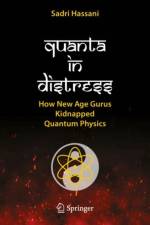
This book deconstructs and debunks the lucrative and widespread marriage of quantum physics with pop-spirituality while tracing this pernicious strain of pseudoscience to its source: the founders of quantum mechanics themselves. The association of mystical ideas with modern physics in the self-improvement industry is not new. The "spookiness" of quantum properties like uncertainty and entanglement has proven fertile ground for new-age mystics and alternative medicine advocates who saw a way to put a scientific veneer on their claims. In the early days, the founders of quantum physics accused it of implying an observer-created reality. Later, Taoists and Wu Li dancers were quantized. Then ancient Indian medicine, Ayurveda, morphed into "quantum healing." Little wonder The Oprah Winfrey Show told its viewers: think about losing weight, making more money, and falling in love, and you'll become thin, wealthy, and happily married ... all based on quantum physics. Criticism of the pseudoscientific misappropriation of quantum physics has been widespread but inadequate; thus far, the scientific community has failed to account for its own role in the fusion of pop-spirituality and quantum physics. As well as thoroughly exploring and debunking quantum mysticism, this book traces the development of quantum mysticism and pulls no punches in exposing the unwitting role of quantum theory's founders in propagating quantum mysticism.
This colorful and concise little book is uniquely tailored for those who write mathematical texts at any level and are eager to improve their English writing skills. The easy-to-read guide focuses on helping the writer avoid common English mistakes in mathematical writing. With just a few minutes of engaging, light reading each day, the reader will learn to create clearer, more readable, math texts.The book covers 23 crucial topics, ranging from correct article and preposition usage to proper usage of dashes, conjunctions, and prepositions. It also addresses the construction of direct sentences, effective introductory phrases for formulas, and more. As a bonus to the reader, ¿Practice makes perfect¿ exercises relating to each topic are freely accessible on this book¿s Springer website.Appendix A gives a quick tutorial on grammatical terms and constructs. Appendix B looks at ChatGPT and the positive aspects of its powerful capabilities. Additionally, Paul Halmos¿s article on ¿How to write mathematics¿ is included in Appendix C. It deals with the mathematical aspects of writing.
This book argues that Aristotle's aporia on time in the Physics figures both as an aporia in the subjective sense of a mental state of perplexity and in the objective, textual sense of a contrast between opposing views.First the book seeks to precisely identify what constitutes Aristotle's aporiai (or aporetic contrasts) on time and then to assess them from the viewpoint of Aristotle¿s five chapters on time as well as the book of Physics as a whole. By such a procedure the claims in the aporiai can, on the one hand, be assessed to find out to what extent they should be accepted, rejected or somehow modified and, on the other, how the aporiai function as a means to provoke new thought and insight in regard to the precise nature of Aristotle¿s understanding of time.
This textbook provides a full treatment of Linear Algebra devoted to undergraduate and graduate physics students. Although the mathematical level is similar to the corresponding mathematical textbooks in regard to definitions, propositions and proofs, it adopts a language and approach more attuned to the reader¿s familiarity with physics lectures and physics textbooks. A distinctive feature is the emphasis placed on the significance of bases within a vector space. As a result, students gain a deeper understanding of how vector indices, despite their abundance, serve not as enemies but as friends since they give additional information about the mathematical objects being used, and facilitate access to tensor formalism.The book offers numerous worked examples and exercises with solution hints to deepen this knowledge.
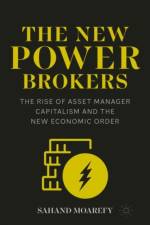
Over the course of the last 70 years, asset managers¿from activist hedge funds to large passive index fund providers¿have come to own the substantial majority of corporate equities in the United States, and have wielded that ownership to fundamentally reshape the economy. For most of American history, investing was simple: you purchased shares and left the operation of the company to management. If you were dissatisfied with the firm's performance, you sold your shares. With the rise of asset managers, shareholders now attempt to directly change the companies in which they invest. The New Power Brokers chronicles the economic, legal and technological changes at the heart of this transformation in our public markets, and provides fresh perspectives on what those changes mean for corporations, investors and society as a whole. Sahand Moarefy is a corporate attorney and writer. His work has been featured in various publications, including Foreign Affairs, Lawfare, The Diplomat and American Affairs. Sahand splits his time between Los Angeles and New York City.
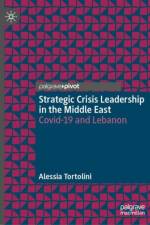
This book assesses strategic crisis management in Lebanon during the Covid-19 pandemic. It compares the government¿s responses to the crisis with those offered by Hezbollah, and assesses how their varying responses were perceived by the public. By shining light on the case of Lebanon, the book broadens our understanding of crisis management into a region that, due to social and political complexity, has been vastly understudied. It will appeal to scholars and students of public administration, crisis management and international relations, as well as all those interested in the Middle East more generally.
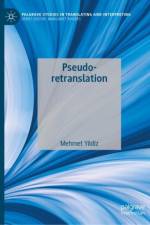
This book presents pseudo-retranslations as a new phenomenon of translational intertextuality, revealing how pseudo-retranslations establish large networks of intertextuality across academic works, how academic authors have recourse to this procedure as they create their academic texts, and how pseudo-retranslations contribute to the dissemination of translation-distorted scholarly knowledge and lead to epistemically polluted academic ecosystems. Pseudo-retranslation can be defined as an academic author¿s partial or complete exploitation of another academic author¿s translation and presenting it as a retranslation of the source text. This phenomenon, first documented in Yildiz (2021), arises from academic authors¿ failure to refer to or translate primary sources ¿ particularly in English. Since there occurs no actual retranslation process, this procedure is called pseudo-retranslation. Using a range of academic texts from the Turkish context as case studies, the author presents the integral constituents of this phenomenon, and the behavioural patterns of its renderers. This book will be of particular interest to academics and postgraduates in the field of translation studies and (corpus) linguistics.
This book assesses the challenges faced by local governments when deciding on the location of public services. Some physical signs of government presence are vital and generally welcomed within local communities. Schools, bus stops, care facilities, and public libraries are both crucial for the functioning and sustainability of communities, and symbolize governmental engagement. Conversely, other types of facilities are typically unwelcome. Waste and recycling stations, wind farms, and prisons often provoke protests from local residents. Drawing on evidence from Sweden, this book argues that decisions on how to locate services are inherently political, and that in order to succeed, authorities need to ensure that their policies are perceived as legitimate. It also demonstrates how the problem of locating public services is a universal issue, relevant to governments at all levels and in all countries. As urbanization and pressure on welfare systems grow, the problem of locating public services looks set to become more pressing, and the themes raised in the book are likely to remain relevant for years to come. It will appeal to researchers and practitioners in the fields of public administration and local government studies, as well as policymakers and public officials.
This book presents algorithms and tools that are designed to model and extract information from personal contact networks, which represent which individuals in a population are physically in contact with one another. The authors developed these tools based on research they conducted during the COVID-19 pandemic, with the goal of improving responses to epidemics in the future. The book provides methods for modelling the transmission of infection across a population. The authors explain how an epidemic model can be used to strategically distribute vaccines and minimize the spread of a virus. The book shows how evolutionary computation, graph compression, and network induction can be utilized to manage issues that arise from an epidemic.
This book provides an updated analysis of political developments in a sample of overseas territories of France, the United States, China, Denmark, the Netherlands, Russia, the United Kingdom, Portugal, Spain and New Zealand. Ranging from Guam, Diego Garcia or New Caledonia/Kanaky to Greenland/Kalaallit Nunaat, Sakhalin, Kuril or Puerto Rico and other territories located all over the globe, these subnational island jurisdictions deserve attention because they lie at the intersection of many evolving issues such as decolonisation, self-determination, post-colonialism, globalisation, climate change, patterns of innovative governance. Moreover, they offer occasional ¿hotspots¿ for analysing international rivalries, conflicts related to illegal migration, disputes pertaining to the delimitation of exclusive economic zones (EEZ) and clashes between mainlands and islands. In addition, they provide fascinating case-studies to grasp the interplay of subnational, national and international politics, particularly in the age of the strategic shift towards the Indo-Pacific. Fred Constant reveals the extent to which these invisible dots on the map may matter in contemporary world affairs.
This book aims to assess the extent to which work health, safety and wellbeing (HSW) considerations are trivialised on the popular Australian reality TV programme, The Block. Reality TV as a genre plays a core feature in media and cultural studies, but there has not been any research on the impact of reality TV on safety culture, or how HSW issues are portrayed in popular media.This research remedies this deficiency and demonstrates contestants are workers on The Block who perform workplace activities. The work-related activities are concerned with construction, building and renovation work; and specifically, participants engage in what are seemingly routine or ordinary everyday life activities; namely housing construction and domestic or home dwelling renovations. It supports the argument claim that contestants on reality TV are defined as workers, and this definition of worker can be extended to other genres.The book ultimately demonstrates that reality television is trivialising HSW for the purposes of satisfying audience desire to consume popular culture, and these activities perpetuate a poor image of best safety practice.
This book presents information on common-to-rare organisms from around the world that inhabit freshwater habitats. The first six chapters focus on organisms from the very small (e.g., protozoa, zooplankton, and fairy shrimp) to the huge (e.g., hippos, freshwater sharks, and giant turtles), while the last four chapters provide information on aquatic ecosystems (lakes, streams, caves, and wetlands). Included in this last section are the physical nature of the system and how that influences the kinds of animals living there.This unique ¿nature¿ book, incorporating information from around the world on both aquatic systems and organisms, is written to attract the interest of a wide group of non-academic readers.
"Lorenzo Veracini advances the field of settler colonial studies with a brilliant body of works that includes his seminal Settler Colonialism of 2010. Perhaps unfashionably but no less urgently, this current expanded edition of 2024 focuses on settler societies. He analyzes our pathological historical violence, systemic domination, ongoing disavowals, and more, to suggest a way forward: what might a transformative politics of recognition mean?"- Susan Slyomovics, University of California Los Angeles, USA."Lorenzo Veracini's book introduced me and endless number of scholars and students to the settler colonial paradigm. It still is the best introduction to settler colonial studies...This theoretical overview is the essential guide for anyone wishing to understand the longevity and relevance of the settler colonial condition for our global society in the past, the present and the future."- Ilan Pappé, University of Exeter, UK."In these times where the concept of 'settler colonialism' is hyper-politicised, it is important to have books marked by scholarship and rigour, but which remain, nonetheless, articulated to an anti-colonial political horizon. This kind of writing has always distinguished the foundational and indispensable work of Lorenzo Veracini."- Ghassan Hage, University of Melbourne, Australia.Exploring the history and politics of a powerful and long-lasting idea: the creation and maintenance of European worlds outside of Europe. This textbook provides a broad overview of settler colonialism in the modern era. The author outlines how the founding of new societies was envisaged and practiced around the world, illustrating the specific ways in which settler colonial projects tried to establish ideal and regenerated political bodies.With an updated introduction and an additional chapter examining decolonisation and Indigenous recognition, this second edition brings the study of settler colonialism up to the present day.Lorenzo Veracini teaches history and politics at Swinburne University of Technology, Australia. His research focuses on the comparative history of colonial systems. He has written and co-edited several books on the topic, including The Settler Colonial Present (2015), The World Turned Inside Out (2021), and Colonialism: A Global History (2022). Lorenzo also manages the settler colonial studies blog and was Founding Editor of Settler Colonial Studies.
This book proposes a new model, GAIN (Generating, Appreciating, Internalizing, and Newness) that shifts negative thinking patterns many find themselves in today¿s society. Whether from extremely short-termed, thus unrealistic, expectations or general victim thinking, many people, particularly professionals, consider past experiences that don¿t lead to immediate and tangible benefits as a waste of time. They forego long-span self-reflection to acknowledge their progress in life. This book uses mindful practices to shift these negative thought patterns into constructive ones that reveal personal purpose and growth, and thus, positive self-leadership and development. Featuring practices and exercises to support the GAIN model, this book will help readers see every life experience as a gain rather than loss, even if it may take some time to see the benefits from it, if at all.
The overarching aim of the book is to provide the first comprehensive account of Sweden¿s feminist foreign policy and its dissemination through digital diplomacy. In contrast to other scholarly studies of digital diplomacy that tend to view it as a technological and apolitical device for online diplomatic communication, this book examines the specific political dynamics of digital diplomacy. It posits that digital diplomacy is a highly political practice and form of communication. The book offers an in-depth examination of the interdependent relationship between digital diplomacy and feminist foreign policy, with an empirical focus on Sweden. Additionally, it introduces a novel theoretical framework to analyse the political characteristics of digital diplomacy, emphasising the oscillation between antagonism and agonism at the intersection of feminist foreign policy and digital diplomacy.In sum, the book provides new theoretical and empirical knowledge of why, how, and in what ways power-political dynamics are produced, sustained, and transformed within the contexts of feminist foreign policy and digital diplomacy. While the focus centres on Sweden, the authors contend that their novel approach to examining the political dynamics of digital diplomacy and feminist foreign policy applies to other country case studies as well.This is an open access book.
This academic book critically examines the concept of sustainable futures and its interdependence with the policy framework of Green New Deals. We emphasize the inherent link between the two concepts by highlighting how Green New Deals can pave the way for a sustainable and just future in key areas such as environmental policy, economic development, and social equity. Taking a multidisciplinary approach, the book draws on insights from fields such as environmental studies, sustainable development, political ecology, and climate policy to explore the intricacies of these interconnections. The revised description underscores the importance of understanding the Green New Deal's historical and political contexts, as well as its implications for sustainable futures. The book delves into the theoretical perspectives that shape our comprehension of sustainable futures, the diverse strategies employed by countries and regions in implementing Green New Deals, the role of technological innovation and social movements in fostering sustainable transitions, and the political dynamics surrounding the Green New Deal. Through an analysis of the Green New Deal's role in sustainable development, climate policy, and environmental justice, the book provides a necessary and timely contribution to ongoing debates. The chapters offer detailed explorations of the interrelationships between these key areas, emphasizing how the Green New Deal can serve as a transformative policy framework for achieving sustainable and equitable futures. "Sustainable Futures and Green New Deals" is intended for scholars, policymakers, activists, and students interested in understanding the complex and interconnected issues surrounding sustainable development, climate policy, and environmental justice.
The book explores the development of the American eugenics movement and how it still plays a role in American life. Building on a brief overview of the concept of eugenics, Shannon Bow O¿Brien charts the foundations of the ideas, significant influences, and influencers of the movement in the last 19th and early 20th centuries. She discusses how these ideals and social life shaped American culture and encouraged attitudes toward racial and ethnic biases, including immigration policies in that period.O¿Brien examines how the founding of the United States of America was built on unwanted individuals from the United Kingdom; transported felons and indentured servants were many of the original colonists. As the population forged its new nation, many of these individuals were the focus of restrictive immigration policies that sought to amend the identity of the American citizen and sought to define acceptable roles for Black persons within American society. Faithful slave monuments provided physical models to help engrain these roles within American life. O¿Brien traces the development of the Mammy statue movement and its intersectionality with the restrictive immigration laws.Finally, she turns to the rhetoric of Donald Trump and contextualizes his speech in the ideology of the superiority of White Nordic nativism within American life.
This open access Palgrave Pivot explores four major aspects of globalization: foreign trade, capital and information flows, and the movement of people. The book examines how the state socialist countries of East Central Europe fit into the general trend of globalization after WWII. It focuses on three specific countries in the region: Poland, Czechoslovakia, and Hungary. The study also considers conceptual problems: whether recently introduced terms such as ¿alternative globalization¿ and ¿socialist proto-globalization¿ are plausible for interpreting state socialist globalization. Special attention is paid to the study of continuities and discontinuities in the process of globalization in East Central Europe, which is a key issue in current debates. This requires a long-term perspective, so the study covers not only the decades before 1989 but also subsequent developments. In doing so, the book attempts to find a balance between old and new mainstream interpretations: it recognises that East Central European societies experienced considerable globalization during the state socialist era; however, based on empirical findings, instead of ¿alternative¿ or ¿proto-¿ globalization, the book suggests other notions to conceptualise this process, including fragmentation, selectivity, and unevenness. Thus, the proposed understanding could also contribute to discussions on globalization beyond East Central Europe.
Abonner på vårt nyhetsbrev og få rabatter og inspirasjon til din neste leseopplevelse.
Ved å abonnere godtar du vår personvernerklæring.