


















Gjør som tusenvis av andre bokelskere
Abonner på vårt nyhetsbrev og få rabatter og inspirasjon til din neste leseopplevelse.
Ved å abonnere godtar du vår personvernerklæring.Du kan når som helst melde deg av våre nyhetsbrev.

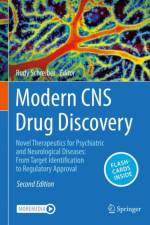
This new edition is a comprehensive guide to the intricate world of drug discovery and development. It provides readers with an update on basic and novel concepts, approaches and technologies that are used in the discovery and development of new therapeutics for diseases of the central nervous system (CNS). A major aim is to support the education of professionals and specialists in the biomedical neurosciences that will become the innovators, entrepreneurs, and leaders of the future. The educational focus is now enhanced by the inclusion of over 150 study questions available in the free Springer Nature Flashcard App, which makes this a unique book in its field.Divided into five sections, the book starts by introducing concepts and ideas to inspire the next generation of life scientists pursuing careers in drug discovery for CNS diseases. In the following section, key strategies and methods for identifying and testing novel drug targets are described. New chapters on important topics have been added, that is, the blood brain barrier, mass spectrometry, biased signaling and the exposome. The third section highlights strategies and technologies in translational CNS drug discovery and looks at safety and drug metabolism assessment, imaging techniques and functional testing to investigate drug treatment outcomes. The chapters in the fourth section address the emergence of transdiagnostic approaches as exemplified by the Research Domain Criteria initiative and non-invasive brain stimulation techniques. Finally, the book concludes with the late stages of drug development, such as the planning and performance of clinical trials, and regulatory approval.Written by experts from academia and industry, the book covers important fundamentals and best practices as well as current developments in neurotherapeutic research. It offers in-depth insights into the world of drug development and is essential reading for young scientists who are interested in translational research and want to prepare for an academic or industry career in CNS drug discovery.
This book introduces in a constructive manner a general framework for regression and fitting methods for many applications and tasks involving data on manifolds. The methodology has important and varied applications in machine learning, medicine, robotics, biology, computer vision, human biometrics, nanomanufacturing, signal processing, and image analysis, etc.The first chapter gives motivation examples, a wide range of applications, raised challenges, raised challenges, and some concerns. The second chapter gives a comprehensive exploration and step-by-step illustrations for Euclidean cases. Another dedicated chapter covers the geometric tools needed for each manifold and provides expressions and key notions for any application for manifold-valued data. All loss functions and optimization methods are given as algorithms and can be easily implemented. In particular, many popular manifolds are considered with derived and specific formulations. The same philosophy is used in all chapters and all novelties are illustrated with intuitive examples. Additionally, each chapter includes simulations and experiments on real-world problems for understanding and potential extensions for a wide range of applications.
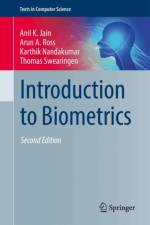
This textbook introduces the fundamental concepts and techniques used in biometric recognition to students, practitioners, and non-experts in the field. Specifically, the book describes key methodologies used for sensing, feature extraction, and matching of commonly used biometric modalities such as fingerprint, face, iris, and voice. In addition, it presents techniques for fusion of biometric information to meet stringent accuracy requirements, also discussing various security issues and associated remedies involved in the deployment of biometric systems. Furthermore, this second edition captures the progress made in the field of biometric recognition, with highlights including: Lucid explanation of core biometric concepts (e.g., individuality and persistence), which builds a strong foundation for more in-depth study and research on biometrics A new chapter on deep neural networks that provides a primer to recent advancements in machine learning and computer vision Illustrative examples of how deep neural network models have contributed to the rapid evolution of biometrics in areas such as robust feature representation and synthetic biometric data generation A new chapter on speaker recognition, which introduces the readers to person recognition based on the human voice characteristics Presentation of emerging security threats such as deepfakes and adversarial attacks and sophisticated countermeasures such as presentation attack detection and template securityWhile this textbook has been designed for senior undergraduate students and first-year graduate students studying a course on biometrics, it is also a useful reference guide for biometric system designers, developers, and integrators.
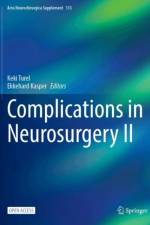
This Open Access book on Complications in Neurosurgery contains the proceedings of the 2nd ICCN conference held in Mumbai in 2019. The work illustrates and discusses key point of intra- and postoperative complications encountered in brain, spine and peripheral nerve surgery. In addition, this compilation addresses topics in ethics, with further contributions covering medico legal and didactic aspects.It draws from the experience of an international team of experts from all subspecialties in neurosurgery, including oncology, vascular, spine, pediatrics and others.The articles were written by renown specialists in the field who are stepping forward to share their valuable professional experience with colleagues following their joint mission to improve future patient care.
The book provides a comprehensive overview of sudden deafness. The volume comprises eleven chapters that are easy to read, amenable, and aim to address all commonly raised questions in daily practice. It starts with a chapter on the concept and epidemiology of sudden deafness, followed by the aetiology of sudden sensorineural hearing loss, diagnostic assessment, and MRI. The next chapter covers prognostic factors and recovery criteria. The remaining chapters elaborate on treatment options, and the closing chapter presents the available hearing aids for single-sided deafness (SSD). This book is the result of over 20 years of clinical experience, research, and knowledge dissemination on this disease. It will be a valuable resource for ENT specialists, neurology specialists, and family doctors.
This book explores the concept of psychophysics and details the development of the ideas which made the mathematisation of desire possible. The experience of desire accompanies us all throughout life, but dealing with it as psychologists and scientists is far from easy. Psychophysics was conceived to help map, mathematically, these unknowable feelings of desire. As such, this book will help to provide an accessible account of psychophysics while telling the story of its creation, which was, in essence, the birth of scientific psychology and contemporary cognitive neuroscience, alongside many of the technologies which characterize the contemporary world. It is a strange and intriguing story, which begins with the German physiologist Ernst Heinrich Weber in the first half of the nineteenth century, and its story will help the reader gain fresh insight into how scientists came to be able to map and quantify complex and private emotional states.
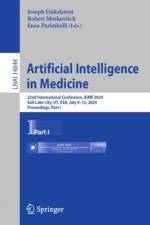
This two-volume set LNAI 14844-14845 constitutes the refereed proceedings of the 22nd International Conference on Artificial Intelligence in Medicine, AIME 2024, held in Salt Lake City, UT, USA, during July 9-12, 2024.The 54 full papers and 22 short papers presented in the book were carefully reviewed and selected from 335 submissions.The papers are grouped in the following topical sections:Part I: Predictive modelling and disease risk prediction; natural language processing; bioinformatics and omics; and wearable devices, sensors, and robotics.Part II: Medical imaging analysis; data integration and multimodal analysis; and explainable AI.
This book describes how Bayesian methods work. Aiming to demystify the approach, it explains how to parameterize and compare models while accounting for uncertainties in data, model parameters and model structures. Bayesian thinking is not difficult and can be used in virtually every kind of research. How exactly should data be used in modelling? The literature offers a bewildering variety of techniques (Bayesian calibration, data assimilation, Kalman filtering, model-data fusion, ¿). This book provides a short and easy guide to all these approaches and more. Written from a unifying Bayesian perspective, it reveals how these methods are related to one another. Basic notions from probability theory are introduced and executable R codes for modelling, data analysis and visualization are included to enhance the book¿s practical use. The codes are also freely available online.This thoroughly revised second edition has separate chapters on risk analysis and decision theory. It also features an expanded text on machine learning with an introduction to natural language processing and calibration of neural networks using various datasets (including the famous iris and MNIST). Literature references have been updated and exercises with solutions have doubled in number.
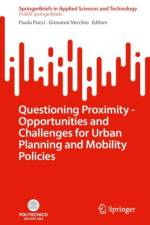
The book discusses some of the issues related to proximity, challenges an acritical use of the concept and highlights several dimensions that may better frame the actual contribution of proximity to urban and mobility planning in different places. The contributions address the conditions required for ensuring accessibility by proximity and the different planning dimensions that can support its promotion, addressing issues related to the inclusiveness of this model, as well as the scalability and metrics of proximity we need to deal with in several different contexts. The first part of the book introduces some experimental approaches aimed at operationalising accessibility by proximity, while the second part discusses several planning issues related to the implementation of proximity at different scales.
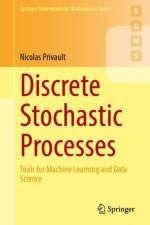
This text presents selected applications of discrete-time stochastic processes that involve random interactions and algorithms, and revolve around the Markov property. It covers recurrence properties of (excited) random walks, convergence and mixing of Markov chains, distribution modeling using phase-type distributions, applications to search engines and probabilistic automata, and an introduction to the Ising model used in statistical physics. Applications to data science are also considered via hidden Markov models and Markov decision processes. A total of 32 exercises and 17 longer problems are provided with detailed solutions and cover various topics of interest, including statistical learning.
This open access book critically examines how discourses and policies target and exclude migrants and their families in Europe and North America along racial, gender and sexuality lines, and how these exclusions are experienced and resisted. Building on the influential notion of intersectional borderings, it delves deep into how these discourses converge and diverge, highlighting the underlying normative constructs of family, gender, and sexuality. First, it examines how radical-right and conservative political movements perpetuate exclusionary practices and how they become institutionalized in migration, welfare, and family policies. Second, it examines the dynamic responses they provoke¿both resistance and reinforcement¿among those affected in their everyday lives. Bringing together studies from political and social sciences, it offers a vital contribution to the expanding field of migrant family governance and exclusion and is essential for understanding the complex processes of exclusion and the movements that challenge and sustain them. It expands academic discussions on populism and the politics of exclusion by linking them to the politicization of intimacy and family life. With diverse case studies from Europe, North, and Central America, it appeals to students, academics, and policymakers, informing future mobilizations against discriminatory and exclusionary tendencies in politics and society.
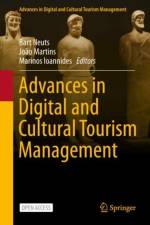
This open access book pertains to the "International Conference on Cultural Tourism Advances," held on June 27 and 28, 2023, at KU Leuven, Belgium. It focuses on advancing understanding of the sustainable development potential of cultural tourism by examining successful policy interventions, emerging cultural tourism trends, advancements in visitor management systems, new business and governance models, and the opportunities arising from ICT in the twenty-first century. This book presents recent key advances and their significant outcomes in the domain of European Cultural Tourism.
"AI is guaranteed to change nearly every aspect of our lives, but predicting how it will do so and determining what role law and regulation should play involve huge uncertainty. Kovac gives us an insightful roadmap, using the tools of law and economics, to our bewildering future. In the process, he also provides a comprehensive and necessary guide to understanding the regulatory and legal challenges we will face in the very near future."-Jonathan Klick, Charles A. Heimbold, Jr. Professor of Law, University of Pennsylvania and Erasmus Chair of Empirical Legal Studies, Erasmus University RotterdamThis book takes a comparative law and economics approach to explore the role of public and private actors in regulating generative artificial intelligence. The book provides an introduction and context for the creation of new generative AI technologies, now understood to be the chief goal of the leading AI companies. As autonomous 'super-intelligences', these technologies are still an unknown entity which nevertheless have profound implications for liberal democracy, consumer choice mechanisms, mutual trust, and political legitimacy.This book explores the deep challenges posed for lawmakers and how we can achieve an optimal form of regulation and governance of such unreliable technologies. Chapters investigate possible hybrid modes of regulation, such as a co-regulatory approach between private AI companies and public actors in addressing the issue of misinformation spread. It also explores mixed types of regulation toward research on new forms of AI, arguing that different levels of systemic risk posed by different technologies must be accounted for. Different contemporary and historical contexts for the regulation of unprecedented technical innovation are also considered, and new suggestions for policy are presented. This book is a timely resource which will be of interest to researchers and practitioners in economic governance, law and regulation, artificial intelligence, and comparative law.Mitja Kovä is full time Professor of Civil and Commercial Law at the University of Ljubljana, School of Economics and Business, Ljubljana, Slovenia. He is also a visiting lecturer at the Erasmus University Rotterdam, The Netherlands, at University of Ghent, Belgium, at the ISM University of Management and Economics in Vilnius, Lithuania, and at University of Vienna, Austria. He publishes in the fields of comparative contract law and economics, new institutional economics, consumer protection, contract theory and competition law and economics.
ILBIJERRI Theatre Company is Australia's longest established First Nations theatre company, producing powerful works for over 30 years. This open access book documents and critically reflects on their Social Impact stream of performances, aimed at health promotion and education around issues that disproportionately affect First Nations communities in Australia. Over the past 16 years, these works have reached over 25,000 audience members across the country. Productions include 'Chopped Liver' (2006-2009), 'Body Armour' (2011-2013) and 'Viral' (2018-2019)-all dealing with Hepatitis C; 'North West of Nowhere' (2014-2016), which deals with sexual health and healthy relationships; and 'Scar Trees' (2019), which addresses family violence. A new work, 'Aunty Flo' (2022) addresses menopause for First Nations women; and a pilot project addressing sexual health for First Nations young people-The Score (2022)-represents a new participatory approach to the Social Impact works, which places community members at the centre of the storytelling process. This book documents this important body of work for the first time, examining the impact on audiences and the cultural, aesthetic, and educational implications of a unique form of theatre for health education and promotion.Sarah Woodland is a researcher, practitioner and educator in applied theatre, participatory arts and socially engaged performance. She is currently Dean's Research Fellow in the Faculty of Fine Arts and Music, University of Melbourne, Australia, investigating how the performing arts can promote social justice and wellbeing in institutions and communities. Sarah has published widely in applied theatre and interdisciplinary arts, including articles in leading journals Research in Drama Education, Qualitative Inquiry, and Cultural Trends. Sarah is also lead Editor on a forthcoming volume Sonic Engagement: The Ethics and Aesthetics of Community Engaged Audio Practice (2023). Sarah has undertaken teaching and supervision in theatre, is an editorial board member for RiDE, and an executive member of the Australasian Drama Studies Association (ADSA).Kamarra Bell-Wykes (Yagera/Butchulla) is a playwright, director, dramaturge, devisor, facilitator, performer, producer, curator, community developer and education consultant. Her transformative practice is highly sought after, delivering innovative research, resources and acclaimed performances. Kamarra served as ILBIJERRI's Education and Learning Manager and later Creative Director from 2014-2018 and has been a Malthouse Resident Artist since 2020. Kamarra's writing/directing credits include Because the Night (Malthouse), CHASE (A Daylight Connection/Malthouse/Hothouse), The Score, Scar Trees, Viral, North West of Nowhere, Body Armour, Chopped Liver, Shrunken Iris (ILBIJERRI), Crying Shame (Next Wave) and Mother's Tongue (Yirra Yaakin). Kamarra received the 2021 Patrick White Playwrighting Award (Sydney Theatre Company) for her work Whose Gonna Love 'Em? I am that i AM (Footscray Community Arts Centre/ILBIJERRI).
This book provides basic knowledge required by an application developer to understand and use the Fully Homomorphic Encryption (FHE) technology for privacy preserving Data-Science applications. The authors present various techniques to leverage the unique features of FHE and to overcome its characteristic limitations.Specifically, this book summarizes polynomial approximation techniques used by FHE applications and various data packing schemes based on a data structure called tile tensors, and demonstrates how to use the studied techniques in several specific privacy preserving applications. Examples and exercises are also included throughout this book.The proliferation of practical FHE technology has triggered a wide interest in the field and a common wish to experience and understand it. This book aims to simplify the FHE world for those who are interested in privacy preserving data science tasks, and for an audience that does not necessarily have a deep cryptographic background, including undergraduate and graduate-level students in computer science, and data scientists who plan to work on private data and models.
This book constitutes the refereed proceedings of the 2nd International Conference, ITMM 2023 and 14th International Workshop, WRQ 2023, held in Tomsk, Russia, during December 4¿9, 2023.The 23 full papers included in this book were carefully reviewed and selected from 96 submissions. The papers are devoted to new results in queueing theory and its applications, and also related areas of probabilistic analysis. Its target audience includes specialists in probabilistic theory, random processes, and mathematical modeling as well as engineers engaged in logical and technical design and operational management of data processing systems, communication, and computer networks.
This book explores an increasingly important issue for legal systems across the world. It asks what do we lose and gain when legal proceedings go online? Adopting a multi-disciplinary socio-legal perspective, it draws on an emerging body of empirical evidence from the UK, Australia, Canada and the US about the ways in which digital justice is being conceived of and experienced. Insights are drawn from across the social sciences to discuss the interface of digitalisation with a range of issues such as due process, procedural justice, digital disadvantage, ceremony and ritual, science and technology studies and the dematerialisation of the civic sphere. Written accessibly and provocatively, it poses questions from a variety of different perspective with a particular focus on marginalised groups.
This book explains how Amsterdam financiers played a much more important role in financing the Louisiana Cession than they are credited for. Drawing on hitherto overlooked Dutch archival sources, alongside American, French and British archival sources, this book shows that in 1803 the international financial order was not yet centered on London, but that the financing of the Louisiana Cession initiated a shift of this order from Dutch to British firms, which would become more apparent after the Napoleonic Wars. This book examines the strategies and operations of the two main banking houses, Hope & Co. of Amsterdam and Francis Baring & Co. of London, involved in financing the cession of this territory from France to the United States. This book advances the scholarship not just on the Louisiana Cession, but also on international finance, the financial ¿sinews¿ of state power, Great Power diplomacy, the Atlantic Revolutions, and the Napoleonic Wars. It will be of interest to researchers and advanced students in all of these fields, at the intersection of history, politics, and economics.
E-mobility is the future. Its development and consumer adoption are strongly contributing to several of the UN's Sustainable Development Goals, playing a huge role in the shift from linear to circular economies. Providing extensive insight into this dynamic, the book reviews extant management and marketing research describing the E-mobility state-of-the-art literature from a twofold perspective; industries and consumers. Industries must consider the benefits and drawbacks related to E-mobility implementation in their business models and strategies, including the communication (online and offline) to stakeholders of such advancements. Meanwhile, consumers experience different perceptions and motivations including barriers related to the adoption of E-mobility, leading in turn to different behaviors across generational cohorts (e.g. Gen Z and Gen Alpha versus Millennials). Offering an empirical analysis based on a consumer survey, this book sheds light on all these aspects, thus giving useful insights to academics, marketers and policy makers into the challenges facing consumers in their E-mobility adoption.
"This carefully compiled book has great potential to renew scholarly discussion on the history of welfare in Britain. By focusing on the welfare cultures that flourish outside the established welfare institutions, and on the entanglements between experience, agency, and societal change, it significantly broadens our understanding of the history of British welfare."- Johanna Annola, Tampere University, Finland"Everyday Welfare provides a rigorously coherent collection of essays that will have a major influence on debates in modern British history and social policy. It resituates 'experience' as a central concept of analysis, demonstrating how everyday social and material realities are connected to broader political and policy changes. It reinvigorates established historical concerns and, through a series of empirically rich examples, points the way forward for so much future research."- Matthew Hilton, Queen Mary University of London, UKThis open access book offers a new approach to understandings of welfare in modern Britain. Foregrounding the agency individuals and groups claimed through experiential expertise, it traces deep connections between personal experience, welfare, and activism across diverse settings in modern Britain. The experiential experts studied in this collection include women, students, children, women who have sex with women, bereaved families, community groups, individuals living in poverty, adults whose status sits outside professional categories, health service users, and people of faith. Chapters trace how these groups have used their experiences to assert an expert witness status and have sought out new spaces to expand the scope, inclusivity, and applicability of welfare services.Caitríona Beaumont is Professor of Social History at London South Bank University, UK.Eve Colpus is Associate Professor of British and European History post-1850 at the University of Southampton, UK.Ruth Davidson is an Honorary Research Fellow in the Mile End Institute, School of History, Queen Mary University of London, UK.
This open access book is a groundbreaking exploration of systemic risk in modern financial systems. Through its theoretical and empirical investigations, it reveals the multidimensionality of systemic risk, the transmission channels of crises, and the interlinkages between physical, transition, and financial risks. It introduces cutting-edge methodologies, including prediction and optimization models based on complex networks, multilayer networks and eXplainable Artificial Intelligence (XAI) approaches, to forecast and measure systemic risk and financial crisis. It provides insight for academics, practitioners, policy and supervisory authorities, and bankers and financial market operators on understanding the links that determine the propagation of financial crises and the emergence of systemic risks. This book is essential for those wishing to better understand systemic risk and its implications.
This textbook introduces the theory and application of open source software (OSS) reliability.The measurement and management of open source software are essential to produce and maintain quality and reliable systems while using open source software. This book describes the latest methods for the reliability assessment of open source software. It presents the state of the art of open source software reliability measurement and assessment based on stochastic modeling and deep learning approaches. It introduces several stochastic reliability analyses of OSS computing with application along with actual OSS project data.The book contains exercises to aid learning and is useful for graduate students and researchers.
Treatment-resistant schizophrenia is one of the most challenging mental health disorders and is associated with a high risk of relapse, repeated hospitalizations, suicidal behavior and poor quality of life.This book focuses on treatment-resistant schizophrenia, its clinical features, and evidence-based treatments: pharmacotherapy, cognitive-behavioral psychotherapy, and rehabilitation.A novel therapy targeting long-term recovery for treatment-resistant schizophrenia is discussed.The cognitive, metacognitive, and recovery perspectives represent the main elements.Each chapter begins with an abstract, followed by learning objectives, introduction, main text, discussion, conclusion, review questions, and bibliography. This structure, including learning objectives and review questions, reinforces the reader's learning process. It can also help improve the teaching process in seminars and courses.
This open access book uses multiple IEA Assessments to examine the relationship between socioeconomic segregation between classrooms and student outcomes. By examining Socioeconomic status (SES) segregation between classrooms as well as between schools, it produces a more accurate estimate of student sorting. Further, this study examines the differential impact of student sorting across subject areas and grades in order to explore whether school structure¿s relationship to educational inequality exhibits content and longitudinal heterogeneity. This study employs time series, fixed-effect, random-effects, and synthetic-cohort methods to comprehensively investigate the robustness of the relationship between SES segregation and achievement inequalities. This project makes an important contribution to researchers¿ understanding of student sorting¿s impact using a comparative lens, while also providing important information to policymakers on the role of schools in mediating social inequalities.
There is an urgent need for the repositioning of organization design in today¿s fast-moving technological, social and political environments. Building on the theory of human-centred design as a new foundation of the study of organization, this book offers a detailed model and approach that brings organization design to a new era of ethical and aesthetic concerns for the role of organizations in society. A new managerial role is put forward, the organization designer, as a unique set of responsibilities aimed at ensuring that the principles and values behind the organization¿s purpose are not only upheld, but also permeate the entirety of the organization.The book contains a number of concepts that offer a unique contribution to the management literature and which can be applied in practice, perhaps as part of the organization¿s regular staff development programs. It will be of great interest to academics and students of organization studies, business ethics, sustainability and strategic management.
This book examines the rise of exclusionary neoliberalism by assessing how far-right populist actors impact economic policy change. Drawing on the case of the Austrian Freedom Party, the book illustrates how neoliberalism emerged as a far-right political project in Austria. Tracing the Freedom Party¿s ideational history, the book describes the making of the exclusionary neoliberal state through its establishment in the 1980s, its implementation in the early 2000s and how exclusionary neoliberalism was sustained after the Great Financial Crisis of 2008. The book thereby provides important insights on how domestic politics respond to challenges imposed by globalization and international market integration, and explains the less obvious ways in which exclusionary nationalist ideas can be deeply entangled with neoliberalism. The book will appeal to all those interested in far-right populism and its interrelation with political economy.
This book presents a detailed and innovative analysis of the governance, policies and ecosystem that define the Italian cybersecurity posture. It explores the complex interplay between technology and policy in shaping national security strategies in the digital era. The author introduces the reader to the critical importance of a policy-driven approach to cyber security, highlighting the challenges and necessary evolution prompted by rapid technological advancements and the expanding relevance of cyberspace. It emphasizes the multifaceted nature of cyber security that extends beyond technological solutions to encompass a broad socio-political analytical framework. The author also illustrates the need for an integrated approach that includes policies development, stakeholder engagement and strategic national objectives.This book delves into the organizational structure and dynamics of Italian national cybersecurity ecosystem, while shedding light on the collaborative interactions among different actors within this complex field. It meticulously outlines the roles and responsibilities of public, private and civil sectors in enhancing Italy¿s cyber resilience. Key developments such as the establishment of the National Cybersecurity Agency and the formulation of strategic objectives to safeguard national cyber perimeter are critically examined. This examination not only reflects on the strategies employed but also on the challenges and achievements in fostering a robust cyber security environment able to respond to both current and emerging threats. Through a blend of theoretical insights and practical case studies, supplemented by more than 30 semi-structured interviewees. This book also offers a comprehensive overview of efforts implemented by Italy in 10 years of policy making experience with the aim to structure the appropriate cyber security national institutional architecture. It provides valuable perspectives on the effectiveness of these policies, the ongoing adjustments required to address the fluid nature of cyber threats, and the implications of these efforts on both national and international scales.Upper-under graduate level and graduate level students in computer science or students interested in cybersecurity will want to purchase this book as a study guide. Researchers working in cybersecurity as well as Policy Makers, Legislators, Decision Makers and CISO will also want to purchase this book as a reference book.
Abonner på vårt nyhetsbrev og få rabatter og inspirasjon til din neste leseopplevelse.
Ved å abonnere godtar du vår personvernerklæring.