

















Gjør som tusenvis av andre bokelskere
Abonner på vårt nyhetsbrev og få rabatter og inspirasjon til din neste leseopplevelse.
Ved å abonnere godtar du vår personvernerklæring.Du kan når som helst melde deg av våre nyhetsbrev.

This book provides a philosophy of mathematics that resonates with critical mathematics education. It draws attention to the social complexities that characterise the period of Modernity including the extreme exploitation of manual workers and their families, brutal forms of colonisations, trading of slaves, and the formation of racist ideologies. It portrays Modernity as a period of contradictions and highlights that mathematics is a part of these contradictions. The text interprets mathematics as being indefinite, seeing that mathematics is a part of the ongoing human constructions. It outlines a performative interpretation of mathematics, portraying mathematics as intrinsically connected to actions. Any kind of action, including mathematics-based actions, calls for ethical considerations and this leads to any mathematical practice, either in research, application, or education, to face ethical challenges. It illustrates with examples how a critical philosophy of mathematics can come to be an integral part of classroom practices.
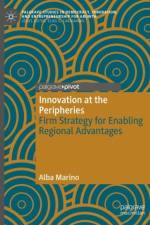
Innovation scholarship has traditionally leaned towards the analysis of innovation processes linked to conditions found in 'core' areas; well-functioning economic hubs and dynamic high-technology sectors. Although more recent work on innovation in emerging economies has begun to broaden the picture, innovation in the 'peripheral' regions and sectors of developed economies is still largely unexplored. This book is a unique exploration of how innovation processes operate in peripheral regions, while also looking at the key drivers and challenges organizations face in peripheral areas as they strive to innovate and compete globally.Adopting interdisciplinary approaches from management studies, economics and geography, this book blends theory-building and quantitative approaches to investigate the periphery and innovation nexus, with a focus on bibliometric approach, topic modelling, and patent-based analysis. It will be of great interest to scholars and students of innovation, strategic management, regional development and sustainability.Alba Marino is Assistant Professor in Management and Innovation at the University of Messina, Italy. She has collaborated with the Freedom Project at the University of Pennsylvania and the iBEGIN research team at the Fox School of Business at Temple University. She has held fellowships at Ca' Foscari University of Venice, the University of Bologna and the University of Turin. She has been a part-time visiting researcher at the Department of Strategy and Innovation of the Copenhagen Business School. Her current research projects include the role of global co-inventorship networks and migration in knowledge creation, the antecedents of green technologies and the determinants of innovative processes in peripheral areas.
This book considers ethical educational leadership dilemmas that impact the workplace cultures influencing school districts' success. As school systems become increasingly demographically, racially, and culturally diverse, the need intensifies for educational leaders to lead their school communities in an ethical manner, developing workplace cultures characterized by psychological and emotional safety. Based on research and extensive experience working with school districts in Canada, Germany, Finland, and the United States, Yee and Yee deliver vignettes from various school contexts illustrating ethical leadership dilemmas and leader responses indicative of both toxic and healthy workplace cultures. Finally, the authors present key lessons learned from healthy educational workplaces, illustrating next steps and a call to action for implementing and maintaining ethical school district leadership practices.
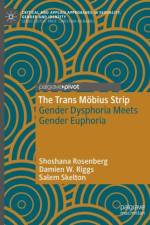
This book explores the histories and presents of gender dysphoria and euphoria as clinical and theoretical concepts as well as lived experience. It outlines how euphoria emerged as a concept, what its relationship to dysphoria is, and how it shows up in the body, in relationships, and as a framework for liberation. Using the concept of the Möbius Strip as an explanatory model of the interconnectedness of gender, the authors explore how gender as a concept encompasses multiplicity, duality, and non-linearity despite its supposed singularity. Rather than viewing euphoria and dysphoria as two poles of a continuum, this volume introduces the notion that they are in fact a blended experience which oscillates between distinctiveness and relationality. Critically engaging with clinical theory, gender studies, crip theory, spirituality, and political movements, this book is ideal for academics from a variety of fields, including psychology, sociology, gender studies, trans studies, cultural studies, as well as practitioners and clinicians, especially those who work with trans people.
This book offers a groundbreaking exploration of Galileo Galilei¿s engagement with the Almagest, Claudius Ptolemy¿s second-century scientific work on the motions of stars and planetary paths. Contrary to the belief that Galileo had little interest in Ptolemaic astronomy, the author investigates whether Ptolemy influenced Galileo¿s shift to Copernicanism, the theory that Earth and all other planets revolve around the Sun. This inquiry is pursued through a detailed examination of Galileo¿s early writings on motion, namely the so-called De motu antiquiora (c. 1589¿1592). By contextualizing Galileo¿s initial reception of Ptolemy, the book reveals a fascinating historical backdrop, highlighting how the Almagest was intended to be read and studied in Galileo¿s milieu during the last decades of the sixteenth century. The author challenges the conventional ¿Ptolemaic-Aristotelian¿ label by showing that early Galileo adhered to a Ptolemaic, yet non-Aristotelian, cosmology supported by an Archimedean-like rationale. Additionally, the book underscores the often-overlooked impact of Theon of Alexandriäs commentary on the Almagest in the sixteenth- and seventeenth-century reception of Ptolemy, suggesting it as one of Galileo¿s potential sources. Offering valuable insights for historians of science and early modern astronomy, this book illuminates Galileo¿s intricate relationship with astronomical and philosophical ideas, emphasizing the need to re-examine his intellectual journey within a nuanced historical framework.
This book explores narratives of vaccine hesitancy using samples from the UK press, and looks at the ways these have changed between the 1950s and the present. The work draws on a variety of research instruments including semantic network analysis and analysis of metaphor to provide a rich description of anti-vaccine narratives in different historical periods. The work considers the ways that concerns about and resistance to inoculation were informed by cultural and social pressures in two case studies, firstly that of polio in the 1950s and secondly the so called 'pertussis crisis' of the 1970s, wherein a period of social activism and newspaper campaigning led UK and US governments to offer compensation schemes for vaccine damaged children. The studies chosen provide a detailed comparison of the politics of childhood inoculation over two eras in the UK. Chapters also cover the use of metaphor and representational analysis in health communication, comparing ways in which the work of Moscovici, Sontag and other theorists can be used to provide complementary insights, and the affordances and concerns around the use of 'big data' analyses in historical work. The work also features discussion of the implications of the findings for approaches to more recent vaccination crisis points. This book argues that anti-vaccination narratives, far from showing a stable and coherent set of concerns, are highly mutable. The work compares anti-vaccination and conspiracy theory narratives, drawing out areas of continuity and schism. Allison Cavanagh is a lecturer in Media and Communication at the University of Leeds, UK.
This extensively expanded third edition offers a practical introduction to Bio Data Science. With a hands-on approach to learning, this book offers ample opportunities to practice:- Installing and utilizing Linux as a virtual machine or remotely- Processing bio data with the programming language AWK- Managing data with the relational database system MariaDB- Analyzing and visualizing data with R- Implementing good bioinformatics practices with Jupyter Notebook and GitHubThis book targets both students and professionals in the life sciences. While it is aimed at beginners, it also provides valuable tips and tricks for experienced researchers dealing with large datasets. Worked examples illustrate how to utilize various bioinformatics tools such as BLAST, Clustal, PLINK, IGV, SAMtools, BCFtools, Mason2, Minimap, NCBI Datasets, Velvet, Jmol, and more for:- Identifying bacterial proteins potentially associated with pathogenicity- Querying molecular structures for redox-regulated enzymes- Mapping and assembling real or simulated sequence reads- Identifying and mapping molecular structure mutations in viruses- Conducting genome-wide association studiesAll software tools and datasets mentioned are freely available, and all code is accessible as Jupyter Notebooks on GitHub. Drawing from the author's experiences and knowledge gained from both academia and industry, this book provides a practical and comprehensive approach to bioinformatics.
This book is an essential reference guide for the use of artificial intelligence in orthopaedic surgery. It covers all related topics, from machine and deep learning, through practical applications in all orthopaedic sub-disciplines, to ethical issues and potential risks.International renowned experts equip the reader with solid scientific foundations and practical tips combining accurate literature reviews with high-quality original images. Addressing a hot topic for the present and next generation of medical specialists, this book is a must read for orthopaedic surgeons, radiologists and health informatic specialists alike.
This book presents an innovative framework for enhancing creativity in decision-making by applying systems thinking principles and tools. It is based on the premise that creativity is not a fixed trait that some people have and others don't, but a skill that can be learned and improved with practice and guidance. The book also argues that decision-making is not a linear or mechanical process that can be reduced to simple rules or formulas, but a dynamic and creative process that requires holistic and systemic thinking.The work also shows that systems thinking is not a complicated or abstract theory that only experts can use, but a practical and powerful tool that anyone can apply to understand and improve complex situations. The framework consists of six steps: problem identification, idea generation, idea selection, idea development, idea implementation, and monitoring and evaluating results and feedback.Readers will learn to use the framework to solve complex problems and generate innovative ideas in any context and domain. Through the systematic integration of existing models into a unified framework, the book contributes to ongoing dialogues regarding effective decision-making processes. It critically evaluates prominent models like the Creative Problem-Solving Model, the Rational Decision Making Model, and the Intuitive Decision Making Model. Researchers seeking insights into incorporating creativity into decision-making will find this book to be a valuable scholarly resource.
This book provides a state-of-the-art review of recent analytical developments on multi-outlets pipe flow hydraulics and alternative hydraulic design concepts. For this purpose, the book presents simple, but sufficiently accurate analytical equations, that can be applied directly without needing any numerical technique to achieve whole hydraulic computations. The analytical procedures explained here give an opportunity for designers to better understand the basic hydraulic principles of multi-outlet pipe flow, and demonstrate their applicability and efficiency to design problems of multi-outlet sub-main lines, covering various design configurations.
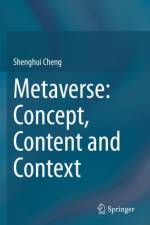
The metaverse, a hybrid society of the real and the virtual is attracting significant attention from academia to industry and is starting to change the world. Composed of ten chapters, this book introduces the metaverse from three aspects ¿ concept, content and context. It starts with numerous concepts related to the metaverse, such as virtual reality, augmented reality, Web 3.0 and NFTs and describes the background, features, advantages and disadvantages. It then presents the content or key techniques around the metaverse, Artificial Intelligence, big data, edge computing, 3D modeling and blockchain. For each technique, it depicts how it performs to advance the development of the metaverse. Finally, it gives the context of the metaverse and illustrates the new society in the virtual world, consisting of economic systems, assets, social activities, security, law, etcetera. Overall, Metaverse: Concept, Content and Context provides a panoramic view of the metaverse, a key feature of which is the intuitive visualizations with numerous figures that clearly address the main aspects. This book is well-designed and well-written and will appeal to beginners and students as well as professionals, welcome to the metaverse community!
This book provides a concise introduction to additive manufacturing, accessible to anyone with a basic background in engineering and materials science. The author explains additive manufacturing (AM) in terms of advantages and disadvantages and gives a concise list of advantages and disadvantages, enabling readers to understand AM in relation to other techniques. Additionally, this book clarifies various contradictions with the help of numerous examples.This book:Offers readers a unique, accelerated learning tool, revealing the subtleties of Additive ManufacturingDescribes a concept for refabrication in the context of additive manufacturing, providing new insight into repair and refurbishmentDiscusses additive manufacturing not only as a design tool, but also a production tool in the context of mass-production
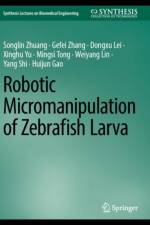
This book offers readers a series of robotic methods for manipulating zebrafish larva, one of the most popular model vertebrates widely used in biomedical research and clinical applications. The authors leverage advanced control theories, image processing algorithms, and artificial intelligence to establish a robot-assisted automated or semi-automated zebrafish larva-targeted micromanipulation system for different experimental purposes. The methods presented are generic and can be translated to manipulate other types of biological objects, such as embryos or cells. Coverage includes topics that span the procedures of manipulating zebrafish larva, such as in-plane positioning, three-dimensional orientation, deformation-controllable immobilization, organ-targeted microinjection, whole-organism imaging, and high-throughput trajectory tracking of zebrafish larvae group movement.Robotic Micromanipulation of Zebrafish Larva is written in a simple, clear, and easy-to-read style. It is an ideal reference for academic researchers and biomedical operators. It is also a valuable resource for students learning robotics, control and system theories, image processing, artificial intelligence, and biomedical engineering.
This open access book foregrounds novel collaborations between the Social Sciences and Humanities (SSH), and Science, Technology, Engineering and Mathematics (STEM) disciplines, for the benefit of European energy policy. Each chapter has been led by a team spanning social and technical disciplines. The book proposes 10 policy recommendations to: Simplify the uptake of community energy; Prioritise societal engagement in geothermal; Create co-learning for energy communities; Facilitate energy literacy; Support place-based strategies for retrofit; Promote integrated policy design for agrivoltaics; Increase social acceptability of low-carbon technologies; Protect digital energy infrastructure; Understand stakeholder perceptions of energy-efficiency measures; and Rethink energy system models to support the just transition. It will be of interest to anyone developing, implementing or critiquing energy policy (locally, nationally or internationally) as well as those looking to expand the use of interdisciplinary research to achieve sustainability goals. Part of a three-volume collection covering climate, energy, and mobility policy.
This book provides a comprehensive review of the methodologies and searches for dark matter (DM) annihilation signals using very-high-energy gamma rays (VHE, E > 100 GeV), utilizing data from current Imaging Atmospheric Cherenkov Telescopes (IACTs) in the pre-Cherenkov Telescope Array (CTA) era. It presents the state-of-the-art statistical analysis methods and theoretical models related to TeV DM, applied to data from the H.E.S.S. telescope array, which is currently the most sensitive IACT array for observing the Galactic Center (GC), where the brightest DM annihilation signals are expected.The authors delve into the astrophysics of VHE gamma-ray production through cosmic ray acceleration. They explain the Imaging Atmospheric Cherenkov technique, describe the H.E.S.S. array, and discuss possibilities for DM annihilation-induced gamma-ray spectra and DM distribution profiles. By employing advanced statistical methods, they search for weak signals in the GC region using the H.E.S.S. Inner Galaxy Survey dataset and address systematic uncertainties. The authors present and debate the most constraining results on TeV dark matter models.Finally, this book presents the sensitivity of current IACTs to DM annihilation signals using IGS mock datasets, accounting for systematic and instrumental uncertainties. Detection prospects for canonical TeV DM models, such as the Wino, Higgsino, and quintuplet, are discussed. Sensitivity benchmarks on indirect DM searches with IACTs using H.E.S.S. as an example are provided, setting the stage for future developments in the CTA era.It serves as a consolidated resource for graduate students and researchers, presenting methodologies that could lead to significant advancements in the quest to understand dark matter.
This book develops a new approach to plural arbitrary reference and examines mereology, including considering four theses on the alleged innocence of mereology. The authors have advanced the notion of plural arbitrary reference in terms of idealized plural acts of choice, performed by a suitable team of agents. In the first part of the book, readers will discover a revision of Boolos¿ interpretation of second order logic in terms of plural quantification and a sketched structuralist reconstruction of second-order arithmetic based on the axiom of infinite, a la Dedekind, as the unique non-logical axiom. The work goes on to analyse the pros and cons of the new interpretation, also with respect to Linnebös objections to the thesis that second order logic is genuine logic. A theory of concepts that can be labelled as a theory of logical concepts is expounded.In the second part of the book, the authors consider grounding megethology on plural arbitrary reference and argue that the arguments for the ontological innocence of mereology are not conclusive and that ¿ for a certain use of mereology ¿ a thesis of innocence, similar to that of plural arbitrary reference, is defensible. The work proposes a virtual theory of mereology in which the role of individuals is played by plural choices of atoms.This considered work will appeal to scholars from branches of analytic philosophy, logic and the philosophy of mathematics in particular.
This open access book deals with the backsliding of the rule of law in Poland and Hungary as one of the main problems of the EU. What began as a national phenomenon has become a general threat for the EU because the respect for the rule of law is a prerequisite for all other values of the EU enshrined in Article 2 of the Treaty on European Union. Media coverage and scholarly publications on these developments mainly focus on backsliding governments and judicial decisions concerning the issue. This book aims to inform the debate by adding another perspective and providing a broader view. Drawing on a comprehensive collection of parliamentary debates, we explore how MPs in Poland, Hungary, but also the Czech Republic, Slovakia and Romania referred to the rule of law from 1990 to 2021 and how their narratives differed across parties, countries and time.
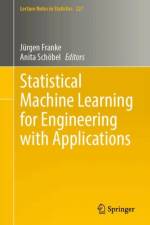
This book offers a leisurely introduction to the concepts and methods of machine learning. Readers will learn about classification trees, Bayesian learning, neural networks and deep learning, the design of experiments, and related methods. For ease of reading, technical details are avoided as far as possible, and there is a particular emphasis on applicability, interpretation, reliability and limitations of the data-analytic methods in practice. To cover the common availability and types of data in engineering, training sets consisting of independent as well as time series data are considered. To cope with the scarceness of data in industrial problems, augmentation of training sets by additional artificial data, generated from physical models, as well as the combination of machine learning and expert knowledge of engineers are discussed.The methodological exposition is accompanied by several detailed case studies based on industrial projects covering a broad range of engineering applications from vehicle manufacturing, process engineering and design of materials to optimization of production processes based on image analysis.The focus is on fundamental ideas, applicability and the pitfalls of machine learning in industry and science, where data are often scarce. Requiring only very basic background in statistics, the book is ideal for self-study or short courses for engineering and science students.
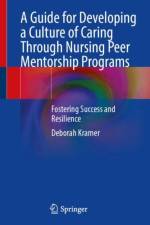
This book describes in detail how to develop successful programs of nursing mentorship, utilizing concepts of caring that yields a strong, caring body of nurses who will be ¿nurse thrivers¿ as they find fulfilment and meaning in their professional commitment and will train others to do the same.The mentorship program is the ticket to success that many students need to complete their degree program, prevent burnout, pass the nursing NCLEX examination, and remain in the workforce after graduation. The current attrition rate in baccalaureate nursing programs is 25-50%, as is the attrition rate in the first 2 years of employment of new RN's entering the workforce. Burnout is due to a lack of care and support for helping the students navigate the rigor and demands of the nursing program. Creating a community of learners with caring and support creates an environment that fosters academic engagement and success.The unique aspect of this book is its focus on creating a caring environment to support the students; helping them develop caring skills, empathy, resilience and their own self-care; developing the skills for success beyond their educational process into the workforce.This book integrates all patterns of knowing - personal, aesthetic, empiric and ethical - and provides the missing link of peer mentorship necessary to the development of resilient, emancipated nursing students and graduates capable of working in community with others to establish cultures of care in health care. This is a must have resource for transformation of nursing education in the next century!Foreword by Dr. Margaret McClure.
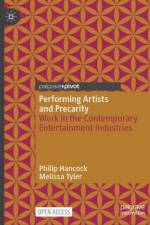
This open access book focuses on the distinctive experiences of freelance and self-employed live performers in the UK¿s live entertainment industries It provides an in-depth account of their working lives during COVID-19, showing how their experiences of the pandemic provide insight into the different types of precarity shaping what it means to be a live performer.A growing body of academic research has focused on the meaning, experience, and nature of precarity for those working in the cultural and creative sector, highlighting the problem of socio-economic precarity. This book demonstrates how a constant struggle for recognition also shapes the contours and lived experiences of live performance work. It emphasizes how, combined with affective and socio-economic forms of precarity, this recognitive precarity creates a distinctive and challenging set of working conditions.Drawing on original data generated through a national survey of self-employed and freelance performers across the live entertainment industries, combined with insights derived from a series of in-depth semi-structured interviews, this book presents an empirically rich insight into the struggles and opportunities presented by the multiple forms of precarity that the pandemic brought to the fore. It gives voice to a precarious workforce that remains integral to one of the UK¿s most economically buoyant sectors but whose experiences are often marginalized in academic research, and in policy and practice. It will, therefore, offer a unique insight for both students and scholars of work and employment, and for those working in the cultural and creative sector, into the distinctive nature of work as a freelance or self-employed live performer.
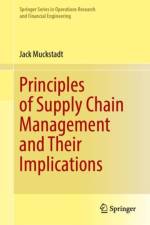
The text begins with a discussion of the basic principles of supply chain management and some attributes of certain industries. The remainder of the text is devoted to developing and applying mathematical concepts needed to address the many issues associated with managing supply chains and, in particular, uncertainty, in a variety of real world settings. In particular, the final chapter is devoted to the design and operation of a vaccine distribution system during a pandemic along with a critique of the way the system used in the United States performed.
In the last decades it has become more and more imperative for our societies, and for decision makers in all areas of society, to understand the dynamics through which innovation systems develop and through which socio-technical systems transform themselves. As both innovation and transformation are strongly intertwined, it has equally become imperative to analyse their dynamics as well as their interplay.This open access volume reflects on the research fields that have developed in the last five decades to do exactly that. It defines and delineates research on systems and innovation as encompassing the scientific study of, first, the conditions, dynamics and impacts associated with the generation and uptake of innovations and, second, the development and transformation of functional systems satisfying essential needs such as the provision of energy or water. Further, the area of Systems and Innovation Research (SIR) is characterised by problem and stakeholder oriented research. We chose five decades as time frame because we noted that roughly 50 years ago a number of research institutes dedicated to SIR were founded and the SIR area started to grow significantly. We present a systematic history of nine selected fields within the area of SIR (Innovation policy, Innovation indicators, Foresight, Policy Evaluation, Technology Assessment, Production Paradigms, Renewable Energies, Energy Efficiency, Water Use). We also present a conceptual framework to understand the processes by which the research fields have developed.This allows to draw general lessons as to what drives fields throughout their development and how their role vis-à-vis policy, businesses and societies changes over time. It also allows to speculate about future challenges and trends in the SIR area. This is important because, if anything, the need to govern transformation through innovation will further grow in the future, and with it the need to understand the underlying dynamics.
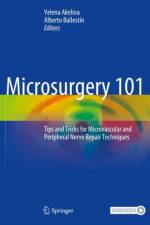
This book is a detailed teaching manual for training in microvascular and peripheral nerve surgery with step-by-step instructions using high-quality pictures and videos. It consists of valuable practical tips and tricks that are explained in detail to the readers, making it a useful tool for both inexperienced and experienced practitioners looking to improve their skills.Microsurgery has diverse clinical applications across multiple medical specialties. It is commonly employed in reconstructive surgery to address tissue defects following trauma, oncological resections, or congenital anomalies, utilizing precise procedures to reattach small blood vessels and nerves. This includes the replantation of amputated body parts such as fingers or hands, as well as the reconstruction of complex defects in the head and neck region, upper and lower extremities and breast among others. Microsurgical techniques are also crucial in nerve repair surgeries to restore function and sensation after trauma but as well in facial reanimation procedures to address paralysis; meanwhile lymphaticovenous anastomosis and vascularized lymph node transfers are useful procedures to treat or prevent lymphedema. Overall, microsurgery represents a cornerstone in modern medicine, offering innovative solutions for a wide range of clinical challenges.Microsurgery 101 - Tips and Tricks for Microvascular and Peripheral Nerve Repair Techniques is a unique guidebook for medical students, residents, fellows, and practicing surgeons from multiple specialties: plastic, hand and orthopedic, maxillofacial, head and neck, neurosurgery, transplant, ophthalmology, pediatric, cardiovascular, urology, gynecology, vascular, general surgery and veterinary surgery.
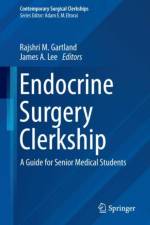
This quick-reference guide is the first book written specifically for the many third- and fourth-year medical students rotating on an endocrine surgery service. Each chapter covers history, physical examination, imaging, and common diagnoses. For each diagnosis, the book sets out the typical presentation, options for non-operative and operative management, and expected outcomes. Chapters include key illustrations, quick-reference charts, tables, diagrams, and bulleted lists. Students can read the text from cover to cover to gain a general foundation of knowledge that can be built upon when they begin their rotation, then use specific chapters to review relevant content before seeing patients in clinic or in the operating room. Topics covered include diagnosis and management of thyroid, parathyroid, and adrenal disorders, gastrointestinal neuroendocrine tumors, and much more.Practical and user-friendly, Endocrine Surgery Clerkship is the ideal, on-the-spot resource for medical students and practitioners seeking fast facts on diagnosis and management. Its bullet-pointed outline format makes it optimal for quick reference, and its content breadth covers the most commonly encountered problems in clinical practice.
¿ This open access book is authored by a rich mix of contributors from across the landscape of research, academia, LEAs, civil protection, and other first responders, practitioners, public and private organizations and industry to address some of the most contemporary challenges within global security domain. The authors cover topics such as protection of critical infrastructures (CI), serious and organized crime, counter (cyber) terrorism, border management, cybercrime, cybersecurity, management of disasters and crises, big data analytics, the application of AI and the legal and ethical dimensions of the implementation of cutting-edge technologies. The book benefits from research actions and lessons learned from more than 35 EU R&D projects within the security domain. The book not only addresses theoretical narratives pertinent to the subject but also identifies current challenges and emerging security threats, provides analysis of operational capability gaps, real world applied solutions, methodologies, and case studies within security domain.This is an open access book. Presents security practitioner driven technologies from practical, theoretical and legal/ethical point of view Offers R&D perspectives on strengthening security potential based on input from multidisciplinary stakeholders Addresses security topics from LEAs, Civil Protection authorities, first responders, cyber-security organizations, Critical Infrastructure operators and other stakeholders involved in societal resilience This book is open access, which means that you have free and unlimited access
Abonner på vårt nyhetsbrev og få rabatter og inspirasjon til din neste leseopplevelse.
Ved å abonnere godtar du vår personvernerklæring.