












Gjør som tusenvis av andre bokelskere
Abonner på vårt nyhetsbrev og få rabatter og inspirasjon til din neste leseopplevelse.
Ved å abonnere godtar du vår personvernerklæring.Du kan når som helst melde deg av våre nyhetsbrev.

Naples, May 8, 1959. Renato Caccioppoli, a mathematical genius, prodigious pianist, captivating storyteller, highly cultured and multilingual, believed to be the grandson of the anarchist movement founder Mikhail Bakunin, takes his own life by shooting himself in the back of the head in his residence at Palazzo Cellammare.Adored by students and colleagues, a symbol of freedom and non-conformity for an entire generation, Caccioppoli enchanted not only some of the most celebrated intellectuals of the century ¿ André Gide, Pablo Neruda, Eduardo De Filippo, Benedetto Croce, Alberto Moravia, Elsa Morante ¿ but also, and above all, the people of Naples, who have always regarded him with amazed admiration. Persecuted by the fascist regime, afflicted by what the writer and friend Paola Masino would describe as "the friction of life," his death permanently places him in the city's history.This meticulous and well-documented investigation tells us who Caccioppoli truly was and offers us an un-stereotyped and, in some ways, unprecedented portrayal of a legendary Naples.
This book presents one of the most extensive MRI image collections of wrist pathology, including common, less frequent, unusual and combined pathology to enhance the common knowledge of radiologists and wrist surgeons to an expert level. Additionally, the comprehensive overview allows the reader to compare MRI exams in the clinic to the provided extensive database and helps with diagnostic and clinical solutions. The currently available basic theoretical information can already be found in many other publications, and will be limited to the essentials that are needed to explain and/or understand the MR images. This book goes beyond the basic information and aims to provide a unique guide for a wide range of wrist pathologies. In addition, rather difficult test images are added at the end in order to encourage the reader to closely observe and analyse key details in the images.
Now in its sixth edition, this textbook presents the tools and concepts used in multivariate data analysis in a style accessible for non-mathematicians and practitioners. Each chapter features hands-on exercises that showcase applications across various fields of multivariate data analysis. These exercises utilize high-dimensional to ultra-high-dimensional data, reflecting real-world challenges in big data analysis.For this new edition, the book has been updated and revised and now includes new chapters on modern machine learning techniques for dimension reduction and data visualization, namely locally linear embedding, t-distributed stochastic neighborhood embedding, and uniform manifold approximation and projection, which overcome the shortcomings of traditional visualization and dimension reduction techniques.Solutions to the book's exercises are supplemented by R and MATLAB or SAS computer code and are available online on the Quantlet and Quantinar platforms. Practical exercises from this book and their solutions can also be found in the accompanying Springer book by W.K. Härdle and Z. Hlávka: Multivariate Statistics - Exercises and Solutions.
This book provides expert advice on the practical implementation of the European Union's General Data Protection Regulation (GDPR) and systematically analyses its various provisions.
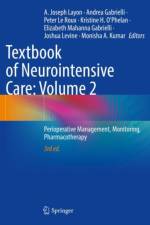
This extensively updated edition provides a comprehensive review of intensive care for neurologically injured patients from the emergency room and ICU through the operating room and post-surgical period in two comprehensive volumes. The Editors of this second volume present a comprehensive textbook that incorporates best practice/evidence-based medicine and performance improvement, while it champions the three characteristics needed in our neuröICUs: patient and family centered high-quality care, education, and discovery. This volume concentrates on perioperative management, monitoring and pharmacotherapy, examining the neurological problems most frequently seen in intensive care, and describes the various types of neurosurgery and critical features of the management of patients. General issues are discussed across the textbook, such as cardiac care, fluids and electrolytes, nutrition, and monitoring as well as more specific conditions and complications including elevated intracranial pressure, seizures, and altered mental states.Listening to an injured brain is not easy. It takes knowledge, dedication, and understanding of the critically ill patient and their family. Textbook of Neurointensive Care Volume 2: Perioperative Management, Monitoring, Pharmacotherapy provides the reader with a detailed resource for studying this most complex area of medicine. It is thus essential reading for all trainees and professionals in critical care, neurosurgery, anesthesia and neurology.
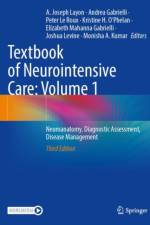
This extensively updated edition provides a comprehensive review of intensive care for neurologically injured patients from the emergency room and ICU through the operating room and post-surgical period in two comprehensive volumes. The Editors of this first volume present a comprehensive textbook that incorporates best practice/evidence-based medicine and performance improvement, while it champions the three characteristics needed in our neuröICUs: patient and family centered high-quality care, education, and discovery. This volume concentrates on neuroanatomy, diagnostic assessment and disease management, examining the neurological problems most frequently seen in intensive care, and describes the various types of neurosurgery and critical features of the management of patients. General issues are discussed across the textbook, such as cardiac care, fluids and electrolytes, nutrition, and monitoring as well as more specific conditions and complications including elevated intracranial pressure, seizures, and altered mental states.Listening to an injured brain is not easy. It takes knowledge, dedication, and understanding of the critically ill patient and their family. Textbook of Neurointensive Care Volume 1: Neuroanatomy, Diagnostic Assessment, Disease Management provides the reader with a detailed resource for studying this most complex area of medicine. It is thus essential reading for all trainees and professionals in critical care, neurosurgery, anesthesia and neurology.
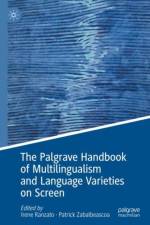
This handbook brings together contributions from the main experts in the field of multilingualism and language varieties (including dialects, accents, sociolects, and idiolects of specific speech communities) as expressed in fictional dialogue on-screen in films, and television series. The chapters included in the volume cover both the representation of these varieties and multilingual situations on screen as well as their translation into a range of languages. The handbook will thus be an essential resource for scholars and students in diverse fields including translation studies, audiovisual translation, linguistics, dialectology, film and television studies.
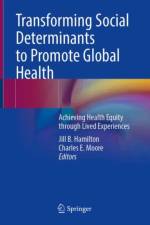
This unique book addresses the need for the scholarly works that include the voices of clinicians, community stakeholders, and leaders of faith-based institutions in various phases of developing, implementing, and evaluating programs that address health inequities and health disparities among marginalized, middle and low resource communities. Another feature of this book is the contributions to the evidence on SDOH from not only academic researchers but clinicians, community partners, and leaders of faith-based institutions. The overall purpose of this book is really to highlight global community-based programs that have been implemented in marginalized, middle and low resource global communities. The communities represented are rural, urban-inner city, located in Southern, Northeastern, and Western U. S. as well as global communities from Malawi, Kenya, Tanzania, Ethiopia, Botswana, the Grenadines, Nigeria, and Peru. For ease of reading, the editors have further classified these SDOH conditions illustrated in chapters organized according to a 4 pillar SDOH framework of social, cultural, physical environment, social environment, and policy conditions.This book contributes to a diverse perspective of the possibilities of incorporating SDOH into communities and faith-based institutions. The long-range objectives are to inform, inspire, and encourage the novice and senior faculty, clinician, community stakeholder, and faith-based institutional leader to develop, implement, and evaluate SDOH on health and health disparities among the communities they serve.The intended audience of this book is faculty of nursing, public health, and medicine in academic and practice settings; professional leaders of nursing, public health, and medicine; community stakeholders, and leaders of faith-based institutions engaged in partnerships with health care providers. This text might also be useful to faculty of foreign studies, and behavioral sciences.
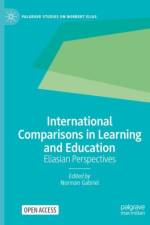
This Open Access edited volume addresses the important role of education in society through the lens of theoretical concepts developed by Norbert Elias. This book sets out to challenge dominant perspectives within the sociology of education by reorientating traditional debates about socialisation, childhood, early years education, care, schooling and the curriculum, focusing on the relational learning processes that lie at the heart of pedagogic relationships between parents, teachers, children and peers. It also offers an innovative perspective on some of the key debates in childhood studies, bringing together and relating the different aspects of childhood through a generational lens. Authors from different countries follow young children as they grow up and learn how to become civilized in institutions in contemporary society, discussing how from one generation to the next they learn from adults and their peers an enormous social fund of knowledge about their world.
This book focuses on the more than 8,000 local elections administrators in counties, municipalities, and townships who largely manage the key administrative processes of elections, work with campaigns and candidates, design voting materials and choose voting equipment, staff early, and Election Day polling locations, and communicate with and educate voters. They are the frontline of democracy, and this is the first book that explores who becomes an election administrator; their opinions about election reform and election integrity; how LEOs responded to the unique challenges of the 2020 election which included misinformation and even death threats; and how to move forward to ensure a sustainable, diverse, and sustainable community.
This textbook introduces topological defects and solitons at a level suitable for advanced undergraduates and beginning graduate students in physics and materials science. It avoids the formal mathematics of topology, and instead concentrates on the physical properties of these topological structures.The first half of the book concentrates on fundamental principles of defects and solitons, and illustrates these principles with a single example¿the xy model for 2D magnetic order. It begins by defining the concept of a winding number, and uses this concept to describe the topology of defects (vortices or disclinations) and solitons (domain walls), carefully identifying the similarities and differences between these two types of topological structures. It then goes on to discuss physical properties of defects and solitons, including free energy, dynamics, statistical mechanics, and coupling with curvature. It shows how these concepts emerge from a theory with variable magnitude of order, and hence how topology can be viewed as an approximation to physics.The second half goes on to explore a wider range of topological defects and solitons. First, it considers more complex types of order¿2D nematic liquid crystals, 3D magnetic or liquid-crystal order, 2D or 3D crystalline solids¿and shows how each type of order leads to specific topological structures. Next, it discusses defects and solitons that are characterized by 2D or 3D measuring surfaces, not just 1D loops, including hedgehogs, skyrmions, and hopfions. These structures are more complex, but they can still be understood using the same fundamental principles. A final chapter describes the formation of phases with regular arrays of defects or solitons.
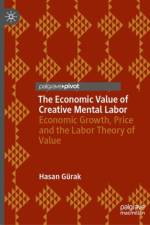
This book examines the role of creative mental labor in determining long-term economic growth, production costs, and product pricing. By redefining theories of value-price and growth in relation to creative mental labor, it acknowledges the role of human talent and skill in the creation of new technologies, productions, and productions methods, and highlights the impact this has on supply and demand dynamics. Traditional and neoclassical notions of human capital are challenged to present a new theory of growth that is more aligned with real life economics.This book reevaluates ideas of economic growth by contextualising technological advancement and sustainable long-term economic growth within ideas of creative mental labor and skilled mental labor. It will be of interest to students and researchers working on labour economics.
This book introduces readers to key concepts in group theory through engaging puzzles. The early sections of the book show how the rules of group theory emerge naturally from solving puzzles. Different classes of groups, such as cyclic, dihedral and permutation groups are introduced, accompanied by numerous puzzles to facilitate the understanding of the underlying group structures. Later chapters explain how further group theory principles can be applied to puzzle-solving.This book is intended as a highly motivating supplementary text for an undergraduate abstract algebra course. It is also ideal for anyone seeking a fun, hands-on approach to learning group theory. Additionally, the book's many puzzles will be enjoyable for readers already familiar with group theory.
The book is a comprehensive exploration of hydrothermal carbonization (HTC), addressing key aspects from its definition and historical relevance to its practical applications and environmental considerations.Throughout its sections, the reader will gain an understanding of the fundamental principles of HTC, including the chemical reactions involved and the catalysts used. In addition, the book provides a comprehensive overview of the various types of waste that can be utilized in the process, from organic sources to industrial and municipal solid wastes. Highlighting the importance in various industries and research areas, case studies illustrating successful applications are presented. A practical perspective is also provided, including exercises for students, exploring laboratory techniques and experiments related to hydrocarbonization.In addition, its focus on research and innovation, addressing current trends and emerging technologies, positions this book as a valuable source for students, researchers, and professionals interested in exploring and developing this field with an emphasis on its potential impact on energy, the environment, and sustainability. The conclusion provides a concise summary of key concepts, a discussion of the future of hydrocarbonization, and an encouragement for students to venture into research in this promising field.
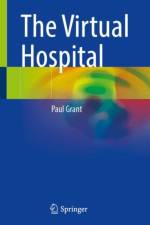
This book describes the current picture of healthcare and how medicine can develop in the 21st century to provide traditional hospital services differently with the use of clinical-digital transformation. Technological and social developments are enabling doctors, patients, tech developers, entrepreneurs and policy makers to recognise that care delivery can be achieved in novel and interesting ways far from the classic bricks and mortar approach. There are multiple triggers for change including the ageing population, limitations of existing clinical capacity and the COVID pandemic, accelerating the use of remote technologies, along with patient demands and expectations being higher than ever. With the speed of development of so many new technologies, it is hard to keep track of them, plus there is a need to scrutinize their claims and true potential for significant improvements in care delivery. The increasing global emphasis on the use of 'virtual wards', a way of remotely monitoring patients in their own homes and freeing up hospital beds, raises questions about the use of such systems of care and how they may be prone to safety failures and higher costs. The rush to use them needs to be balanced with the right level of evaluation and assurance. The Virtual Hospital explores the many approaches by which traditional medical practice is changing and the potential for new technologies (everything from biohacking to AI) to disrupt the existing paradigm. The goal is to assess and challenge whether the claims for such developments are robust and beneficial, rather than merely praising how shiny and clever the future looks. Consequently, this book is of enormous value to all involved in the provision of care, from physicians, nurses and healthcare planners to data scientists and healthcare leaders in all clinical settings.
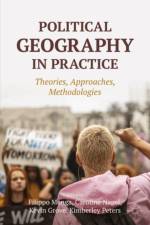
This innovative textbook on the theories, approaches and methodologies that inform political geography is brought together by past and present editors of the journal of the same name. The book fills the current gap in the literature through a reflection on the ¿doing¿ of political geography: its very practice. The book includes chapters authored by leading and emerging voices in the field and covers themes to guide students across various degree levels, as well as university staff and faculty, in a logical and practical manner. The textbook allows students to develop critical thinking and reflect on important aspects of the practice of the sub-discipline. It presents how theories, approaches and methodologies are adopted by researchers in practice, equipping political geographers at all stages to develop their own individual research projects.Download the SN More Media app for free, scan a link with play button and access audio directly on your smartphone or tablet.
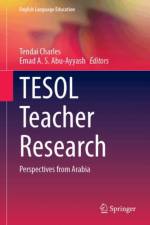
This edited volume provides a comprehensive and detailed insight into the Teaching of English as a Second Language (TESOL) in the United Arab Emirates (UAE). It describes a variety of challenges that native speakers of Arabic face when learning the English language and presents contemporary teaching strategies for supporting them. The book provides analyses of TESOL syllabi and policies currently adopted in the UAE¿s K-12 education sector, addressing strengths and areas which can be improved. The book also includes a critical discussion about the difficulties of implementing Western-based TESOL methodologies in a Middle Eastern context, from the perspectives of real-world practitioners. By presenting a combination of research-based and theory-based chapters, this book is a great resource to TESOL-related graduate students, teachers-in-training, educational leaders and policy makers in the UAE and beyond.
The vast majority of investors in the capital market do so, at least in part, via mutual funds. In the US market alone, there are currently thousands of mutual funds to choose from. Thus, the task of mutual fund selection is of central importance. It is a notoriously difficult task, because the past return parameters are very noisy estimates of the future parameters. This book presents the state-of-the-art research in this field. It describes recent academic findings and translates them into practical guidelines for mutual fund selection, and will be of interest to researchers alongside professional investors and fund ranking agencies.
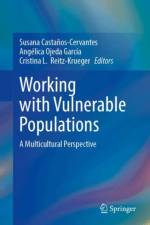
This book explores vulnerability in many forms and among diverse understudied vulnerable populations worldwide from different perspectives, particularly from non-western contexts. It examines characteristics and profiles of vulnerable populations, intervention strategies, and recommendations for public policy actions in developing and emerging countries. As the world becomes increasingly connected and localities become more diverse, researchers and practitioners working to ameliorate human suffering cannot rely on one-size-fits-all solutions, especially when it comes to the most vulnerable members of society. The book argues the need for interdisciplinary research and action, and it challenges popular discourse on vulnerable groups and intervention strategies in Western societies and developed countries. In particular, it includes a Latin American perspective seldom considered in research about vulnerability worldwide. With interdisciplinary contributors from four continents, working in diverse fields such as social psychology, pedagogy, community psychology, medicine, sociology, clinical psychology, anthropology, and social work, this edited collection brings together theoretical and applied research evidence on three vulnerable population categories: physical vulnerability, psychological vulnerability, and social vulnerability. The book not only presents exhaustive solutions to any of the problems discussed therein, but it also offers examples of the considerations that should be afforded when working with groups who have unique vulnerabilities. Among the topics covered in the chapters: Poor Doctor-Patient Communication: How Social Vulnerability Turns into Physical Vulnerability Art Therapy: Focus to Decrease Vulnerability Condition and Increase Sense of Community Pedagogical Guidelines for Vulnerability in Postmodernity Working with Vulnerable Populations: Final Reflections and Implications Working with Vulnerable Populations: A Multicultural Perspective presents case studies, original research, and literature reviews that would engage students and professionals interested in social work, psychology, community organizing, public health, allied health professions, and other helping professions. Readers will gain insight into how work being conducted in various localities speaks to the challenges they may face in their own work or research. By exploring the unique issues facing vulnerable populations around the globe, we can apply those same considerations in our own communities.
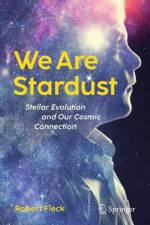
This concise and accessible book explains one of the most profound and inspiring discoveries ever made, namely, the fact that we ourselves¿and all we see around us¿are a natural product of the workings and wonders of the Universe, tied directly to distant events spread across space and time reaching back to the beginning, back to the Big Bang, and continuing through the birth and death of successive generations of stars. Modern science has shown that, in a very real and profound way, we are intimately connected to the Cosmos: we are, as Joni Mitchell tells us in her song Woodstock, stardust¿in a very real sense, children of the stars¿star folk made from chemical elements (¿starstuff¿) cooked by nuclear reactions in stellar furnaces throughout the various stages of stellar evolution. Life as we know it is an inevitable consequence of the life cycle of the stars. Our story begins at the beginning with the Big Bang some 13.8 billion years ago when, during the first three minutes in the history of the Universe, all of the hydrogen and most of the helium, by far the most abundant elements in the Universe, formed from a cooling plasma of protons, neutrons, and electrons. We then trace the life cycles of the stars from birth to death highlighting the synthesis in the stars of the heavier chemical elements so essential to life, along the way touching on many of the hot topics in astrophysics today including exoplanets, supernovae, pulsars, black holes, white dwarfs, and, since these conditions are found throughout the Galaxy, life in the Universe. The reader, awed by the power and beauty of this cosmic perspective, will leave with a better understanding and appreciation of our true cosmic connection. Surprisingly, despite its significance, this fascinating story of our connection to the stars has largely gone unnoticed outside a small circle of scientists. Understanding that the stuff we are made of traces its origin to nuclear processes accompanying the Big Bang, and thereafter to billions of years of the birth and death of generation after generation of stars, is an important and beautiful story that deserves more attention. Intended for a broad audience, this book provides inspiring reading for all students and afficionados of science.
This book offers a new vision on urban gun violence that focuses on public space-centered concepts, events, and research. It builds on our existing knowledge base by viewing a "slice" of this problem through celebratory and solemn occasions and how violence at these events and spaces reflects on the state of urban gun violence. Understanding this context serves to inform us on how best to address this social phenomenon. Gun violence in the United States is a salient national problem with virtually no day that goes by without it occurring, particularly in urban public spaces, making it a significant social event. This book uniquely presents an urban- and event-focused context for gun violence. It also draws attention to marginalized urban communities, merging urban public spaces, events, intersectionality, social justice, and gun violence, introducing a unique window to better comprehend this violence as a national issue and bringing profound consequences when it transpires in a public event.To examine the context of public spaces and events in gun violence, the author organized the book¿s ten chapters in three sections: Part I: Conceptual Foundation sets the foundation for a multifaceted perspective. Part II: Celebratory and Solemn Events expands the gun violence arena. Part III: Implications for Research, Education, and Practice.Urban Public Spaces, Events, and Gun Violence: Block Parties, Funerals, Mother¿s Day, and Other Community Events expands the context of gun violence beyond the street scene to include public settings and events, and helps in achieving a comprehensive understanding of this public health problem and how best to solve it. The book is essential reading for practitioners, academics, and researchers in public health, social work, criminal justice, and community practice.
This book examines public, political and media discourse in the context of failed states using Lebanon, a country torn by wars and political-financial corruption, as a contemporary case study. Using critical discourse analysis (CDA), the author brings political and economic theories into dialogue with socio-linguistics to argue that public discourse in a failed state not only plays a role in that collapse but is a key presenting symptom of social disintegration. Through CDA, the book makes this phenomenon visible, and contributes to existing definitions of the concept "failed" or "fragile" state. In addition, the qualitative data and analysis provided offer a tool to assess a state's vulnerability to collapse. The book also expands the sociolinguistic model to eavesdrop on the zeitgeist of the nation in order to examine the degrees of social cohesion, sectarianism and bonding. This book will be of interest to discourse analysts, journalists, politicians, policy-makers, and economists.Samia Bazzi is Professor of Translation and Linguistics at the Centre for Languages and Translation, Lebanese University, Beirut. She has published extensively on political discourse and journalistic translation, analysing the links between language and politics using Critical Discourse Analysis. Her key publications include Arab News and Conflict (John Benjamins, 2009).
This second edition of Particles in the Dark Universe has been substantially enhanced with several new chapters that delve into crucial aspects of particle physics in the Universe. These additions encompass the role of primordial black holes in the early universe, tracing their formation to decay, unification theories, a comprehensive historical overview of cosmological models, an extensive examination of the physics of the graviton, and an educational exploration of gravitational phenomena such as Unruh-type or Hawking radiation. Additionally, this edition incorporates 30 new exercises and provides a comprehensive presentation of inflationary models, along with a pedagogical insight into the mechanism of baryogenesis.Structured in a logical sequence, this book offers a thorough and instructional exploration of particle physics within the early universe. It initiates by elucidating the thermal history of the universe, delving into pivotal concepts like Big Bang nucleosynthesis, the cosmic microwave background (CMB), and inflation. Subsequently, it meticulously addresses both direct and indirect detection methods of dark matter, followed by an in-depth analysis of neutrino physics. The book further scrutinizes potential candidates for dark matter and their interactions.Designed for theoretical physicists engaged in particle physics within the universe, dark matter detection, astrophysical constraints, and those interested in models of inflation or reheating, this book also caters to astrophysicists involved in quantum field theory computations. It encompasses all essential elements required for computing various physical processes, providing mathematical tables, necessary thermodynamic functions for the early universe, and Feynman rules. Consequently, this book serves as an intersecting point between astrophysics, particle physics, and cosmology.
This book makes a significant contribution to ongoing discussions about the crisis of democracy by delving into the impacts of digital communication technologies on the 2022 Brazilian elections. Written by a multidisciplinary group of experts in the field of digital politics, the chapters explore not only how these technologies are appropriated by political actors, but also how the affordances offered by digital platforms and their role in promoting them affect electoral integrity. Consequently, the book also contributes to debates concerning the urgent necessity of regulating digital corporations.In facing the potentially harmful effects of the uses of digital technologies on electoral integrity, the Brazilian case offers key lessons. Brazil stands as one of the most important global democracies, but it is also one that has been under attack from autocratic and extremist forces in the past decade. These forces have leveraged digital communication technologies extensively to advance their agendas and launch disinformation campaigns. Furthermore, the country is one of the main markets for digital companies. Their role in Brazil and how Brazilian actors react to them has a widespread impact in Latin America and beyond. As this book shows, the 2022 electoral process serves as a compelling case study of how various actors, including electoral authorities, civil society organizations, journalists, scholars, and prodemocracy activists, came together in the months leading up to the election to combat the rampant abuses facilitated by digital technologies and defend electoral integrity.Because of the similarities between the Brazilian context and the challenges being faced by other democracies, this book will be of interest to a broad international audience that is worried about the crisis of democracy and its resilience, as well as the impacts of asymmetric polarization.
The Afterlife of Palestinian Images is a groundbreaking study of how colonial violence alters and changes visual objects - which in turn affects how a society and culture relates to its own images. Based on the practice-based creative methodology of Palestinian filmmaker and researcher Azza El Hassan, this book explores the re-use and re-appropriation of photos, film and media equipment that have survived looting and destruction, objects which become a constant reminder of what was and what has been lost. El Hassan goes beyond using these visual remains as simple evidence, demonstrating how artistic engagement can reconfigure them into new narratives and establish a renewed sense of cultural identity. While previous research has explored why colonial structures practice native archive plundering, as well as into how a culture reckons with the absence of archival records, this book uniquely addresses how plundered cultures relate to the actual remains of their archives. As a scholar and an artist, El Hassan reconciles a problematic past and present in the search for a new visual experience emerging out of the ruins, finding ways to move forward after destruction. Azza El Hassan is an award-winning filmmaker whose works include The Unbearable Presence of Asmahan (2014), Kings & Extras (2004), and News Time (2001). She is the founder of The Void Project (thevoidproject.org), an artistic exploration of the effect of looting and destruction of Palestinian visual archives on the formation of a modern Palestinian visual narrative. She received her Ph.D. from Sheffield Hallam University, UK, and is a visiting professor of practice at the Doha Institute for Graduate Studies in Qatar.
Most scientists are constantly under pressure for reading essential literature, designing new experiments, writing successful proposals and papers, and meeting deadlines. However, imagine that your brain is connected to the entire human knowledge and can extract instantly essential information for discovery. Imagine that research tasks that took days to months can now be done within few seconds. This is not science fiction anymore since the onset of generative artificial intelligence tools such as ChatGPT. This book explains concisely and simply how to use ChatGPT for identifying new results, crafting titles, editing language, interpreting figures, creating visuals, and refining methods. ChatGPT even allows for brainstorming, designing experiments, writing proposals, responding to reviewers, and evaluating research papers. Written for researchers with no background in coding or prompt engineering, this book provides the skills necessary to navigate the changing landscape of scientific research. In particular, you will learn how to leverage ChatGPT¿s unique capabilities to generate ideas, streamline literature reviews, and craft compelling narratives. In short, this book empowers you to unlock the potential of ChatGPT, boosting productivity, and take your scientific research and writing to new heights.
This textbook presents the spectral theory of self-adjoint operators on Hilbert space and its applications in quantum mechanics. Based on a course taught by the author in Paris, the book not only covers the mathematical theory but also provides its physical interpretation, offering an accessible introduction to quantum mechanics for students with a background in mathematics. The presentation incorporates numerous physical examples to illustrate the abstract theory. The final two chapters present recent findings on Schrödinger¿s equation for systems of particles.While primarily designed for graduate courses, the book can also serve as a valuable introduction to the subject for more advanced readers. It requires no prior knowledge of physics, assuming only a graduate-level understanding of mathematical analysis from the reader.
Abonner på vårt nyhetsbrev og få rabatter og inspirasjon til din neste leseopplevelse.
Ved å abonnere godtar du vår personvernerklæring.