
























Gjør som tusenvis av andre bokelskere
Abonner på vårt nyhetsbrev og få rabatter og inspirasjon til din neste leseopplevelse.
Ved å abonnere godtar du vår personvernerklæring.Du kan når som helst melde deg av våre nyhetsbrev.

This open access book compares and analyses the results in twelve countries of the two latest international student assessments: Progress in International Reading Literacy Study 2021 (PIRLS) and the Programme for International Student Assessment 2022 (PISA) and tries to disentangle the effects of the pandemic from the long term trends in education.It is one of the first, or maybe the first, published volumes to provide a global assessment of the devastating impact of the COVID-19 pandemic on student learning as measured by independent international comparative surveys.The 12 countries discussed in this volume represent a wide variety of educational systems ¿ including Chile, Ecuador, England, Estonia, Italy, the Netherlands, Poland, Portugal, South Africa, Spain, and the United States. It compiles diverse scenarios including countries that are high performers; countries that perform at the OECD mean; and countries that are struggling to attain the OECD average. Each country has its history that reflects efforts to cope with pandemic school closures and to improve educational achievement.A major topic discussed in this edited volume is related to understanding the diverse circumstances for the variations in results within different countries: Why did learning loss in specific locations? How much learning was lost? Why is a country continuously declining? Why is another country constantly improving? Why is there higher or less levels of inequality? How is a country regularly improving with an outdated curriculum? Which policies have worked, and which ones have not? What can we do now? This book is a valuable contribution to answer these concerns based on a diverse sample of countries and research questions.
Water is the essential substance for life on Earth. The natural patrimony of all living beings and the material and cultural heritage, a common good, a shared resource, a treasure trove of humanity. The nature of water, water at rest and in motion, the water cycle and its management are addressed here in a multidimensional, comprehensive and transdisciplinary approach.The book focuses on water without complying with any disciplinary approach: philosophical, historical, physical and mathematical issues are merged with traditional hydrochemistry, hydrostatics, hydrodynamics and hydrology to provide an overview of basic knowledge on Earth¿s water. These five lectures can be delivered to any undergraduate STEM student to introduce them a valuable, basic, multidisciplinary knowledge on water. Non-specialists will find here an insight of water made as simple as possible, but not simpler than required
Each year, the Supreme Court of the United States announces new rulings with deep consequences for our lives. This sixth volume in Palgrave¿s SCOTUS series describes, explains, and contextualizes the landmark cases of the US Supreme Court in the term ending 2023. With a close look at cases involving key issues and debates in American politics and society, SCOTUS 2023 tackles the Court¿s rulings on affirmative action, LGBT equality, internet platform liability, the Clean Water Act, immigration enforcement, and more. Written by notable scholars in political science and law, the chapters in SCOTUS 2023 present the details of each ruling, its meaning for constitutional debate, and its impact on public policy or partisan politics. Finally, SCOTUS 2023 offers an analysis of Justice Ketanji Brown Jackson's first year on the court, as well as court reform.
This textbook is designed for a one-year graduate course in real algebraic geometry, with a particular focus on positivity and sums of squares of polynomials.The first half of the book features a thorough introduction to ordered fields and real closed fields, including the Tarski¿Seidenberg projection theorem and transfer principle. Classical results such as Artin's solution to Hilbert's 17th problem and Hilbert's theorems on sums of squares of polynomials are presented in detail. Other features include careful introductions to the real spectrum and to the geometry of semialgebraic sets. The second part studies Archimedean positivstellensätze in great detail and in various settings, together with important applications. The techniques and results presented here are fundamental to contemporary approaches to polynomial optimization. Important results on sums of squares on projective varieties are covered as well. The last part highlights applications to semidefinite programming and polynomial optimization, including recent research on semidefinite representation of convex sets.Written by a leading expert and based on courses taught for several years, the book assumes familiarity with the basics of commutative algebra and algebraic varieties, as can be covered in a one-semester first course. Over 350 exercises, of all levels of difficulty, are included in the book.
This volume features current, innovative, and effective ways of developing instructional materials for diverse English Language Teaching (ELT) contexts. It is divided into four sections, each featuring pedagogical materials designed for specific groups of learners. The sections focus on materials for general English, ESP and EAP, CLIL, and ELT teacher education courses. The chapters, written by experienced educators from around the world, are highly practical and detail the process of designing materials for innovative and sustainable language education. The contributors reflect on their own practice, describe the materials design process, explain the guiding principles, and connect the design process with the local context and educational policies. They also offer practical tips to inspire classroom practitioners to create their own materials, promoting innovative teaching and sustainable learning. Ultimately, their chapters aim to encourage a world where teaching involves creativity and adaptability, leading to transformative learning for both teachers and learners.
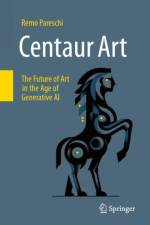
Generative AI is transforming the landscape of numerous industries, and the creative fields are no exception. As the figurative arts become a focal point in the ongoing debate, this book explores hybrid and centauric intelligence¿an integration of human and artificial intelligence. Through parallel and complementary directions, it investigates the general concept of this hybrid intelligence and its specific application in the artistic realm, highlighting the unprecedented creativity and innovation that can emerge from this synergy. Additionally, it addresses the economic tensions and legal disputes, particularly around copyright, that arise from the impact of new technologies in the creative sector.The result is a comprehensive overview of the hybridization paradigm by analyzing the operational and creative methods of artists and creators who have embraced generative AI. The author examines the implications of the recent developments, offering readers an understanding of how AI can support human creativity rather than replace it. Thus, a compelling vision of the future unfolds, one in which artists and AI collaborate, pushing the boundaries of what is artistically achievable.Whether you are a seasoned professional looking to incorporate AI into your creative process or a curious reader intrigued by the convergence of art and technology, the book will provide valuable insights and inspire you to explore the fascinating intersection of human creativity and artificial intelligence and the future it heralds for the art world.
How to Think about Progress is an interdisciplinary work exploring whether optimistic claims about technology¿s potential stand up to humanity¿s most difficult challenges. Will technology solve the problems of climate change, pandemics, cancer, loneliness, unhappiness, and even death? The authors show that techno-hype is all too often accepted because of the horizon bias, i.e. the modern propensity to believe that any problem that can be solved with technology will be solved in the very near future. The authors situate their analysis in a broad context, drawing on history, literature, and popular culture to emphasize their case against techno-hype. They also draw on a wide range of research, including that of biologists, philosophers of science and of language, psychologists, theorists of technological change, specialists on digital technologies, historians of ideas, and economists. As a corrective to much mainstream ¿futurism,¿ the book offers principles for seeing through much of the techno-hype that circulates online and in best-selling books. The authors share insights (without the jargon) from a variety of academic disciplines, making this book an engaging read for all audiences. Readers will find a balanced framework for thinking and writing about technological progress in the face of truly vexing challenges like cancer, climate change, and colonizing mars.
This open access book explores epistemic justice in mental healthcare, bringing together perspectives from psychologists, psychiatrists, philosophers, activists, and lived experience researchers. Through eight chapters, authors identify threats to the agency of people who hear voices, experience depression, have psychotic symptoms, live with dementia, are diagnosed with personality disorders, and face serious mental health issues while receiving palliative care. Considering the power asymmetries in clinical interactions, where patients are vulnerable and healthcare professionals are uniquely placed to offer support, this book reaffirms the importance of recognizing patients as agents and collaborators. Topics covered include trust in the therapeutic relationship, dignity at the end of life, the social dimension of health, stigma in an acute ward, the harm caused by biases and stereotypes, the role of clinical communication, and the promise of digital health. Students, academic researchers, practitioners, as well as mental health charities will benefit from this timely collection.
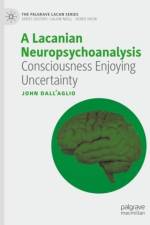
This book brings together Lacanian psychoanalysis, neuropsychoanalytic work by Mark Solms and Ariane Bazan, Jaak Panksepp¿s affective neuroscience, Karl Friston¿s free energy principle, Adrian Johnston¿s transcendental materialist philosophy, and Darian Leader¿s critique of jouissance in Lacanian theory. In doing so, it articulates a philosophical and scientific basis for Lacanian neuropsychoanalysis. A Lacanian perspective on Solms¿s recent neuropsychoanalytic developments in affective consciousness and predictive coding furnishes an immanent critique that advances both Lacanian psychoanalysis and neuropsychoanalysis.Dall¿Aglio develops novel propositions for conceptualizing the Lacanian real, symbolic, and imaginary registers in the brain, treating affect systems like signifiers, viewing jouissance as surplus prediction error, and conceiving the brain as structurally antagonistic. It presents fresh theoretical and clinical insights in a manner that will be accessible to the interdisciplinary fields it draws upon. It will appeal to those working in neuropsychoanalysis, clinical psychology, neuroscience, psychoanalysis, and critical theory.
Using the "Parallel Lives" approach adopted by the Greek biographer Plutarch, noted historian of astronomy William Sheehan contrasts the lives and research careers of two famous astronomers, Percival Lowell and Edward Emerson Barnard. Drawing on vast archival materials and hitherto unpublished source materials, Sheehan documents in detail the contributions of these two late 19th and early 20th astronomers.Living at a time when controversies about Mars peaked, when great observatories were being built, and when research increasingly turned away from the Solar System toward the stellar and extra-galactic universe, these observers made spectacular contributions to astronomy. Their work still inspires, and continues in Perseverance rover's explorations of the surface of Mars carrying forward Lowell's dream of showing that Mars may once have been "the abode of life," and in Barnard's pioneering wide-angle photographs of the Milky Way which first showed the sweep, majesty and complexity of the Galaxy. The work of decades of research and writing, Sheehan has produced what is likely to become the definitive work on these two great astronomers. "Parallel Lives marks an important contribution to the history of astronomy. The book is masterful and inventive. William Sheehan could hardly have chosen two more compelling¿or contrasting¿personalities to analyze in this fascinating dual biography." - David Baron, author of American Eclipse and The Martians, and former Chair in Astrobiology at the Library of Congress."Sheehan has united scientific acumen, detailed historical research, penetrating insight into character, and narrative virtuosity¿and adapted it all to an ancient Greek model¿a remarkable achievement!"¿¿- Michael Armstrong, Assoc. Prof. Emeritus of Classics, Hobart and William Smith Colleges, Geneva NY William Sheehan's many books include the authoritative biography The Immortal Fire Within: The Life and Work of Edward Emerson Barnard and (with Jim Bell) Discovering Mars: A History of Observation and Exploration of the Red Planet, which has been called the "gold standard of books on Mars" (Michio Kaku).
This textbook examines encounters between different cultures during the Global Age, outlining their historical, social, political, and economic contexts. Based around themes including tourism, migration, protest, display of cultures, and the examination of ¿mega-events¿ like the Olympics, the book explores the ways in which people were able to experience other cultures from 1945 onwards. The author questions the impact of these encounters, discussing whether they led to cultural hybridity or contrastingly, divergence. By bringing together a selection of themes and considering their national and transnational impact, this textbook provides insights for those studying international politics and global history. At a time when globalism is questioned by politicians and campaigners, this timely book examines its impact on groups of people and the systems under which they live.
This textbook develops and presents a new hybrid pedagogy that integrates the best practices of both face-to-face and online teaching within community colleges and other access-oriented institutions. Focusing specifically on historically underserved students, this text demonstrates how online pedagogy offers new and different approaches to learning, engaging, collaborating, and communicating which can also be adapted for face-to-face classrooms, creating an innovative blended pedagogy that builds upon both course experiences. Recognizing that higher education is at a unique turning point as the Covid-19 pandemic and its effects become endemic, this volume offers educators ways to forge new paths forward and prepare for future crises by learning how to maximize the possibilities of both face-to-face and online learning tools and approaches.
This first volume of Husserlian Legacies: Themes for the 21st Century focuses on hitherto underexamined dimensions of Husserl's philosophical thinking and in particular, values and love. Texts in this series draw from the variety of Husserl's rich original works; they are selected and arranged with the support of the Husserl Archives, Leuven. The texts are made available in English and are primarily targeted to advanced undergraduates, graduate students, and scholars.This volume helps the reader both to investigate the themes of value and love and to gauge their role in Husserl's reflections on related topics: his analysis of philosophy, the sciences as vocational tasks, the emotions and the community of love, as well as his personalistic reformulation of the categorical imperative. The texts gathered, edited, and translated in this volume have far-reaching implications, ranging from axiology and individual and social ethics to the philosophy of emotions, action theory, and the philosophy of science.
This book delves into the complexities of masculinity, mental health, and cultural identity among young Bangladeshi-Canadian men. Employing an anthropological, intersectional approach, it scrutinizes the interplay of neoliberal ideologies, Islamic values, and diasporic experiences in shaping their masculine trajectories. The study unravels the intergenerational trauma, parental pressures, and societal expectations that contribute to their deteriorating mental well-being. With a unique insider perspective and rich empirical data, this book fills a crucial gap in the literature by offering invaluable insights for scholars exploring the nuances of migration, ethnicity, gender, and psychological resilience. Strikingly, the author proposes evidence-based interventions and policy recommendations to address the mental health struggles of this underserved population, making it a must-read for academics and students in diaspora studies, migration studies, sociology of race and ethnicity, gender studies, anthropology, political science and development studies, as well as NGOs and policymakers alike.
This book provides musicians, students, and teachers a practical guide for optimal music learning, practice, memorization, and performance by the application of modern neuro-music research. Uncover the best, scientifically researched techniques, supported by researchers and musicians alike, that will empower you to learn thoroughly, practice optimally, and perform at your best.Do you know how people learn? Do you know how people improve motor-skills for playing an instrument? Do you know how to focus attention and stay motivated? Discover the essential answers you need to revitalize and optimize your daily work as a musician. By applying the best methods and knowing why they work, you, too, can create successful practice routines with positive, rewarding, results. Know the best techniques for preparing expert music performance. Learn how to play with success!
This book examines what it means to live in an epidemiological reality, exploring the worldbuilding properties of epidemiology through the lens of critical theory, literary analysis, and visual culture. Whether we want it or not, we live in a world made of statistical correlations, risk factors, and social determinants of health, animal reservoirs and spillovers, containment strategies and curves to be flattened, prophylactic measures, and syndromic surveillance systems detecting in real-time potential outbreaks. This book uses a series of vignettes to show that we have lived in a version of that reality for quite some time now, even before the formalization of epidemiological tools and concepts at the beginning of the twentieth century.
This book gives a complete introduction to cybersecurity and its many subdomains. It¿s unique by covering both technical and governance aspects of cybersecurity and iseasy to read with 150 full color figures. There are also exercises and study cases at the end of each chapter, with additional material on the book's website.The numerous high-profile cyberattacks being reported in the press clearly show that cyberthreats cause serious business risks. For this reason, cybersecurity has become a critical concern for global politics, national security, organizations as well for individual citizens. While cybersecurity has traditionally been a technological discipline, the field has grown so large and complex that proper governance of cybersecurity is needed.The primary audience for this book is advanced level students in computer science focusing on cybersecurity and cyber risk governance. The digital transformation of society also makes cybersecurity relevant in many other disciplines, hence this book is a useful resource for other disciplines, such as law, business management and political science. Additionally, this book is for anyone in the private or public sector, who wants to acquire or update their knowledge about cybersecurity both from a technological and governance perspective.
Most boards are faced with the paradox of growth. Organic growth is slow and can be difficult in mature markets. M&A provides more rapid growth but is higher risk in terms of outcome. Businesses need growth not just to satisfy investors but to create market power and scale economies. This book helps to navigate the difficult terrain faced by boards wishing to grow through acquisition. It identifies which strategies are more likely to be effective and how the chosen strategy largely determines the form of integration. Taking a step-by-step approach, this book guides readers through the key decisions and likely business outcomes. Each chapter is accompanied by lessons which are helpful in summarising and consolidating the key issues.This book tackles key topics, such as:M&A performance and risksStrategic growth optionsImproving integration performanceLearning from private equityM&A process and business valuationFuture of private equityPerformance driven governanceGrounded in cutting-edge theory and combined with engaging, real world case studies and practical exercises and lessons, this is an indispensable guide not only for MBA and Executive students, but also for anyone likely to be involved in setting strategy and the process of buying, selling or integrating a business.
In the boardroom, executive and non-executive directors must frequently make decisions balancing competing interests and conflicting moral norms, with their actions impacting employees, customers, shareholders, and society at large. These decisions are not always understood, frequently criticised, and sometimes deemed immoral or unethical.Disbelief over the apparent mismatch between the actions of the company and the moral norms of wider society can damage the corporate reputation and lead to embarrassing U-turns. However, despite the importance of these decisions and the interest they generate, we rarely ask how these decisions are made? What role do moral norms and moral identity have in the boardroom? And how do companies sometimes interpret the moral norm so spectacularly poorly? The picture revealed is of a decision-making process that is neither simple nor morally black-and-white.This eye-opening book examines the role of moral judgement in the boardroom and how the actions and behaviours of directors in tackling moral dilemmas can lead to wildly different outcomes and consequences. It includes forensic breakdowns of recent, high profile boardroom decisions, with alternative outcomes explored and assessed. The detailed descriptions of the case studies include the moral dilemmas and the subsequent decisions of the directors of Adidas, Bud Light, Ajax, Yahoo!, G-Star, and many others. This book provides practical guidance for corporate decision-makers looking to assign the right weight to conflicting moral norms and interests, as well as all those seeking to gain more insight into the workings of the boardroom.Mijntje Lückerath-Rovers is Professor in Corporate Governance at TIAS Business School, Tilburg University, the Netherlands. She holds a PhD in financial economics and is also a labour and organisational psychologist. Before starting in academia, she worked in finance and continues to hold numerous board positions in large corporates, as well as non-profits. She has previously held positions at Erasmus University and Nyenrode University. Her research focuses on the role of the board of directors, board diversity, corporate governance and long-term value creation.
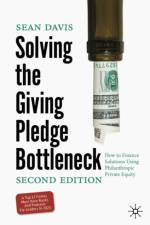
This book highlights the historic inflection point we are in, both in terms of philanthropy in general, and specifically in financing the solutions to our largest and most urgent social and environmental problems. It covers the two movements that have recently had a dramatic influence on capitalism. First, wealthy millennials have been pressuring their bankers to invest their family portfolios in companies with high social and environmental impact (ESG ratings), triggering a wave where the wealth management industry, and now all public companies, are significantly adapting to the increasing demand for good. Second, The Giving Pledge triggered another wave, changing what success and the accumulation of wealth means. It has even begun to redefine the goal of capitalism as more than 230 billionaires have pledged to give half or more of their wealth away. This book also focuses on the bottleneck problem that The Giving Pledge has created, as it is very hard to give hundreds of billions away with measurable impact to nonprofits lacking detailed long-term plans to scale. Nonprofits have never had the luxury of having all the resources to invest in the planning, management training and systems needed to rapidly expand. Thus taking in very large gifts is very difficult, and almost impossible to justify. Large philanthropy can always be used for traditional capital campaigns and to fund endowments, yet The Giving Pledge signers are often looking for large visible impact beyond these traditional avenues. The result is a bottleneck which has grown as more billionaires pledge their funds away while their wealth continues to skyrocket and giving rates stay very small.Finally, this book covers the emergence of large giving vehicles, modelled after the private equity industry. They have sophisticated third-party managers focused on deploying funds and supporting management teams. It also covers the scaling of nonprofits in a significant way (¿Big Bets¿) as well as investing large philanthropy through for-profits as Philanthropic Private Equity. This book is of interest specifically to nonprofit and foundation leaders, as well as wealth managers, estate attorneys and other philanthropic advisors. It is also of interest to investors and corporate CEOs as they begin to access these large pools for philanthropic capital to increase their impact. This book is focused on providing those with the ability to make large philanthropic investments a path to scale their impact and increase their fulfillment and that of their family. It provides a step-by-step guide of how these approaches, especially Philanthropic Private Equity, can actually solve the social and environmental challenges that have been seemingly hopeless. The second edition also presents a plan to use these concepts to create a path to solve the housing crisis in America.
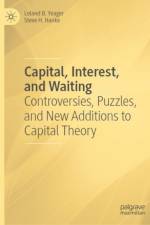
Prominent economists have recognized or toyed with the idea of waiting as a factor of production, but the subject has remained largely undeveloped until now. In this book, Leland B. Yeager and Steve H. Hanke build upon the contributions from a gallery of distinguished economists, diving into the economic theory behind waiting and explaining its relevance for modern-day monetary policy, among other things. With this new perspective, Yeager and Hanke challenge economists to reconsider capital theory as previously understood. Capital, Interest, and Waiting is an indispensable resource for economists grappling with or questioning the theoretical and applied relationships between time, money, and the economy. It challenges readers to reconsider their approach to capital theory. The arguments presented throughout the book rest on the vast literature of capital theory that has been accompanied by numerous controversies, puzzles, and debates for well over a century. With energy, Yeager and Hanke resolve these many puzzles and paradoxes one after the other, breaking new ground by demonstrating that waiting is a factor of production and interest is its price. Leland B. Yeager (1924-2018) was Ludwig von Mises Distinguished Professor Emeritus of Economics at Auburn University and Paul Goodloe McIntire Professor of Economics Emeritus at the University of Virginia.Steve H. Hanke is Professor of Applied Economics and Founder and Co-Director of the Institute for Applied Economics, Global Health, and the Study of Business Enterprise at The Johns Hopkins University in Baltimore. Hanke was a member of the faculties at the Colorado School of Mines and the University of California, Berkeley.
This textbook provides a history of modern Germany, locating the country¿s social, cultural, and political developments within their proper global and transnational context. The author argues that most developments in German culture, society, and politics throughout the nineteenth and twentieth centuries were caused by wider global and transnational trends. A history of the German people rather than the German state, the book focusses on non-state and non-government actors, intercultural transfers, and applies the approach of ¿thick description¿ to analysing the creation of German culture, society, and identity from the era of the Napoleonic wars right up to the present post-unification Germany. This includes an examination of German migrants¿ journeys to their new homes in the Americas and, thus, the creation of a global German diaspora with cultural and social networks beyond its home country¿s borders. The book further focusses on the transfers that connected German society and culture with those of other countries; for instance, chapters cover the transfer of football from England to Germany, the transfer of the Christmas holiday tradition from Germany to other countries, and the development of eugenics in Germany within its global context.
The book offers an exciting, non-technical intellectual journey around applying feedback control to emerging and managing local and global crises, thus keeping the world on a sustainable trajectory. There is a narrow border between destruction and prosperity: to ensure reasonable growth but avoid existential risk, we must find the fine-tuned balance between positive and negative feedback. This book addresses readers belonging to various generations, such as: young people growing up in a world where everything seems to be falling apart; people in their 30s and 40s who are thinking about how to live a fulfilling life; readers in their 50s and 60s thinking back on life; and Baby Boomers reflecting on their past successes and failures.Albert-László Barabási, Robert Gray Dodge Professor of Network Science, Northeastern University: "In a world where interconnectedness has fostered global prosperity, it has also introduced vulnerabilities that can escalate local failures into worldwide crises. "Feedback" by Peter Erdi explores this double-edged sword, offering a solution through the power of feedback mechanisms. These tools are designed to mitigate the negative impacts of connectedness, steering the complexity of modern life towards outcomes that enhance human welfare."Patrick Grim, Philosopher in Residence, Visiting Scholar, Center for Complex Systems University of Michigan: "Érdi demonstrates that many of the critical problems we face-from climate crises to economic instability to the threat of terrorism-operate as runaway feedback loops. The first challenge is to understand them. The second is to introduce control mechanisms on the model of biological homeostasis-a different form of feedback-that will guide us toward a more sustainable social future. Érdi applies the analytic tools of complex systems to some of the most complex issues we face."Ichiro Tsuda, Specially Appointed Professor at Sapporo City University, Sapporo, Japan, leaving Chubu University Academy of Emerging Sciences (Director and Professor), Chubu University, Japan: "This book is dangerous, because of making your own consideration on feedback impossible to stop by a continual feedback process of yourself. Nevertheless, you must be given a method of finding very narrow boundaries between prosperity and destruction, therefore this book is extremely valuable. We all must read."
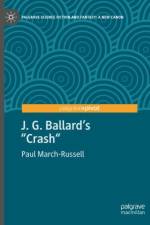
J.G. Ballard's Crash (1973) remains a byword for transgression in literature: declared 'too disgusting for words' upon publication. The basis for David Cronenberg's equally provocative film, Crash has been regarded variously as the apotheosis of New Wave science fiction, the ur-source for postmodernism, a transhumanist manifesto, and a pornographic masterpiece in the tradition of Sade and Bataille. This revisionist account, based on previously unexplored archive material, shatters the myths that have accrued around this tantalising work whilst also revealing why it continues to inspire writers, artists, musicians and filmmakers in the 21st century. The book vividly reconstructs how Ballard came to write Crash, the cultural landscape in which it was written, the effect of its reception, and the toll it took on its author. New perspectives reveal how Crash reworks surrealist anthropology, evolutionary theory, and pornographic imagery in order to expose a society addicted to the abuse of power, the silencing of others, and its own environmental destruction. As Ballard later admitted, he 'must have been mad' to write Crash.
This book will sketch the dynamics of infrastructure in video games, focusing on the relationship between game rules, fictional world, and player interaction. It will discuss a variety of commercial video games, both mainstream and somewhat niche, that use infrastructure in different ways: Control, Wolfenstein, Fallout, This War of Mine, Exocolonist, Cyberpunk, and Frostpunk.Video games offer a particularly rich field for thinking about the relationship between narrative and infrastructure. The infrastructures that exist in the fictional worlds of these games define the experience of play in a very direct way: how players are instantiated in the game, how they move around the play space, the resources that are available, and so on. And those infrastructures in turn very directly definite the nature of the fictional world. In contrast to literary fiction, were infrastructures might remain on the periphery of some stories, by virtue of the centrality of player interaction video games are inherently infrastructural.
This open access Palgrave Pivot explores the experiences of nonreligious asylum seekers in Northern Europe. While religious persecution is often cited as a reason for seeking asylum, nonbelievers also face significant persecution in their home countries due to their lack of religious affiliation. Despite this, their experiences are frequently overlooked in academic discussions, and asylum assessment centers have been slow to develop frameworks that address their unique challenges. Drawing on in-depth qualitative research from Sweden, Norway, and the Netherlands, this book provides a comprehensive examination of the challenges nonbelievers face, as well as the opportunities they create as agents within the system. Emotions offer an analytical window into the world of nonbelievers, highlighting their desperation and innovative practices of evidence creation. Throughout the book, the logics of credibility assessment are critically explored, revealing the cultural chasm between assessors and nonreligious claimants.
Competitive advantage is the core of a winning strategy. Still, only a few companies have a competitive advantage. This book helps a business create a competitive advantage. It replaces product- and production-oriented thinking with a market-oriented way of thinking. Competitive advantages are created only by thinking in new way. By thinking what has not been thought.
This open access book unveils the hidden elite of Italy's third sector, offering a rare glimpse into the lives and minds of civil society's most influential leaders. Bridging elite and civil society studies, it presents pioneering research on these powerful yet understudied figures. Through in-depth analysis, the chapters reveal surprising insights about the elite's composition, attitudes, career trajectories, and views on power. Essential reading for scholars of democracy, civil society, and social policy, this volume challenges conventional wisdom about leadership in the nonprofit world. By illuminating the dynamics of Italy's third sector elite, it reshapes our understanding of civil society's role in modern democracies.
As artificial intelligence becomes an all-encompassing issue in education and beyond, this book seeks to answer how it will change the arc of educational leadership in K-12 schooling. Educators and leaders serve as the champions and gatekeepers of technology use in schools. They need to consider how AI can change education for the better while keeping in mind cultural, social, and emotional concerns that cannot be isolated from educational settings. Jackson and Papa examine existing literature and include insightful interviews with professionals in AI and education to understand how educators currently perceive and use AI. They also illustrate the similarities and differences in how educators and A.I.ED developers envision AI's present and future.
Abonner på vårt nyhetsbrev og få rabatter og inspirasjon til din neste leseopplevelse.
Ved å abonnere godtar du vår personvernerklæring.