





Gjør som tusenvis av andre bokelskere
Abonner på vårt nyhetsbrev og få rabatter og inspirasjon til din neste leseopplevelse.
Ved å abonnere godtar du vår personvernerklæring.Du kan når som helst melde deg av våre nyhetsbrev.

This book offers an innovative exploration of energy justice, from concept to action, highlighting its role as a crucial tool for navigating the complexities of a just and sustainable energy transition. The book is timely and as the global energy transition rapidly progresses, it will serve as an essential resource, offering practical guidance to advancing a just and sustainable energy future. The perspectives presented in this book are presented by early career energy justice scholars from around the world, each highlighting and proposing ways to navigate the transition. The discussion focuses on three key themes: the integration and repurposing of energy infrastructures with the use of technology, the need for affordable and accessible energy services, and the promotion of responsible governance through effective policymaking and corporate social responsibility. At the heart of this book is the presentation of the 'Toolkit to Achieve the Just Transition using the Energy Justice Framework'. Alicia Phillips is an attorney-at-law and a PhD Researcher at the Université de Pau et des Pays de l'Adour (UPPA), TRansitions Energétiques et Environnementales Laboratory (TREE) & the CNRS- France.Laura Kaschny is a Postdoctoral Researcher in Energy Law at the Erasmus School of Law at Erasmus University Rotterdam, the Netherlands.
In a world of unprecedented challenges and opportunities, Fintech stands as a pivotal force, at the crossroads of technology, finance, and sustainability. This book invites readers to the forefront of a revolutionary convergence, where economic growth and environmental stewardship align. Whether the reader is a decision-maker, innovator, entrepreneur, or investor within the Fintech industry, this is a guide to a future where finance and technology serve our planet.Authored by experts in GIS, AI, and remote sensing, who are also seasoned entrepreneurs, this unique work offers both theory and practical guidance, discovers sources often overlooked in ESG analytics, dives into specific, not general, KPIs for industry professionals, and navigates global regulations and frameworks with ease.Real-world case studies unveil the value of applied methods, supported by insights from leading practitioners, explore the latest developments in AI and machine learning, and uncover a step-by-step data science analysis framework.
Numerous thinkers have considered the Principle of Non-Contradiction, but none has clearly identified its inherent limitation: that it is itself only a formal principle.This book shows that negation plays a fundamental role both in the constitution of the principle and in the affirmation of its value, which consists in its undeniability. Since it is a formal negation, it is extrinsic to the negated in such a way that it is configured as a negation only insofar as it is applied to something.On the basis of this analysis, it is shown that it is possible to reverse the usual philosophical perspective: it makes no sense to speak of proof of the principle, but only of proof by virtue of the principle.This book is essential reading for all scholars and researchers of theoretical philosophy and Aristotle.
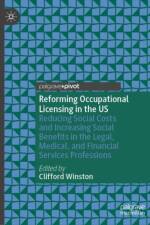
Nearly one-third of US workers must obtain a license from a government agency to perform their jobs legally. This impacts employees across all areas, including lawyers, doctors, and accountants, as well as florists, hairdressers, physical therapists, and plumbers. The justification for occupational licensing is that potential consumers allegedly lack the information and knowledge to judge the competence of a service provider. This necessitates a licensing system built to ensure that customers are served by people who have received adequate training and certification in their profession.While there are recognizable benefits of occupational licensing, the training and certification requirements create barriers to entry for employees or those entering the profession. These barriers can limit competition, raise service costs, and restrict consumer access to essential services. Recent empirical work suggests that consumers have incurred these costs without being adequately protected from incompetent or unscrupulous service providers. This book addresses this situation head on.In light of occupational licensing's shortcomings, the authors of this book propose and analyze constructive reforms, assessing their effects on key professions such as law, medicine, and finance. Chapters identify the significant costs of current policies and they recommend practical reforms that rely more on market forces. The resulting book provides new ways to reduce licensing costs without compromising service quality.Clifford Winston is a senior fellow in the economic studies program at the Brookings Institution.
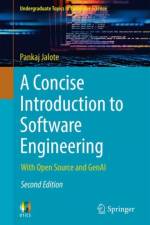
Software engineering has changed: A software project today is likely to use large language models (LLMs) for some tasks and will employ some open-source software. It is therefore important to integrate open source and use of LLMs in teaching software engineering - a key goal of this textbook.This reader-friendly textbook/reference introduces a carefully curated set of concepts and practices essential for key tasks in software projects. It begins with a chapter covering industry-standard software, open-source tools, and the basics of prompt engineering for LLMs. The second chapter delves into project management, including development process models, planning, and team-working. Subsequent chapters focus on requirements analysis and specification, architecture design, software design, coding, testing, and application deployment.Each chapter presents concepts, practical methods, examples, the application of LLMs, and the role of open-source software. A companion website provides some comprehensive case studies, as well as teaching material including presentation slides.This textbook is ideal for an introductory course on software engineering where the objective is to develop knowledge and skills to execute a project-specifically in a team employing contemporary software engineering practices and using open source and LLMs. It is also suitable for professionals who want to be introduced to the systematic approach of software engineering and/or use of open source and LLMs.The author is a distinguished professor at IIIT-Delhi and a well-known academic in software engineering. He has served as vice president in Infosys Technologies Limited and as a visiting researcher at Microsoft Corporation.
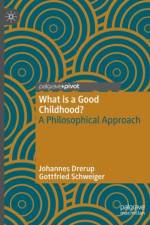
This book deals with the question of what is a good life for children. It argues that a good childhood is one in which: a child is sufficiently provided with all the goods it needs to develop into an autonomous person a child is sufficiently provided with the goods it needs for its well-being sufficient space is given to a child¿s will, wishes, concerns and projectsThe book not only develops a new theoretical conception of a good childhood and defends it against objections, it also engages with the problem how a good childhood can be realized in the context of families as well as the institutions of liberal states. In so doing it provides numerous insights into central themes and key issues of the philosophy of childhood.What is a Good Childhood? is essential reading for all scholars and researchers of ethics, social and political philosophy and philosophy education, especially those focusing on the philosophy of childhood.
This brief explores the justification of the death penalty, using the 2018 Marjorie Stoneman Douglas High School shooting in Parkland, Florida, as a case study. The authors argue that when an offender¿s impairments severely impact their ability to make rational decisions, the death penalty is unjustified, regardless of the crime's severity. The book examines the case of Nikolas Cruz, the school shooter diagnosed with fetal alcohol spectrum disorder (FASD), including: The nature of FASD, how it was measured, and how it manifested in Cruz. The impact of FASD on Cruz¿s adaptive functioning. The concept of ¿psychiatric overshadowing¿ and how it led to the oversight of Cruz¿s FASD and associated brain damage by many mental health experts. The broader implications of FASD, with a recommendation to expand death penalty exemptions to include disorders equivalent to intellectual disabilities (ID).By focusing on the highly controversial Cruz case, the authors¿key experts from the trial¿offer insights into FASD and its often-overlooked role in determining criminal responsibility and sentencing. This book is essential for forensic psychologists, psychiatrists, mental health professionals, FASD/DD specialists, researchers, and legal professionals involved in death penalty defense work.
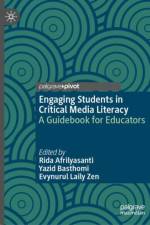
This edited book presents the integration of Critical Media Literacy (CML) principles into teaching English as a Foreign Language (EFL). This approach has its roots in content-based language learning, which aims to promote effective communication as the ultimate goal of language acquisition. This book highlights the profound influence of CML on educational methods, exploring the evolving concepts that support its integration and providing both theoretical perspectives and practical examples to illustrate its implementation. The book delineates methodologies for constructing and executing a CML integration framework in EFL lessons, offering various instructional strategies and reflective analyses and integrating the viewpoints of professionals, educators, and researchers. The book explores the complexities of CML, discussing the changing nature of language instruction in a world heavily influenced by media, and explores issues such as professional growth during educational restructuring, highlighting the significance of personal metamorphosis in attaining social equity. This book offers a concise yet thorough examination of CML integration in EFL settings, and it will be of interest to scholars specializing in education, media studies, and language instruction, as well as educators actively engaged in teaching, such as EFL teachers, curriculum developers, and educational policymakers.Rida Afrilyasanti is a PhD candidate in English Language Education at Universitas Negeri Malang, Indonesia. She is also a writer, academic, and English as a Foreign Language (EFL) instructor at SMA (Senior High School) Negeri Taruna Nala Jawa Timur. She is widely recognized for her English as a Foreign Language (EFL) textbooks, which she developed in collaboration with the Indonesian Ministry of Education. Her research interests include technological pedagogy, pedagogical innovation, instructional media, and media literacy. Yazid Basthomi is a Professor of Applied Linguistics in the Department of English at Universitas Negeri Malang, Indonesia. He was a Fulbright scholar at the ELI, University of Michigan-Ann Arbor during his PhD studies. His research interests include genre analysis, intercultural education, and digital culture, and he is currently the coordinator of the publication division of TEFLIN. Evynurul Laily Zen is a faculty member of the Department of English at Universitas Negeri Malang, Indonesia. She earned her PhD in English Language and Linguistics from the National University of Singapore in 2020. Her research interests include multilingual acquisition and education, language maintenance and shift, Family Language Policy (FLP), and multilingual learner corpora.
This study guide is designed for students taking courses in engineering mathematics and mathematical methods in science. The textbook includes problems with detailed solutions to teach students the subjects in detail and partially and fully solved exercises with hints to required formulas and answers, enabling students to practice independently and guiding them through problem-solving procedures. The material covered in the book includes complex functions, complex transformations, singularities of complex functions, complex series, Taylor and Laurent series expansions, residue, complex integration, Fourier series, half-domain Fourier sine and cosine series, complex Fourier series, Fourier integral, complex Fourier integral, Fourier transform, half-domain Fourier sine and cosine transform, and partial differential equations.Offering detailed solutions, multiple problem-solving methods, and clear explanations of concepts, this hands-on tutorial will improve students¿ problem-solving skills and foster a solid understanding of engineering mathematics and mathematical methods in science.
This Palgrave Pivot book analyses the current state of economic and financial relations between China and the European Union. It illustrates the 'de-risking' strategy that informs much of financial policy between China and the EU and argues that this differs from the policy of 'decoupling' that characterizes the US approach towards China. Exploring how the EU positions itself in the context of a trade and tech race between the US and China, the book sketches out a range of geopolitical challenges for Europe as it navigates current and future scenarios in global economic cooperation and competition. It discusses the concept of 'strategic autonomy' for the EU and explores barriers to achieving this as well as options for re-shaping relations with China. The book provides an excellent overview for researchers and policy-makers of Sino-EU economic relations today and sets them firmly in the contexts of the post-pandemic world with new global value chains, rapid technological development, and evolving environmental challenges.René W.H. van der Linden is lecturer & researcher at the International Business program of The Hague University of Applied Sciences in the Netherlands. Together with Piotr ¿asak, he published The Financial Implications of China's Belt and Road Initiative in 2019 and Financial Interdependence, Digitalization and Technological Rivalries in 2023. Piotr ¿asak is an Associate Professor at the Jagiellonian University in Krakow, Poland. His research focuses on topics related to international financial markets development, including financial market regulation and supervision, mechanisms of financial and currency crises, digitalization of the financial sector, and shadow banking system development (especially in China).
"Absolutely fascinating! I, of course, knew nothing about stage prologues. You've very successfully whetted my appetite." - Peter Holland, McNeel Family Professor in Shakespeare Studies, University of Notre Dame.This open access book seeks answers to a series of questions about the littlestudied subject of prologues or theatrical presentations in American movie theaters from the late 1910s to the mid-1920s. How did prologues emerge out of prior practices? Who were the exhibitors most involved? What characteristics would come to define prologues? How widespread did they become not only in metropolitan palace cinemas but also in movie theaters in mid-sized cities and even small towns? If they generally created an atmosphere that complimented or harmonized with the feature films, could they also be what at the time was called "contrastive"? Who were the performers in these theatrical presentations? Were prologues ever described, in ads and audience responses, as a program's main attraction and to what effect?The book comprises five chapters and up to a hundred photographs of prologue stage settings. Moreover, supplementing each chapter is one or more relevant trade press documents. Overall, the chapters construct a set of practices and typologies that came to define the theatrical presentations that typically preceded the feature films. They also advance this argument: the variety format of combined stage and screen performance in movie theaters has a longer and unexpectedly revealing history than usually assumed. In short, an exhibitor would have a certain degree of creativity in his/her programming, which in turn could strongly impact an audience's movie-going experience.Richard Abel is Professor Emeritus of International Cinema and Media Studies at the University of Michigan, USA. His most recent books include Menus for Movie Land: Newspapers and the Emergence of American Film Culture, 1913-1916 (2015), Motor City Movie Culture, 1916-1925 (2020), and Our Country/Whose Country?: Early Westerns and Travel Films as Stories of Settler Colonialism (2023) as well as Barbara C. Hodgdon's Ghostly Fragments, co-edited with Peter Holland (2021), and the edited collection, Movie Mavens: US Newspaper Women Take on the Movies, 1914-1923 (2021).
This book sheds new light and comprehensively discusses all aspects of surgical hip dislocation (SHD), a surgical technique which has indeed granted access to areas not accessible with standard procedures, thus allowing intra-articular osteotomies.Filling a gap in literature, this book combines detailed anatomical knowledge - as a prerequisite to avoid iatrogenic complications - and practical guidance in order to successfully manage these complex techniques. Pioneers and renowned experts in the field share best practices, tips and tricks - from patient positioning to anesthesia and surgical steps - to achieve the maximal benefit for the patient and minimize any complication risk.Orthopedic surgeons and residents with an interest in surgical hip preservation will find this book to be an excellent, richly illustrated guide to the subject.
This comprehensive book provides decision-makers with clarity in navigating business ecosystems. It covers the history and drivers of ecosystem emergence and explores key concepts like complementarity and modularity. Various archetypes, including business, innovation, and platform ecosystems, are examined. The book details the design, set-up, and growth of successful ecosystems, including roles, building strategies, and growth levers.Further sections focus on ecosystem orchestration and participation, emphasizing the balance between engagement depth and breadth, cooperation and competition, trust and control, and openness and closedness. Ecosystem management within firms is addressed, covering leadership, commercial functions, communication, financial planning, risk management, legal compliance, and IT. Insights into assessing ecosystem performance, failure, and competition are provided. The book concludes with a discussion on the future of ecosystem evolution, environmental and social impacts, and how ecosystems are transforming work and management practices. This book is an essential resource for executives in the ecosystem-driven business landscape.
This Second Edition presents and details the process of quantization of a classical mechanical system in a relevant physical system, the harmonic oscillator. As mathematics and physics are inextricably interwoven in quantum theories, the author takes a mathematically rigorous approach. The book focuses on properties of the quantum system that can be observed and measured, and the author then interprets the resulting theory. The book covers methods of operator theory in the formulation of the theory as well as in the calculation of the consequences of the theory. The author addresses the mathematical foundation of the probabilistic interpretation of quantum mechanics through the spectral theorems for (densely-defined and linear) self-adjoint operators in complex Hilbert spaces. The book also explains the measurement process and questions the challenges of the wave function, the EPR paradox, and Bell¿s inequality.
Intending to fill an important gap in medical training, this book presents an easy-to-learn, standardized approach to having compassionate and collaborative goals of careconversations with patients and families, a skill that can be difficult for clinicians to learn and that is not part of standard medical education curricula.Developed by a Palliative Care provider, this is the first book to teach everything clinicians need to know to gently guide patients and families through what can often bedifficult discussions about illness, disease, end-of-life wishes, and hospice care. This technique can be used to discuss any medical diagnosis or treatment, be employed atany age or stage of an illness, and can be used by health care professionals at any level.Readers will be introduced to the patterns of decline patients follow toward the end of life, criteria for recognizing when a patient's time is limited, hospice care, groundrules for compassionate communication, and a step-wise method of leading patients and families through difficult goals of care conversations in a collaborative way. Thebook includes specific questions to ask and starter language clinicians can use for developing their own patient-friendly talking points about disease progression, the endof life, concerns that a patient's time is limited, advanced directives, code status, and hospice care. An Arc of Conversation Guide, for use when learning this technique, is also included. While modern medicine is terrific at acute stabilization of illness or injury, it often ignores the elephant in the room-disease progression and death. By doing so, the healthcare system frequently misses opportunities to align patient wishes with the care they receive. Furthermore, physicians often avoid difficult conversations with patients due to a lack of training or the assumption that hospice care represents medical or personal failure. Incorporating the material and technique taught in The Arc of Conversation into everyday practice will enable clinicians to acknowledge and discuss patient decline and to confidently include hospice care as a viable option for treatment that can support patient values, wishes, and priorities. Moving toward a continually collaborative approach with patients-a shift away from physician-directed care to patient-centered care-will enable clinicians to develop treatment plans that prioritize outcomes that matter most to patients and families, improving patient and family experience of health care across their lives and providing patients with the 'soft landing' they want at the end.
This book considers the cognitive, behavioural and socio-emotional aspects of autism in relation to music perception, musical engagement and music production. Musicality is considered from an evolutionary perspective and in relation to psychological models of autism. In drawing together literature on autism and music neuroscience with original case studies from musicians with autism, the book seeks to broaden our understanding of typical and atypical musical experience and sets a new agenda for multi-disciplinary research in this area. It provides a unique resource that will appeal to students and scholars of Autism Spectrum Disorder, neurodevelopmental conditions, music psychology and neuroscience, music therapy, music education and inclusive education; as well as to practitioners and general readers.Pamela Heaton is Emerita Professor of Psychology, at Goldsmiths University of London, UK. As a mature student, Professor Heaton drew on her undergraduate studies in music and classical training in her PhD thesis, which was awarded the British Psychological Society prize for outstanding doctoral research contributions in 2002. Developing and delivering the cross-departmental Psychology of Music module fuelled her interest in developing a cross-disciplinary approach to studying music in neurodevelopmental conditions
This open access book is intended to provoke and progress new thinking in the field of energy research for policy makers, practitioners and scholars. By drawing on a broad range of social and innovation theory insights, this book showcases the diversity of energy citizenship and opens up the concept by including multiple 'latent', less visible, forms of energy citizenship that also form part of the energy transition. Focusing on how energy citizenship is considered in eight countries across Europe, each of the contributions highlight the empirical variety, the geographical differences, the contextual challenges, and the socio-political histories out of which energy citizenship develops. In exploring if there are certain convergences and similarities across contexts, the collection makes a significant contribution to debates and discussions surrounding the European Energy Union.Frances Fahy is Professor of Geography and the Director of the Ryan Institute at the University of Galway, where she leads several research teams on sustainable consumption and energy citizenship research. Frances is an environmental geographer and she has published more than 100 publications and has coordinated over 20 funded research projects including as the coordinator and lead of the Horizon 2020 project, EnergyPROSPECTS, a large scale social science research project which explored energy citizenship in Europe. A Fulbright Scholar, Frances previously served as Head of Geography at University of Galway and is the past President of the Geographical Society of Ireland. Edina Vadovics, with a background in environmental sciences and policy, is research director of GreenDependent Institute, a non-profit research and action organisation promoting sustainable lifestyles and multistakeholder dialogue. Edina's research focuses on 1.5 °C lifestyles, citizenship and social innovation with the aim to connect environmental and social considerations in dozens of EU and national projects such as EnergyPROSPECTS. She is also involved in action-oriented work with citizens, communities and municipalities, and has published extensively for both audiences. She worked as an expert to the EEA, UNEP, IGES, and is a member of the SCORAI Europe steering committee.
Abonner på vårt nyhetsbrev og få rabatter og inspirasjon til din neste leseopplevelse.
Ved å abonnere godtar du vår personvernerklæring.