

















Gjør som tusenvis av andre bokelskere
Abonner på vårt nyhetsbrev og få rabatter og inspirasjon til din neste leseopplevelse.
Ved å abonnere godtar du vår personvernerklæring.Du kan når som helst melde deg av våre nyhetsbrev.

In recent years, football has become an important field for institutional change and political steering in China. Under the leadership of Xi Jinping, the Chinese Communist Party has placed football at the centre of its national rejuvenation agenda, seeking to transform the country into a powerful sports nation. However, this ambitious plan has triggered a series of contentious interactions between party-state actors, international and local socio-economic actors, who often have to strike a delicate balance between political expectations, market dynamics and human rights.The Politics of Football in the People's Republic of China delves into the intricate world of Chinese football politics and offers a comprehensive analysis of how the sport has become a locus for achieving broader social, economic and political goals. The book examines the implications of the Chinese party-state's institutional transformation efforts towards 'top-level design' in this policy field, which aim to centralise and hierarchise policy-making authorities. It also uses detailed case studies to investigate the Chinese party-state's attempts at political steering, including international sport diplomatic interactions as well as interactions with Chinese social and economic actors.From the spectacular rise and fall of Mesut Özil's popularity in China to the controversial campus football initiatives to nurture future generations, this book explores how the Chinese party-state's governing practices intersect with the global football industry. It critically assesses the successes and failures of the football reforms, the challenges faced by foreign actors engaging with Chinese football, and the evolving nature of the sport as an arena for playing out (geo)political conflicts.Whether you are interested in Chinese politics, football and sport, or the relationship between sport and politics, this book offers valuable insights into the multifaceted world of Chinese football in the Xi Jinping era.Ilker Gündöan is a postdoctoral researcher and lecturer at the Julius Maximilian University of Würzburg, Germany. He's also a fellow at the EU*Asia Institute of the ESSCA School of Management, France, and an affiliate researcher at the Centre for EU-Asia Connectivity at the Ruhr University Bochum, Germany.
"Financing the Race to Space is a masterful work that challenges and inspires. Armen V. Papazian's book is a must-read for policymakers, investors, and anyone with a keen interest in the future of space exploration. It is a testament to the power of visionary thinking and a significant contribution to the discourse on sustainable space development."-Alderman Professor Michael Mainelli, The Right Honourable The Lord Mayor of London, City of London Corporation "Financing the Race to Space is an inspiring and ground-breaking blueprint for the future of space exploration. Blending visionary thinking with practical financial innovation, it offers transformative insights into funding sustainable space ventures and provides the tools and guidance needed to propel humanity's most ambitious space endeavors. Papazian redefines the financial paradigm necessary for our leap into the cosmos. Essential and enlightening, a must-read for C-suite executives, investors, and policymakers."- Karlton D. Johnson, CEO and Chairman of the Board of Governors, National Space Society "Investors, wisely advised by our members who understand the precepts that Dr Papazian covers so well in his work, stand to reap the responsible rewards."- Tracy Vegro OBE, CEO, The Chartered Institute for Securities & Investment "An extraordinary book that serves us and future generations with realism and optimism."- Adrian Webb, Founder and Director, Space Value Foundation "A thought provoking and fresh way to look at finance and economics with a set of ideas that deserve wider debate."-Dr. Gillian Tett OBE, Provost, King's College Cambridge University, Editorial Board Member, Financial Times This seminal book examines the monetary and financial foundations necessary for outer space exploration, development, and settlement. It addresses the shortcomings of our financial value framework, financial mathematics, and monetary architecture, and introduces the transformations required to unlock the massive investment programs needed to invent, manufacture, deploy, and maintain the new habitats of the future.Armen V. Papazian is a financial economist (PhD, University of Cambridge) and the author of Hardwiring Sustainability into Financial Mathematics and The Space Value of Money.
"Brilliant, original, and packed with fresh ideas. Andrew Caplin has written a manifesto, calling for a 'science of mistakes,' using large data sets to understand what people are doing and why. Full of important findings and terrific insights, Caplin's book paves the way toward a revolution in social science-something we have never seen before."-Cass R. Sunstein, Robert Walmsley University Professor, Harvard University and coauthor of Nudge"One of the most brilliant, creative, and brave thinkers in economics and really all of the social sciences, Andrew Caplin has produced a masterwork in this beautifully written book.... All social scientists should read and ponder this wonderful book."-Steven Durlauf, Frank P. Hixon Distinguished Service Professor and Director of the Stone Center for Research on Wealth Inequality and Mobility, Harris School of Public Policy, University of ChicagoThis book introduces readers to "cognitive economics," a rapidly emerging interdisciplinary science built on economic, psychological, and data scientific foundations. Throughout the book, economist Andrew Caplin provides new approaches to help scholars collaborate and solve problems that can shape economic outcomes and bridge the gap between theoretical knowledge and the real world.Divided into two parts, the first section brings readers up to speed on economic concepts that underlie decision-making mistakes, such as utility functions, subjective beliefs, and costs of learning. It explores real-world applications, including improvements in legal decision-making, online privacy protection, and optimizing human-AI collaboration. The book discusses the future impact of AI on the workforce and emphasizes the need for decision-making skills and financial literacy in navigating this evolving landscape. In the second section of the book, Caplin addresses the barriers to progress within social sciences, advocating for interdisciplinary cooperation and innovative measurement techniques to advance the field.The book invites readers to contribute to the development of cognitive economics. Whether you are a socially-conscious and hard-working citizen, business leader, scholar, or policymaker, this book will help you understand why cognitive economics matters to you and how you can contribute to its takeoff.This book is open access.Andrew Caplin is Silver Professor of Economics at New York University and a fellow of the Econometric Society.
"This book is a bold and confident advance in dynamic econometric theory and practice." I. Litvine, Professor in Statistics, Nelson Mandela University, Port Elizabeth, South Africa"This book is an outstanding contribution to econometrics, coming at a crucial time to fill a significant gap in the field."Maria do Rosário Grossinho, Professor of Analysis and Mathematical Finance ISEG - University of Lisbon PortugalThis textbook for advanced econometrics students introduces key concepts of dynamic non-stationary modelling. It discusses all the classic topics in time series analysis and linear models containing multiple equations, as well as covering panel data models, and non-linear models of qualitative variables. The book offers a general introduction to dynamic econometrics and covers topics including non-stationary stochastic processes, unit root tests, Monte Carlo simulations, heteroskedasticity, autocorrelation, cointegration and error correction mechanism, models specification, and vector autoregressions. Going beyond advanced dynamic analysis, the book also meticulously analyses the classical linear regression model (CLRM) and introduces students to estimation and testing methods for the more advanced auto-regressive distributed lag (ARDL) model. The book incorporates worked examples, algebraic explanations and learning exercises throughout. It will be a valuable resource for graduate and postgraduate students in econometrics and quantitative finance as well as academic researchers in this area.Francis Bismans is Professor in Economics and Statistics, University of Lorraine, France.Olivier Damette is Professor in Economics, University of Lorraine, France.
As more medical professionals recognize the intuitive benefits of prehabilitation, there is a need to pull best practices that exist across the literature and set a multimodal standard of care. This innovative book fills this need and provides a (should we say "the most"?) comprehensive guide to prehabilitation.Authored by experts in each area of surgery, perioperative care, and rehabilitation medicine, the book's chapters introduce the concept of prehabilitation and describe the current medical optimization strategies, unique patient considerations, and the continuum of care for each procedural population. This text provides data from the existing literature on typical programs' impact on outcomes and complication rates, and it proposes detailed treatment plans for providers to incorporate into practice.A Prehabilitation Guide for All Providers explores actionable insights for a broad audience, including primary care physicians, surgeons, anesthesiologists, and physical medicine and rehabilitation specialists, as well as non-clinical professionals in policy-driving positions such as hospital administration or governmental organizations.
This book provides a comprehensive overview of adipose tissue as an endocrine organ and examines its complex biology and clinical significance. It explores the interaction between adipose tissue and various physiological systems and sheds light on how adipose dysfunction contributes to the pathogenesis of metabolic diseases that affect millions of people worldwide. It aims to clarify how the endocrine functions of adipose tissue maintain health and contribute to various metabolic and cardiovascular diseases. With obesity rates escalating globally, understanding the role of adipose tissue and its clinical implications has become critical.Adipose Tissue: Endocrine Functions, Health Implications, and Future Perspectives covers topics ranging from basic science to its clinical significance. It provides a comprehensive view of the clinical manifestations of adipose tissue dysfunction, such as obesity, diabetes, and metabolic syndrome. The book demonstrates the clinical complications associated with adipose tissue dysfunctions and the importance of early detection and intervention. Cutting-edge advancements in adipose tissue research technology and, more importantly, how these findings can translate into clinical practice are discussed, thus offering novel perspectives for future therapeutic strategies.This timely and relevant book targets medical practitioners, clinical researchers, basic scientists, students, and everyone interested in understanding the complex biology of the human body and how a tissue once seen as mere fat storage is now at the forefront of endocrine research and therapy.
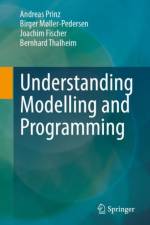
This book provides a concise overview of modelling and programming by presenting their essential concepts. It enables the reader to better understand the relationships between modelling and programming by describing abstract properties, desired behaviours, intended structures, needed interactions, and other specific viewpoints on the overall system under development.After an introduction to the importance of modelling and programming in the scope of system engineering in chapter 1, the book provides four main chapters covering systems, models, specifications, and programs, each of them with a set of reflection exercises. Chapter 2 explores how systems relate to reality, exploring different perspectives related to the purpose of the system. Chapter 3 explains what it takes to be a model and how models and systems are related and concludes with discussing model semantics, meaning, and correctness. In Chapter 4, specifications are debated which are precise descriptions of models and systems. It presents the language constructs needed to describe systems and shows how the constructs can be expressed in concrete languages, considering both the structure and the behaviour of models. Chapter 5 considers the creation, simulation, and correct execution of specifications (model descriptions or programs). Eventually, Chapter 6 presents a collection of real-world modelling cases. Apart from describing the case, the concepts of the book are applied to the case, thus giving a better understanding of the concepts.The book is carefully designed to explain modelling and programming concepts, their relationships, and their use. Written for computer science students and lecturers, it covers systems, modelling, programming, simulation, and semantics.
The main objective of this new edition is to facilitate the learning of radiology through a handbook that includes all disciplines of radiology. It is aimed to guide young trainees from the beginning of their radiology training and help them in the preparation of the European Diploma in Radiology (EDiR). The 2nd edition features new cases in all the subspecialities, now including also Hybrid Imaging, Informatics (with some information regarding Artificial Intelligence) and Physics. The book is intended to be a reference in the field of radiology providing a standardised study opportunity of the specialty following the outline of EDiR. The content has been selected and supervised by the members of the different committees responsible for the examination.Each chapter is structured in three sections similar to the European exam: a first section with Multiple Response Questions (MRQs), a second section with Short Cases (SCs) and, finally, cases of clinical reasoning (CORE). For a deeper understanding, this new edition features 30 exclusive videos that complement the text. These engaging visuals enhance the learning experience, making complex concepts easier to grasp.The reader is exposed to questions and problems as they arise in the European examination. It covers technical, security and management aspects, all of which are included in the European curriculum and which form part of the content of the exam.
"Effective Climate Communication provides a fresh perspective on communicating climate change in a climate of public disengagement and anxiety. Using these realities as starting points, Denisova explores key issues around greenwashing, news narratives, and the need for de-colonising practices. By asking 'what slows down citizen action?' Denisova's thoroughly researched and clearly written text calls for persistence, care and creativity. Combining compassion and practicality, the lessons in Effective Climate Communication will be useful for researchers, policy-makers, activists and storytellers in their fights for climate justice." Anna Feigenbaum, Professor in Digital Storytelling, Bournemouth University, UKThis book explores the urgent challenges of communicating climate change in the media. While many books have been written about climate change, this book goes to the very heart of what makes humans care about stories enough to act. In a direct and sympathetic approach, Denisova tackles problems of greenwashing, news narratives, colonial framings and more. Taking climate anxiety as a starting point, the author positions herself with empathy and asks the question: 'what slows down citizen action?' This fresh perspective acknowledges the pressing challenge of public disengagement and the anxiety people feel when faced with increasingly bleak headlines as the climate crisis intensifies. There is a surprising challenge to apocalyptic storytelling and a hero's narrative, which Denisova argues are counter-productive, while solutions are provided for media storytellers. This book is essential reading for anyone seeking to ease climate-related anxiety and foster a deeper sense of empowerment in their audience.Anastasia Denisova is a Senior Lecturer in Journalism at the Communication and Media Research Institute, University of Westminster, UK. She specialises in viral cultures, internet memes, and climate change communication and is the author of the book Internet Memes and Society (2019) and the policy brief Fashion Media and Sustainability (2021). She has published widely in top academic journals, including Social Media + Society; Media, Culture and Society; and Journalism. Dr Denisova is a Senior Fellow of the Higher Education Academy and a board member of Westminster Papers in Communication and Culture.
"In this timely new edition, Karen Boyle's lucid feminist analysis of the 'long #MeToo moment' provides a critical framework for challenging linear storytelling and interrogating the reductive media logics around gender-based violence. With great care and intellectual acuity, Boyle takes stock of ongoing discourses and activism around #MeToo, exploring advances but also showing how much work remains to be done." Tanya Horeck, Professor, Anglia Ruskin University, UK"This book is recommended for anyone who wants to understand the impact of #MeToo and the Me Too movement. This revised edition carefully traces and documents the journey that #MeToo has had on feminism's quest to end sexual violence worldwide. Boyle skillfully weaves detail and academic evidence with a powerful and passionate argument. It is essential reading for people with an interest in the role of social media on shaping feminist understandings and responses to sexual violence." Nicole Westmarland, Professor, Durham University, UK
Abonner på vårt nyhetsbrev og få rabatter og inspirasjon til din neste leseopplevelse.
Ved å abonnere godtar du vår personvernerklæring.