





Gjør som tusenvis av andre bokelskere
Abonner på vårt nyhetsbrev og få rabatter og inspirasjon til din neste leseopplevelse.
Ved å abonnere godtar du vår personvernerklæring.Du kan når som helst melde deg av våre nyhetsbrev.

Brisk, easy-to-read and never dull, the strengths of this history lie in a concern for all aspects of the history of Israel and Judah, political and economic factors, religious and theological interpretation, methodology, geography and topography.
Concilium has long been a household-name for cutting-edge critical and constructive theological thinking. Past contributors include leading Catholic scholars such as Hans Küng, Gregory Baum and Edward Schillebeeckx, and the editors of the review belong to the international "who's who" in the world of contemporary theology.
The book has a genuine unity, and I can think of no better introduction for theological students to the variety of problems about language which confront the contemporary theologian. Analytical philosophy, existentialism, the problems of biblical criticism and those of continental neo-Protestant theology are allowed to contribute to a single argument in which Macquarrie is able to pose the problems of man's likeness to God and of anthropomorphism with a welcome degree of precision. Macquarrie's strength is that he is straightforwardly writing from within theology. His exposition of Saint Athanasius on the Incarnation propounds squarely the claim that Christianity entails empirical judgments, that in principle at least it is refutable by the facts, if they are of one kind rather than another' (Alasdair MacIntyre in The Guardian). 'He lucidly explains the issues raised for Christian belief both by empiricist analytical philosophy and by existentialist hermeneutics. The hermeneutical question is brilliantly illuminated by an exposition of Athanasius's De Incamatione, and all the problems of mythology, symbolic language, analogy and paradox are carefully sorted out' (Alan Richardson in Theology). 'Following the lead of the later Wittgenstein, Macquarrie holds that we must allow each linguistic form to disclose its own logic. The dominant characteristic of all religious and theological language is its obliqueness. It speaks in terms of myth, symbol and analogy. Macquarrie makes it plain that existentialist interpretation cannot exhaust the meaning of theological language. He clearly sees that if theology can be totally interpreted in this way, then it is reduced to anthropology. We must progress through existential interpretation to ontology--to talk about the transcendent Being of God.... The book does not finally solve the problems which it raises and does not claim to. But it develops a very promising manner of tackling them. Above all it is a very timely counter-poise to those over-facile analyses of the logic of theology which result in a kind of Christian atheism. John Macquarrie seems to me to grow in both spiritual and intellectual stature with every book he writes' (The Expository Times).
An accessible introduction to the life and thought of one of the most influential theologians of our time.
This book is a classic account of inter-religous encounter from a German monk who lived in a holy city of India.
An expanded & revised version of "Religion in an Age of Science". Three new chapters on physics & metaphysics in the 18th century and biology & theology in the 19th century. Other new sections included.
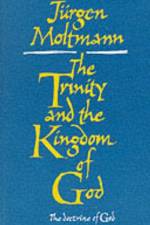
Moltmann considers the interrelation of Christian concepts and doctrines with the aim of overcoming schism both within the churches and with Judaism. Offers profound insight into the relationship between suffering and God.
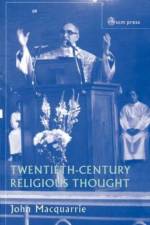
Beginning from the philosophical and theological legacies of the 19th century, this book traces the renewal first of Protestant then of Catholic theology during the 20th century. It ends with a discussion of recent movements such as liberation theology.
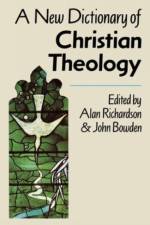
Welcomed on first publication as the best one-volume dictionary of theology available, here is an indispensable resource for students and clergy.
Stands as a model of theological exposition and is the first commentary to take full account of the revolution in Pauline studies inaugurated by E.P. Sanders.
On first publication in the 1960s, "Honest to God" did more than instigate a passionate debate about the nature of Christian belief in a secular revolution. It epitomised the revolutionary mood of the era and articulated the anxieties of a generation.
This text poses the question "what is theology?" and goes on to discuss issues of methodology, the relation of theology to other disciplines and different theological perspectives. It also investigates topics in the fields of philosophical theology, symbolic theology and applied theology.
A text which acts as a useful introduction for undergraduate students studying historical Jesus modules. New material covered by the book includes: the Jesus Notice of Josephus re-examined; a summary of the law by Flavius Josephus; and the Dead Sea Scrolls 50 years on.
A Hauerwas "reader", this book is aimed at undergraduate students of ethics. The author characterizes non-violence as the cornerstone of Christian ethics.
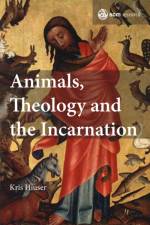
How does an understanding of the non-human lead us to a greater understanding of the incarnation? Are non-human animals morally relevant within Christian theology and ethics? Is there a human ethical responsibility towards non-human animals? In Animals, Theology and the Incarnation, Kris Hiuser argues that if we are called to represent both God to creation, and creation to God, then this has considerable bearing on understanding what it means to be human, as well as informing human action towards non-human creatures.
In Chaplaincy and the Mission of the Church, Victoria Slater explores the significance of chaplaincy for the mission and ministry of the contemporary Church.
This text offers a distinctive approach to practical theology and theological reflection. It challenges and offers practical theologians to utilize cultural studies yet to locate their work within a theological framework.
Kate Bruce argues that imagination can help to engage the hearer in a sermon which seeks to evoke rather than to inform. Imagination frames how we see the world and ourselves in it. As such it has a vital role in how preachers see the preaching task itself, which in turn affects how we go about the task.
Abonner på vårt nyhetsbrev og få rabatter og inspirasjon til din neste leseopplevelse.
Ved å abonnere godtar du vår personvernerklæring.