



















Gjør som tusenvis av andre bokelskere
Abonner på vårt nyhetsbrev og få rabatter og inspirasjon til din neste leseopplevelse.
Ved å abonnere godtar du vår personvernerklæring.Du kan når som helst melde deg av våre nyhetsbrev.

In October 1936 two German ships arrived in Spain loaded with a Panzer I company and all the services and personnel to establish Franco's army's first armored unit, the so-called Panzer-Gruppe Drohne. The Third Reich chose a pioneer in the development of German ground forces to command this contingent - Oberstleutnant Wilhelm Ritter von Thoma. This book presents the history of von Thoma's units in the Spanish Civil War, from the tank crews to the infantry, and specialties.
This book offers a unique view of the Natter and other German rocket jet projects.
This book provides fellow collectors with a detailed reference on the famed World War II Luftwaffe gravity knife (Flieger-Kappmesser). The book dispels many common misconceptions about the gravity knifes origin, purpose, evolution and history while thoroughly familiarizing the reader with every facet of the gravity knife. To this end the book presents the reader an historical context with which to view the knife and imparts an appreciation for the gravity knifes development and use. As well, through the provision of a general historical backdrop, by briefly introducing the Luftwaffe and its formations, the reader gains an better understanding of how the knife fits into the larger scheme relative to its time and other weapons. As well this book demonstrates, from an historical perspective, that the knife bears testament to the high level of German technology that emerged during the 1930s. Innovative, ergonomic, and of the highest quality, it truly stands far above its contemporaries. The FKm is, undeniably, a state-of-the-art knife from its time.
This book describes the procurement, operation and technical aspects of the legendary Messerschmitt Me 109 in Swiss service during and after World War II. The aircraft and its procurement during the 1930s and 1940s are described in detail, as are the internal quarrels and errors in planning. The Me 109G "Gustav" is extensively discussed, and a chapter on camouflage paint and markings will be of special interest to modelers. The book also contains nearly 450 mostly unpublished photographs, including color. Georg Hoch was born in 1943 in Zurich, and was an instructor in the Luftwaffe. His specialties included aircraft armament, structure, and war repairs.
Sailors in Forest Green is a detailed examination of the uniforms and equipment used by Navy personnel attached to the U.S. Marine Corps during World War II. Navy hospital corpsmen, Seabees, combat photographers, demolitions experts, and many other Navy specialists served with USMC units from 1941-1945. This subject is often overlooked today. Sailors in Forest Green is the first book of its kind to address this previously unexplored and fascinating topic. It is lavishly illustrated with over 800 previously unpublished archival and contemporary photographs, documents, and dramatic reconstructions. Both U.S. Navy and Marine Corps uniforms are highlighted, including officer and enlisted dress uniforms and insignia, combat and fatigue uniforms, camouflage, field gear and experimental equipment. Additionally, gas masks, medical supplies, and explosives are featured as well. Anyone with an interest in World War II militaria will marvel at this new and exciting breakthrough!
The Allied invasion of North Africa in November 1942 included the USAAFs Lockheed P-38 equipped 14th Fighter Group. Flying long-range, high-altitude escort missions as well as low level ground support sorties, the 14th engaged in three months of grinding attrition. Another squadron arrived from the U.S. along with new P-38s and the revitalized 14th returned to the Mediterranean air war in May 1943 where they flew combat for another two years battling the German, Hungarian, Rumanian, and even the Russian air forces.
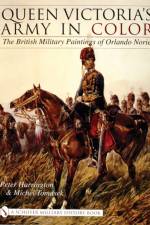
Orlando Norie is considered to have been one of the foremost illustrators of the British army in the 19th century, with thousands of watercolors to his credit in public and private collections. His pictures are highly sought after and command high prices. Yet his life remained a mystery that is only now being uncovered. Many of these wonderful pictures are revealed here for the first time. The Anne S.K. Brown Military Collection in Brown University Library, Providence, Rhode Island, USA, possesses one of the largest, if not the largest public collection of original military watercolors by Orlando Norie. The pictures in the Brown military collection range from single figure uniform studies or composites, to genre and battle scenes and at least one named portrait. These are published as a group for the first time along with Michel Tomaseks masterful account of Nories life, including comments on the artists British pictures by Peter Harrington.
Illustrated study showing the military and civilian off-road capabilites of this German vehicle produced in the 1970s-1980s, including many detail photographs.
This incredible book combines a history of skateboarding that spans the twentieth century; 693 color photos of decks, wheels, trucks, and other gear that illustrate the sports's dramatic changes in design and graphics; photos of famous riders in action over seven decades; a huge list of skateparks in the USA; and a glossary to help the newcomer get a handle on skateboard lingo. Full pricing information is provided. This book is a required reference for skateboarders, past and present.
Covered is the variety of British, French, American, Russian and other armored cars used by the Wehrmacht.
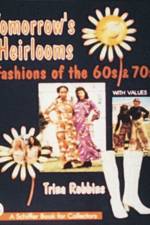
A sentimental journey through 100 years of fashion accessories. Hundreds of hats, shoes, gloves, scarves, jewelry, handbags, and more are presented in a decade-by-decade progression of fashion styles. 478 color photos, original drawings, and an extensive text bring the twentieth century to life. Collectors of vintage clothing will covet the information and illustrations in this gorgeous work.
Each 96 page, hard cover book in the series is 10 1/2" x 7 5/8" and contains color and black and white photos, drawings, charts, and catalog facsimiles. Each classic model is presented in its historic and developmental aspects.
Under the emblem of the Edelweis, the soldiers of the German mountain corps fought on every front in the Second World War in the tundra of Lapland, in the gorges of the Balkans, on Crete, in the High Caucasus, at Monte Cassino and finally in Upper Italy and the Western Alps, at the Semmering, in Bavaria and Tyrol. Mountain troops even formed part of Rommels famed Afrikakorps. During the war, the army alone formed a total of eleven mountain divisions, plus independent battalions and units. The accomplishments of the Men of the Edelweis are still held in high regard by historians and military experts. Armed forces and special units worldwide use their alpine and combat abilities as an example, for in mountain fighting the weather and the terrain often caused more casualties than the enemy. Through impressive photographs and brief, insightful text, this chronicle offers the reader and extraordinary view into the world of these elite troops, who were always committed where the outcome hung in the balance.
Abonner på vårt nyhetsbrev og få rabatter og inspirasjon til din neste leseopplevelse.
Ved å abonnere godtar du vår personvernerklæring.