

























Gjør som tusenvis av andre bokelskere
Abonner på vårt nyhetsbrev og få rabatter og inspirasjon til din neste leseopplevelse.
Ved å abonnere godtar du vår personvernerklæring.Du kan når som helst melde deg av våre nyhetsbrev.

This book gives descriptions and a photographic account of the ground radar systems of the Luftwaffe used during WWII.
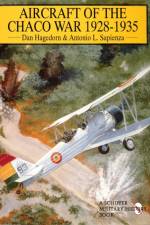
More than 150 never before published illustrations, complimented by an exhaustively researched text, document the little-known air war between Bolivia and Paraguay during the late 1920s and early 1930s. Full details of such aircraft as Fiat C.R. 20s, Curtiss Hawk IIs, Curtiss Ospreys, Potez 25s and all other types employed by both combatants, including acquisition, operations, and markings make this a must for historians, modelers, and anyone interested in golden-age aviation.
This beautiful, three-dimensional dollhouse is easy to assemble. Children and adults alike will enjoy the rich architectural ornamentation of this classic, Victorian cottage. Create your own color scheme for both its interior and exterior. Two resident ca
This book presents several years of research into the history of Americas post-World War II M-1 Helmet. It provides the most comprehensive look into the research, development, and production of the M-1 Helmet during this often overlooked period. All aspects of the M-1 Helmet are covered, as well as associated research and development programs that impacted the helmet, such as the Nylon Helmet Program. The book provides a detailed look at helmet production, including the helmet body, cotton duck liner, Combat Helmet Liner, parachutists helmets, and camouflage helmet covers. The production history of every major manufacture is also provided. Every production helmet is covered with full color photographs, including detail shots and production markings. Also included are contract sheets, a contract number reference, military specification drawings, and photos of helmet samples and helmet production.
This second volume in the Uniforms and Equipment of the Imperial German Army 1900-1918: A Study in Period Photographs series, contains over 500 never before published photographic images of the Imperial German military forces. Contained in this volume are photographs of: machine gun troops and their equipment; assault troops with grenades and their specialized equipment; the M1895 blue uniform; minenwerfers and crews; steel combat helmets; decorative steins, pipes and patriotic items; telegraph and signal troops; field artillery troops and their personal equipment; kraftfahrer and vehicles; Model 1915 ersatz pickelhauben; cavalry, including Dragoons, Bavarian Chavauleger, Jäger zu Pferde, Ulans, Kürassiere, and Husaren; eisenbahn troops; flak anti-Aircraft artillery; Imperial Air Service; commissary; heavy artillery guns; horses and pets; and, finally, pickelhauben in detail. The color section features the M1915 uniform illustrations by Paul Casberg, which originally appeared in the 1916 volume by Moritz Ruhl Verlag, Die Deutsche Armee in ihren neuen Feld-und Friedens-Uniformen. Each photograph and caption has been carefully researched affording the reader much information not to be found elsewhere, plus the inclusion of a glossary and an annotated bibliography which make this volume essential for the serious military historian, collector and World War I re-enactor.
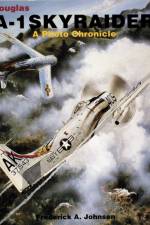
The famed Skyraider in Korea and Vietnam, emphasizing its great ground assault capabilities.
In 1945, the United States Army established a testing center for rockets and guided missiles in south-central New Mexico. Named White Sands Proving Ground, this center was the locale for many of America's first steps towards space. "Rockets and Missiles of White Sands Proving Ground" chronicles major activities at the base from 1945-1958. During this period, the Army, Navy, and Air Force all tested missiles at the desert installation. This book details the development and testing for such missiles as Hermes, Corporal, Nike Ajax, Sergeant, Honest John, and Viking. These missiles formed the backbone of much of America's arsenal during the Cold War and represented major technological advancements. In 1958, the White Sands Proving Ground became the White Sands Missile Range, as it is known today.
This book is an unprecedented view of the Western Front in World War I from the perspective of German amateur photographers. While fighting in the trenches tens of thousands of German soldiers had their cameras with them in their field packs and took shots of the surrounding reality of war. Largely forgotten since the 1920s, German amateur photographs show the trench war at the Western Front as the infantry man or the company officer captured it spontaneously with his camera. In this way an intimate, moving and authentic view of the Western Front evolved that allows the tragedy of trench war to be viewed from a very different angle than that of professional press and propaganda photographers. The rediscovery of German WWI amateur photography is a long overdue step towards the revival of a piece of mens visualized war memory that has been neglected for decades.
Abonner på vårt nyhetsbrev og få rabatter og inspirasjon til din neste leseopplevelse.
Ved å abonnere godtar du vår personvernerklæring.