

























Gjør som tusenvis av andre bokelskere
Abonner på vårt nyhetsbrev og få rabatter og inspirasjon til din neste leseopplevelse.
Ved å abonnere godtar du vår personvernerklæring.Du kan når som helst melde deg av våre nyhetsbrev.

Terry Foltz turns one of the favorite tools of woodworkers, the scrollsaw, into a means of artistic expression. And now he shares his techniques with readers everywhere. Everything from making the pattern to the selection of wood and finely detailed scrollsaw cuts is explained in depth and illustrated with clear color photographs. The main project in this book is a fishing scene with an angler landing "the big one," in a mountain stream surrounded by tall pine trees. What makes the scene extraordinary is not only the complex design, but the fine detail Terry obtains in the linework and silhouette. To take the mystery out of it, he leads readers through the process step-by-step, so that with a little practice they can produce wonderful works of scrollsaw art. Additional patterns and a gallery of Terry's other work are provided , which gives a wealth of ideas while exploring the possibilities for scrollsaw creations.
Whipmaking--the highest refinement of the art of leather braiding--is the main emphasis of this book. While the original text focused on the design and construction of whips made in the Western tradition, this revised edition adds two completely new sections. First, it introduces another major category of whips--those made in the Mongol tradition. Braiding details are shown in an extensive selection of photographs that also serve to document the geographic distribution of the whips; their historic use and characteristics and explained in detailed captions. Second, a new chapter describes the evolution of a whip design that became world-famous through its association with Hollywood. The whips used by Indiana Jones were all made by the author, David W. Morgan. The first movie prompted an immediate revival of interest in whips for performance and sport use, and the enthusiasm has grown with each new film.
Volume IV of the Battle Colors series concludes the examination of USAAF combat insignia and aircraft tactical markings in the European Theater during World War II. Covered within this work are the Ninth, Twelfth, and Fifteenth AAFs from the first to last combat operations by U.S. air power in the Mediterranean Theater of Operations. These operations were extensive and covered territory extending from the sands of North Africa to the heartland of Germany, and from the shores of French Morocco to the oil fields of Romania. Combat units covered include both Day and Night fighters, Bombers, Troop Transports, and Reconnaissance and Special Operations groups/squadrons. Aircraft tactical markings are depicted via original full color illustrations, showing full and close-up profiles in addition to upper elevation views.
Drawn from the files of English, American, New Zealand, Australian and Canadian sources, as well as from veterans, this is the story of Lockheeds Lucky Star the marvelous Ventura! Fashioned from the Lockheed Model 18 airliner, the Ventura went on to fight on nearly every World War II battlefront as a penetration bomber, anti-submarine patrol aircraft, reconnaissance bomber, and even nightfighter.
The most comprehensive how-to/where-to fishing book you''ll find anywhere, covering coastal bay, inlet, inshore, and offshore angling from New York to North Carolina. Whether you fish for flounder off Shinnecock Inlet or yellowfin tuna off Oregon Inlet, Rudow''s Guide will provide you with the know-how you need to boost your catch rate every time you leave the dock. The first section of the book details more than 300 specific hotspots with GPS coordinates included for many. Seasonality, probable catches, and effective tactics for each spot are included. The second section provides you with an in-depth look at each sportfish found in the Mid Atlantic and information on when, where, and how to catch them. The third section of the book focuses on tackle and tactics, and here you''ll discover how and when to employ the most effective methods of fishing up and down the coast, as well as basic and advanced modern rigging techniques. If you fish along the Mid Atlantic coast, Rudow''s Guide to Fishing the Mid Atlantic is a must-read book.
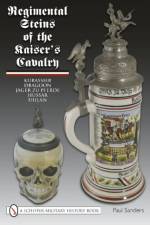
From the late-1800s up to the beginning of World War I some of the most elegant and colorful regimental steins were produced for Kaiser Wilhelm IIs cavalry regiments. Each stein portrayed the unique uniform colors, owner, service dates, and fellow servicemen of the regiment. These steins represent a time of military fashion that disappeared during World War I. The steins presented in this book are organized by cavalry service branch, beginning with the heavy cavalries of Prussia and Saxony, followed by the Hussar and Uhlan (lancer) regiments, and finishing with representative steins of the Mounted Rifle (Jger Zu Pferde) and Dragoon regiments. Each stein is well illustrated in large color photos. This book provides an accurate collectors reference for cavalry regimental steins of the Kaisers time.
The great pin-up illustrators of the '30s through the '60s have inspired a whole new generation of digital photographers. Replacing the artist's palette with myriad photo editing tools, the modern photographer has kept the pin-up tradition alive. This book is a visual delight with more than 300 photos from 25 photographers nationwide. The vintage images from cheesecake pin-up to Hollywood glamour will surely take you back in time, as will classic military nose art and authentic WWII bomber jackets. The pin-up models were photographed in the most scenic locations in the United States.
Translation of: Die Kavallerie Divisionen der Waffen-SS / Michaelis-Verlag.
This new book is a concise combat history of the six Waffen-SS panzergrenadier divisions in World War II. The formation and combat histories of each are discussed in detailed text, along with maps and rare photographs and includes: the 4th SS-Polizei Panzergrenadier Division; 11th SS-Freiwilligen Panzergrenadier Division "Nordland"; 16th SS-Panzergrenadier Division "ReichsfÃ"hrer-SS"; 17th SS-Panzergrenadier Division "Götz von Berlichingen"; 18th SS-Freiwilligen Panzergrenadier Division "Horst Wessel"; 23rd SS-Freiwilligen Panzergrenadier Division "Nederland".
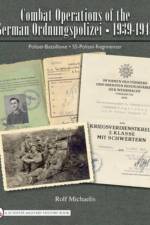
This new book covers the little known combat operations of the German Ordnungspolizei (Order Police - regular uniformed police) during World War II. Discussed are unit formations, personalities, and operations including frontline combat, security duties in occupied countries, as well as the participation of some battalions in ethnic cleansing atrocities. Also included are very rare photos, documents, soldbuchs and maps.
This book presents in words and images the first operational use of German paratroopers in the Russian campaign, and also the first time they served as conventional infantry. Focusing specifically on the 1st Battalion of the 3rd Fallschirmjäger Regiment, it describes the horrific weather, and unspeakable living and fighting conditions endured by these elite soldiers who were deployed in the trenches near the Neva River in northern Russia. Outnumbered in men and equipment, they fought bravely and with distinction, never faltering in their mission. Included with the operational history, are recollections and reminiscences of surviving veterans.
Abonner på vårt nyhetsbrev og få rabatter og inspirasjon til din neste leseopplevelse.
Ved å abonnere godtar du vår personvernerklæring.