















Gjør som tusenvis av andre bokelskere
Abonner på vårt nyhetsbrev og få rabatter og inspirasjon til din neste leseopplevelse.
Ved å abonnere godtar du vår personvernerklæring.Du kan når som helst melde deg av våre nyhetsbrev.

Over 280 authentic, rare, and often unpublished vintage photographs explore life in the Old West - from the Gold Rush to World War I. This visual record is supported with narratives, many in the first person, and important historical information.
Jewelry and decorative manufactured goods in Egyptian Revival style capitalized on public fascination resulting from the rediscovery of Egyptian monuments and artifacts in the late 19th and early 20th centuries. Museum exhibitions, movies, and political events popularized Egyptian architectural designs throughout the world. This is the first book of its kind to focus on revival consumer goods inspired by the ancient culture, including jewelry. Over 400 color photographs and line drawings depict beautiful examples with symbols and images of Egyptian design. Bold colors of natural pigments created the pallets that modern manufacturers used. Images of sylized insects, hieroglyphics, sphinx, royal symbols, and geometric patterns are explored. The manufacturers are introduced with pertinent information that collectors will reference. A chronology of Egyptian history identifies the kingdoms and their relevant styles. This should be an important reference for designers, historians, and ornamental collectors alike. The values with the captions reflect the market today, and the glossary and index are useful for all.
This beautifully illustrated volume presents baskets woven from natural fibers over a long period of time and from diverse American, European and International cultures. Specialized baskets for work places, as architectural elements and for domestic and farm chores are shown in over 400 black and white and 31 color pictures. The text explores the origins of the plants which produce weavable fibres, localized preparation techniques, and a wide variety of weaving styles and forms. The extensive picture captions identify the use, origin, material and size of each basket and reflect the cultural styles. Detailed drawings of many weaves will enable craftsmen today to duplicate and experiment with a variety of materials and patterns.
Enjoyed since Sir John Suckling invented this popular card game in the early 1600s, cribbage is examined here in full-color photos and engaging text. Over 350 color photographs enliven the discussion, displaying many appealing styles and variations. Cribbage boards of war and peace, with 61 and 121 point scoring, and on which pegs follow the straight and narrow or meander across the board in innovative street designs all are featured here. Also a history of the game and of the American companies that have produced cribbage boards such as H. Baron Co., E.S. Lowe, Milton Bradley, and Whitman Publishing is provided. Pictured and discussed are boards created from exotic materials including ivory and bone, and methods for determining the age of heirloom boards. Rounding out the presentation are cribbage board values and an extensive bibliography. A must for card game lovers, gamblers, and collectors alike.
In his long and creative career as a woodcarver, Tom Wolfe has created literally thousands of patterns. Many of them have appeared in his previous books, but many more have not. Now Tom's creative energy and talent is available in a series of books containing his previously unpublished patterns. The first of these books contains a variety of animals from dragons to mice, and pigs to raccoons. In all, 108 of Tom's animals are presented for the use of woodcarvers around the country. This will be the source of many hours of fun and productivity for the woodcarver, resulting in some charming and delightful creations.
This is a history of the 370th Fighter Group in World War II, conveyed in the words and photos of the veterans. The 370th was organized in 1943 to fly the P-47 Thunderbolt. When the group arrived in England in early 1944, they were assigned to the 9th Air Force and converted to fly P-38 Lightnings. They were involved in every major Allied offensive from D-Day onward. The group supported Operation Cobra, flew missions over the Falaise Gap, and flew cover over Operation Market Garden. On missions after the weather cleared, the men could actually watch from the base as their planes made dive-bombing runs on German armored columns. The group converted to P-51 Mustangs in March 1945, just in time for cover missions during Operation Varsity, the Rhine River crossing. This is one of the most thorough and comprehensive group histories written and is a must for veterans, their families, and enthusiasts.
Explore hundreds of remarkable corkscrews from figurals and eclectics to knives: rare and novelty varieties are well represented. For easy reference, all corkscrews are classified by category with current values. A handy companion to The Ultimate Corkscew Book, this is an up-to-date reference that corkscrew addicts can not do without.
Art flourished in France to an exciting and unprecedented degree in the 19th century. Sculpture was a part of this fantastic explosion of creative genius with such artistic giants as Rodin, Barye, d'Angers and Carpeaux. At the same time technological advances in the bronze industry transformed sculpture from an art form for public plazas and the rich to art for living rooms and vestibules of even the middle class. The result has been an abundant supply of nineteenth century French bronzes-some common reproductions, and some extremely valuable limited editions. In this important reference, you can discover a wealth of information. This extraordinary volume contains a complete encyclopedia of almost 750 French artists, with biographies, listings of works (along with size and foundry when known), museum pieces in France and elsewhere, and recent sales. It also includes an overview of 19th century bronze sculpture, the foundries that cast the bronzes, and methods used to cast works. 1000 photographs capture the beauty of the pieces and help identify these and similar works.
“Vigorous training, hazardous duty.” These were the words that lured prospective volunteers to the First Special Service Force, and that promised, for those who measured up, the chance of getting into the war quickly. Unique during World War II, the First Special Service Force evolved as the amalgam of two Armies, Canadian and American, and the men who filled its ranks were among the hand-picked best from throughout North America. Their diverse and intensive training took them from the dust-covered prairies of Montana, to the bitterly-cold peaks of the Great Divide, to the waters of Chesapeake Bay. Their skillfulness, their remarkable esprit de corps, and their legendary endurance saw them through tough combat missions in both the Asiatic-Pacific and the European Theaters of operation. The Supercommandos chronicles the organization, training, and combat operations of the First Special Service Force during its brief but exhilarating history. Accompanying the broad text are nearly 400 black and white images, most unpublished, including a photo-essay by renowned combat photographer, Robert Capa. As well, there are more than forty extraordinary full-color wartime images of the Force both in training and in the combat zone. Beautifully rendered full-color maps, highly detailed Order of Battle graphics, charts, and numerous facsimiles of noteworthy original Force documents are also included. Completing this volume are over eighty full-color images of exceptionally rare, authentic First Special Service Force uniforms, insignia, weapons and equipment. The Supercommandos offers an unparalleled view of one of the world’s all-time military elites, and will prove to be an invaluable resource for any collector, reenactor, veteran, or historian.
Formed in August 1944, Jagdgeschwader 7 was equipped with the revolutionary Me 262 jet fighter, which was faster than any aircraft in existence at the time. This unit experienced all of the highs and lows associated with the introduction of such a radically new design. Thus the history of JG 7 is also the story of the Me 262, and inspired design which broke new ground in many areas of technology, and for which there was simply not enough time for thorough development. The pilots of JG 7 frequently had to make do with improvisation and faced a numerically far superior enemy in an aircraft which was technically immature. Manfred Boehme has collected many documentary sources including first hand accounts, technical records and photo archives - many of the 150 photos are published here for the first time.
A Tucson-based dealer in antique Mexican and Native American arts, McMenamin has traveled extensively in Mexico. With a minimum of text, the 300 color photographs in this volume provide the reader with a vicarious, visual tour of the facades, doors, gates, porches, patios, columns, fountains, canter
Richard Bueschel revises and updates his classic series of books on Japanese Naval and Army Air Force aircraft of World War II. The Japanese navy Mitsubishi/Nakajima G3M1/2/3 96 RIKKO (Nell) is presented in this volume. All variations and markings are covered in this sixth book in a multi-volume series.
More than 2,000 trademarks, logos, and typefaces display the creative mindset of the 1950s. These marks include clothing companies, drugstore products, alcohol and cigars, and food and dairy products. The marks are arranged numerically by registration number from the U.S. Patent and Trade Office, with the USPTO's unique coding system indicating color and shading. Designers, artists, and entrepreneurs will find inspiration for new designs and marketing concepts here while enjoying this eclectic collection.
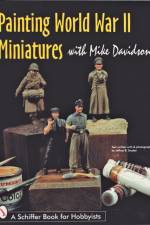
World War II saw a large variety of uniforms on battlefields around the globe. Mike Davidson turns his painting skills to twentieth century warriors. Starting with commercially produced figures, he guides the reader through the process of assembly, painting, and mounting. There are also formulas for mixing a variety of World War II uniform colors to enhance any World War II figure the reader may choose.
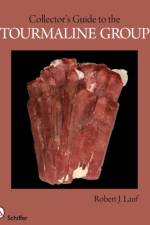
Among rock-forming minerals, the colorful tourmaline group is a favorite of both mineral collectors and gemologists. Superb examples are found at many locales worldwide, and in diverse geological settings from pegmatites to schists. Over 120 clear, crisp photos show each mineral in its geological context. This book will help mineral and gem collectors understand tourmaline mineralogy and see how changes in nomenclature reflect our evolving understanding of the group. The text explains the chemistry and taxonomy of the group, the environment in which tourmalines form, provides a detailed entry for each mineral including locality information and full-color photos wherever possible so that collectors can see what good specimens look like and which minerals one might expect to find in association with them. An extensive bibliography is provided for readers who wish to learn more. Every serious mineralogist, gemologist, and rock hound will need this book.
Finally there is a simple book for do-it-yourselfers who want to undertake a small countertop project. Follow several countertops projects step-by-step through the process of molding, pour, and finishing. Projects include cast-in-place, pre-cast, and hand
Abonner på vårt nyhetsbrev og få rabatter og inspirasjon til din neste leseopplevelse.
Ved å abonnere godtar du vår personvernerklæring.