




















Gjør som tusenvis av andre bokelskere
Abonner på vårt nyhetsbrev og få rabatter og inspirasjon til din neste leseopplevelse.
Ved å abonnere godtar du vår personvernerklæring.Du kan når som helst melde deg av våre nyhetsbrev.

World War I was the first war in which the pictorial full color poster played a major propaganda role. The eras greatest illustrators and fine artists contributed their energies to produce hundreds of great and classic posters. A surprising number of these posters have survived and many are still found in attics and barns today.
McDonald's toys distributed in the United States from January 1990 through mid-1998 are shown and identified. 900 color photographs of Happy Meal promotions, including boxes, bags, premiums, and advertising materials, and a definitive numbering system identify each item, and check-off boxes help you organize and document your collection. Brief historical comments chronicle the world-renowned McDonald's Corporation.
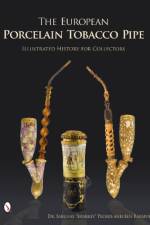
Here is the first illustrated retrospective of the storied evolution and continental acceptance of the porcelain pipe. The history of these beautiful pipes is covered in over 145 brilliant photos and detailed, informative text, from their revolutionary introduction as early objets d'art to their eventual eclipse as twentieth century kitsch. While the history, manufacture, and use of clay, meerschaum, and briar tobacco pipes have been thoroughly documented, the authors have now crafted a chronicle about porcelain tobacco pipes. This pipe originated with an eighteenth-century, European design developed in France and in Germany and its production spanned roughly 250 years. Porcelain pipes for student life, sporting coats of arms, commemorating military campaigns, adorned with a wide range of flora and fauna, and much more are illustrated and described. Whether you are a pipe smoker, pipe collector, or someone who appreciates antique and vintage porcelain objects, this vivid narrative is a fascinating read.
This book covers the diverse amounts of American and British tanks that the Germans used in service during WWII.
British militaria, in particular officer's peak caps, have been largely overshadowed by the interest surrounding Third Reich military collectibles. To the untrained eye one British cap may appear much like another, however this area of collecting is highly specific and can be quite complex. This encyclopedic introduction to British officer's peak caps clarifies important details such as branch and rank distinction, and identification to a particular period. The author also explores the caps' history, giving key introduction and alteration dates, as well as a long list of known outfitters. With over 250 photographs, illustrations and original period imagery, you will observe the sometimes subtle differences, characteristics and changes in the caps' development. This essential guide also explores the interconnected and relevant subject of Commonwealth and post-war caps, while also giving useful information on care and display.
This book is about the men of the 79th Fighter Group on the "forgotten" Mediterranean front in World War II. It tells who they were, what they did, and because it is set in the broader context of the entire conflict in that theater is shows how the war on the ground influenced their war in the air. The 79th spent much of its tour with the RAF's Desert Air Force in Tunisia, Sicily, and the "other side" of Italy - providing readers with an inside look at battles generally not well known to the American public - and also took part in the battle for Rome and the invasion of southern France. It racked up an enviable record. It destroyed hundreds of ground targets, led all Allied fighters in victories over both Pantelleria and Anzio, gave three destroyers the "deep six," and was the only fighter group to sink an aircraft carrier.
Art Deco style, with its modern forms, rich colors, and brilliant glazes, appeared on the scene by 1910, exploded into great heights of popularity by 1925, and remained popular throughout the 1930s. In 475 brilliant color images worthy of the movement, the Art Deco decorated porcelains from Limoges, France, are displayed. While centering on the work of the talented artist Camille Tharaud, examples from Robj, Edouard Marcel Sandoz, Suzanne Lalique, and Royal Limoges are also included. Among the wares presented are over 500 delicate vases, tea sets, figurines, covered boxes and bowls, plates, and night lights. Additionally, Art Deco patterns and company names, direct from the pattern books of Gerard, Dufraisseix, Abbot, are on display.\nThe detailed text provides an indepth look at Camille Tharaud and his work, with an extensive bibliography, and index. Value ranges for the wares displayed are found in the captions.
The fourth volume concerning the trucks and cars employed by Germany during WWII.
Photographs and text offer a thorough account of the German heavy mortars employed during WWII.
Abonner på vårt nyhetsbrev og få rabatter og inspirasjon til din neste leseopplevelse.
Ved å abonnere godtar du vår personvernerklæring.