



Gjør som tusenvis av andre bokelskere
Abonner på vårt nyhetsbrev og få rabatter og inspirasjon til din neste leseopplevelse.
Ved å abonnere godtar du vår personvernerklæring.Du kan når som helst melde deg av våre nyhetsbrev.

John Costello and a team of palliative care specialists take a patient-centred approach to discussing palliative and end of life care across a range of diseases and illnesses.
John Costello and a team of palliative care specialists take a patient-centred approach to discussing palliative and end of life care across a range of diseases and illnesses.
Do your students ever struggle to grasp what exactly constitutes evidence or struggle to see how it applies to practice? Would you like them to feel more confident about critiquing evidence?The need for an evidence base for nursing practice is widely accepted. However, what constitutes evidence and how nurses might apply it to practice is not always clear. This book guides nursing students through the process of identifying, appraising and applying evidence in nursing practice. It explores a wide range differing sources of evidence and knowledge, and helps students to develop key skills of critiquing research and using evidence in clinical decision making.
This is a key text for all those studying for degrees and foundation degrees in early childhood, early years and related disciplines and for Early Years Teacher candidates. It enables students to appreciate and understand the central role of observation for understanding, planning for and educating early years children. This new Third Edition has been updated in line with recent policy and legislation changes and includes: a new first chapter to help students to understand the context of early childhood in England and elsewhere an exploration of the essential elements of child observation that are important across the world new international case studies a research chapter that has been re-written to improve its accessibility to students more case studies throughout to link theory to practice.
It is essential that social work students have a clear grasp of the history and the evolution of social work practice and this classic text explores the fundamental questions: What is social work? How has social work been defined over the years? What does social work look like now? And what is to come?
This book offers students a solid grounding in the core knowledge and skills of communication needed for effective practice. It takes the key theories and explains them in a systematic and practice-related way, to help undergraduate and postgraduate students develop a critical understanding of the subject.
This handbook is a much-needed and in-depth review of the distinctive set of ethical considerations which accompanies qualitative research. This is particularly crucial given the emergent, dynamic and interactional nature of most qualitative research, which too often allows little time for reflection on the important ethical responsibilities and obligationsContributions from leading international researchers have been carefully organised into six key thematic sections:Part One: Thick Descriptions Of Qualitative Research EthicsPart Two: Qualitative Research Ethics By TechniquePart Three: Ethics As PoliticsPart Four: Qualitative Research Ethics With Vulnerable GroupsPart Five: Relational Research EthicsPart Six: Researching DigitallyThis Handbook is a one-stop resource on qualitative research ethics across the social sciences that draws on the lessons learned and the successful methods for surmounting problems – the tried and true, and the new.
Using and Interpreting Statistics is designed to be paired with any undergraduate introduction to research methods text used by students majoring in sociology, social work, criminal justice/criminology, psychology, political science, or communication. It introduces students in these courses to statistics at the conceptual level--focusing on the meaning of statistics, and why researchers use a particular statistical technique, rather than computational skills
Explaining both why and how to use mixed methods for discovering solutions to complex research problems, this book gives readers the tools to adapt approaches to suit their own research conditions.
Covering the general process of data analysis to finding, collecting, organizing, and presenting data, this book offers a complete introduction to the fundamentals of data analysis.
A unique contribution to discussions of social theory, this book examines pre-20th century histories and discussions that culminated in the classical period of sociology, how they were lost, and why they remain important today.
An essential how-to guide appropriate for trainees and practitioners to give them all the tools they need to develop writing for reflective practice.
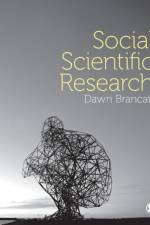
Heavily grounded in theory and context, this book explores the philosophical issues and debates surrounding social science research to help build solid, logical proposals and move from research concepts to fully realized designs.
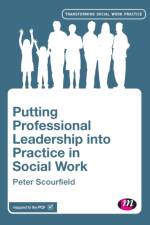
This comprehensive textbook engages in the essential discussion of what professional leadership means in the context of contemporary social work and why this is considered to be important for the future of the profession.
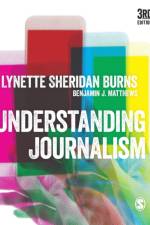
With a new chapter on visual storytelling and expanded coverage of digital and social media platforms, the third edition of this bestselling text explains the principles and techniques required to become a successful - and valued - journalist.
An engaging, practical introduction to research methods, guiding students through the challenges of developing a project, with abundant examples, activities and digital resources.
Fundamental theories and concepts for understanding how business is done in Europe, linked to the current European business environment through a range of up-to-date case studies and examples.
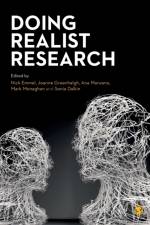
Bringing together leading theorists, researchers and policy makers with expertise in using realist methods, this book is a definitive guide to putting realist methodologies into practice.
Explaining how digital media affect identities, bodies, social relations, artistic practices and the environment, this book helps students understand the key theoretical approaches in the field.
Clearly and lucidly written, this book offers broad coverage of theoretical debates, using case studies from the author's own extensive research to bring the various theories alive. With a sociological approach throughout, it provides up-to-date coverage of key topics including gender and violence, collective violence and media and violence.
A straightforward guide to help teachers and trainee teachers in FE navigate the complex system of teaching qualifications and learn to teach in an ever-changing sector.
Taking readers from media students to media professionals, Introducing Media Practice brings together the 'why' and the 'how to' of media studies. It explains how adding theory to practice improves students' media projects, and shows them how to develop the kind of project skills they need for a career in the creative and media industries.
Provides a clear explanation of the science as well as the practical and clinical aspects of infection prevention and control; giving students a more robust knowledge base to better prepare them for taking on future leadership roles in this area.
The Little Quick Fix to Understanding Probability breaks it down step by step with crystal clear examples and exercises from one of the leading quantitative teachers in the UK. All you need is an hour and you'll finally get it. Once it clicks into place, you can nail that section of your exam.
Zina O'Leary's Research Proposal Little Quick Fix gives you a clever, beautiful workbook packed with real life examples to keep you on track. Use it to: work through guided exercises; understand the elements of the proposal; and, put them together thoughtfully to create your very own research proposal - fast.
Zina O'Leary's Research Question Little Quick Fix teaches students how to find their interest, hone it to a topic, and turn it into a research question that is relevant, interesting and researchable.
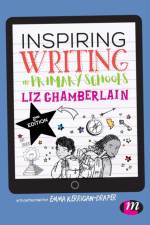
Writing is not a subject; it is part of reading, of speaking, and of listening. Being a writer means being a reader, articulating stories and characters, listening to tales and learning from other writers. Through teaching exciting and engaging lessons you can help children to discover stories, create worlds, record events, mould characters and inspire each other as writers.Inspiring Writing in Primary Schools helps you to teach writing and to know what a good writing lesson looks and feels like. It gives you all the background theory you need to encourage purposeful writing across the curriculum. It includes exemplar lessons and offers them alongside a detailed exploration of what makes them good, and the theory behind them. As a teacher or trainee teacher, you can respond more imaginatively to the way you approach and teach writing. This text will help you to seize the opportunity of the new curriculum and inspire fabulous writing in your classroom."e;Packed with accessible advice, engaging examples of research-informed practice and new ideas for ways to involve and support young writers, it offers primary teachers a breath of fresh air. Emerging from the memorable work of BookTrust's Everybody Writes initiative (which was co-led by Liz Chamberlain) and drawing on her own doctoral research (which involved exploring three young writers' practices at home and at school), the resultant mix of practice and theory - theory and practice is very energising. The authors take a real world view of writing and recognise and respect each child as a writer and each teacher as a professional - a potentially creative pedagogue."e; - Teresa Cremin
Abonner på vårt nyhetsbrev og få rabatter og inspirasjon til din neste leseopplevelse.
Ved å abonnere godtar du vår personvernerklæring.