







Gjør som tusenvis av andre bokelskere
Abonner på vårt nyhetsbrev og få rabatter og inspirasjon til din neste leseopplevelse.
Ved å abonnere godtar du vår personvernerklæring.Du kan når som helst melde deg av våre nyhetsbrev.

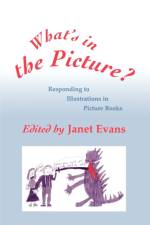
Studying the use of picture books, this text covers: their role in early literacy; their role in intellectual and emotional development; their use as a learning resource; their use in aesthetic development; their use in extending children's thinking; and their role in developing reading skills.
This text examines strategic management in education in order to improve practice in schools and colleges, using ideas derived from international practice and research. It stresses the importance of vision, mission and culture, but also focuses upon the practical implementation of strategy.
Recognising Early Literacy Development
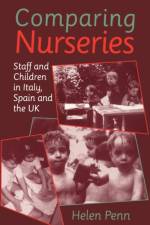
This study of 12 nurseries in Italy, Spain and the UK, examines how they are organized, who works in them and which children attend them. It explores what staff think about the work they are doing and traces how these views are put into action, and how they affect the children.
This text presents relevant research and theory to enhance management practice in education. It intends to articulate good practice on the basis of evidence in educational settings. It presents ideas from international research and practice which are applicable to all phases of education.
This six session resource helps Year 6 pupils make a successful transition and follows a Circle Time approach with follow-up activities. The issues covered include: bullying, friendship, the induction day and meeting new people.
In the fourth addition to her series of books about Circle Time in the Secondary School, Charlie has developed a fascinating Circle Time book that addresses the transition from Key Stage 3 to Key Stage 4 and considers the dip in achievement especially evident amongst boys. At this transitional phase schools focus on the continuity of curriculum rather than emotional needs. This Circle Time book helps develop emotional wellbeing and reduces the likelihood that pupils will struggle in the later stages of secondary education.Young people need signposting, support, understanding, direction and confidence building at the start of their Key Stage 4 journey. The seven sessions consider issues such as:" Co-operation" Conflict and anger management" Relationships" Hopes and aspirations" Stress and stress management.Detailed facilitator notes and copiable resources are included in the bookThe learning achieved in this programme fits some of the requirements of Citizenship and PSHE curriculum.
`This is a zippy read arising out of the international project "effective leadership in a time of change", which grapples with the nature and practice of leadership (as opposed to management or administration) in schools' - Times Educational Supplement
A guide to implementing the National Literacy Strategy for reading which is aimed at those who work with children from Nursery to the end of Key Stage 1. It examines the statutory requirements, classroom management techniques, assessment and approaches to planning for reading, including a number of examples of short and medium term reading plans.
Bringing together many professional perspectives on inclusive education, this book explains: policy changes and the role of curriculum and resources in realizing the ideal of inclusion.
Based on the author's analysis of in-depth interviews and relevant research literature, this booki nvestigates and explores the experiences, problems and pressures faced by black and ethnic minority women managers in the United Kingdom.
This text discusses quality in early childhood services. It covers such issues as: involving parents and children in defining quality; research and evaluation; training and curriculum; and working in ethnically-diverse societies.
Talking about three teenage girls who have some eating problems, this book explores the different effects on each girl. It also describes the difficulties they face as secrets are disclosed and treatment is embarked upon.
`The uncluttered worksheets in The Powerhouse provide a useful template to spark a childs imagination. The sections for pupil evaluations will help develop the skills of self-reflection: a necessary indicator of emotional intelligence. It is a good introduction to emotional literacy and a welcome addition to primary staffroom resources' - Mark Edwards, Times Educational SupplementThis copiable resource, developed from the work of Elizabeth Morris, Principal of the School of Emotional Literacy, is an essential addition to primary school resources on self-esteem.Designed as a teaching aid for the PSHE curriculum, the sections are graded from 5 to 7 years to 9 to 11 years, following the topics:" All about me" Me and my world" You and me" My dreams and wishes" My daily dilemmas. Each section contains teacher notes and photocopiable pupil activity worksheets.The resource helps schools develop the emotional literacy of young people and can be linked to other curriculum topics.
Examines controversial aspects of learning theories, in particular the differing perspectives on the process of knowledge construction, and makes explicit the implications of the various theories for assessment practice.
The Third Edition of this successful text includes extensive changes, based on feedback from students and lecturers. There is a discussion of auditing and the law beyond the issue of third-party liability; and more coverage of recent developments in audit methodologies and techniques.
Written for co-ordinators and for those who are intending to take on the subject leadership, this book addresses the issues of policy development, implementation and evaluation in primary English. The authors provide guidance on the central tasks of subject co-ordination.
This is the first substantial book written from first-hand experience by a British planning practitioner, about what the planning process is actually like in a major British city.
This text provides information on the social context of childcare and educational services in Europe. Offering a comparative analysis of different European countries, it documents the types of provision for young children and describes the training of staff working in early childhood services.
People with disabilities are one of the poorest groups in Western societies. In particular, they lack power, education and opportunities. For most disabled people, their daily reality is dependence on a carer, while trying to survive on state welfare payments. The dominant societal stereotype of disability as a ''pitiful'' state reinforces the view that people with disabilities are somehow ''less than human''. In taking exception to these, and related, conceptions of disability, this book explores one of the crucial contexts within which the marginal status of disabled people is experienced: the interrelationships between disability, physical access, and the built environment. The author seeks to explore some of the critical processes underpinning the social construction and production of disability as a state of marginalization and oppression in the built environment. These concerns are interwoven with a discussion of the changing role of the state in defining, categorising, and (re)producing ''states of disablement'' for people with disabilities.Focusing primarily on the United Kingdom, although with a substantial discussion of disability and access issues in the USA, the book also considers the role of the ''design professionals'', architects, planners, and building control officers, in the construction of specific spaces and places, which, literally, lock people with disabilities ''out''. From the shattered paving stones along the high street, to the absence of induction loops in a civic building, people with disabilities daily negotiate through hostile environments. Using a range of empirical material, the book documents how the environmental planning system in the United Kingdom is attempting to address the inaccessible nature of the built environment for people with disabilities, while discussing how disabled people are contesting the constraints placed upon their mobility.The book draws on a range of ideas from geography, sociology, and environmental planning and reflects the emergent interest in planning schools with equal opportunity issues and planning for minority groups. It will be relevant to final year geography, planning, and architecture courses and postgraduate planning courses.
The book highlights the main research agendas of these countries, and includes a special chapter discussing the strengths and weaknesses of comparative research, and proposing a way forward for the field.
A study of mathematics curriculum management in nursery and infant schools. It examines the formulation of a mathematics policy, the role of the mathematics co-ordinator, resource management, partnerships with parents, planning processes, classroom and lesson management, assessment, managing differentiation, and record-keeping and reporting.
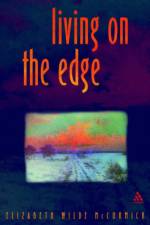
Many of us know what it is like to live on the edge. Sometimes we feel stuck there, in limbo and in fear of tumbling over. Our fear of the edge and our personal darkness can be transformed into a positive and creative drive for greater inner strength.
This guide, incorporating case studies, provides information on drugs themselves as well as the methods prisons use to tackle drug misuse, including reducing the supply and demand for drugs, treatment programmes and Throughcare.
Suitable for those using Circle Time with 3 to 7 year olds, this book sets out strategies and activities for making the most out of Circle Time sessions. It includes Pre and post-activities, to encourage children to focus on the content of Circle Time as a way of sharing their work, ideas and thoughts.
The chapters in this book outline the history and scope of educational research. They also discuss many of the major issues at stake in current debates, and exemplify the contrasting perspectives to be found in the literature. This is the companion volume to Educational Research in Action (edited by Roger Gomm and Peter Woods). It is one of two course readers for The Open University course E824 Educational Research Methods.
A practical guide to implementing and sustaining a developmental approach to writing in the early years. It covers such topics as planning a writing curriculum, spelling, handwriting, assessment, bilingual writers, gender, parents and creating a writing policy.
This text has three objectives: to identify the essential features of forms of assessment which will be genuinely supportive of education in the early years; to help teachers in their search for such forms; and to evaluate the likely impact of the systems of external assessment recently imposed.
This text shows how blockplay illustrates at the micro-level the development of the child's understanding of and competence in controlling three-dimensional space. Aesthetics, mathematics, the processes of science and problem-solving are presented as part of the reality of blockplay.
Abonner på vårt nyhetsbrev og få rabatter og inspirasjon til din neste leseopplevelse.
Ved å abonnere godtar du vår personvernerklæring.