
















Gjør som tusenvis av andre bokelskere
Abonner på vårt nyhetsbrev og få rabatter og inspirasjon til din neste leseopplevelse.
Ved å abonnere godtar du vår personvernerklæring.Du kan når som helst melde deg av våre nyhetsbrev.

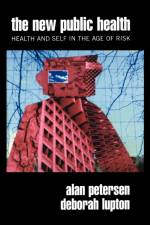
Continuing and developing the argument of Deborah Lupton's "The Imperative of Health", the authors use contemporary socio-cultural and political theory to examine: the notion of citizenship; the concept of the "healthy citizen"; the healthy cities project; and community participation.
This text provides a comparative analysis of contemporary and future changes in welfare states, looking at the different patterns found in Europe, North America, the Antipodes, and the emerging scenarios in Latin America, East Asia and Central and Eastern Europe.
Doing Research with Children and Young People introduces researchers to the key considerations involved in working with children and young people.
Integrates the thinking in the human services to provide supervisors and those preparing to become supervisors with an approach to the important skills and knowledge needed for effective practice in the 21st century. This title builds upon past efforts to define the principles and practices of supervision in the human services.
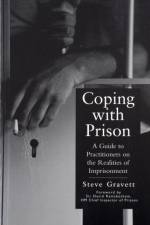
Coping with Prisons explores the unique nature of the prison environment and examines the range of opportunities that exist to help prisoners address their offending behaviour, acquire skills, and gain qualifications.
This book adds a valuable `Chinese voice' to the current Western-dominated forum on Chinese business negotiating style. The book provides the reader with an in-depth socio-cultural understanding of Chinese negotiating behaviour and tactics in the context of Sino-Western business negotiation. It addresses this fascinating and complex subject by looking systematically at various components of Chinese business culture which range from contemporary Chinese politics to ancient Chinese philosophies and military stratagems.
This book sets out to examine how animals affect their companion humans' quality of life. The contributors address human animal interaction (HAI) according to the elements that define quality of life: physical; mental/emotional and social health; functional health; and general well-being. The book will be required reading for all health and social science professionals caring for clients who already have companion animals or for clients who might benefit from such interaction.
This text focuses on normative family problems, such as birth or leaving home; problems which distort normative expectations, such as divorce and step-parenting; and those that are produced by the unexpected, such as accidents or chronic illnesses.
The widespread rejection of conventional theory and method has led to the evolution of different ways to gather and analyze psychological data. This text provides a guide to key effective methods, for example, semi-structured interviews, grounded theory, and discourse analysis.
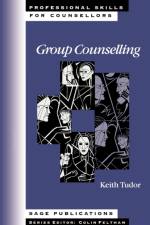
Provides guidelines and help for counsellors wishing to work in and with groups. The book: covers the stages from setting up a group, developing and maintaining it and bringing it to and appropriate end; an integrates multicultural perspectives on groups and group-work.
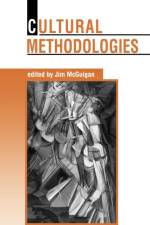
Cultural Methodologies illustrates the distinctiveness and coherence of cultural studies as a site of interaction between the humanities and the social sciences.
The art and science of doing qualitative research involving children is the subject of this book. Elizabeth Graue and Daniel Walsh carefully discuss the research process, emphasizing the areas where work with children presents particular challenges.
This book provides those who want to plan organizational surveys with a step-by-step, `how-to' guide. The authors describe the issues that must be addressed at each step in the process, the advantages and disadvantages that result from many of the choices that must be made, and practical lessons learned from their years of experience in designing and conducting surveys.
How do we group different subjects on a variety of variables? Should we use a classification procedure in which only the concepts are classified (typology), one in which only empirical entities are classified (taxonomy), or a combination of both? Kenneth D Bailey addresses these questions and shows how classification methods can be used to improve research. Beginning with an exploration of the advantages and disadvantages of classification procedures, the book covers topics such as: clustering procedures including agglomerative and divisive methods; the relationship among various classification techniques; how clustering methods compare with related statistical techniques; classification resources; and software packages for use in clustering techniques.
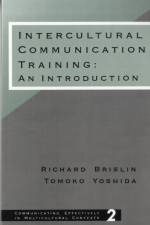
This unique handbook provides an organizational framework for planning and establishing intercultural communication training programmes. Drawing from intercultural communication and cross-cultural training, this guide emphasizes those aspects of training that explicitly involve face-to-face communication. The approaches covered apply to any situation where good personal relations and effective communication need to be established with people from different cultural backgrounds.
Three new strategies for research - post-positivism, critical theory and constructivism - challenge scientific positivism. These strategies are examined and compared on issues such as conducting research between paradigms, answering questions of applied research and what constitutes good work.
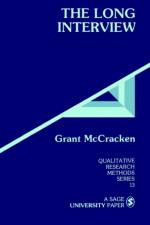
The Long Interview provides a systematic guide to the theory and methods of the long qualitative interview or intensive interviewing. It gives a clear explanation of one of the most powerful tools of the qualitative researcher. The volume begins with a general overview of the character and purpose of qualitative inquiry and a review of key issues. The author outlines the four steps of the long qualitative interview and how to judge quality. He then offers practical advice for those who commission and administer this research, including sample questionnaires and budgets to help readers design their own. The author introduces key theoretical and methodological issues, various research strategies, and a simple four stage model of inquiry, from the design of an open-ended questionnaire to the write up of results.
Offers a broad-ranging perspective of the contemporary debates surrounding social constructionist perspectives in psychology. The contributors map connections between theory, method, and politics in social research in the context of social constructionist and discursive debates.
Brings together contributions to the development of person-centred theory and practice from European practitioners. Covering a range of person-centred issues, the book is useful to experienced practitioners, supervisors, trainers and trainees.
Completely rewritten, the Third Edition of this successful guide to European media systems has also been expanded to include Central and Eastern Europe as well as Western Europe. Covering 23 countries, the volume highlights and explains key issues of debate and current tendencies in media policy.
Formerly a publication of The Brain Store This book is packed with easy-to-use strategies and cutting-edge research to help you use ergonomics, lighting, temperature, color, and other factors to boost learning and student success.
Offers a comprehensive, contemporary and critical review of the key issues in strategic human resource management. This book helps students to explore thinking on topics as diverse as performance, pay, process reengineering, structure, ethics, culture, change and leadership.
Provides critical analysis of the rapidly changing media industry that students need in order to get behind the headlines and understand our increasingly media-saturated society. This second edition uses two conceptual models to understand the media: the market model and public sphere model.
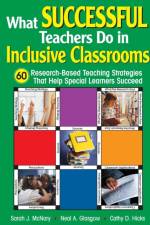
This guide focuses on maximizing student achievement by outlining a full range of research-based methods that can be interwoven to create the best instructional plan for special learners.
Formerly a publication of The Brain StorePacked with more than 1,000 innovative and practical ideas, this book shows how to raise intrinsic motivation, incorporate terrific energizers, build teams that work, and much more.
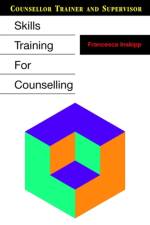
A guide that helps those who are training counsellors, as well as those training to be counsellors. It deals with: teaching and learning skills, curriculum development; preparation and setting up of courses; teaching ideas, competencies and assessment; with a final chapter of the competencies of the trainer.
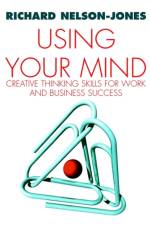
A guide to using one's mind skillfully and creatively which focuses on how to manage oneself rather than other people. It covers thinking skills such as setting realistic goals, visualizing problems, making accurate decisions, and preventing and managing crises. It also includes fifty exercises.
John McLeod examines the role and significance of stories in psychotherapy from within a broad-based cultural and theoretical framework, drawing on research from psychology, anthropology and sociolinguistics, while fully integrating previous theory and research.
Sets out practical guidelines, backed up by examples and a theoretical base, for the management of difficult, disturbed or disturbing clients. This book concentrates on the difficulties of the transaction between practitioner and client in their respective social contexts.
Abonner på vårt nyhetsbrev og få rabatter og inspirasjon til din neste leseopplevelse.
Ved å abonnere godtar du vår personvernerklæring.