





















Gjør som tusenvis av andre bokelskere
Abonner på vårt nyhetsbrev og få rabatter og inspirasjon til din neste leseopplevelse.
Ved å abonnere godtar du vår personvernerklæring.Du kan når som helst melde deg av våre nyhetsbrev.

They provide a view of child neglect which moves beyond the current child welfare focus on parental omissions in care.
A guide to developing a response to domestic violence using the Duluth Model.
Describing the uses and limitations of psychotropic drugs, their effectiveness and impact on the counselling process, this book lays down guidelines for assessment, drug withdrawal and counselling approaches to consider while clients are still taking drugs or are withdrawing from drug use.
'In the staid world of journalism research, it is a delight to see an attempt to open that focus of inquiry to new interpretive frames.... this volume takes definitive steps toward achieving that aim' - Popular Communication
Explores the use and effects of psychotherapy with the mentally handicapped. The theory, practice and techniques of a range of individual or group therapeutic approaches for different circumstances are outlined.
Aimed at those dealing with child and adolescent problems, this text addresses a range of key issues about the nature and role of assessment in different contexts and presents an evaluation of the various assessment approaches available.
The purpose, practice and outcomes of groupwork with women are presented in this volume, drawing on the involvement of the authors in establishing and running community based women's groups.
Everyday life events are employed in this volume to illustrate a phenomenological view of human nature, development and interpersonal relationships.Becker draws on the work of key thinkers in existential philosophy, phenomenological philosophy and psychology, blended with humanistic, descriptive accounts of living and relating, to show how their insights can provide a rich and useful orientation to the everyday world of human existence.
Introducing content analysis methods from a social science perspective, this book focuses on the reliability and viability of these coding procedures and their associated category schemes. This text is intended for those who have a basic knowledge of research methods or data analysis.
The authors examine the theoretical influence of culture on interpersonal communication. They provide a framework for guiding future, and for interpreting past, research in the field.Because cross-cultural comparisons of interpersonal communication must be theoretically based, culture must be treated as a variable in research. This concept is presented in the first two chapters and then applied to specific areas of research. Previous research is reinterpreted in the light of this concept, and explanations are provided on how culture has influenced specific areas such as situational factors, verbal and nonverbal communication styles, interpersonal and intergroup relationships.
Kirk and Miller define what is -- and what is not -- qualitative research. They suggest that the use of numbers in the process of recording and analyzing observations is less important than that the research should involve sustained interaction with the people being studied, in their own language and on their own turf. Following a chapter on objectivity, the authors discuss the role of reliability and validity and the problems that arise when these issues are neglected. They present a paradigm for the qualitative research process that makes it possible to pursue validity without neglecting reliability.
This book explains academic anxiety, what causes it and what its physical and intellectual effects are. Strategies are provided for teachers and school counsellors to use with students in a one-on-one setting to overcome serious academic anxiety.
Why do people in a certain group behave the way they do? And, more importantly, what specific criteria was used by the group in question? Ethnographic Decision Tree Modeling presents a practical method for answering these questions. From starting research to testing and verifying results, this handy volume takes you step-by-step through this unique research process.
The Handbook of Cognition provides a definitive synthesis of the most up-to-date and advanced work in cognitive psychology in a single volume
This Handbook consists of 26 chapters on historical sociology. Part One is devoted to Foundations, Part Two moves on to consider major approaches and Part Three is devoted to the major themes in historical sociology. Systematic and informative it offers readers the most complete and authoritative guide to historical sociology.
Drawing together contributions and new research from those at the forefront of supervisory practice, this volume answers the question of where responsibility lies within the client-counsellor-supervisor triad.
This workbook accompanies Treating Nonoffending Parents in Child Sexual Abuse Cases: Connections for Family Safety. It features many useful checklists, illustrative diagrams, and spaces to record thoughts and feelings as the client works through the process.
Presents a model for treating specific mental illnesses when combined with substance abuse, integrating theory, research, and techniques from the substance abuse and general mental health fields.
This reader provides a thorough grounding in issues related to the study of crime, the criminal justice system, and social control. The editors indicate crime's varied and conflicting history as well as its current debates. The mixture of historical and more recent readings shows a variety of perspectives.
This book is an anthology of 34 previously published articles and book exerpts that focus on the major theories, past and present, that inform criminology today. While there are a variety of readers available in criminological theory, Cote provides a greater emphasis on some of the novel, newer theories, and some of the often overlooked theoretical perspectives - particularly the newer integrative perspectives. Additionally, an innovative section early in the book contains articles looking at the points where theory and research in the fields of criminology and criminal justice merge and diverge. Features/Benefits: ┬╖ Some new perspectives not often seen in theory readers┬╖ There is a greater emphasis on issues of gender, race, and class within criminological theories and criminality giving the book a more contemporary feel.┬╖ The anthology includes and expands on topics typically neglected in other texts, namely white-collar crime; developmental criminology; new penology; postmodern and constitutive theories; and integrated theories that consider genetics, psychology, and environmental approaches.┬╖ Brief overviews introducing each article discuss the author, the article''s important points, and a context for its development and value.┬╖ Discussion questions at the end of each theory section.
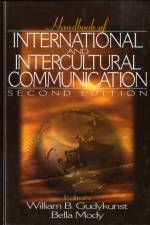
In bringing together the contributions of forty-two accomplished scholars to create the Second Edition of the Handbook of International and Intercultural Communication, William B Gudykunst and Bella Mody summarize the state-of-the-art in international, cultural and developmental communication and set the agenda for future research.
Offers a unique look at these dreadful crimes from a variety of viewpoints including those of people directly involved as perpetrators or investigators.
What is a committed employee? Are such employees better or worse off than uncommitted employees? What are the organizational advantages and disadvantages of having a committed workforce?This book overviews academic and popular perspectives on commitment in employees. It examines the multiple faces of commitment and the links that have been established between the various forms of commitment and organizational behaviour. In addition, questions concerning individual differences, organizational characteristics, job characteristics and work experiences associated with commitment are explored. The volume concludes with a discussion of what organizations can do to manage commitment effectively, including under difficult circumstances such as merger/acquisition, downsizing and relocation.
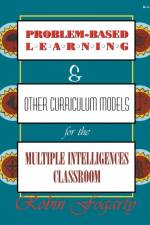
Formerly a SkyLight publicationBy using the holistic models presented in this invaluable resource, teachers can structure curricula in ways that give them more time to teach.
- Contains 296 printable worksheets on a CD-ROM!These resources aim to encourage teachers, parents or carers and children to work in partnership in setting appropriate targets which will promote positive attitudes to learning and behaviour within the classroom and school context. Children are encouraged to see themselves as learners in a positive way, enhancing their self-image and in turn affecting their learning and behaviour. The resources can be used to reinforce positive learning patterns and behaviour in all children, but they are particularly useful for work with children who exhibit learning and emotional and behavioural difficulties. There are facilitator notes on how to use the 12 sections, which include: . target book covers . daily reward sheets . weekly reward sheets . playtime reward charts . reward charts for home and school.
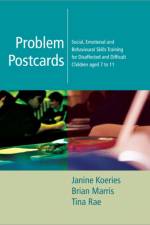
Problem Postcards presents a series of social dilemmas for young people to discuss and find positive outcomes. The style is engaging because it follows the example of letters sent to an agony aunt with the young people having to compose suitable responses. There are also worksheets for written work.
Including a CD-ROM, this title contains games that are useful for those working with small groups of young people who find it difficult to behave and co-operate with their peers. It addresses socio-emotional development, such as: social and friendship skills; anger management; coping with teasing; coping in the playground; and paying compliments.
Introduces readers to the case method of instruction popularized by the John F Kennedy School of Government and the Harvard Business School. This is a practical, process-oriented guide to teaching, writing, and learning with the case method. It selects the broadest possible context for discussing the use of cases in teaching.
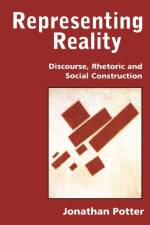
How is reality manufactured? The idea of social construction has become a commonplace of much social research, yet precisely what is constructed, and how, and even what constructionism means, is often unclear or taken for granted. This work offers a tour of the central themes raised by these questions.
Abonner på vårt nyhetsbrev og få rabatter og inspirasjon til din neste leseopplevelse.
Ved å abonnere godtar du vår personvernerklæring.