



Gjør som tusenvis av andre bokelskere
Abonner på vårt nyhetsbrev og få rabatter og inspirasjon til din neste leseopplevelse.
Ved å abonnere godtar du vår personvernerklæring.Du kan når som helst melde deg av våre nyhetsbrev.

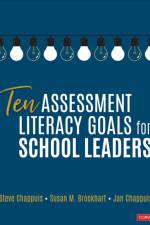
Assessment literacy leads to improved outcomes for allDo you know how to ensure teachers have the knowledge and skill to use assessment data to improve student learning? Do you know the influence that student involvement in assessments has on motivation and learning? This book guides you and your leadership team through 10 assessment literacy goals with practical content, how-tös, success indicators, and activities to extend and process learning. You will come away understanding the attributes of comprehensive and balanced assessment systems, the necessity for clear academic achievement targets, and why assessment quality is essential.In addition to providing rubrics, processes, and practical tools that work across all grade levels and subject areas, this book shows you how to: Work with staff to integrate formative assessment and sound grading practices Communicate with all members of the school community about student learning Protect students and teachers by avoiding unethical and inappropriate assessment use Use student assessment information to improve and inform instruction Develop assessment policies that support quality assessment practiceAdvance your understanding of assessment so your teachers can accurately measure learning, practice effective formative assessment strategies, and ensure and maintain a comprehensive and balanced assessment system in your school or district.
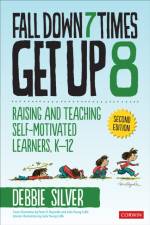
Failure is just one step on the path to success. Failure is not only a possibility for learners during these challenging times, but a productive, concrete way of gaining ground. How can parents and educators teach kids to turn failure into progress toward success? This revised edition of the beloved bestseller, Fall Down Seven Times, Get Up Eight, has sensible answers, including both what to say and what not to say to truly help kids self-motivate and become independent, lifelong learners. Rich with fresh insights, this new edition offers a deeper understanding of how motivation works along with new, practical, research-driven strategies for spurring learners to thrive. It features: · The latest research on motivation theory, persistence, self-regulation, grit, and a growth mindset in learners. · An expanded focus on equity and culturally responsive approaches to ensure that all learners maximize their full potential.· A new chapter on giftedness, an updated discussion guide, videos available via QR codes, and a robust companion website.
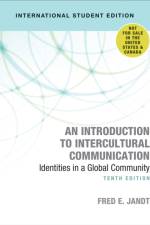
This book prepares today's readers to successfully navigate our increasingly global community, introducing communication skills and concepts that will enable readers to interact successfully with different cultures and ethnic groups. Jandt offers unique insights into intercultural communication, at home and abroad, through an emphasis on history, culture, and popular media.
Packed with experiential exercises, self-assessments, and group activities, this book develops essential management skills students can use in their personal and professional lives.
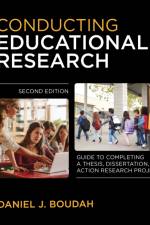
Designed to be used during the research process, Conducting Educational Research: Guide for Completing a Major Project, Second Edition, walks readers through each step of a research project or thesis, including developing a research question, performing a literature search, developing a research plan, collecting and analyzing data, drawing conclusions, and sharing the conclusions with others. Throughout the book, Daniel J. Boudah covers all types of research (including experimental, descriptive, qualitative, group designs, and single subject designs) and helps readers link research questions to designs, designs to data sources and data sources to appropriate analyses. Each chapter includes activities and exercises to ensure the researcher is asking the right questions and producing a quality project.
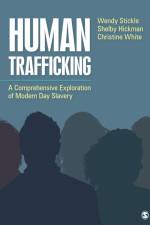
Human Trafficking: A Comprehensive Exploration into Modern Day Slavery examines the legal, socio-cultural, historical, and political aspects of human trafficking and modern-day slavery in the United States and around the world. The goal of this text is to provide an accurate understanding of all forms of human trafficking and current responses to this crime.
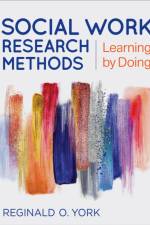
Social Work Research Methods: Learning by Doing instills in students an appreciation for science-informed practice as a means of evaluating client outcomes. The book includes a step-by-step journey through the process of conducting research.
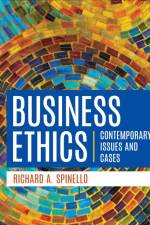
Business ethics aims to deepen students' knowledge of the topic through a multidisciplinary approach grounded in moral philosophy, management principles, business history, and economics.
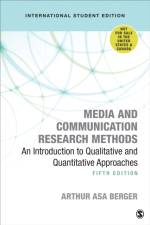
This step-by-step introduction to conducting media and communication research offers practical insights along with the author's signature light-hearted style to make discussion of qualitative and quantitative methods easy to comprehend.
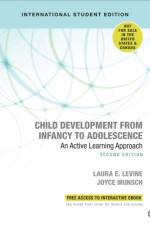
Chronologically organized,this book presents topics within the field of child development through unique and highly engaging active learning opportunities.
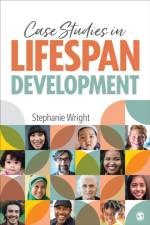
Case Studies in Lifespan Development offers students a comprehensive view into life’s key developmental stages through unique, diverse, and moving cases. Author Stephanie M. Wright presents a series of 12 case studies shaped by the contributions of real students—including their observations, concerns, and moments of triumph—to build immersive examples that readers can relate to and enjoy.
International in scope, Security and Crime is an authoritative and multidisciplinary analysis of the relationship between security and crime, addressing much of the confusion about its nature and meaning, clarifying its relevance to criminological analysis, and giving due attention to the interdisciplinary nature of the topic.
The Research Experience is the complete guide to the research process. It features technologies that are increasingly available to students and faculty conducting survey research, such as Survey Monkey, Qualtrics, Amazon Mechanical Turk and other new tools.
A student introduction to the systems of meaning, structure, and belonging that make up the complex social phenomena of religion.
This groundbreaking book, based on research from an innovative mixed-methods study, provides a holistic approach to coaching that honors both mind and heart.
Through a reflective lens, this book equips teachers and support staff to help all students thrive by identifying and fostering each teacher's and child's individual differences and unique strengths.
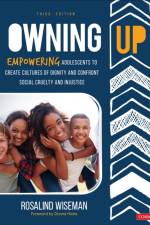
Foster dignity and respect and combat youth aggression This new edition from bestselling author Rosalind Wiseman is packed with the latest research-based strategies and revised to include all that she has learned while working over decades with young people. Owning Up provides the tools to own up and take responsibility for unethical behavior and to treat yourself and others with dignity. This bigger, comprehensive edition features:· Three flexible, dynamic curricula separated by grade· A new chapter on successfully implementing a social and emotional learning program in every school· More games, role-playing activities, and provocative discussion questions to use in co-ed or single-sex groups· Even more lessons and resources, updated to address social media, bystanding, and how young people can develop strong, healthy relationships with adults
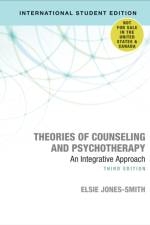
Theories of Counseling and Psychotherapy: An Integrative Approach by Elsie Jones-Smith is for the theories of counseling and psychotherapy course at both the undergraduate and graduate level. This Third Edition, offers an extensive array of theories that includes all the mainstream theories as well as such contemporary approaches as narrative, feminist, LGBT, and post-modern . It offers students an integrative framework with which to assess the various theories with respect to possible clinical application. In addition to listing and describing theories, this Third Edition takes it a step further by comparing and contrasting them, showing strengths and weaknesses, in a way to help students to apply them flexibly. Students will be challenged to understand what it is about their own personalities that will lead them to accept or reject various theoretical perspectives.
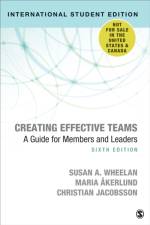
Based on the author¿s many years of consulting experience with teams in the public and private sectors, Creating Effective Teams: A Guide for Members and Leaders describes why teams are important, how they function, and what makes them productive. Susan A. Wheelan covers in depth the four stages of a team¿forming, storming, norming, and performing¿clearly illustrating the developmental nature of teams and describing what happens in each stage. Separate chapters are devoted to the responsibilities of team leaders and team members. Problems that occur frequently in groups are highlighted, followed by what-you-can-do sections that offer specific advice. Real-life examples and questionnaires are used throughout the book, giving readers the opportunity for self-evaluation.
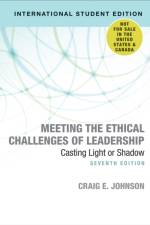
Taking an interdisciplinary approach, this seventh edition explores the ethical challenges of leadership, helping the reader make ethical decisions, lead with integrity and create an ethical culture.
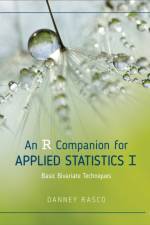
An R Companion for Applied Statistics I: Basic Bivariate Techniques breaks the language of the R software down into manageable chunks in order to help students learn how to use it. R is a powerful, flexible, and free tool. However, the flexibility¿which eventually becomes a great asset¿can make the initial learning curve appear steep. This book introduces a few key aspects of the R tool. As readers become comfortable with these aspects, they develop a foundation from which to more thoroughly explore R and the packages available for it. This introduction does not explain every possible way to analyze data or perform a specific type of analysis. Rather, it focuses on the analyses that are traditionally included in an undergraduate statistics course and provides one or two ways to run these analyses in R. Datasets and scripts to run the examples are provided on an accompanying website. The book has been designed to be an R companion to Warner¿s Applied Statistics I, Third Edition, and includes end-of-chapter instructions for replicating the examples from that book in R. However, this text can also be used as a stand-alone R guide, without reference to the Warner text.
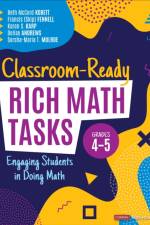
Detailed plans for helping elementary students experience deep mathematical learning The more than 50 mathematical tasks in this guide will challenge your students to do deep problem-based learning. These ready-to-implement tasks connect concepts, skills, and practices and encourage students to reason, problem-solve, discuss, explore, justify, monitor their own thinking, and connect the mathematics they know to new situations. In other words, these tasks allow students to truly do mathematics! Written with a strengths-based lens, this guide includes:¿ Complete task-based lessons, referencing mathematics standards and practices, vocabulary, and materials ¿ Downloadable planning tools, student resource pages, and thoughtful questions, and formative assessment prompts¿ Guidance on preparing, launching, facilitating, and reflecting on each task¿ Notes on access and equity, focusing on students¿ strengths, productive struggle, and distance or alternative learning environments.
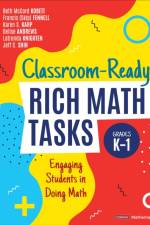
Detailed plans for helping elementary students experience deep mathematical learning The 56 mathematical tasks in this guide will challenge your youngest students to do deep problem-based learning. These ready-to-implement tasks connect concepts, skills, and practices and encourage students to reason, problem-solve, discuss, explore, justify, monitor their own thinking, and connect the mathematics they know to new situations. In other words, these tasks allow students to truly do mathematics! Written with a strengths-based lens, this guide includes:¿ Complete task-based lessons, referencing mathematics standards and practices, vocabulary, and materials ¿ Downloadable planning tools, student resource pages, and thoughtful questions, and formative assessment prompts¿ Guidance on preparing, launching, facilitating, and reflecting on each task¿ Notes on access and equity, focusing on students¿ strengths, productive struggle, and distance or alternative learning environments.
Drawing on the expertise of major names in the field, this text provides comprehensive coverage of the key methods for analyzing, interpreting, and writing up qualitative research in a single volume.
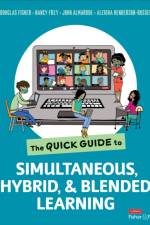
What a year! Twelve months and counting since COVID expanded, stretched, and blurred the boundaries of teaching and learning, at least one thing has remained constant: our commitment as educators to move learning forward. It¿s just the context that keeps changing¿why Doug Fisher, Nancy Frey, John Almarode, and Aleigha Henderson-Rosser have created a follow-up to The Distance Learning Playbook, their all-new Quick Guide to Simultaneous, Hybrid, and Blended Learning.First, to be clear: simultaneous learning must not be an additive, meaning we combine two entirely different approaches and double our workload. That¿s unsustainable! Instead, we must extract, integrate, and implement what works best from both distance learning and face-to-face learning environments. Then and only then¿Doug, Nancy, John, and Aleigha insist¿can we maximize the learning opportunities for all of our students.To that end, The Quick Guide to Simultaneous, Hybrid, and Blended Learning describes how to: Have clarity about the most important learning outcomes for our students. This will help us decide what is best done asynchronously and what is best done with our "Roomies" and "Zoomies." Capitalize on the potential of asynchronous learning and use that valuable time to preview and review. This way we can draw on evidence from these tasks to help us decide where to go next in our teaching and our students¿ learning. Utilize synchronous learning for collaborative learning and scaffolding of content, skills, and essential understandings. In doing so, we can collect additional evidence of students¿ learning so that we provide feedback that moves learning forward. Establish norms for combining synchronous and face-to-face environments in simultaneous learning. Importantly, we have to set up the environment for our Roomies and Zoomies to learn together. Develop learning experiences and tasks that maximize learner engagement for all learners in all settings. Focus on acceleration and learning recovery. In other words, no more deficit thinking! Our students are where they are and there are specific things that we can do to ensure their learning. Implement the guide¿s many resources, strategies, and templates."None of us chose to be in a situation where some learners are physically in our classrooms, while others attend virtually and remotely," write Doug, Nancy, John, and Aleigha. "However, what we hope to convey is that we¿ve got this! While the context is different, the principles behind clarity, planning, high-yield strategies and interventions, student learning, and assessment hold steady." This is where The Quick Guide to Simultaneous, Hybrid, and Blended Learning will prove indispensable on this next leg of our journey.
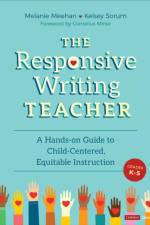
"This book is an instructive call to action for all of us who need to be reminded of what hope enacted as classroom practice can look like." ¿Cornelius MinorEvery classroom is shaped by the skills, languages, social and cultural identities, perspectives, and passions of the children within it. When you approach writing instruction with a deep understanding of children in your classroom, everything else¿assessment, planning, differentiated instruction, mentor and shared texts¿begins to fall into place. And you can teach writing with inclusion, equity, and agency at the forefront. Authors Melanie Meehan and Kelsey Sorum show you how to adapt curriculum to meet the needs of the whole child. Each chapter offers intentional steps for responsive instruction across four domains: academic, linguistic, cultural, and social-emotional. Features include: Inspiration, classroom examples, and scaffolded tips for creating individualized resources Customizable information-gathering and planning tools, classroom charts, and writing samples Space for making notes and working through ideas Links to online content, including printable templates
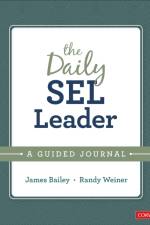
Everyone in your school community benefits when you invest in YOU.While accountability to standards and assessment are foundational to education and learning, the emotional needs of the educators at the center of the work have been overlooked. These brief, thought-provoking daily reflections emphasize a leader¿s social and emotional awareness as the key to reinvigorating, renewing, and sustaining any learning community. Using the core CASEL skills presented in six modules, this book will help you:· Become more self-aware of what each CASEL skill means for leadership· Engage community stakeholders confidently and inclusively · Build stronger relationships throughout schools, classrooms, and communities· Increase credibility and approachability
Abonner på vårt nyhetsbrev og få rabatter og inspirasjon til din neste leseopplevelse.
Ved å abonnere godtar du vår personvernerklæring.