























Gjør som tusenvis av andre bokelskere
Abonner på vårt nyhetsbrev og få rabatter og inspirasjon til din neste leseopplevelse.
Ved å abonnere godtar du vår personvernerklæring.Du kan når som helst melde deg av våre nyhetsbrev.

New Directions in Interpersonal Communication presents the latest research being done today and reflects the changes that have occurred in interpersonal communication research during the past 18 years.
This book takes an original approach to teaching about qualitative research by providing rich examples of stories of various student qualitative research experiences.
This book assists practitioner-scholars in crafting and conducting a qualitative dissertation.
Integrating Teaching, Learning and Action Research: Enhancing Instruction in the K-12 Classroom shows how action research can be used as an integral part of the teaching and learning process.
This book challenges students to think about the future of aging policy as it relates to issues of access and financing of aging policies and programs.
With over 100 entries on key concepts and theorists, this title provides full coverage of the field, explaining fundamental concepts and introducing new and unfamiliar terms. It also offers definitions, examples in the field of management studies, and, criticisms and possible future directions.
This first volume in the five volume Cultures and Globalization series analyses conflicts and tensions: the cultural dimensions of conflict and the conflictual dimensions of culture.
Focuses on the intervention strategies which can be employed by counsellors to help individuals suffering from emotional and physiological stresses engendered in the workplace. This book also discuss the factors influencing the problem: factors which can be tied to the individual, to the work setting and to the larger social context.
Provides a theoretical framework which helps the reader make sense of the detail contained in the later case studies. This title shows how choosing a particular concept of quality has significant political and organizational consequences and also discusses how quality may be measured.
This compelling book provides cutting-edge information on studies on sexual violence against women conducted on North American campuses - and simultaneously contradicts backlash critics who claim that feminists exaggerate their statistics.Well-known researchers in the field describe their own work and that of others to illustrate both large-scale and local studies. Topics discussed include: researchers'' own emotional experiences of working with rape research; experiences of harassment by subjects; feminist participatory research into lesbian battering; reflexivity in studying prostitutes; the gendered nature of research interviews; and white women studying battered black women.
Using the results of a participant observation study, Robyn M Holmes illustrates how young children learn about ethnic identity. Unlike many previous studies, performed in experimental and contrived settings, the author worked with children in a kindergarten environment. The resulting account uses the children''s own words and drawings to illustrate their beliefs and understanding about race and ethnicity. Particular issues addressed include: how children understand group boundaries; view their selves; and develop an ethnic component of friendship, romance and procreation.
An increasing proportion of parents in the United States are turning to home-based education for their children. If this trend continues, as much as two per cent of school-age children may be taught in this way by the end of the century. Home Schooling presents an overview of home education which reflects its multidimensional nature. The volume also enhances the possibility of cooperative relations between professional and home educators. Parents, teachers, school board members and researchers will find this invaluable reading.
Management and Langugage explores and develops the image of the manager as one who is aware of, and attends to, the way in which language is used in everyday managerial activity. Much managerial activity is achieved through language and a vital task for any manager is to generate with others an intelligible account of the various feelings that surround the contested issues in the organization. Such a process involves reading a context from different perspectives, constructing new meanings, framing the complexities and dilemmas faced into new ''landscapes'' of possible future actions, and creating a persuasive argument for those landscapes amongst those who must work in them. For such a process to be conducted successfully a range of abilities and skills become relevant such as storytelling, metaphors and developing arguments.Management and Language is a timely publication with contributions from eminent academics in the field. This book will be engaging reading to academics and management teachers interested in critical management theory and those generally open to new and different approaches to management. It will also be of relevance to practising managers who wish to have a deeper understanding of how they use language in their everyday work.
Focuses on a major philosopher who has had, or should have, a major influence on organization theory.
This handbook draws on multidisciplinary insights and the experiences of academics and campaign practitioners to provide a comprehensive guide and introduction to planning, implementing and measuring public information and communication campaigns.
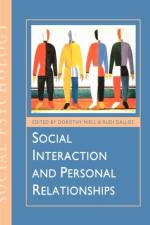
Exploring the interactions between people as they develop relationships with each other, this accessible textbook examines what lies behind the behaviour we can observe from these interactions.
This book puts the theory of Consensus Organising into practice through activities, case studies and the practical application of examples to real life situations
These guidelines for special education teachers cover gathering student information, classroom design, meeting with parents, evaluation, assessment, classroom management, instructional interventions, and grading options.
This resource examines how Routine inFormative Assessments, Reflective inFormative Assessments, and Rigorous inFormative Assessments can inform and improve teaching practices and student learning.
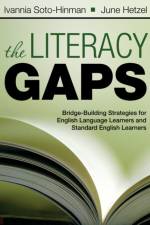
The authors provide strategies, examples, and tools to address the gap between ELLs and texts, socio-cultural differences between teachers and ELLs, and language differences between ELLs and peers.
Takes preservice and inservice teachers through the process of developing a professional portfolio. This work helps readers learn how traditional and electronic portfolios are defined, organized, and evaluated. It also helps teachers to use their portfolios as an action research tool for reflection and professional development.
Integrating the four Tools of Cultural Proficiency with the PLC framework, this guide provides school leaders with practical strategies for building equity-focused PLCs to help all students achieve.
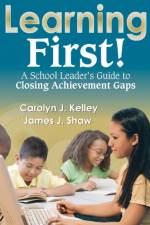
Combine this research-based, collaborative framework with four critical dimensions of leadership to advance equity and excellence in student learning and close student achievement gaps in your school.
Establish cooperative relationships with all parents-even the most difficult ones-by using the author's proven communication strategies, supported by sample forms, letters, scenarios, and vignettes.
From components of successful PR programmes to evaluation guidelines, this valuable resource gives educational leaders the public relations support needed to meet tough communication demands and ensure student success.
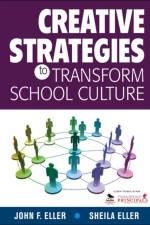
The authors present practical, proven strategies to improve school culture, including activities for developing collaborative work relationships, dealing appropriately with conflict, and fostering rapport.
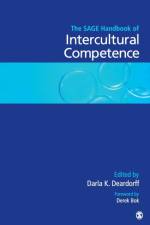
Interdisciplinary and cutting edge handbook on cultural competence, with contributions from leading authors accross the globe.
Offering a timely review of the past 50 years of theoretical and methodological debate Audiences argues the case for a paradigmatic shift in audience research.
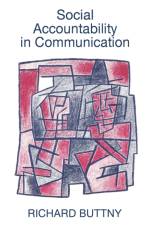
Much of our talk revolves around accounting for our own and other people's actions. We praise one person and blame another, justify our own actions, speculate on motives, tell and retell problematic events. This volume draws upon speech communication, sociology and social psychology to offer an original approach to such accounts.
This edited volume provides cutting edge research in an easily accesible format.
Abonner på vårt nyhetsbrev og få rabatter og inspirasjon til din neste leseopplevelse.
Ved å abonnere godtar du vår personvernerklæring.