





![Mathematize It! [Grades 3-5] af Sara Delano Moore](https://cdnbackdoor.tales.as/thumbnail/150x225/00118/08669/cover.1570629540.jpg)



Gjør som tusenvis av andre bokelskere
Abonner på vårt nyhetsbrev og få rabatter og inspirasjon til din neste leseopplevelse.
Ved å abonnere godtar du vår personvernerklæring.Du kan når som helst melde deg av våre nyhetsbrev.

Several decades of psychometric research have led to the development of sophisticated models for multidimensional test data, and in recent years, multidimensional item response theory (MIRT) has become a burgeoning topic in psychological and educational measurement. Considered a cutting-edge statistical technique, the methodology underlying MIRT can be complex, and therefore doesn¿t receive much attention in introductory IRT courses. However author Wes Bonifay shows how MIRT can be understood and applied by anyone with a firm grounding in unidimensional IRT modeling. His volume includes practical examples and illustrations, along with numerous figures and diagrams. Brief snippets of R code are interspersed throughout the text (with the complete R code included on an accompanying website) to guide readers in exploring MIRT models, estimating the model parameters, generating plots, and implementing the various procedures and applications discussed throughout the book.
The reference will discuss mass media around the world in their varied forms-newspapers, magazines, radio, television, film, books, music, websites, and social media-and will describe the role of each in both mirroring and shaping society.
This popular text has a "how to" and "here's what you need to do" approach to ethnographic research, taking the mystery out of the research process and making ethnography accessible to the reader.
Provides an authoritative and informed analysis of key issues in international migration, including its crucial significance far beyond the more traditional questions of immigrant settlement and incorporation in particular countries.
The Psychology Major's Handbook offers students a wealth of practical information to succeed throughout their college journey--from choosing a major and learning how to study to writing papers and deciding what to do after graduation. Drawing on over 20 years of experiences, questions, ideas, and enthusiasm from working with students, best-selling author Tara L. Kuther covers topics relevant to all learners regardless of major, such as developing an active learning style, honing study skills, and becoming more self-aware. The handbook also addresses the specific needs of psychology students with guidance on the process of writing terms papers, how to read articles, and how to write APA-Style empirical reports. Thoroughly revised, the Fifth Edition emphasizes psychological literacy and pays particular attention to the role of technology and social media in students′ lives.
The book brings together material on the analysis of limited and bounded variables that is scattered across the literature in several disciplines, and presents it in a style that is both more accessible and up-to-date. The authors provide worked examples in each chapter using real datasets from a variety of disciplines. The software used for the examples include R, SAS, and Stata. The data, software code, and detailed explanations of the example models are available on an accompanying website.
The "communication effect" is what happens when we saturate our classrooms with authentic communication, which occurs when students use language to build up ideas and do meaningful things. For starters, authentic communication deepens and increases language development, learning of content concepts and skills, rigor and engagement, empathy and understanding of others¿ perspectives, agency and ownership of core ideas across disciplines, and social and emotional skills for building strong relationships. And these are just the starters. With The Communication Effect, Dr. Jeff Zwiers challenges teachers in Grades 3 and up to focus less on breadth and more on depth by grounding instruction and assessment in authentic (rather than pseudo-) communication. This book provides: Ideas for cultivating classroom cultures in which authentic communication thrives Clear descriptions and examples of the three features of authentic communication: 1. building up key ideas (claims and concepts); 2. clarifying terms and supporting ideas; and 3. creating and filling information gaps Over 175 suggestions for using the three features of authentic communication to enhance twenty commonly used instructional activities across disciplines Additional examples of not-so-commonly-used activities that embody the three features Suggestions for improving four different types of teacher creativity needed to design effective lessons, activities, and assessments that maximize authentic communication Our students deserve to get the most out of each minute of each lesson. Authentic communication can help. As you read The Communication Effect and apply its ideas, you will see how much better equipped and inspired your students are to grow into the amazing and gifted people that they were meant to become.
Ensure that Every Child Achieves Academic and Social Success An equity-based multi-tiered system of support (MTSS) helps school teams engage all students across the full range of learning needs. MTSS ensures that the vision of equity for every student is achieved, with high expectations and quality instruction, while not straining a school¿s budget or personnel. This strategy filled book teaches you how to ¿ Engage all students in learning through an equity-based approach ¿ Analyze and utilize your resources ¿ Apply strengths- and evidence-based principles for implementation ¿ Incorporate effective tools to systematize MTSS
Built from the principles of Fullan/Quinn's Coherence this book explains why the long-term success of school districts requires a systemic approach for creating a coherent system of continuous improvement. The reason is that the district is the most important ‘unit’ of system change, not the school by itself. School districts demonstrating the clarity, commitment, collaboration, and accountability needed to create a coherent system of continuous improvement are deemed Districts on the . We use the phrase ‘on the move’ because forward motion is essential for coherence-making and continuous improvement as both necessitate constant adapting and adjusting to realize the equitable improvement of student learning outcomes.
Providing a model for how to learn from successes-instead of failures-The Collective Wisdom of Practice introduces an assets-based approach to designing and implementing professional learning and growth.
Your school needs a powerful value proposition that shouts to families, "Pick us!" from all of the options they have. Schools that increase their value proposition over time will have a greater chance of survival; those that fail to boost their perceived value will tend towards failure. One profound lessons sticks out: the tools of change are neither difficult to understand nor complicated to implement. The difference between schools that thrive and those that may wilt or die during this period of evolution is not just about understanding how your school can thrive; it’s about actually doing it. It takes time and sustained commitment. That part is up to you.
The NEW Team Habits provides a new lens and tools to implement the 6 key lessons from The New School Rules. It provides concrete practices to use in making your development, meetings, projects, roles, decisions, and processes more responsive. In doing so the authors orient the use of the rules through interactions that every team routinely has (attending meetings, planning projects, developing processes, etc).The workbook provides practical tools leaders can use on a daily basis and provides a roadmap for thinking about change, from what you can do on your own, to what you can do with a single team, and what you can do with your entire organization.
Offering a comprehensive look at individual, team and organizational change, this fifth edition incorporates theory, research and consulting techniques for both traditional organization development practices and newly adapted strategies for change.
Generate multifaceted solutions to real-life classroom issues with this innovative, research-based approach to the design and delivery of sustained, collaborative, evidence-informed, and student-focused professional learning.
Exploring the U.S. Census gives social science students and researchers the tools to understand, extract, process, and analyze census data, including the American Community Survey and other datasets. This text provides background on the data collection methods, structures, and potential pitfalls for unfamiliar researchers with applied exercises and software walk-throughs.
Empowering striving writers to thrive as writers! When we think of students who have faced instructional challenges as striving writers, their path to success becomes clearer. It may not be the same path their classmates travel, but with you as their guide, they will reach their goal. This book, filled with practical strategies, classroom-management ideas, reproducible tools, as well as low and high-tech solutions for increasing output and boosting self esteem will also help you: · Implement principles of UDL to optimize your classroom environment and student learning;· Identify and honor students¿ strengths throughout your writing instruction;· Maximize the power of formative assessment to set goals with students· Integrate the most appropriate technology that empowers students and leads them to independence
Are you ready to plan your best lessons ever?Planning Powerful Instruction is your go-to guide for transforming student outcomes through stellar instructional planning. Its seven-step framework—the EMPOWER model—gives you techniques proven to help students develop true insight and understanding. You’ll have at your fingertips: the real reasons why students engage—and what you must do to ensure they do a framework to help you create, plan, and teach the most effective units and lessons in any subject area more than 50 actionable strategies to incorporate right away suggestions for tailoring units for a wide range of learners downloadable, ready-to-go tools for planning and teaching
It was a dark and stormy night in Santa Barbara. January 19, 2017. The next day¿s inauguration drumroll played on the evening news. Huddled around a table were nine Corwin authors and their publisher, who together have devoted their careers to equity in education. They couldn¿t change the weather, they couldn¿t heal a fractured country, but they did have the power to put their collective wisdom about EL education upon the page to ensure our multilingual learners reach their highest potential. Proudly, we introduce you now to the fruit of that effort: Breaking Down the Wall: Essential Shifts for English Learners¿ Success. In this first-of-a-kind collaboration, teachers and leaders, whether in small towns or large urban centers, finally have both the research and the practical strategies to take those first steps toward excellence in educating our culturally and linguistically diverse children. It¿s a book to be celebrated because it means we can throw away the dark glasses of deficit-based approaches and see children who come to school speaking a different home language for what they really are: learners with tremendous assets. The authors¿ contributions are arranged in nine chapters that become nine tenets for teachers and administrators to use as calls to actions in their own efforts to realize our English learners¿ potential: 1. From Deficit-Based to Asset-Based 2. From Compliance to Excellence 3. From Watering Down to Challenging 4. From Isolation to Collaboration 5. From Silence to Conversation 6. From Language to Language, Literacy, and Content 7. From Assessment of Learning to Assessment for and as Learning 8. From Monolingualism to Multilingualism 9. From Nobody Cares to Everyone/Every Community Cares Read this book; the chapters speak to one another, a melodic echo of expertise, classroom vignettes, and steps to take. To shift the status quo is neither fast nor easy, but there is a clear process, and it¿s laid out here in Breaking Down the Wall. To distill it into a single line would go something like this: if we can assume mutual ownership, if we can connect instruction to all children¿s personal, social, cultural, and linguistic identities, then all students will achieve.
Here at last is a resource that will open up access and reveal all-new ways to forge more culturally inclusive partnerships with families and communities.
Help students reveal the math behind the wordsSolving problems is about more than computation. Students must understand the mathematics of a situation to know what computation will lead to an appropriate solution. Mathematize It! shares a reasoning approach that helps students dig into the problem to uncover the underlying mathematics, deeply consider the problem’s context, and employ strong operation sense to solve it. This user-friendly resource for Grades 3–5 • Offers a systematic mathematizing process for solving word problems• Provides specific examples for all four operations (addition, subtraction, multiplication, and division) with whole numbers, fractions, and decimals• Demonstrates the use of concrete manipulatives to model problems with dozens of short videos
All On-Your-Feet Guide orders receive FREE SHIPPING! Use code SHIPOYFG at check out.Math has its own specialized language. Mathematicians write in symbols, read patterns, and think in terms of visual or abstract ideas. With a disciplinary literacy approach, math teachers can focus on teaching their specialized content by showing students the literacies that truly support mathematical thinking ¿ so students can read, write, think, investigate, and communicate as mathematicians.This On-Your-Feet Guide will help teachers: Plan instruction that engages students¿ natural inquiry and curiosity; Apprentice students toward deeper understanding of mathematical concepts, terms, symbols, and patterns; Help students use their new learning to create, communicate, and act as mathematicians; Teach skills required by mathematical standards and frameworks; and Start working with colleagues to design instructional units that incorporate both mathematics and literacy skills.On-Your-Feet Guides (OYFGs) provide you with the ultimate "cheat sheet" to implement effective change in your classroom while in the moment of teaching. Designed for accessibility, and providing step-by-step guidance, the OYFGs are written by experts who take research-based practices and make them doable for the busy teacher. Each On-Your-Feet Guide is laminated, 8.5"x11" tri-fold (6 pages), and 3-hole punched.Use the On-Your-Feet Guides When you know the "what" but need help with the "how" As a quick reference to support a practice you learned in a PD workshop or book To learn how to implement foundational practices When you want to help your students learn a specific strategy, routine, or approach, but aren¿t sure how to do it yourself
All On-Your-Feet Guide orders receive FREE SHIPPING! Use code SHIPOYFG at check out.How can you use literacy tools used to help students practice the behaviors of scientists? With a disciplinary literacy approach, science teachers can focus on teaching their specialized content by showing students the literacies that truly support scientific thinking ¿ so students can read, write, think, investigate, and communicate as scientists.This On-Your-Feet Guide will help teachers:INTRODUCTION¿ Plan instruction that engages students¿ natural inquiry and curiosity;¿ Apprentice students toward deeper understanding of scientific concepts, terms, understandings, and text;¿ Help students use their new learning to create, communicate, and participate in science;¿ Teach skills required by science standards and frameworks; and¿ Work with colleagues to design instructional units that incorporate both deeper content learning and science-specific literacy skills.The strategies in this guide will help you teach students to read, write, think, and do as scientists!On-Your-Feet Guides (OYFGs) provide you with the ultimate "cheat sheet" to implement effective change in your classroom while in the moment of teaching. Designed for accessibility, and providing step-by-step guidance, the OYFGs are written by experts who take research-based practices and make them doable for the busy teacher. Each On-Your-Feet Guide is laminated, 8.5"x11" tri-fold (6 pages), and 3-hole punched.Use the On-Your-Feet Guides¿ When you know the "what" but need help with the "how"¿ As a quick reference to support a practice you learned in a PD workshop or book¿ To learn how to implement foundational practices¿ When you want to help your students learn a specific strategy, routine, or approach, but aren¿t sure how to do it yourself
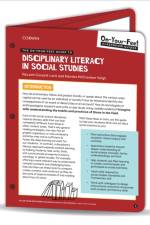
All On-Your-Feet Guide orders receive FREE SHIPPING! Use code SHIPOYFG at check out.Each of the social science disciplines requires literacy skills that can look completely different from those in other content areas. A disciplinary literacy approach, then, expands content learning by helping students read, write, think, and communicate as experts in history, sociology, or global studies, offering a more relevant way to understand complex concepts and challenging texts.This On-Your-Feet Guide will help teachers ¿ Plan instruction that engages students¿ natural inquiry and curiosity; ¿ Apprentice students toward deeper understanding of social science concepts, terms, understandings, and text; ¿ Help students use their learning to create, communicate, and participate as social scientists; ¿ Teach skills required by social studies standards and frameworks; and¿ Work with colleagues to design instructional units that incorporate both content and literacy skills.Students can then use these tools to compare, create, connect, and construct as they do the work of experts instead of only reading about how it¿s done.On-Your-Feet Guides (OYFGs) provide you with the ultimate "cheat sheet" to implement effective change in your classroom while in the moment of teaching. Designed for accessibility, and providing step-by-step guidance, the OYFGs are written by experts who take research-based practices and make them doable for the busy teacher. Each On-Your-Feet Guide is laminated, 8.5"x11" tri-fold (6 pages), and 3-hole punched.Use the On-Your-Feet Guides¿ When you know the "what" but need help with the "how"¿ As a quick reference to support a practice you learned in a PD workshop or book¿ To learn how to implement foundational practices¿ When you want to help your students learn a specific strategy, routine, or approach, but aren¿t sure how to do it yourself
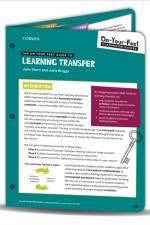
All On-Your-Feet Guide orders receive FREE SHIPPING! Use code SHIPOYFG at check out.The goal of learning is to develop strong thinkers and problem-solvers who can apply what they have learned in the classroom to innovate in the real world. That¿s learning transfer. This On-Your-Feet Guide to Learning Transfer will help you break down the steps needed to implement this important strategy to engage and motivate your students and make your classroom relevant.This On-Your-Feet Guide provides: A step-by-step method for ensuring that learning transfer happens in your classroom Guidance on how to identify the concepts in learning outcomes Examples showing how to write concept questions to help students make their own connections between key concepts Prompts to help students apply conceptual relationships to increasingly dissimilar contextsFull of rich examples and ideas, this guide will make learning transfer a successful learning strategy in your classroom!On-Your-Feet Guides (OYFGs) provide you with the ultimate "cheat sheet" to implement effective change in your classroom while in the moment of teaching. Designed for accessibility, and providing step-by-step guidance, the OYFGs are written by experts who take research-based practices and make them doable for the busy teacher. Each On-Your-Feet Guide is laminated, 8.5"x11" tri-fold (6 pages), and 3-hole punched. Use the On-Your-Feet Guides When you know the "what" but need help with the "how" As a quick reference to support a practice you learned in a PD workshop or book To learn how to implement foundational practices When you want to help your students learn a specific strategy, routine, or approach, but aren¿t sure how to do it yourself
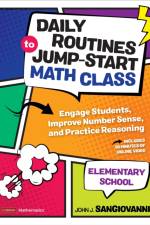
Give math routines a makeover in your classroom and make every minute count.Captivate your elementary students with these new, innovative, and ready-to-go mathematics routines! Trusted math expert John J. SanGiovanni details 20 classroom-proven practice routines to help you ignite student engagement, reinforce learning, and prepare students for the lesson ahead. Each quick and lively activity spurs mathematics discussion and provides a structure for talking about numbers, number concepts, and number sense. Designed to jump-start mathematics reasoning in any elementary classroom, the routines become your go-to materials for a year’s work of daily plug-and-play short-burst reasoning and fluency instruction.
Assuming no prior knowledge, this book offers a comprehensive, easily digestible introductory research methods text for undergraduate and graduate students.
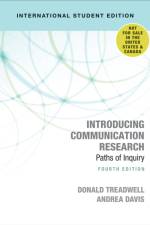
Teaching students the basics of communication research in an accessible manner, this fourth edition demystifies the theories and applications through its focus on methods in practice.
The Process of Research and Statistical Analysis in Psychology presents integrated coverage of psychological research methods and statistical analysis to illustrate how these two crucial processes work together to uncover new information.
From the best-selling authors of Deep Learning: Engage the World Change the World, this book is a must-have practical guide to help you implement your ideas. Packed with tools, tips, and protocols, this resource shows you how to design deep learning, measure progress, and assess the conditions needed to mobilize and sustain innovation and deep learning. Dive Into Deep Learning: Tools for Engagement builds on the call to action in Deep Learning: Engage the World Change the World by providing a comprehensive approach for mobilizing deep learning in classrooms, schools, districts, and systems.
Strategies for working with parents of all kinds Unexpected situations with angry or dysfunctional parents can leave teachers floundering. This teachers’ edition of the best-selling How to Deal With Parents Who Are Angry, Troubled, Afraid, or Just Seem Crazy provides invaluable strategies that teachers can use to defuse angry parents and to work with all parents to advance the success of their children. It includes: • A set of proactive practices to help teachers get parents on their side.• Guidelines for teachers to follow when meeting with parents during Annual Reviews and IEP meetings.• Advice and vignettes that reflect concerns of today’s teachers.
Abonner på vårt nyhetsbrev og få rabatter og inspirasjon til din neste leseopplevelse.
Ved å abonnere godtar du vår personvernerklæring.