












Gjør som tusenvis av andre bokelskere
Abonner på vårt nyhetsbrev og få rabatter og inspirasjon til din neste leseopplevelse.
Ved å abonnere godtar du vår personvernerklæring.Du kan når som helst melde deg av våre nyhetsbrev.

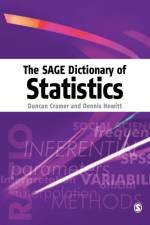
The SAGE Dictionary of Statistics provides students and researchers with an accessible and definitive resource to use when studying statistics in the social sciences, reading research reports and undertaking data analysis.
Understanding Criminal Justice addresses the fundamental relationship between law and the criminal justice system, and the ways in which both are intimately connected with wider social forces.
Explains approaches to managing disputes at home, in the workplace or school, within communities, and in the international arena.
Educational Research maps the demands now being made on educational research against the background complexities of the relationship between research and practice.
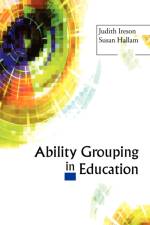
The authors provide an overview of ability grouping in education. They consider selecting schooling and ability grouping within schools, such as streaming, banding setting and within-class grouping.
With over 350 entries this is a comprehensive lexicon of existential terms, their meaning and application.
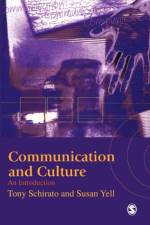
From Saussure to Bourdieu, from Freud to Fouclault, this book outlines a range of theoretical approaches to the study of communication and culture. It focuses on three 'primary' systems of communication: spoken, written and visual.
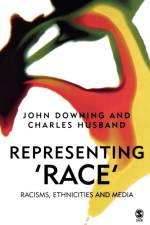
The Media play a diverse and significant role in the practical expression of racism and in the everyday politics of ethnicity. Written by two veterans of research on media and 'race', this book offers a fresh comparative analyses of the issues and sets out the key agendas for future study.
This accessible and original text combines a systematic examination of the theories of welfare with an historical account of the evolution of the welfare state and its impact in promoting social justice.
`With many other introductory texts, data analysis becomes just an exercise unto itself, and students (sometimes) learn to go through the motions without really knowing why. After working with Blaikie's text, novice researchers will know why quantitative inquiry is important' - Ray Pawson, University of Leeds
Combining a comprehensive literature review with original empirical research on young people's use of new media, this book provides a fresh and in-depth discussion of the increasingly complex relationship between the media and childhood, the family and the home.
The Politics of Social Work provides a major contribution to debates on the politics of social work at the beginning of the 21st century. It locates social work within wider political and theoretical debates and deals with important issues currently facing social workers and the organisations in which they work.
This study describes the development of urban planning ideas since the end of World War II to the 1990s. It outlines the main theories of planning, from the traditional view of urban planning as an exercise in physical design, to more recent views of planning as a form of "communicative action".
Choosing a research method can be bewildering. This book links methodology and theory with clarity and precision, showing students and researchers how to navigate the maze of conflicting terminology.
Our concepts of our emotions are integral to our wider conception of ourselves, and are used to give meaning and provide explanation for our lives. This book brings together empirical research and social and cultural theory to examine the nature of the emotional self in western societies.
In a lively and accessible style, the student is introduced to research design issues alongside statistical procedures and encouraged to develop analytical and decision-making skills.
This overview of modern visual culture explores the relationship between technology, society and identity which underpins contemporary `media culture'. The book is not so much about the camera's field of vision: it is concerned with processes of modernization and the dramatic changes which characterize modernity.
This is the first accessible and practical guide to using multilevel models in social research. While other books describe these multilevel models in considerable detail none focuses on the practical issues and potential problems of doing multilevel analyses that are covered in Introducing Multilevel Modeling.
This is an introduction to Central and Eastern Europe since its emergence from the Soviet bloc. Using theories of democratization, this book shows how to distinguish between processes of democratization and redemocratization, and introduces the issues of nation building.
Culture plays an important role in our everyday lives, yet the study of cultural processes and their impact on thinking and behavior is still in its infancy. This book provides an overview of approaches from varying disciplinary perspectives, discussing methodological problems as well as theoretical implications of these approaches.
Provides a coherent theoretical framework for the sociological analysis of ethnicity
Introducing CLD - Constructivist Learning Design - a new and different way of thinking about learning and teaching.
William Braud and Rosemarie Anderson introduce a series of transpersonal research methods designed to help researchers develop new ways of studying extraordinary human experiences such as ultimate values and meanings, transcendence and heightened awareness.
Culture is big business. It is at the root of many urban regeneration schemes throughout the world. It is also one of the leaders of the post-Fordist economic revolution, yet the economy of culture is under-theorized and under-developed. In this wide-ranging and penetrating volume, the economic logi
Examines the train of social theory from the 19th century, through to the 'organization of modernity', in relation to ideas of social planning, and as contributors to the 'rationalistic revolution' of the 'golden age' of capitalism in the 1950s and 60s. This title looks at key concepts in the social sciences.
A reappraisal of the concept of selfhood seeking to demonstrate that despite the centrality of our social and cultural identities the self must be understood as autonomous, distinct and continuous - as singular.
`At last, a student-friendly guide that answers the question: "Yes, but how do you do Foucault?" Kendall and Wickham address the thorny question of how-to-Foucault in a clear, distinctive manner that stands out in the secondary literature on this important thinker' - Toby Miller, New York University
Abonner på vårt nyhetsbrev og få rabatter og inspirasjon til din neste leseopplevelse.
Ved å abonnere godtar du vår personvernerklæring.