

Gjør som tusenvis av andre bokelskere
Abonner på vårt nyhetsbrev og få rabatter og inspirasjon til din neste leseopplevelse.
Ved å abonnere godtar du vår personvernerklæring.Du kan når som helst melde deg av våre nyhetsbrev.

This book will be welcomed by practising analytical chemists as an important reference for day to day statistics in analytical chemistry.
This is the first single-author book on ionic liquids and the first introductory book on the topic. It is written in a clear, concise and consistent way. The book provides a useful introduction to ionic liquids for those readers who are not familiar with the topic.
This volume describes the discovery and development history of the most promising drugs now in development for combating Alzheimer's disease.
Nanostructured materials with tailored properties are regarded as a fundamental element in the development of future science and technology. Research is still ongoing into the nanosized construction elements required to create functional solids. The recently developed technique, nanocasting, has great advantage over others in terms of the synthesis of special nanostructured materials by the careful choice of suitable elements and nanoengineering steps. This new book summarizes the recent developments in nanocasting, including the principles of nanocasting, syntheses of novel nanostructured materials, characterization methods, detailed synthetic recipes and further possible development in this area. The book focuses on the synthesis of porous solids from the viewpoint of methodology and introduces the science of nanocasting from fundamental principles to their use in synthesis of various materials. It starts by outlining the principles of nanocasting, requirements to the templates and precursors and the tools needed to probe matter at the nanoscale level. It describes how to synthesize nano structured porous solids with defined characteristics and finally discusses the functionalization and application of porous solids. Special attention is given to new developments in this field and future perspectives. A useful appendix covering the detailed synthetic recipes of various templates including porous silica, porous carbon and colloidal spheres is included which will be invaluable to researchers wanting to follow and reproduce nanocast materials. Topics covered in the book include: * inorganic chemistry * organic chemistry * solution chemistry * sol-gel and interface science * acid-base equilibria * electrochemistry * biochemistry * confined synthesis The book gives readers not only an overview of nanocasting technology, but also sufficient information and knowledge for those wanting to prepare various nanostructured materials without needing to search the available literature.
This book is devoted to the preparation of fine chemicals by new emerging approaches in the field of eco-friendly processes and procedures.
This unique book provides comprehensive coverage of monocyclic inorganic ring systems of the p-block elements and the polymers that are derived from them.
This Specialist Periodical Report aims to reflect the growing interest in the potential of organometallic chemistry.
Fatty alcohols occur naturally in most organisms and can also be used in consumer products including detergents and cosmetics and all of these materials make their way to the sea eventually. These long chain alcohols can be used as biomarkers due to their distinctive source allocations although they have differential degradation rates across the range of chain lengths. Concern has been raised about their inputs from anthropogenic uses and this book seeks to set out the natural and industrial synthetic pathways, sources, signatures, concentrations in the environment, toxicity and eco-toxicity before summarising their impact. Their large scale synthesis for industrial uses puts them in the 'High Production Volume' category and they will need to be addressed in REACH (Registration, Evaluation and Authorization of Chemicals) - a new European legislation for chemicals and substances. There is no other book that considers the fatty alcohols from their production, environmental behaviour and potential toxicity viewpoint. The book, which is also well illustrated, presents for the first time environmental data from many locations around the world and discusses the anthropogenic contributions to these places.
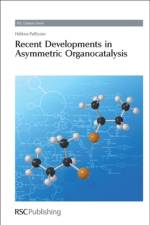
The aim of this book is to cover the very recent developments in asymmetric organocatalysis, focussing on those published since the beginning of 2008. The last decade has witnessed an explosive growth in the field of asymmetric organocatalysis with an impressive amount of new catalysts, novel methodologies, and applications in numerous reaction types, such as nucleophilic substitutions, addition reactions, as well as cycloadditions, oxidations, reductions, kinetic resolutions, and miscellaneous reactions. This very diverse and intensely developing field is too wide to cover in a single review. The timeliness of the book together with the expected impact is excellent, since nowadays asymmetric organocatalysis is arguably the most intensively developed field in organic chemistry. The book is designed to meet the demands of a postgraduate textbook,containing case studies and Q&A sections, as well as a practical book filled with facts and data useful as a working tool for the practitioner. The book is divided into ten sections, dealing successively with nucleophilic additions to electron-deficient C=C double bonds, nucleophilic additions to C=O double bonds, nucleophilic additions to C=N double bonds, nucleophilic additions to unsaturated nitrogen, nucleophilic substitutions at aliphatic carbon, cycloaddition reactions, oxidations, reductions, kinetic resolutions and desymmetrisations, and miscellaneous reactions.
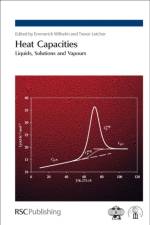
The book contains the very latest information on all aspects of heat capacities related to liquids and vapours, either pure or mixed.
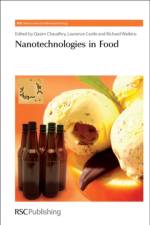
This book provides an independent, balanced, and impartial view of the potential benefits and risks that nanotechnology applications may bring to the food sector.
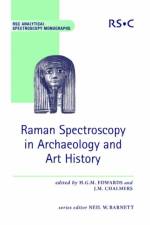
With its extensive examples, Raman Spectroscopy in Archaeology and Art History will be of particular interest to specialists in the field.
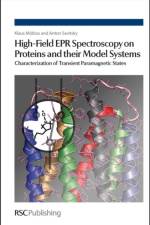
Understanding the major factors determining the specificity of transmembrane transfer processes in proteins is now a hot topic in molecular bio-science. Advanced electron paramagnetic resonance (EPR) at high magnetic fields is a powerful technique for characterizing the transient states of proteins in action. High-Field EPR Spectroscopy on Proteins and their Model Systems: characterization of Transient Paramagnetic States offers a comprehensive overview of experimental techniques in, and paradigmatic examples of, the application of high-field EPR spectroscopy in biology and chemistry. The book's focus is on the use of the technique in conjunction with site-specific mutation strategies and advanced quantum-chemical computation methods to reveal protein structure and dynamics. This yields new insights into biological processes at the atomic and molecular level. The theoretical and instrumental background of high-field EPR is described and examples of paradigmatic protein systems, such as photosynthetic reaction centres, are discussed in the light of recent investigations. Aspects of structure dynamics-function relations that are revealed by studying site-specific mutants are highlighted, thereby combining high-field EPR with genetic engineering techniques. The information obtained complements that obtained from protein crystallography, solid-state NMR, infrared and optical spectroscopy. The book documents both background knowledge and results of the latest research in the field. Unique features include comparisons of information content of EPR, ENDOR, Triple resonance, ESEEM and PELDOR taken at different microwave frequencies and magnetic fields. Coherent treatment of the subject by the leading Berlin high-field EPR laboratory covers the theoretical background as well as state-of-art research both in terms of instrumentation and application to biological systems. The book provides an outlook to future developments and references for further reading and is essential reading for postdoctoral scientists, professionals, academics and graduate students working in this field.
By leading experts, this is an up-to-date view of the strategies essential for an effective response to water contamination emergencies.
This book enables scientists to tackle the fundamental issues of chemical change in the archaeological materials, in order to advance the study of the past.
A concise collection of the latest advances in chemical and biological agent detection and/or their surveillance written by leading experts in the field.
This book will make fascinating reading for the chemist with an interest in gardening as well as the gardener with a general interest in the scientific processes involved in the garden.
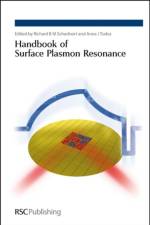
Surface plasmon resonance (SPR) plays a dominant role in real-time interaction sensing of biomolecular binding events.The book is intended as a hands-on guide for all interested in SPR
"e;For centuries fireworks have been a source of delight and amazement in cultures around the world. But what produces their dazzling array of effects? This book takes you behind the scenes to explore the chemistry and physics behind the art of pyrotechnics. Topics covered include history and characteristics of gunpowder; principles behind each of the most popular firework types: rockets, shells, fountains, sparklers, bangers, roman candles and wheels; special effects, including sound effects, coloured smokes and electrical firing; firework safety for private use and displays; and firework legislation. The Chemistry of Fireworks is aimed at students with A level qualifications or equivalent. The style is concise and easy to understand, and the theory of fireworks is discussed in terms of well-known scientific concepts wherever possible. It will also be a useful source of reference for anyone studying pyrotechnics as applied to fireworks. Review Extracts "e;"e;a worthwhile addition to the pyrotechnist's library"e;"e; Fireworks "e;"e;a useful source of information which makes absorbing reading."e;"e; Angewandte Chemie, International Edition"e;
This comprehensive book describes all aspects of the current sampling and analysis techniques for trace-level beryllium in the workplace.
A journey through the diverse world of nanotechnology research and development, covering 122 specific research projects taking place in laboratories around the world.
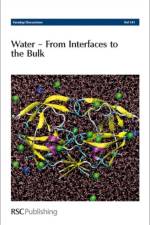
This book plans to achieve a unification of views towards the goal of understanding the microscopic structure and behaviour of condensed phases of water at interfaces and progressing into the bulk.
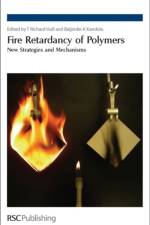
The latest developments in fire retardancy of polymeric materials, including new systems, formulations and test-methods are detailed in this book.
Indispensable reference source for researchers in the pharmaceutical and allied industries, and at the biology/chemistry interface in academia.
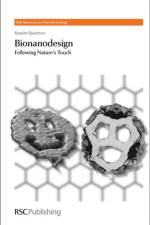
This new publication brings together contemporary approaches for designing nanostructures that employ naturally derived self-assembling motifs as synthetic platforms.
For those wanting to become rapidly acquainted with specific areas of NMR, this title provides unrivalled scope of coverage.
With contributions from international experts, this book is essential reading for academics and industrialists in food science.
An up-to-date review of the scale of the electronic waste problem, the impact of recent legislation, current and future methods for treatment, recycling and disposal.
Describes the development of the topic seen primarily from a European point of view, but also in a wider perspective. Written by a group of Danish experts and edited to a comprehensive presentation.
International interest in nanoscience research has flourished in recent years, as it becomes an integral part in the development of future technologies. The diverse, interdisciplinary nature of nanoscience means effective communication between disciplines is pivotal in the successful utilization of the science. Nanochemistry: A Chemical Approach to Nanomaterials is the first textbook for teaching nanochemistry and adopts an interdisciplinary and comprehensive approach to the subject. It presents a basic chemical strategy for making nanomaterials and describes some of the principles of materials self-assembly over 'all' scales. It demonstrates how nanometre and micrometre scale building blocks (with a wide range of shapes, compositions and surface functionalities) can be coerced through chemistry to organize spontaneously into unprecedented structures, which can serve as tailored functional materials. Suggestions of new ways to tackle research problems and speculations on how to think about assembling the future of nanotechnology are given. Primarily designed for teaching, this book will appeal to graduate and advanced undergraduate students. It is well illustrated with graphical representations of the structure and form of nanomaterials and contains problem sets as well as other pedagogical features such as further reading, case studies and a comprehensive bibliography.
Abonner på vårt nyhetsbrev og få rabatter og inspirasjon til din neste leseopplevelse.
Ved å abonnere godtar du vår personvernerklæring.