


Gjør som tusenvis av andre bokelskere
Abonner på vårt nyhetsbrev og få rabatter og inspirasjon til din neste leseopplevelse.
Ved å abonnere godtar du vår personvernerklæring.Du kan når som helst melde deg av våre nyhetsbrev.

This book provides comprehensive coverage of the application of P-stereogenic ligands in homogeneous catalysis.
This second edition has been fully revised and updated and is a straightforward, logical introduction to electrochemical investigations for inorganic chemists
Introduction to green chemistry Concepts and trends in green analytical chemistry "Greening" sample preparation Green instrumental analysis "Greening" signal acquisition and processing Conclusions This book describes the applications, ideas and concepts of green chemistry in chemical analysis and evaluates the performance of current methodologies.
The goal of this book is to show the high potential of chiral sulfur-containing ligands to promote numerous asymmetric catalytic transformations. The important number of reports appeared in the literature over the last 35 years often highlighted spectacular results in terms of efficiency and enantioselectivity, allowing access to many biologically important molecules, which clearly demonstrates that these ligands can now be recognised as real competitors to the more usual phosphorus- or nitrogen-containing ligands. A key point of reference for post-graduate students, researchers and academics.
Reflecting the growing volume of published work in this field, researchers will find this book an invaluable source of information on current methods and applications.
This up-to-date summary of natural product chemistry in drug discovery will appeal to scientists, professionals, postgraduates and industrial chemists.
This unique book deals with the utilization of carbon materials in hydroprocessing and is a comprehensive summary of recent research in the field.
Provides readers with a basic knowledge of the chemistry of Earth's atmosphere and the role that chemical transformations play in this environment.
Provides a comprehensive overview of the various processes developed using aqueous microwave chemistry, which is an environmentally, friendly green chemistry technique.
By-products of global biodiesel manufacturing are a modern day global fact responsible for igniting a number of year's worldwide intense research activity into human chemical ingenuity. This fully updated and revised 2nd edition depicts how practical limitations posed by glycerol chemistry are solved based on the understanding of the fundamental chemistry of glycerol and by application of catalysis science and technology. The authors report and comment on employable, practical avenues applicable to convert glycerol into value added products of mass consumption. This book is the best-selling reference book in the field. The highly anticipated 2nd Edition is essential reading for anyone interested in understanding whether biodiesel and glycerol refineries are convenient and economically sound.
This book for students, teachers and researchers focuses on the contribution of mass spectrometry to the advancement of nutrition research.
This volume brings together emerging topics in environmental science, making an excellent source for policy makers and environmental consultants working in the field or related areas.
This unique book covers all the practical aspects of setting up an HPLC system for high temperature operation.
This book introduces optical activity and anisotropy as techniques for studying the structure of molecules and their interactions in solution.
This lay person's guide explains the roles of chemistry in areas of life ranging from the entirely personal to the global.
Reflecting the growing volume of published work in this field, researchers will find this book an invaluable source of information on current methods and applications.
This professionally edited and well organized book is the first in a series which will archive key presentations from the annual conferences sponsored by the Society of Environmental Forensics.
Carbohydrate Chemistry provides review coverage of all publications relevant to the chemistry of monosaccharides and oligosaccharides in a given year.
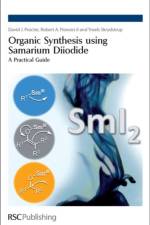
Samarium diiodide is one of the most important reducing agents available to synthetic organic chemists. The lanthanide(II) reagent acts by single-electron transfer to organic substrates leading to the formation of both radical and/or anionic intermediates. The power of the reagent arises from its versatility - samarium diiodide can be used in processes ranging from functional group conversions to elaborate carbon-carbon bond-forming cyclization sequences that result in a dramatic increase in molecular complexity. In addition, reactions involving samarium diiodide often show high stereoselectivity as samarium ions can coordinate to Lewis basic sites on substrates and can direct the stereochemical course of reactions. The ability to fine-tune the reactivity of the reagent by the use of additives and co-solvents is an additional, attractive feature. Although samarium diiodide is used extensively by organic chemists, there is still a widely held view that the reagent can be difficult to prepare and use. In addition, samarium diiodide can mediate such a wide variety of organic chemistry that potential new users are often overawed by the extensive primary literature on the reagent. The objective of this book is to provide a concise, practical guide to the reagent. Rather than being a comprehensive review of the chemistry of samarium diiodide, this user-friendly book adopts an "e;an all you need to know"e; approach to the topic. The international authors are well-known for their work with the reagent and their expertise covers current developments in new reactivity and selectivity, applications in target synthesis, co-solvent and additive effects, coordination chemistry and mechanism. The book includes the best methods for preparing and handling the reagent, how solvents, co-solvents and additives alter reactivity, the basic mechanisms of reactions, common transformations using the reagent, and emerging areas in samarium diiodide chemistry. The authors have distilled the extensive primary literature to allow the reader to quickly grasp an understanding of the reagent and its utility. The illustrative practical procedures help the reader to prepare and use the reagent in the laboratory while references from the recent literature allow readers to pursue their interest in the popular reagent. The book also contains many illustrations and chemical schemes.
This Specialist Periodical Report reflects the growing volume of published work involving NMR techniques and applications, in particular NMR of natural macromolecules.
An introductory text to environmental chemistry and pollution. This third edition develops a more international approach than the previous editions. The major human and environmental impacts of pollution are summarized, and there are case studies, questions and worked examples.
This guide explains the best methods for undertaking the measurement of mass, one of the most frequent operations in the analytical laboratory.
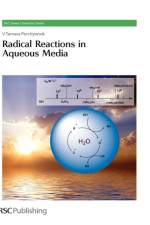
Chemists are now moving away from volatile, environmentally harmful, and biologically incompatible organic solvents. With its low cost, ready availability, and capacity to remove environmentally unfriendly by-products, water is an obvious replacement. Recent advances in free radical chemistry in water have expanded the versatility and flexibility of homolytic carbon-hydrogen, carbon-carbon, carbon-halogen, carbon-nitrogen bond formations in aqueous media. This textbook highlights the substantial progress which has been made in the last decade to "e;tame"e; the reactive free radical species in aqueous phase reactions. It describes carbon-hydrogen bond formations in aqueous media via radical reactions with a specific focus on HAT (Hydrogen Atom Transfer). Suitable for students of chemistry, industrial chemists and academic researchers, it combines extensive knowledge of free radical chemistry with the latest innovations and creative applications. Divided into five main areas, it covers the: generation of carbon centred free radicals; radical initiators; solubility of substrate; suitability of free radical hydrogen donors, and HAT reactions in aqueous media. The book describes radical reactions in organic and aqueous media and their applications in total synthesis, DNA structural probing, isotope labelling, living polymerization and various other applications. It shows that, armed with an elementary knowledge of kinetics and some common sense, it is possible to harness radicals into tremendously powerful tools for solving synthetic problems. Written with the needs of students in mind, it offers just the right level of detail for undergraduate study. All the basic principles and facts on each topic area are presented in a concise yet comprehensive style that is appropriate for both core and specialist courses. It provides a step-wise introduction, taking students from the basic principles of radical reactions through to their applications in industry and their role in biological and environmental processes. Case studies are used to illustrate reactions in landmark synthesis and problems, with outlined answers, test the reader's understanding. There are also suggestions for further reading.
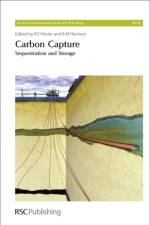
Reports on methods of capturing and storing CO2 from major sources to reduce the levels emitted to the atmosphere by human activities.
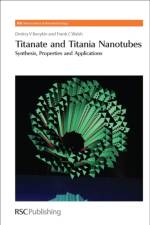
This exciting new book is a unique compilation of data from a wide range of chemical and spectroscopic instrumentation and the integration of nanostructure characterisation drawn from physical, chemical, electrochemical, spectroscopic and electron microscopic measurements. It fills a gap in the current nanomaterials literature by documenting the latest research from scientific journals and patent literature to provide a concise yet balanced and integrated treatment of an interesting topic: titanium oxide nanostructures within the emerging fashionable area of nanomaterials. Of particular interest are the following key chapters: * Modification and Coating Techniques - provides a unique summary and discussion of available techniques to coat surfaces with nanostructured materials * Chemical Properties - relates structure to surface chemistry and hence applications * Structural and Physical Properties - reviews the relationship between nanostructure and physical properties providing a basis for the rationalisation of applications The book, a valuable reference point, is aimed at professionals, postgraduates and industrial research workers in nanomaterials. Readers will gain a knowledge of the methods for synthesising nanomaterials as well as an understanding of their structure and resulting physical characteristics and a knowledge of their (existing and potential) applications.
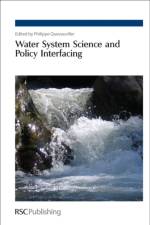
This book examines the issue of integrating science into policy, with an emphasis on water system knowledge and related policies.
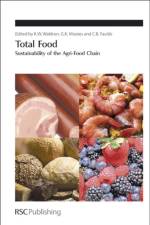
This book is the proceedings of Total Food 2009 which focused on the sustainable exploitation of agri-food co-products and related biomass.
Summarises new trends in organic synthesis, based on flow continuous processes, mini- and micro-reactors, homogeneous and heterogeneous catalysts and reagents.
This comprehensive book discusses some of the more controversial issues associated with the field including: nanoparticles in the environment, occupational exposure, toxicological properties, human health issues and safety.
Reflecting the growing volume of published work in this field, researchers will find this book an invaluable source of information on current methods and applications.
Abonner på vårt nyhetsbrev og få rabatter og inspirasjon til din neste leseopplevelse.
Ved å abonnere godtar du vår personvernerklæring.