





Gjør som tusenvis av andre bokelskere
Abonner på vårt nyhetsbrev og få rabatter og inspirasjon til din neste leseopplevelse.
Ved å abonnere godtar du vår personvernerklæring.Du kan når som helst melde deg av våre nyhetsbrev.

This book is a unique title that will be welcomed by many in industry, including industrial and water chemists, microbiologists, and plant and environment managers.
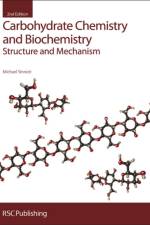
This fully updated and expanded second edition of a highly popular text book focuses on the structure and mechanism in carbohydrate chemistry and biochemistry.Carbohydrates play important roles in biological systems as energy sources, as structural materials, and as informational structures (when they are often attached to proteins or lipids). Their chemical reactivity and conformational behaviour is governed by mechanistic and stereochemical rules, which apply as much to enzymic as to non-enzymic reactivity. The same principles of reactivity and conformation govern changes brought about in the process industries, such as pulp, paper and food.Extensively referenced with citations and a detailed index, the book contains everything the reader needs to know to start a carbohydrate research project with one of the real strengths being the treatment and integration of the important physical-chemical principles and methods (though lead references only are given to the finer points of carbohydrate synthesis).The book is suitable for both researchers who are new to the subject and those more established as well as a readership from diverse backgrounds and interests, including chemists, biochemists, food scientists and technologists involved with the processing of polysaccharides in the paper, textile, cosmetics, biofuels and other industries.
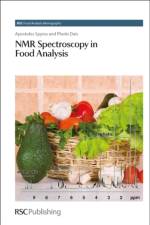
During the last two decades, the use of NMR spectroscopy for the characterization and analysis of food materials has flourished, and this trend continues to increase today. Currently, there exists no book that fulfils specifically the needs of food scientists that are interested in adding or expanding the use of NMR spectroscopy in their arsenal of food analysis techniques. Current books and monographs are rather addressed to experienced researchers in food analysis providing new information in the field. This book, written by acknowledged experts in the field, fills the gap by offering a day to day NMR guide for the food scientist, affording not only the basic theoretical aspects of NMR spectroscopy, but also practical information on sample preparation, experimental conditions and data analysis. Current developments in the field covered in this book are the availability of solid state NMR experiments such as CP/MAS and more importantly HR-MAS NMR for the analysis of semisolid foods, and the increasing use of chemometrics to analyze NMR data in food metabonomics. Moreover, this book contains an up to date discussion of MRI in food analysis including topics such as food processing and natural changes in food such as ripening. The book is a compact and complete source of information for food scientists who wish to apply methodologies based on NMR spectroscopy in food analysis. It contains information so far scattered in the primary literature, in NMR treatises and food analysis books, in a concise format that makes it appealing to food scientists who have no or minimal experience in magnetic resonance techniques. The inclusion of practical information about NMR instrumentation, experiment setup, acquisition and spectral analysis for the study of different food categories make this book a hands-on manual for food scientists wishing to implement novel NMR spectroscopy-based analytical techniques in their field.
For those wanting to become rapidly acquainted with specific areas of NMR, this title provides unrivalled scope of coverage.
Reflecting the growing volume of published work in this field, researchers will find this book an invaluable source of information on current methods and applications.
Nanochemistry offers the unique chance to work with almost all the elements of the periodic system to try to solve problems with new materials in architecture, medicine and electronics. This book draws together the published material on nanochemistry from 2005-2008, choosing each important element of the periodic table, summarising relevant general properties and then detailing the findings. Coverage is aimed at materials researchers and the authors intend to bring the reader up-to-date with information which could alter the use of materials in an industry setting.
The first book on bioactive nanoceramics to unite the many multidisciplinary concepts useful for those working in bioceramics today.
A unique book dealing with all types of renewable energy resources, aimed at scientists but also a textbook for science students
This unique book covers the crucial role that chemistry has played in the growth and development of railways in Britain.
This volume brings together experimentalists and theoreticians working in all areas of physics and chemistry who have an interest in probing and controlling chemical interactions at the quantum resolved level.
This book provides an up-date on the methods employed to obtain dynamic kinetic resolution (DKR) by enzymatic and non-enzymatic methods.
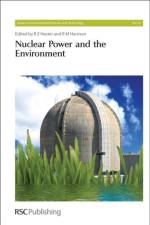
This book is concerned with reviewing the political and social context for nuclear power generation, the nuclear power fuel cycles and their implications for the environment.
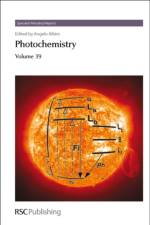
Compiled by teams of leading authorities this Specialist Periodical Report on Photochemistry aims to provide an annual review of photo-induced processes.
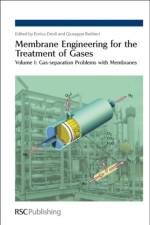
This two volume set presents the state-of-the-art, and potential for future developments, in membrane engineering for the separation of gases.
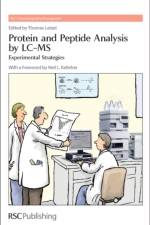
This book is the first example in presenting LC-MS strategies for the analysis of peptides and proteins with detailed information and hints about the needs and problems described from experts on-the-job.
Covers the latest research in green chemistry principles for new, environmentally friendly processes in the fields of engineering, science and technology.
Organophosphorus Chemistry provides a comprehensive and critical review of the recent literature.
We all learn - in schools, factories, bars and streets. We gather, store, process and transmit information in society. Molecular systems involved in our senses and within our brains allow all this to happen and molecular systems allow living things of all kinds to handle information for the purpose of survival and growth. Nevertheless, the vital link between molecules and computation was not generally appreciated until a few decades ago. Semiconductor-based information technology had penetrated society at many levels and the interest in maintaining momentum of this revolution led to the consideration of molecules, among others, as possible information handlers. Such an overlap between the recent engineering-oriented revolution with the ancient biology-oriented success story is very interesting and George Boole's times in Ireland 150 years ago produced the logic ideas that provide the foundations of computation to this day. Molecular logic and computation is a field which is 17 years young, has had a healthy growth and is a story which deserves to be told. It is a growing branch of chemical science which highlights the connection between information technology (engineering and biological) and chemistry. The author and co-workers of this publication launched molecular logic as an experimental field by publishing the first research in the primary literature in 1993 and are uniquely placed to recount how the field has grown. There is no other book at present on molecular logic and computation and is more comprehensive than that found in any review available so far. It shows how designed molecules can play the role of information processors in a wide variety of situations, once we are educated by those information processors already available in the semiconductor electronics business and in the natural world. Following a short history of the field, is a set of primers on logic, computing and photochemical principles which are an essential basis in this field. The book covers all of the Boolean logic gates driven by a single input and all of those with double inputs and the wide range of designs which lie beneath these gates is a particular highlight. The easily-available diversity of chemical systems is another highlight, especially when it leads to reconfigurable logic gates. Further on in the book, molecular arithmetic and other more complex logic operations, including those with a memory and those which stray beyond binary are covered. Then follows molecular computing approaches which lie outside the Boolean blueprint, including quantum phenomena and finally, the book catalogues the useful real-life applications of molecular logic and computation which are already available. This book is an authoritative, state of the art, reference and a 'one-stop-shop' concerning the current state of the field for scientists, academics and postgraduate students.
This cross disciplinary book relates green principles to the food industry, covering legal and policy issues, engineering, food processing and food science.
This comprehensive book reviews some of the many scientific and technical challenges faced by EU Member States, stakeholder organisations and scientists while developing the first River Basin Management Plan (2009-2015) under the Water Framework Directive.
Research and literature on nanomaterials has exploded in volume in recent years. Nanotubes (both of carbon and inorganic materials) can be made in a variety of ways, and they demonstrate a wide range of interesting properties. Many of these properties, such as high mechanical strength and interesting electronic properties relate directly to potential applications. Nanowires have been made from a vast array of inorganic materials and provide great scope for further research into their properties and possible applications. This book provides a comprehensive and up-to-date survey of the research areas of carbon nanotubes, inorganic nanotubes and nanowires including: synthesis; characterisation; properties; applications Nanotubes and Nanowires includes an extensive list of references and is ideal both for graduates needing an introduction to the field of nanomaterials as well as for professionals and researchers in academia and industry.
This book is a comprehensive reference for energy crops from the plant perspective with expert authors for each crop. Of particular importance are the chapters covering the sustainability aspects (social, economic and environmental), including food security.
This book reviews the state-of-the-art in fuel cells (low and high temperature) across all the types applied in the field today and assesses current trends in development.
Written by experts, this book presents the latest knowledge and chemical prospects in developing hydrogen as a solar fuel.
This book will act as a primer for graduates and postgraduates interested in a career in drug discovery. It covers both synthetic technologies currently impacting medicinal chemistry and emerging areas.
In this book, a group of experts contribute articles covering a wide range of topics relevant to sustainable water.
This book provides a complete overview of current techniques to identify ligands, characterise their binding sites and understand binding mechanisms. Suitable for biomolecular scientists at graduate or post-doctoral level in academia and industry. Biologists and chemists will also find it a useful introduction to the techniques available.
Essential reading for cardiologists, epidemiologists, urban planners and pollution control specialists, this is the first comprehensive text on environmental cardiology.
A comprehensive account of the history of silver in medicine, its clinical benefits and advantages as a broad spectrum antimicrobial agent.
A comprehensive and up-to-date account of recent advances in securing safe performance of graphite-moderated nuclear reactors both within the UK and abroad.
Abonner på vårt nyhetsbrev og få rabatter og inspirasjon til din neste leseopplevelse.
Ved å abonnere godtar du vår personvernerklæring.