

Gjør som tusenvis av andre bokelskere
Abonner på vårt nyhetsbrev og få rabatter og inspirasjon til din neste leseopplevelse.
Ved å abonnere godtar du vår personvernerklæring.Du kan når som helst melde deg av våre nyhetsbrev.

This work addresses the relationship of humans to the non-human world by analysing Pannenberg's theology and ethics. It provides a close reading of his understanding of creation, redemption and theological anthropology, and demonstrates that his conception of God has implications for our age.
This text bings together the seminal essays of two leading Catholic moral theologians - Thomas Shannon and James Walter - in a n effort to identify the key ethical and theologoical questions raised by genetic medicine.
First published in 1954, this indispensable reference quickly became the gold standard for concise summaries of important U.S. Supreme Court cases. Updated through the end of the 2008 term, the 15th edition is an essential resource for students, lawyers, and everyone interested in our nation's Constitution.
How does one forgive an international political transgression as deep as genocide or apartheid? Forgiveness is often conceived of as an element of personal morality, and even at that it is difficult. This book argues that it is also an essential part of p
A theoretical, historical, and contemporary analysis. The book encompasses the institution of the Organs of the People's power in 1976 to the present.
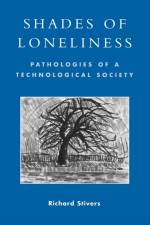
Richard Stivers rejects recent emphasis on genetic explanations of psychological problems, arguing that the very organization of technological societies is behind the pervasive experience of loneliness.
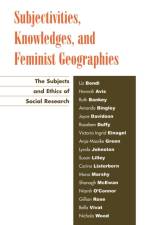
Research about people always makes assumptions about the nature of humans as subjects. This collaboration by a group of feminist researchers looks at subjectivity in relation to researchers, the researched, and audiences, as well as the connections between subjectivity and knowledge.
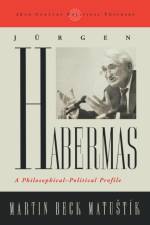
This philosophical-political profile offers an intellectual reconstruction of Jurgen Habermas' defining historical and existential situations, his generational profile and interventions, his impact on as well as the discontents that his life work generates on others.
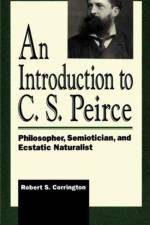
Corrington achieves the most judicious presentation of Peirce's philosophy made so far, an ideal introduction for the beginning student and 'balancer' for Peirce sophisticates. -John Deely, Loras College
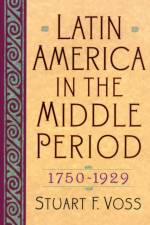
The customary division of Latin American history into colonial and modern periods has come into question. This book demonstrates that there was a middle period in Latin America's historical evolution since the European Conquest.
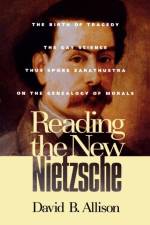
Reading the New Nietzsche is devoted to a comprehensive analysis of the four most important ad widely read of Nietzsche's works. After a largely biographical introduction, a chapter is devoted to each work. Read in succession they give an overall philosophical account of Nietzsche's thought.
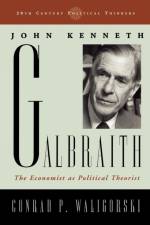
Examines the economist John Kenneth Galbraith through the lense of political theory. This book illustrates the link between politics and economics in American political discourse by locating Galbraith in a framework of liberal and conservative theory, controversy, alternatives, and policy.
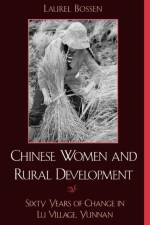
Based on anthropological research conducted during the 1990s in Lu Village and informed by the classic 1930s study of the same village by Fei Xiaotong, China's most famous anthropologist, this book portrays individuals confronting a variety of changes in their daily lives.
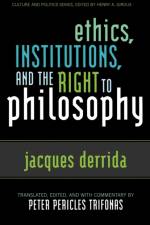
This volume reflects Jacques Derrida's views on the role of education and international organizations in an era of globalization. Derrida develops a notion of the global citizen that is uniquely post-Kantian, and he looks especially at the changing role of UNESCO and similar organizations.
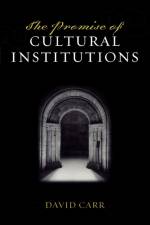
Often museums or libraries have the power to profoundly alter our sense of ourselves and of the world around us, but that power carries with it obligations. This work challenges us to contemplate both the effects and the responsibilities, and also to examine carefully the nuances of these experiences.
This study of Soviet censorship during its whole existence emphasizes textual changes made in literary works by official censorship and editorial boards. Covering the works of 80 writers, it groups censorial corrections to show the aims of censorship and its evolution in Communist Party policy.
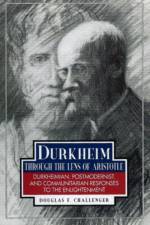
This text re-examines Durkheim's "science of morality" as it is illuminated by Aristotle's philosophy. The author demonstrates, by examining previously unappreciated aspects of the latter's moral sociology, that Durkheim's theory can be compatible with postmodernism.
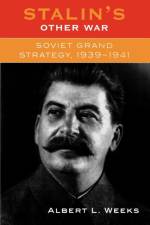
Longtime Soviet expert Albert L. Weeks has studied the newly-released information and come to a new conclusion about the Soviet Union's pre-war buildup_it was not precaution against German invasion at all. In fact, Weeks argues, the evidence now suggests Soviet mobilization was aimed at an eventual invasion of Nazi Germany.
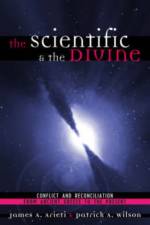
Examines the perennial issues that keep science and religion at arm's length, clarifies those issues, and fits them into an historical framework-from Plato, to Aquinas, to today's thinkers.
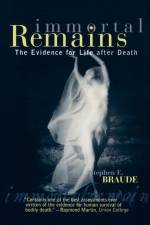
Immortal Remains takes a fresh look at some of the most puzzling cases suggesting survival after death, and considers how to distinguish evidence for an afterlife from evidence for exotic things (including psychic things) done by the living. Author Stephen E. Braude concludes that we have some reason, finally, for believing in life after death.
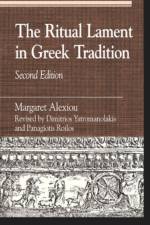
First published in 1974, this is a generic and diachronic study of learned and popular lament and its socio-cultural contexts throughout Greek tradition, and a variety of sources are integrated to offer a comprehensive synthesis. This edition includes an updated bibliography.
One of the central questions of philosophy has been that of how we know that the objects perceive are real. The author develops a theory of awareness in which perception gives us an awareness of objects, not mental representations, and we have non-inferential knowledge of the objects' properties.
Using excerpts from rarely seen publications such as "White Patriot" and "White Power", this text explores the world of white supremacists and the way they imagine racial and gender identity. Discussing groups like the Ku Klux Klan, this text provides a history of race as a concept.
In this book, Chomsky builds a larger understanding of our educational needs, starting with the changing role of schools today, yet broadening our view toward new models of public education for citizenship.
An exploration of the experiences of women entrepreneurs amidst the contradictions of a free-wheeling commercial culture set within the patriarchal constraints of contemporary Taiwan. The book focuses on the voices and perspectives of the women themselves.
Abonner på vårt nyhetsbrev og få rabatter og inspirasjon til din neste leseopplevelse.
Ved å abonnere godtar du vår personvernerklæring.