



















Gjør som tusenvis av andre bokelskere
Abonner på vårt nyhetsbrev og få rabatter og inspirasjon til din neste leseopplevelse.
Ved å abonnere godtar du vår personvernerklæring.Du kan når som helst melde deg av våre nyhetsbrev.

This work explores major shifts and re-orientations in the history of American anthropology. It engages three fundamental intellectual-political challenges that American anthropology is destined to confront - becoming more self-reflexive, achieving holism, and defence of universal human rights.
This book provides a sociological account of the events in Bosnia in the 1990s, including ethnic cleansing, mass rape, and the role of political journalists.
This work tests the assumption that economic globalization and the decline of US hegemony give overseas corporate behaviour a free reign in defying US imposed sanctions abroad. It examines the use of sanctions from the Cold War through the sanctions decade of the 1990s.
Charles Sanders Peirce complained that William James allowed pragmatism to become "infected" with "seeds of death" like the idea that truth is mutable. This volume aims to defend James's pragmatic theory from a range of critics including Peirce, Bertrand Russell, Hilary Putnam, and Cornel West.
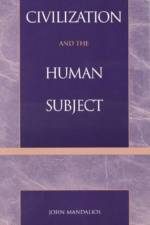
This work seeks to incorporate the "postmodern" debate on the self with a philosophical exploration of identity and cultural formation, and the dynamics of social power underlying them. It analyzes the historical, social, political, religious and psychoanalytical dimensions of civilized life.
Who are we? is a question that has haunted Russians for centuries. The crisis of identity that underlies Russia's efforts to answer that question and the country's attempts to grapple with modernity - the invention of an alien civilization - are explored in this text.
In Our Only Star and Compass, Peter C. Myers reexamines the role of Locke in liberal political philosophy. Myers considers Locke's philosophy in relation both to contemporary liberalism and to the great works of classical and modern political philosophy.
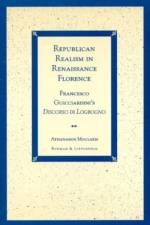
This text makes available in English the essay, "How to Bring Order to Popular Government", by Renaissance thinker Francesco Guicciardini. It also analyzes this work, showing that the long maturation of Florentine constitutional thought points to a modern idea of the republican state.
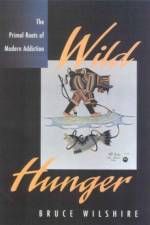
This pioneering work explores why our culture is plagued by addictions-by giving serious attention to our genetic legacy from our hunter-gatherer ancestors.
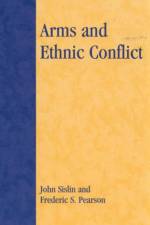
This book explores the function of arms in ethnic conflict by looking at arms acquisition by ethnic groups, government involvement in escalation, and the role of outsiders in arms influx and sometimes, conflict resolution. Important new data and a fresh look at established records of arms and ethnic conflict are hallmarks of this book.
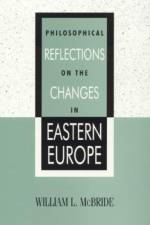
A philosophical reflection on the changes in Eastern Europe that began in 1989. It focuses on issues such as the role of ideology; "conversions" of intellectuals; the place of philosophers in politics; the relationship between democratic slogans and everyday realities; and women's concerns.
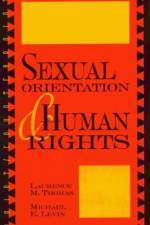
What rights govern heterosexual and homosexual behaviours? Laurence Thomas argues that any discrimination based on sexual orientation is unjustified, while Michael Levin defends the unorthodox view that the aversion some people experience toward homosexuality deserves respect.
This text considers the concept of constitutionalism as the subject matter of constitutional history and argues that the study of constitutionalism should be interdisciplinary, requiring the insights and methods of history, political science, and jurisprudence.
Folklorist Alan Dundes offers a radical analysis of caste in India, focusing on the rationale underlying the customs surrounding untouchability.
This work unveils the factors that have led to misunderstanding of the geologic radon issue. It shows how risk factors are hidden by mystic beliefs that contradict scientific realities and how political and scientific realities behind environmental policy can undermine an effective response.
This work demonstrates that women, as women, have a valuable contribution to make to religion. This edition of the book is revised and updated in the light of 13 years of feminism, including fresh biblical role models and a new chapter on women's special relationship to time.
What role did economics play in leading the United States into the Civil War in the 1860s, and how did the war affect the economies of the North and the South? Tariffs, Blockades, and Inflation uses contemporary economic analyses such as supply and demand, modern market theory, and the economics of politics to interpret events of the Civil War.
This text illuminates the forces that drive US global policy, from Vietnam and Colombia to Afghanistan and Iraq. It brings to light the intertwined patterns of drugs, oil politics, and intelligence networks that have been central to the larger workings of US intervention in Third World countries.
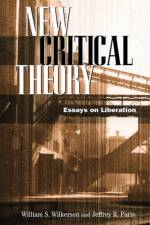
Seeking to expand critical theory beyond the frontiers represented by Habermas (on the one hand) and postmodern cultural studies (on the other), these 12 essays describe the aims and methods of this pursuit.
The war between the United States and Mexico was decades in the making. Although Texas was an independent republic from 1836 to 1845, Texans retained an affiliation with the United States that virtually assured annexation at some point.
Reality and Humean Supervenience confronts the reader with central aspects in the philosophy of David Lewis, whose work in ontology, metaphysics, logic, probability, philosophy of mind, and language articulates a unique and systematic foundation for modern physicalism.
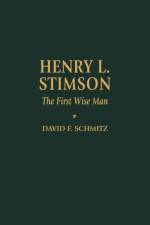
The twentieth century witnessed the rise of the United States as the preeminent player on the world stage. Henry L Stimson was among those individuals responsible for the American ascension in the arena of foreign policy.
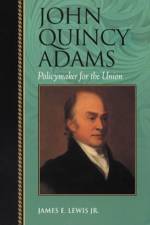
Focuses on John Quincy Adams' role in foreign policy, including his years as secretary of state and as president.
A well-written, lively, optimistic book that calls for the transformation of technology in government from lipstick on a bulldog to total information awareness.
Abonner på vårt nyhetsbrev og få rabatter og inspirasjon til din neste leseopplevelse.
Ved å abonnere godtar du vår personvernerklæring.