










Gjør som tusenvis av andre bokelskere
Abonner på vårt nyhetsbrev og få rabatter og inspirasjon til din neste leseopplevelse.
Ved å abonnere godtar du vår personvernerklæring.Du kan når som helst melde deg av våre nyhetsbrev.

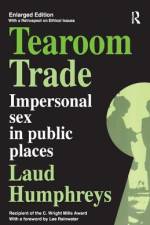
From the time of its first publication, 'Tearoom Trade' engendered controversy. It was also accorded an unusual amount of praise for a first book on a marginal, intentionally self-effacing population by a previously unknown sociologist. The book was quickly recognized as an important, imaginative, and useful contribution to our understanding of "deviant" sexual activity. Describing impersonal, anonymous sexual encounters in public restrooms--"tearooms" in the argot--the book explored the behavior of men whose closet homosexuality was kept from their families and neighbors. By posing as an initiate, the author was able to engage in systematic observation of homosexual acts in public settings, and later to develop a more complete picture of those involved by interviewing them in their homes, again without revealing their unwitting participation in his study. This enlarged edition of 'Tearoom Trade' includes the original text, together with a retrospect, written by Nicholas von Hoffman, Irving Louis Horowitz, Lee Rainwater, Donald P. Warwick, and Myron Glazer. The material added includes a perspective on the social scientist at work and the ethical problems to which that work may give rise, along with debate by the book's initial critics and proponents. Humphreys added a postscript and his views on the opinion expressed in the retrospect.
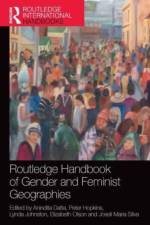
This handbook provides a comprehensive analysis of contemporary gender and feminist geographies in an international and multi-disciplinary context. It features 48 new contributions from both experienced and emerging scholars, artists and activists who critically review and appraise current spatial politics. Each chapter advances the future development of feminist geography and gender studies, as well as empirical evidence of changing relationships between gender, power, place and space. Following an introduction by the Editors, the handbook presents original work organized into four parts which engage with relevant issues including violence, resistance, agency and desire: Establishing feminist geographies Placing feminist geographies Engaging feminist geographies Doing feminist geographies The Routledge Handbook of Gender and Feminist Geographies will be an essential reference work for scholars interested in feminist geography, gender studies and geographical thought.
This book examines the effects of the terrorist attacks on New York and Washington of 11 September 2001 on America's human rights and counter-terrorism policies towards a number of countries in Asia. Five countries have been chosen for examination, divided into two front-lines states (Pakistan and Uzbekistan), two second-front countries (Indonesia and Malaysia), and a third-front country, China. The paper also looks at changes in US domestic legislation and its treatment of prisoners at Guantanamo Bay and elsewhere in order to analyse the extent to which the US promotion of an external human rights policy might also have been compromised by its own legislative changes as a result of the struggle against terrorism. The paper concludes that the attacks on US territory, overall, have constrained America's willingness and capacity to promote an external human rights policy with respect to these five countries. However, some attention - especially at the rhetorical level - to these countries' human rights records has been retained to differing degrees among the five states. This degree of difference is not explained entirely in reference to a country's perceived centrality to the struggle against terrorism. It depends on the extent to which the US executive and legislative branches are united - either singly or in combination - in their disapproval of a state's record, or in their understanding about how best to reach the policy goals that are sought.
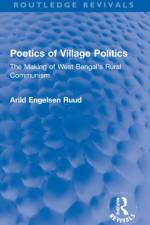
Originally published in 2003, this volume studies village politics and the changes brought about in rural society through political developments. It focuses on the social, political and cultural circumstances of communist mobilization in rural West Bengal. It analyses the emergence of rural communism in the local context of changes in the position of women, in caste practices, in economic conditions and in new efforts to create 'development'. It investigates how this cultural change interacts with the mechanisms and tools of village politics, and using anthropological methods and oral history as tools, allows for a detailed and intimate ethnographic description of village politics and its changes.
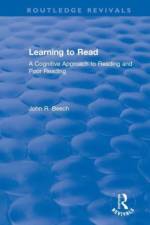
Originally published in 1985, Learning to Read presents a balanced view of contemporary research into the reading process and theories accounting for reading and poor reading. The book focuses in particular on children who experience considerable difficulty in acquiring necessary reading skills. It considers how reading ability is assessed and the problematic subject of dyslexia. It also adopts a comprehensive approach to the cognitive factors behind poor reading, as well as possible developmental and environmental factors. Learning to Read will appeal to those with an interest in how children learn to read and the development of research on this subject.
The results of the investigation into British industrial profit, business saving, and investment are the subject of this book, originally published in 1965.
This book explores the structure and function of memory and imagination, as well as the relation and interaction between the two states. It is the first book to offer an integrative approach to these two emerging areas of philosophical research.The essays in this volume deal with a variety of forms of imagining and remembering. The contributors come from a range of methodological backgrounds: empirically minded philosophers, analytic philosophers engaging mainly in conceptual analysis, and philosophers informed by the phenomenological tradition. Part 1 consists of novel contributions to ontological issues regarding the nature of memory and imagination and their respective structural features. Part 2 focuses on questions of justification and perspective regarding both states. The chapters in Part 3 discuss issues regarding memory and imagination as skills or abilities. Finally, Part 4 focuses on the relation between memory, imagination, and emotion.Philosophical Perspectives on Memory and Imagination will be of interest to scholars and advanced students working in philosophy of memory, philosophy of imagination, philosophy of mind, and epistemology.
Masterless Men (1985) examines the nature of vagrancy in Tudor and Stuart England, an issue that many contemporary authorities regarded as their most serious social problems. It looks at why vagrancy was felt to be such a threat to the stability of the country, and the steps the authorities took to overcome the problem.
Ever since the history of science emerged as a discipline at the heart of the Age of Enlightenment in the eighteenth century, Arabic science or at least certain sectors of it - have constantly been cited by the philosophers and historians of science. In this book the editors have tried to restore to Arabic science its true aspect and place by emphasizing the analysis of ancient sources and by devoting some chapters to its extensions in Latin and Hebrew. The book as a whole covers the history of Arabic science over about seven centuries.
Seafarer & Community (1973) examines life on shipboard and how the communities which rely on the sea for their livelihood exist. The main theme running through the chapters in this book is the observation of seafaring as an occupational community, as observed by anthropologists, economists, geographers, psychologists, seafarers and sociologists. The book explores the nature of seafaring communities, and asks whether they exist as communities in their own right or if they are occupational subgroups within a larger community. It also examines the psychological impact on seafarers of working within the closed communities of ships, and analyses the problems of training and recruitment.
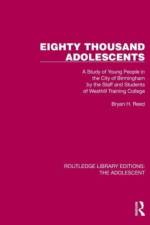
Eighty Thousand Adolescents, originally published in 1950, illustrated by maps, photographs and diagrams, describes and interprets the results of a study of the young people of Birmingham. This study was made by the staff and students of Westhill Training College, under the direction of Bryan Reed, Youth Tutor. Visits were paid to some hundreds of youth organizations, and answers to a series of questions were given by over a thousand young people, both 'attached' and 'unattached'.Some of the questions to which the investigators set out to find answers were: In what kind of homes are young people growing up? How do they earn their living? How many take advantage of opportunities for further education? How do they spend their leisure? - and their pocket money? What do they read? What are their emotional, intellectual, spiritual and social needs? and how far do Education Authorities, Clubs, Churches, etc. meets these needs?In his summing-up Mr. Reed calls attention to the need for imaginative and instructed leadership, for a sense of purpose in the Youth Service, and for the integration of this Service in the wider life of the community. Today it is a fascinating look back at adolescent life in post-war Britain.
The 1960s, in retrospect, may be chiefly remembered for the unprecedented constitutional developments it witnessed in countries emerging from colonial rule. Originally published in 1963, an examination of these constitutional developments from the authoritative pens of the previous Legal Adviser to the Colonial and Commonwealth Relations Offices, and the Legal Adviser to the Colonial Office at the time was, therefore, particularly timely - for no two men in human history can have had to draft so many constitutional instruments.One after another of these new constitutions had, moreover, included certain 'Fundamental Rights', so a discussion of this subject by a recognised academic authority, together with an examination by an ex-Chief Justice of Allahabad of the constitutional writs which have been so widely used in India to protect these rights, was particularly appropriate. An erudite examination of the origins of the famous phrase 'Justice, Equity and Good Conscience' by the Reader in Oriental Laws in the University of London, fittingly concludes the first half of this volume.Legal developments in these emergent countries, had, however, by no means been limited to the sphere of constitutional law. So the series continues with contributions on the legal profession in African territories, by a former President of the Law Society, and on the problems posed by Islamic law in that continent, by the Professor of Oriental Laws. Criminal Law is represented by a consideration of 'Liability under the Nigerian Criminal Code' by an ex-Chief Justice of the Western Region; matters economic and sociological by papers on 'Legal Development and Economic Growth in Africa' and 'Women's Status and Law Reform' by two experts in Africa law; and developments in Asia by an examination of recent legislation on family law in Pakistan, and of the sources of Chinese Law in Hong Kong, by other members of the staff of the School of Oriental and African Studies.
In the early twentieth century, Pulitzer Prize-winning journalist Walter Lippmann said that the presentation of truthful news lies at the heart of democracy. This volume strong strong stems from Dan D. Nimmo's conviction that opinion and policymaking are also significant, interrelated processes within any political system. A democracy poses problematic questions of the manner and means by which political ideas, opinions, and issues are transmitted throughout the body politic. In the United States, such communication is carried on primarily through the news media. Reporters and their sources interact to form crucial relationships linking citizen and official. Nimmo focuses on that interaction, using personal interviews with selected samples of Washington correspondents and their official news sources as his evidence. Nimmo's research examines the relationships that develop between news sources and reporters as each engages in political communication, indicates the factors most influential in determining such relationships, and suggests the implications such findings have for interpreting the tension that characterizes government-press relations in a democracy such as the United States. In this era of heightened attention to the role of the media in political discourse, reissuance of this volume could not be timelier. This study features a new preface by Daniel Pearl Award winner Georgie Anne Geyer. It should be read by all media specialists, communication scholars, and journalists, and will be valuable for those entering these fields as well.
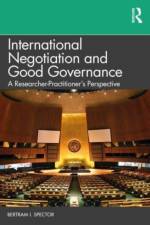
This book investigates two critical political science domains: international negotiation processes and the establishment of good governance practices, using real-world examples. The author's observations, analyses, and recommendations provide a unique blend of researcher and practitioner experiences that were implemented in conjunction with government authorities, businesses, the media, and citizen groups in over 40 countries.The book examines negotiation process dynamics from several perspectives: the inclusion of new actors; the impact of psychology, creativity, and values; the significance of post-agreement negotiations; and how negotiations that resolve civil wars need to incorporate explicit good governance provisions. From the governance perspective, the book analyzes the age-old problem of corruption, which is often a major factor responsible for bad governance practices, economic dysfunction, and widespread poverty. It explores the importance of strengthening citizen advocacy for reforms, designing and implementing anti-corruption strategies for fragile states, customizing anti-corruption strategies through targeted risk assessments, and deconstructing the negotiation give-and-take in corrupt transactions to reduce their impact. Each chapter incorporates the author's practitioner experiences with his research contributions, along with examples of events he experienced when implementing programs around the world.This unique volume will be used in university courses on international negotiation, conflict resolution, governance practices, international development, and comparative politics, as well as providing a useful resource for researchers, policymakers, practitioners, NGOs, donor organizations, and grant-giving organizations.
Originally published in 1995, after decades of steady growth, this book was written at a time when the world's food supply was no longer keeping up with population increases. This book examines the causes of the imbalance in the food/population equation and suggests ways in which Malthusian checks can be countered. It calls for an international strategy to restore global security, and a budget to implement it, with a massive redirection of the world's financial resources. On one side of the argument the authors advocate increased expenditure on family planning services, education, and women's rights. On the other, they stress the environmental importance of reforestation and soil conservation schemes to halt the deterioration of the agricultural resource base.
The working of the 1969 Children and Young Persons Act was the subject of much debate in the 1970s. Discussion had been strong on opinion and short on facts; this book, originally published in 1977, supplied some much-needed evidence, based on the results of a research project funded by the Home Office Research Unit. It also discusses the origins of the Act and its consequences for children and their families. The authors describe the way in which two groups of children were dealt with by the police, social workers, probation officers and juvenile courts during the first three months of 1972. Their findings depict a system which decides what to do with 'children in trouble' mainly on the basis of their offence behaviour rather than on assessments of their personal needs - a 'judicial' rather than 'welfare' system of the kind envisaged in the legislation. As a result of these observations, the authors conclude that 'the idea of the juvenile court has been tried and found wanting, and that it suffers from the congenital defects which fresh applications of money or manpower will fail to cure.' They recommend the abolition of the juvenile court and the raising of the age of criminal responsibility, proposing a number of controversial alternatives based on principles of non-intervention.
First published in 1981, Theories of Trade Unionism traces the development of trade union theory from its nineteenth-century foundations to the more advanced conceptual models present at the time of original publication. The book surveys the main tributaries of modern approaches - the moral and ethical, the revolutionary, the defensive or conservative, and the economic and political - and analyses the work of contemporary industrial relations scholars. This includes the main types and varieties of systems theory, the disparate pluralist approaches and the 'radical school'. The book identifies links between the differing premises of the various schools of thought, and combines the main perspectives in a higher analytical and conceptual unity. It concludes with a discussion of a number of avenues for theoretical and conceptual progress. Theories of Trade Unionism is ideal for those with an interest in the history of trade union theory.
Although the adoption of market reforms has been a key factor leading to China's recent economic growth, China continues to be governed by a communist party and has a socialist-influenced legal system. Vietnam, starting later, also with a socialist-influenced legal system, has followed a similar reform path, and other countries too are now looking towards China and Vietnam as models for development. This book provides a comprehensive, comparative assessment of legal developments in China and Vietnam, examining similarities and differences, and raising important questions such as: Is there a distinctive Chinese model, and/or a more general East Asian Model? If so, can it be flexibly applied to social and economic conditions in different countries? If it cannot be applied to a culturally and politically similar country like Vietnam, is the model transportable elsewhere in the world? Combining 'micro' or interpretive methods with 'macro' or structural traditions, the book provides a nuanced account of legal reforms in China and Vietnam, highlighting the factors likely to promote, change or resist the spread of the Chinese model.
This book utilises the Expectancy-Value theory and the Undermining Effect of Extrinsic Reward theory to examine the impact of the Central Government-Funded Teacher Education policy (CGFTE) policy on Chinese pre-service teachers' motivations for choosing the teaching profession.
Memetic War analyses memetic warfare, included in cyber war and aims to develop a framework for understanding the parameters included in utilising this concept in Ukraine as a part of civic resistance.
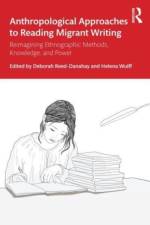
This book brings fresh perspectives to the anthropology of migration. It focuses on what migrants write and how anthropologists may incorporate insights gained from engagement with this writing into research methods and writing practices. The volume includes a range of contributions from leading scholars in the field, all organized around a striking set of questions about the conditions in which migrant narratives are written and translated, the audiences for which they are intended, the genres and media through which they are disseminated, and what such stories include or leave out. The contributors to this volume demonstrate an innovative shift in anthropological methods by showing how fiction and nonfiction, graphic memoir and autoethnography, song lyrics as well as social media posts and images, unsettle the power dynamics in the study of migration narrative. This book will serve as important supplemental reading for courses on migration, literary anthropology, ethnographic methods, and sociocultural anthropology in general. It's interdisciplinary perspective will appeal to a broad range of scholars and students with interests in migration, narrative, and anthropological writing genres.
Originally published in 1968, this book is of unique value because it provides first-hand information on Nigerian government and administration in action during the 2nd half of the 20th Century. Themes discussed include the evolution, organisation and structure of the civil services; the impact of politics on administration; interest groups; the politics of modernisation and its effect on the Administration; inter-class and inter-departmental conflicts in the public services; the contribution of politicians and administrators to national economic planning and the politics and administration of public corporations. The Nigerian experience is also compared with that of francophone West African countries, and the last chapter examines the future of Nigerian administration against the background of past experience.
This new study of the Meiji Government's controversial Education Minister and thinker, Mori Arinori, seeks to complement Ivan P. Hall's excellent earlier biography (1973) by providing an alternative interpretation of the man and his mission, namely that he is 'overwhelmingly closer to the social evolutionist's view of social change', with a considerable debt to the writings of Spencer rather than the Utalitarian philosophy of J. S. Mill. In other words, Mori was able to develop a workable philosophy of government and administration in line with the pragmatic needs of Japanese society. The book, therefore, will contribute to a radical rethink of Japanese perceptions of the Meiji reforms seen in their own terms.
This timely book offers up-to-date information for both researchers and decision makers regarding five core areas of Middle Eastern institutional and cultural context and its role in shaping business's strategies and practices in the region.
The root cause of contemporary American psychological and social disorders, argues William Donohue in this major new book, is the dominant culture's embracement of a fraudulent conception of freedom. In fact, the tension between an individual liberty without limits and the social need for civility and community has created havoc in the lives of many Americans.Conventional wisdom about the nature of freedom is characterized by both the uncoupling of a concept of rights from a concept of responsibilities and by an overweening doctrine of moral neutrality. This preoccupation with individual liberty, to the neglect of other competing values, has left a trail of social discord that will be difficult to redress. Constraint of any kind is now seen as the enemy of liberty, and all that limits or burdens the individual in any way is seen as anathema to freedom.The New Freedom critically examines how this new concept of freedom developed historically and why it exploded on the American scene in the 1960s. Its impact on the deepest recesses of American society, including marriage, the family, sexuality, the schools, the churches, and the criminal justice system, are fully explored. The costs have been high. Information on the psychological and social health of Americans suggests that all is not well. But the ultimate cost, says Qonohue, may be the ultimate failure of liberty, as the fraudulent new freedom collides with the human need for community.Sure to be controversial, The New Freedom will provide policymakers, social scientists, and specialists in the family, education, and religion a compelling new perspective on old questions. The book will also appeal to general readers who seek to understand the root causes of the nation's unprecedented volume of social and psychological problems.
Some goods are freely traded as commodities without question or controversy. For other goods, their commodification - their being made available in exchange for money, or their being subject to market valuation and exchange - is hotly contested. "Contested" commodities range from labour and land, to votes, healthcare, and education, to human organs, gametes, and intimate services, to parks and emissions. But in the context of a market economy, what distinguishes these goods as non-commodifiable, or what defines them as contestable commodities? And why should their status as such justify restricting the market choices of rationally consenting parties to otherwise voluntary exchanges?This volume draws together wide-ranging, interdisciplinary research on the legitimate scope of markets and the kinds of goods that should be exempt therefrom. In bringing diverse answers to this question together for the first time, it finally identifies commodification studies as a unique field of scholarly research in its own right. In so doing, it fosters interdisciplinary dialogue, advances scholarship, and enhances education in this controversial, important, and growing field of research. Contemporary theorists who examine this question do so from across the disciplinary spectrum and ground their answers in diverse scholarly literature and divergent methodological approaches. Their arguments will be of interest to scholars and students of philosophy, economics, law, political science, sociology, policy, feminist theory, and ecology, among others.The contributors to this volume take diverse and divergent positions on the benefits of markets in general and on the possible harms of specific contested markets in particular. While some favour free markets and others regulation or prohibition, and while some engage in more normative and others in more empirical analysis, the contributors all advance nuanced and thoughtful arguments that engage deeply with the complex set of moral and empirical questions at the heart of commodification studies. This volume collects their new and provocative work together for the first time.
This volume is a survey of Soviet-Israeli relations from the time when the U.S.S.R. supported the establishment of Israel's independence in 1947-48. Although diplomatic relations have been broken since 1967, the author shows how many contacts there have been, from conversations at the foreign minister level to the visits of individuals and delegations.
This book examines the U.S. system of intergovernmental relations pertaining to ocean resources. The exploitation of the oceans with regard to fisheries, marine mammals, hydrocarbons and economic minerals, waste disposal, and coastal zone management is analyzed in the context of the Reagan administration's New Federalism. The contributors document the relationships that exist between the various levels of government - federal, state, and local - involved in regulating ocean resources and explore the problems associated with the use of specific resources. The analyses suggest no single pattern of government guidelines during the Reagan years, and they explain existing federal systems in relation to improve the management and conservation of ocean resources.
Originally published in 1988, Appraising Teachers in Schools considers and provides advice on the introduction of staff appraisal in schools. Following the publication of the 1987 Pay and Conditions of Employment and written by contributors with practical experience of introducing staff appraisal into schools, the book provides guidance on the introduction of staff appraisal across a range of schools; outlines a planning process for the establishment of staff appraisal; and offers suggestions for how to prepare for the appraisal process. It covers both primary and secondary education in a variety of larger and smaller schools. Appraising Teachers in Schools will appeal to those with an interest in the history of education and the history of staff appraisal in schools in particular.
Test Scoring provides a summary of traditional true score test theory and modern item response theory related to scoring tests, as well as novel developments resulting from the integration of these approaches. The background material introduced in the first four chapters builds a foundation for the new developments covered in later chapters. These new methods offer alternative psychometric approaches to scoring complex assessments. Each of the book's contributors draws from the classic literature of traditional test theory, as well as psychometric developments of the past decade. The emphasis is on large-scale educational measurement but the topics and procedures may be applied broadly within many measurement contexts. Numerous graphs and illustrative examples based on real tests and actual data are integrated throughout. This multi-authored volume shows the reader how to combine the coded outcomes on individual test items into a numerical summary about the examinee's performance. This book is intended for researchers and students in education and other social sciences interested in educational assessment and policy, the design and development of tests, and the procedures for test administration and scoring. Prerequisites include an introduction to educational and psychological measurement and basic statistics. Knowledge of differential and integral calculus and matrix algebra is helpful but not required.
Abonner på vårt nyhetsbrev og få rabatter og inspirasjon til din neste leseopplevelse.
Ved å abonnere godtar du vår personvernerklæring.