



















Gjør som tusenvis av andre bokelskere
Abonner på vårt nyhetsbrev og få rabatter og inspirasjon til din neste leseopplevelse.
Ved å abonnere godtar du vår personvernerklæring.Du kan når som helst melde deg av våre nyhetsbrev.

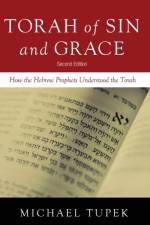
The role of the Torah is poorly understood within the religious communities of both Judaism and Christianity, but with varying causes. Its use in biblical salvation history is much more than the foundational text for Israelite existence, covenant, and stipulation. ""Torah"" is the Hebrew word for instruction, not law, and this sacred document contains, not only the well-known Abrahamic covenant of grace, but two core lessons: the serious nature of sin and the fearful necessity of transforming grace. Torah of Sin and Grace provides a fresh, honest, and careful examination of both the Torah and the relevant prophetic portions of the later Hebrew Bible, which will reveal the fact that the biblical writers themselves had a larger understanding of the role of the Torah, and that this understanding always incorporated the recognition of the failed Israelite covenant, resulting in the core lessons concerning the sinfulness of man and the supernatural grace that rescues him. Much of the book discusses the unfolding of this glorious rescuing grace for both Jew and Gentile, including the ""new things"" revealed by the prophets such as the new covenant, the Suffering Servant, the ingathering of the Gentiles, and the future of Israel and their land.""Michael Tupek has written a book that clarifies the precious gospel that unites the two testaments. God has spoken and sent his messengers, Moses and the prophets, whose ministries anticipate the coming of the Son. Thus, the relation between the two testaments is such that the message of the Old Testament is not abrogated, neither is it conflated with or separated from the New Testament. One God has spoken, and we do well to listen to his message confirmed by the incarnate Word and by his Spirit.""--Willem A. VanGemeren, Professor of Old Testament, Trinity Evangelical Divinity SchoolMichael Tupek is a self-taught lay theologian, having studied biblical theology, biblical Hebrew and Greek, Jewish studies, philosophy, and history. He resides in New Hampshire with his wife, and works as an IT technician, and is also a professional artist.
""God our Savior desires everyone to be saved"" (1Tim 2:4). Does God get what God wants? ""Yes, but--"" depending on how we read the Bible.The Bible is universal: One God, Sovereign Creator of everything, especially humanity in God's image, God's partner to manage creation. Science and evolution say humanity evolved, gradually acquiring superior capabilities. We have yet to transcend animal nature and acknowledge oneness of creation under God.Humans exploited our semi-divine status, becoming alienated. God chose Israelites/Jews for blessing and reconciling humanity. They exploited chosenness, so God sent the Jew Jesus to reveal God's gracious concern for all people. Roman political and Jewish religious power killed Jesus, but he appeared resurrected to his disciples, who proclaimed him Savior.God gave another Jew, Paul, a vision of Jesus resurrected and appointed him to proclaim God's reconciliation to Gentiles. Paul taught that through the faithfulness of Jesus, Gentiles too become God's people and share Israel's blessings without becoming Jews. All who experience reconciliation share Jesus's partnership with God. ""We toil and struggle, because we have our hope set on the living God, who is the Savior of all people, especially of those who believe"" (1 Tim 4:10).
""For surely I know the plans I have for you, says the Lord, plans for your welfare and not for harm, to give you a future with hope."" Jeremiah 29:11How do we know God's plans for us? How do we know God leads and talks to us daily? How do we become more disciplined in our spiritual walk in order to better hear God's voice and guidance in our lives? There are no easy answers to these questions. However, when we are intentional in our times of prayer, Bible study, and reflection, the Holy Spirit opens our hearts to God's love, allowing us to see opportunities for further direction and growth. Discipleship--A Lifelong Spiritual Pilgrimage offers guidance and gives support to those already involved in this pilgrimage plus encouragement to those wanting to do more in developing good discipleship practices.
Supported by the International Association of Addictions and Offender Counselors (IAAOC), this annual review addresses innovation, evaluation, and program development efforts in addictions and offender counseling. Experts in the field present peer-reviewed models and recommendations for ensuring best practices in addictions and offender counseling.
The overall problem raised in this book is that the Western culture of modern rationality, power, and economics departs from a rather narrow, secular and ego-centric worldview. Therefore, it does not recognize the identity of traditional cultures and religions nor social, economic, or ecological justice in relation to the rest of the world.Western religion has, over history, often played a legitimating role for political power, and the expansion of institutional structures and has therefore lost much of its prophetic identity to be signs of peace, justice, and unity. The ecumenical and integrative model of stewardship as an ""economy of grace,"" with a deeper ecological philosophy, does, however, offer new visions for a multicultural and multireligious economy.This book is intended for leaders, students, and scholars interested in interdisciplinary studies of politics, religion, economics, and ecology. This will also be of interest to students and researchers in peace studies or conflict management, as well as to leaders who are engaged in the building of peace and justice.
Abonner på vårt nyhetsbrev og få rabatter og inspirasjon til din neste leseopplevelse.
Ved å abonnere godtar du vår personvernerklæring.