













Gjør som tusenvis av andre bokelskere
Abonner på vårt nyhetsbrev og få rabatter og inspirasjon til din neste leseopplevelse.
Ved å abonnere godtar du vår personvernerklæring.Du kan når som helst melde deg av våre nyhetsbrev.

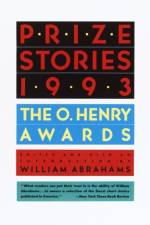
“Widely regarded as the nation’s most prestigious award for short fiction.”—The Atlantic Monthly Established in 1918 as a memorial to the master of the short story genre, O. Henry, Prize Stories has long been recognized as the premier forum for the contemporary story. The volume for 1993 carries forth the time-honored literary tradition in 23 selections as original and varied as the current trends in short fiction. The top prize for 1993 is awarded to Thom Jones’s “The Pugilist at Rest,” which explores the interior depths of depression through the eyes of Vietnam vet and former Marine boxing champion. Other stories in this collection include: Andrea Lee “Winter Barley” William F. Van Wert “Shaking” Joyce Carol Oates “Goose-Girl” Charles Eastman “Yellow Flags” Cornelia Nixon “Risk” Rilla Askew “The Killing Blanket” Antonya Nelson “Dirty Words” John H. Richardson “The Pink House” Diane Levenberg “A Modern Love Story” John Van Kirk “Newark Job” Alice Adams “The Islands” Stephen Dixon “The Rare Muscovite” Lorrie Moore “Charades” Kate Wheeler “Improving My Average” Peter Weltner “The Greek Head” C. E. Poverman “The Man Who Died” Jennifer Egan “Puerto Vallarta” Charles Johnson “Kwoon” Linda Svendsen “The Edger Man” Daniel Stern “The Hunger Artist by Franz Kafka: A Story” Josephine Jacobsen “The Pier-Glass” Steven Schwarz “Madagascar”
"Certainly, if I am obliged to bring religion into after-dinner toasts (which indeed does not seem quite the thing), I shall drink -- to the Pope, if you please -- still, to Conscience first, and to the Pope afterwards."--John Henry Cardinal NewmanIn the works collected here, including An Essay on the Development of Christian doctrine, A Letter Addressed to His Grace the Duke of Norfolk, and On Consulting the Faithful in Matters of Doctrine, John Henry Cardinal Newman, the great nineteenth-century English theologian, debunks a few Catholic myths:Myth #1: The teaching of the Catholic Church on faith and morals has never changed and never will change. Not so, this brilliant scholar says. For just as each era has new ways of understanding, so, too, must the Catholic Church always change in its understanding of faith and morals.Myth #2: Catholics have to do whatever the Pope says. To the contrary, according to Newman''s famous quip on after-dinner toasts, the ultimate obligation of Catholics is to conscience, not the Pope.Myth #3: It''s the bishops who teach, the laity who follows. Newman turns this notion upside down: The laity, he says, are the source and final seal of the church''s teaching; thus the bishops must listen to them.Never before collected in one volume, these classic works reveal Newman at his eloquent best as he speaks to the religious crises of our time.
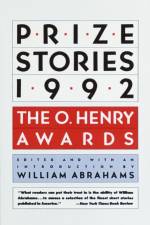
“Widely regarded as the nation’s most prestigious awards for short fiction”—The Atlantic Monthly The O. Henry Prize Stories 1992 gathers 20 of the best short stories of the year, selected from thousands published in literary magazines. Stories include: Cynthia Ozick “Puttermesser Paired” (first prize) Lucy Honig “English as a Second Language” Tom McNeal “What Happened to Tully” Amy Herrick “Pinocchio’s Nose” Murray Pomerance “Decor” Joyce Carol Oates “Why Don’t You Come Live With Me It’s Time” Mary Michael Wagner “Acts of Kindness” Yolanda Barnes “Red Lipstick” David Long “Blue Spruce” Harriett Doerr “Way Stations” Perri Klass “Dedication” Daniel Meltzer “People” Ken Chowder “With Seth in Tana Toraja” Alice Adams “The Last Lovely City” Frances Sherwood “Demiurges” Antonya Nelson “The Control Group” Millicent Dillon “Lost in L.A.” Kent Nelson “The Mine from Nicaragua” Ann Packer “Babies” Kate Braverman “Tall Tales from the Mekong Delta” “What readers can put their trust in is the ability of William Abrahams . . . to amass a selection of the finest short stories published in America.”—New York Times Book Review
Andrew M. Greeley, one of the most renowned authors and lecturers of our day, here turns his attention to a variety of the trials and frustrations that we all too often encounter in these hectic, pressure-filled times. These essays on nearly fifty themes address our fears, hang-ups, and worries, providing commonsense advice, consolation, and encouragement. In his inimitable fashion, Greeley blends the wisdom of the Scriptures with his own down-to-earth and uplifting insights. Anyone involved in the frequently harried and painful business of living—indeed, everyone—will find their true solace for those moments when life hurts. “I can heartily endorse this wo . . . Greeley deals not only with sorrow, but offers truly comforting reflections of other troubled moments, for our frustration, our physical and mental pain, for our hopelessness and despair.”—Morton Kelsey
In this arresting chronicle of one tumultuous year in China''s love-hate relationship with the West, Orville Schell brings us a revealing analysis of the Chinese reform movement.
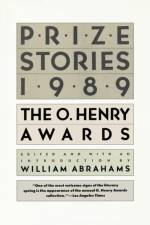
“Widely regarded as the nation’s most prestigious awards for short fiction”—The Atlantic Monthly The O. Henry Prize Stories 1989 gathers 20 of the best short stories of the year, selected from thousands published in literary magazines. Stories include:Ernest J. Finney “Peacocks” (first prize) Joyce Carol Oates “House Hunting” (second prize) Harriet Doerr “Edie: A Life” (third prize) Jean Ross “The Sky Fading Upward to Yellow: A Footnote to Literary History” Starkey Flythe, Jr. “CV10” Alice Adams “After You’ve Gone” Frances Sherwood “History” Banning K. Lary “Death of a Duke” T. Coraghessan Doyle “Sinking House” Catherine Petroski “The Hit” James Salter “American Express” David Foster Wallace “Here and There” Susan Minot “Ile Sèche” Millicent Dillon “Wrong Stories” Charles Simmons “Clandestine Acts” John Casey “Avid” Barbara Grizzuti Harrison “To Be” Rick Bass “The Watch” Ellen Herman “Unstable Ground” Charles Dickinson “Child in the Leaves”
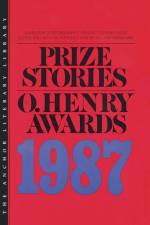
Established in 1918 as a memorial to the master of the short story genre, O. Henry, Prize Stories has long been recognized as the premier forum for the contemporary story. The 1987 volume carries forth the time-honored literary tradition in 20 selections as original and varied as the current trends in short fiction. The top prize for 1987 is jointly awarded to Louise Erdrich for “Fleur” and Joyce Johnson for “The Children’s Wing.” Other stories include: Robert Boswell “The Darkness of Love” Alice Adams “Tide Pools” Stuart Dybek “Blight” James Lott “The Janeites” Donald Barthelme “Basil from Her Garden” Gina Berriault “The Island of Ven” Jim Pitzen “The Village” Richard Bausch “What Feels Like the World” Millicient Dillon “Monitor” Norman Lavers “Big Dog” Robert Taylor, Jr. “Lady of Spain” Helen Norris “The Singing Well” Grace Paley “Midrash on Happiness” Lewis Horne “Taking Care” Warren Wallace “Up Home” Joyce Carol Oates “Ancient Airs, Voices” Daniel Stern “The Interpretation of Dreams by Sigmund Freud: A Story” Mary Robison “I Get By”
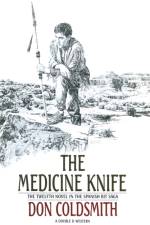
The Elk-Dog People have two new members, former soldiers in the French Army. Fully assimilated into the tribe, they travel to Santa Fe to help the group trade pelts. But soon trouble starts, and the new tribesmen must defend their people. Don Coldsmith''s detailed description of the Elk-Dog People and the harrowing journey to Santa Fe show why he is one of the best authors in western-adventure fiction.
Be your own home inspector with The Home Inspection Handbook. No one should ever buy a house without first inspecting it for crumbling foundations, corroded pipes, termites, and a host of other potential problems that could turn your most important investment into a disaster. The Home Inspection Handbook helps you spot symptoms of existing and potential problems at nineteen key checkpoints, determine which problems would require your immediate attention, estimate how much time, skill, and money it would take to make renovations and repairs, and indicate which problems are “Walk-Away Factors”—problems so serious that you should not even consider buying the house in question. Take the guesswork out of finding the right house and maximize your odds of success with The Home Inspection Handbook.
“Widely regarded as the nation’s most prestigious award for short fiction.”—The Atlantic Monthly The O. Henry Prize Stories 1986 collects 19 of the best short stories of the year, selected from thousands published in literary magazines. The 1986 winning story is Alice Walker’s “Kindred Spirits,” which profiles a young African-American woman after her divorce from her white husband. A Special Award for Continuing Achievement is given to Joyce Carol Oates for “Master Race” that narrates a shocking of a sexual assault in Germany. Other stories include: Stuart Dybek “Pet Milk” Greg Johnson “Crazy Ladies” John L’Heureux “The Comedian” Joyce R. Kornblatt “Offerings” Ward Just “The Costa Brava, 1959” Peter Meinke “Uncle George and Uncle Stefan” Bobbie Anne Mason “Big Bertha Stories” Merrill Joan Gerber “‘I Don’t Believe This’” Gordon Lish “Resurrection” Peter Cameron “Excerpts from Swan Lake” Alice Adams “Molly’s Dog” Deborah Eisenberg “Transaction in a Foreign Currency” Anthony DiFranco “The Garden of Redemption” Jeanne Wilmot “Dirt Angel” Elizabeth Spencer “The Cousins” Irvin Faust “The Year of the Hot Jock” Stephanie Vaughn “Kid MacArthur”
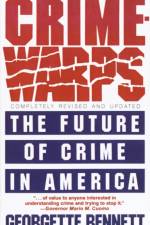
“. . . [O]f value to anyone interested in understanding crime and trying to stop it.”—Governor Mario M. Cuomo This explosive and thought-provoking investigation goes to the heart of America’s fear of crime, takes on the most common myths, and sets them straight. How safe are we? Here are Crimewarp’s startling conclusions:• The odds are twice as great that you will commit suicide this year than be murdered. • It is 32 times more likely that you will be involved in a car crash than become the victim of a violent street crime. • A woman is twice as likely to die of heart disease than be raped.Criminologist Georgette Bennett uses the latest statistics to predict these and other dramatic changes in future of crime. “[This] highly regarded book analyzes the ripple effect of intersecting new social forces in changing the nature of crime and society’s changing responses to crime.”—The Washington Post“A groundbreaking book, solidly researched, but easy to digest.”—Kirkus Reviews
An essential guide for all teenagers and children to discuss among themselves, showing them how to exercise control over alcohol and informing them of its effects and abuses. Whether it is the torment of living in an alcoholic family or the peer pressure to take a few drinks at a party, alcohol and alcohol abuse have become the greatest concerns facing young people today. Now, here’s a handbook written by kids, for kids, that candidly examines the confusion that children may have about drinking. Some of the youngsters in the book are recovering alcoholics, many are children of alcoholics, but all share common qualms and questions about the role alcohol will play in their lives. The issues raised here include:• Living with an alcoholic• Overcoming the peer pressure to drink• Defining alcohol and what place it has in society• Recognizing alcohol abuse in yourself or a family member • Places to seek help if drinking becomes a problem“This book should be required reading for every teenager, teacher, and parent in America.”—Dennis Wholey, author of The Courage to Change
The author of Celebrate Your Self addresses the changes that everyone must face in life—including death, aging, retirement, and separations from people and places. In today’s increasingly complex world, change is one of the few constants. A new job. Remarriage. Relocation. Divorce. Death. Growing up. Moving out and moving on. Dramatic, and often traumatic, each change can leave us feeling confused, anxious, wondering if we can cope. But there can be another way to meet the challenge of change. Rather than resist it, we can embrace it wholeheartedly and use all of life—its losses as well as its triumphs—to discover our own purpose for being in this world. Some thoughts included on Embracing Life:• Life is not about arrival but about the trip.• Part of high esteem is choosing to anchor in positive values.• Victims of life-threatening disease learn and teach invaluable secrets. Why wait for cancer or a heart attack to reframe yourself?• If there is not room for failure in your life, there is not room for risk or growth.• You are the gift. You are the treasure. You are already “there.” Accept this as so. Drawing on different forms of therapies, philosophies, and spiritual teachings, as well as her own writings on self-esteem, Dorothy Corkille Briggs has written three books on personal development and growth that have sold close to a million copies. With Embracing Life, Your Child’s Self-Esteem, and Celebrate Your Self, she has provided insight for people seeking a rich and rewarding life.
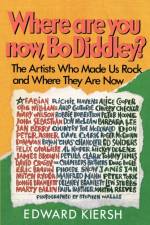
From the jumping rock and blues joints of the 1950s to Woodstock and beyond, Where Are You Now, Bo Diddley? takes a close look at forty-seven musicians whose unique contributions to their thrilling era will never be forgotten. For as we sang their songs, we also preserved a piece of our own personal history along with each tune. But where are they now? How do they feel about their success? How have their lives changed? Now, in this fun-filled, candid, and compelling collection of interviews, acclaimed journalist and author Edward Kiersh talks with each musician, reconstructing their triumphs and defeats, the road to gold and the path to obscurity. Here are the victories over incredible odds, and the struggles with drugs and booze and runaway fame—a fame that, in some cases, ran completely out of steam. But always, the humor, the idealism, the optimism that is the underlying key to success in the music business, as well as in life, shines through. Packed with fabulous photos, Where Are You Now, Bo Diddley? takes readers on a vivid, intoxicating nostalgia trip, giving us an important part of our musical past from the lips of the men and women who made it history.
“The landscape of monotony is elsewhere,” Jack Newcombe writes, and the routes he traces through the vineyards, towns, and parkland of northern California—along with the variegated pleasures to be explored en route—bear the proof: • Mud baths and wine tasting in Calistoga • A view from the top at Mt. St. Helena • Wine touring, the slow and selective way, in the Napa and Sonoma valleys • “A Beer Experience” in Petaluma, and a dining treat at the New Boonvile Hotel • Whale watching on the Sonoma and Mendocino coasts • Walking the redwood forest trails • Finishing fleets and Victorian mansions in Eureka These attractions and more—and the colorful past that gave rise to them—are presented in Northern California: A History & Guide, an exciting, indispensable travel companion for a most spectacular region.
Excerpts from the private diaries of women, known and unknown, among them Louisa May Alcott, Sophie Tolstoy, George Eliot, Anais Nin.
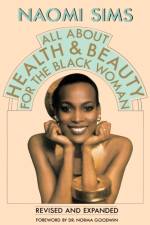
Since its original publication, All About Health and Beauty for the Black Woman has firmly established itself as a classic reference in both the fields of health and beauty. Now, in this newly revised and expanded edition, Naomi Sims—famed model and beauty expert—brings Black women of all ages up to date with the latest information on aging of the face and body; makeup; hairstyles; exercise and diet; coping with stress; and dressing to succeed in the business arena. In addition, she provides new information on dental care; ways of preventing weight gain after giving up smoking; and dealing with drug problems. An important and timely revision, this is the essential guide to health and beauty for all Black women.
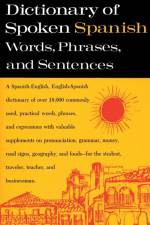
A must reference for students of Spanish and travelers anywhere in the Spanish-speaking world -- over 18,000 commonly used words, phrases, and expressions, plus valuable supplements on pronunciation, grammar, currency, road signs, geography, and foods.
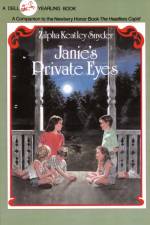
One by one, dogs are disappearing from thirteen-year-old David Stanley''s neighborhood. Who could be taking people''s pets? David''s eight-year-old sister Janie has just founded the J.V. Stanley detective agency and she''s determined to find out. It looks like a case of dognapping, and neighbors are accusing her friends the Trans, a Vietnamese family new to the area. In no time at all David fins himself, Thuy and Huy Tran, and the rest of the Stanley family involved in a search for a missing poodle. But solving crimes can be dangerous, even deadly. Before long, Janie''s private eyes are up to their necks in danger and it''s up to David to get them out of it!"This fourth book about the eccentric but believable Stanleys and their madcap adventures stands well on its own. . . . Funny and fast-paced."—Kirkus Reviews"The mystery is credibly solved in a nicely crafted story that has suspense, humor, and natural dialogue."—Bulletin of the Center for Children''s Books"A funny and quick read that fans of the Stanley family will enjoy. . . ."—School Library Journal
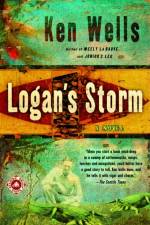
The capstone of Ken Wells’s acclaimed Catahoula Bayou trilogy, Logan’s Storm tracks the epic journey of Logan LaBauve as he flees corrupt cops while trying to lead Chilly Cox—the teenager whose “crime” was rescuing Logan’s son, Meely, from a racist bully—to safety. But dodging two-footed predators deep in the Cajun backwaters turns out to be the easy part. As Logan, accompanied by a newfound love interest, heads to Florida to lie low, a killer hurricane springs from the Gulf—and lives are suddenly on the line. Wells writes with Twain’s flair for adventure and Welty’s sense of place, making Logan’s Storm a trip through the heart and soul of a singular American character.
The real story of the ordeal experienced by both settlers and Indians during the Europeans'' great migration west across America, from the colonies to California, has been almost completely eliminated from the histories we now read. In truth, it was a horrifying and appalling experience. Nothing like it had ever happened anywhere else in the world.In The Wild Frontier, William M. Osborn discusses the changing settler attitude toward the Indians over several centuries, as well as Indian and settler characteristics—the Indian love of warfare, for instance (more than 400 inter-tribal wars were fought even after the threatening settlers arrived), and the settlers'' irresistible desire for the land occupied by the Indians.The atrocities described in The Wild Frontier led to the death of more than 9,000 settlers and 7,000 Indians. Most of these events were not only horrible but bizarre. Notoriously, the British use of Indians to terrorize the settlers during the American Revolution left bitter feelings, which in turn contributed to atrocious conduct on the part of the settlers. Osborn also discusses other controversial subjects, such as the treaties with the Indians, matters relating to the occupation of land, the major part disease played in the war, and the statements by both settlers and Indians each arguing for the extermination of the other. He details the disgraceful American government policy toward the Indians, which continues even today, and speculates about the uncertain future of the Indians themselves.Thousands of eyewitness accounts are the raw material of The Wild Frontier, in which we learn that many Indians tortured and killed prisoners, and some even engaged in cannibalism; and that though numerous settlers came to the New World for religious reasons, or to escape English oppression, many others were convicted of crimes and came to avoid being hanged.The Wild Frontier tells a story that helps us understand our history, and how as the settlers moved west, they often brutally expelled the Indians by force while themselves suffering torture and kidnapping.
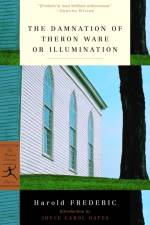
Published in 1896, The Damnation of Theron Ware or Illumination is a profound psychological portrait of the spiritual undoing of a guileless Methodist minister who is taken in by a rural townspeople’s various progressive ideas, from liberalism to bohemianism, only to be spurned by them for being too conventional. Described by Everett Carter as “among the four or five best novels written by an American during the nineteenth century,” the novel, as Joyce Carol Oates writes in her Introduction, has “shrewd, disturbing insights into the human pysche.” This Modern Library Paperback Classic is set from the text of the authoritative Harold Frederic Edition.
Called a “remarkable story” by John Greenleaf Whittier and described by John Keats as “very powerful,” Wieland, Charles Brockden Brown’s disturbing 1798 tale of terror, is a masterpiece involving spontaneous combustion, disembodied voices, religious mania, and a gruesome murder based on a real-life incident. This Modern Library Paperback Classic includes Wieland’s fragmentary sequel, Memoirs of Carwin the Biloquist, as well as several other important but hard-to-find Brockden Brown short stories, including “Thessalonica,” “Walstein’s School of History,” and “Death of Cicero.” This collection also reproduces the newspaper account of the murder that inspired Wieland.
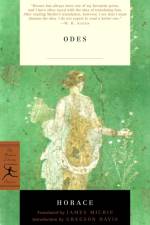
Timeless meditations on the subjects of wine, parties, birthdays, love, and friendship, Horace’s Odes, in the words of classicist Donald Carne-Ross, make the “commonplace notable, even luminous.” This edition reproduces the highly lauded translation by James Michie. “For almost forty years,” poet and literary critic John Hollander notes, “James Michie’s brilliant translations of Horace have remained fresh as well as strong, and responsive to the varying lights and darks of the originals. It is a pleasure to have them newly available.”
Francis Bacon, lawyer, statesman, and philosopher, remains one of the most effectual thinkers in European intellectual history. We can trace his influence from Kant in the 1700s to Darwin a century later. The Advancement of Learning, first published in 1605, contains an unprecedented and thorough systematization of the whole range of human knowledge. Bacon’s argument that the sciences should move away from divine philosophy and embrace empirical observation would forever change the way philosophers and natural scientists interpret their world.
Abonner på vårt nyhetsbrev og få rabatter og inspirasjon til din neste leseopplevelse.
Ved å abonnere godtar du vår personvernerklæring.