









Gjør som tusenvis av andre bokelskere
Abonner på vårt nyhetsbrev og få rabatter og inspirasjon til din neste leseopplevelse.
Ved å abonnere godtar du vår personvernerklæring.Du kan når som helst melde deg av våre nyhetsbrev.

With a precision and brilliance unmatched perhaps by any other novelist of the twentieth century, Junichiro Tanizaki interweaves a sense of his country''s deep past with the kind of pathologies and obsessions we are likely to think of as modern. Here, in two eerie and beautiful novellas, he displays this skill at its most elegant and affecting. The Reed Cutter has a contemporary setting, though it might have taken place any time in the past thousand years. On a fine September evening, the narrator decides to make a solitary excursion to the site of an ancient imperial palace south of Kyoto, a place now lost and overgrown near the banks of a river. Musing upon old poems, passages of history, and topographical antiquities, he eventually finds himself among the reeds of a sandbar sipping sake from the bottle he has brought with him, watching the moon rise over the river, and scribbling bits of verse in his notebook. Suddenly he is surprised to discover that he is not alone. A strange man joins him and begins to tell a most extraordinary tale about his father, about a scene glimpsed in a moonlit garden forty years before, and about a mysterious woman who has become a lasting obsession. Captain Shgemoto''s Mother is more violent but no less strange. It takes place in tenth-century Kyoto, in a world in which poetry and brutality, power and sexual impulse, shape the lives of the courtiers. Beginning in an almost whimsical vein with an account of the amorous exploits of a Heian Don Juan called Heiju, it gradually shifts mood to focus on three people—Shihei, the powerful Minister of the Left; his doddering uncle Kunitsune; and Kunitsune''s ravishing and much-younger wife, a woman known only as Shigemoto''s mother. How Shihei succeeds in taking Kunitsunes'' wife away from him in the course of a bizarre and drunken party is a story as shocking—and memorable—as anything Tanizaki ever wrote.
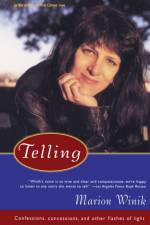
Combining the insight of Anna Quindlen and the comic storytelling of Garrison Keillor with her own singularly outrageous humor, Marion Winik has captivated thousands of listeners on NPR''s All Things Considered. Now, in Telling, she takes us on a journey both personal and universal, a tour of the minefield of chance and circumstance that make up a life. Along the way, she offers razor-sharp takes on everything from adolescence in suburban New Jersey ("Yes, I wanted to be a wild teenage rebel, but I wanted to do it with my parents'' blessing") to hellish houseguests and bad-news boyfriends; from the joys of breastfeeding in public to the sometimes-salvation of motherhood.Candid, passionate, and breathtakingly funny, Marion Winik maintains an unshaken belief that following one''s heart is more important than following the rules -- and a conviction that the secrets we try to hide often contain the deepest truths."A born iconoclast, an aspiring artiste, a feminist vegetarian prodigal daughter, from early youth I considered myself destined to lead a startling life far outside the bounds of convention. I would be famous, dangerous, brilliant and relentlessly cool: a sort of cross between Emma Goldman, Jack Kerouac, and Georgia O''Keeffe.... So where did this station wagon come from?" -- from Telling
Now available in paperback, comes a successful and beautifully-written novel about a decent North Carolina farmer haunted by errors and redeemed by faith. Painstakingly honest, Littlejohn is "a character as fully rounded in his quirks and imperfections, in his quiet determination and bravery, as any in recent fiction."--Washington Post. National reading tour.
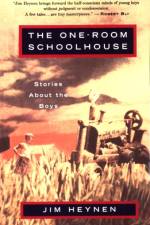
In more than one hundred perfectly pitched, sometimes perverse, and always surprising stories, Jim Heynen displays his mastery of country wisdom, speech, and behavior as he reveals life in a Midwest where electricity is a magical novelty and cities a distant rumor. These are tales of farmboys finding their way, contending with grown-ups, city kids, birth, death, bats, rats, skunks, and even mean ponies. Or choosing between corncobs and peach tissues, hurling rotten eggs, getting in trouble, helping out, and trying to conceive of the mountains and oceans and forests they''ve never seen. Their adventures are an education in the natural world, as well as an aknowledgment of what is both common and strange in human nature. Whether true of just funny, sad or even magical, The One-Room Schoolhouse is indelibly American.
Does our abhorrence of racism allow us to ban certain forms of speech? This is the simple yet subversive question that Edward J. Cleary posed to the U.S. Supreme Court when, in 1991, he defended a white student who had burned a cross on a black family''s lawn in St. Paul, Minnesota, violating a local ordinance against hate crimes. As a progressive, Cleary detested everything his client stood for. But in this compelling argued book he describes how he overturned the St. Paul ordinance—and convinced the Court to rule that "burning a cross is reprehensible. But St. Paul has sufficient means . . . to prevent such behavior without adding the First Amendment to the fire."As Cleary retraces his path from St. Paul to the courtroom in Washington, he juxtaposes the stories of previous First Amendment cases with a personal account of the unlikely alliances (with both the A.C.L.U. and a group engaged in defending the Ku Klux Klan) and antagonisms that grew out of the case. Ultimately, he shows us why a law that bans expressions of racism is as dangerous as a law that bans protests against those expressions. In Beyond the Burning Cross, Leary has given us an unparalleled insider''s report of a watershed event in constitutional history that is as absorbing as any thriller.
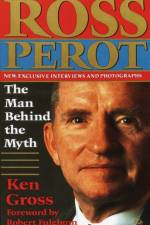
A portrait of the outsider presidential candidate who captured the American imagination, based on exclusive interviews with Ross Perot, his family, and his business associates He’s a brilliant entrepreneur, a robust patriot, a working-class boy who rose to be a business tycoon. But who is the real Ross Perot? In this definitive biography that everyone who cares about America will want to read, Ken Gross brings to life the man behind the news stories and the sound bites, offering insights into Perot’s gifts for leadership. Here are the experiences that forged Perot’s character and political convictions: his humble childhood in Texas, his naval service, his astounding business success, his daring hostage-rescue mission to Iran. Here are his down-to-earth ideas for re-energizing America. Ross Perot: The Man Behind the Myth offers the most revealing and detailed portrait yet of the man who singlehandedly transformed America’s political landscape.
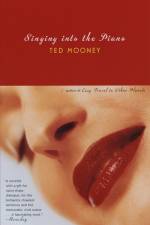
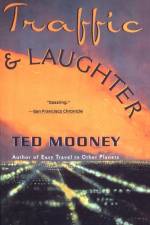
Acclaimed author of Easy Travel to Other Planets creates a thrilling work of intellectual and erotic provocation, rendered with stylishness and suspense.At a political fundraiser in New York, Andrew and Edith inaugurate their love affair with a brazen sexual spectacle. Watching them is the event’s speaker, Santiago Diaz, a Mexican popular hero who is now running for his country’s presidency. He is aroused, disturbed, and intent on finding the couple whose erotic risk-taking parallels his own high-wire career. Soon Andrew and Edith are drawn into Diaz’s campaign, his marriage, and the vortex of trans-American politics where plunder dictates policy, loyalty is devalued currency, and the future of nations is decided by talk-show appearances and terror.Praise for Ted Mooney“[A] combustible literary cross between Hawkesian avant-garde and Don DeLillo’s post-modern cool.”—The New York Times“Unsettling, coolly intense. . . . Mooney is a risk-taking adventurer in novelistic possibilities.”—San Francisco Chronicle“Equally enchanting and disorienting.”—Boston Book Review
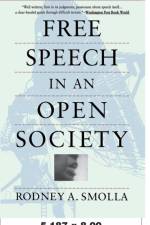
This grand tour of First Amendment law underlines the intimate connection between free expression and democratic values as it leads us through the most treacherous and emotionally charged cases in American jurisprudence. “Intellectually venturesome. . . .”—The New York Times Book Review
In a provocative study that bristles with contemporary relevance, Himmelfarb demonstrates that the material and moral dimensions of poverty were inseparable in the minds of late Victorians, be they radical or conservative.
An airplane crashes, killing eighty-seven passengers. A cancer patient receives a fatal dose of radiation from a machine designed to be foolproof. The ATMs at a New York bank debit customers twice their actual withdrawals, resulting in a loss of millions of dollars. In every case, the culprit was a computer bug, a software error or design defect that may escape detection until it erupts into the real world with sometimes catastrophic results.This arresting and at times terrifying book tells us just how prevalent these defects are and how they are multiplying as computers become more sophisticated and more deeply embedded in our daily lives. It is also a riveting portrait of the men and women who find and "exterminate" those bugs, whether they occur in pocket calculators or nuclear reactors.Fatal Defect reveals what you should know about the computers in our lives. Read it before you buy a computer, use a cash machine, or book an airplane flight. Then pray that one of its real-life heroes was on the job.
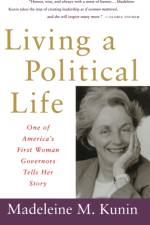
The first time Madeleine M. Kunin ran for office it was because she thought there ought to be more women in politics. In time she fulfilled that belief by becoming the first woman governor of Vermont. Throughout her career, Kunin found that the rules for women politicians were different: she would not be forgiven (nor would she forgive herself) for neglecting her family. She could not afford to display emotion at the wrong times lest she be thought "weak." And she would have to learn to play political hardball with the best of them while keeping her integrity.In Living a Political Life, Kunin-who is now Deputy Secretary of the U.S. Department of Education-takes a frank look at the challenges that confronted her as she tried not just to succeed in politics but to set a precedent for other women. In doing so, she illuminates both what it means to be a woman and what it means to be a public servant and gives us a memoir as thoughtful and revealing as any to emerge from the corridors of power.
From the Nuremberg trials to the grisly campaign of "ethnic cleansing" in today''s Bosnia, the world recognizes that certain actions are morally and legally unacceptable even in the midst of war. This book features extensive excerpts from treaties and charters that define the proper treatment of civilians, detainees, and POWs during wartime.
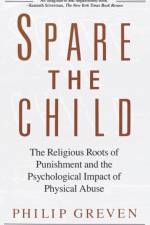
He that spareth his rod hateth his son: but he that loveth him chasteneth him betimes. These words provided generations of American Christians with the justification for physically disciplining their children, in ways that range from spankings to brutal beatings. This learned and deeply disturbing work of history examines both the religious roots of corporal punishment in America and its consequences -- in the minds of children, in adults, and in our national tendencies toward authoritarian and apocalyptic thinking. Drawing on sources as old as Cotton Mather and as current as today''s headlines, Spare the Child is one of those rare works of scholarship that have the power to change our lives.
Thurgood Marshall''s extraordinary contribution to civil rights and overcoming racism is more topical than ever, as the national debate on race and the overturning of affirmative action policies make headlines nationwide. Howard Ball, author of eighteen books on the Supreme Court and the federal judiciary, has done copious research for this incisive biography to present an authoritative portrait of Marshall the jurist.Born to a middle-class black family in "Jim Crow" Baltimore at the turn of the century, Marshall''s race informed his worldview from an early age. He was rejected by the University of Maryland Law School because of the color of his skin. He then attended Howard University''s Law School, where his racial consciousness was awakened by the brilliant lawyer and activist Charlie Houston. Marshall suddenly knew what he wanted to be: a civil rights lawyer, one of Houston''s "social engineers." As the chief attorney for the NAACP, he developed the strategy for the legal challenge to racial discrimination. His soaring achievements and his lasting impact on the nation''s legal system--as the NAACP''s advocate, as a federal appeals court judge, as President Lyndon Johnson''s solicitor general, and finally as the first African American Supreme Court Justice--are symbolized by Brown v. Board of Education, the landmark case that ended legal segregation in public schools. Using race as the defining theme, Ball spotlights Marshall''s genius in working within the legal system to further his lifelong commitment to racial equality. With the help of numerous, previously unpublished sources, Ball presents a lucid account of Marshall''s illustrious career and his historic impact on American civil rights.
At the outbreak of the Civil War, Jefferson Davis sent merchant marine James D. Bulloch to Europe to clandestinely acquire arms and ships for the Confederate navy. His first stop was Britain, a country hedging its bets on who would win the War Between the States and willing to secretly provide the Confederacy with the naval technology to fight the Union on the high seas. Bulloch''s mission continued for the length of the war, and his story, told by the man himself, is one of the least-understood aspects of the Civil War, even today.
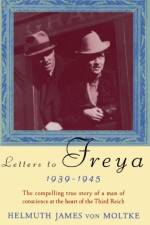
The compelling true story of a man of conscience at the heart of the Third Reich. In the years when most Germans were abetting a policy of conquest and genocide, Helmuth James von Moltke, an aristocratic and devoutly Christian young lawyer drafted into the German Intelligence Service, was working tirelessly against it. Throughout the war, he fought through the labyrinthine insanity of wartime bureaucracy on behalf of Jews and foreign prisoners and organized a clandestine resistance to the Nazi regime. From 1939 to the eve of his execution from treason in 1945, von Moltke wrote letters to his wife, Freya. Gathered here, these letters transcend their format to create at once a horrifying record of the daily workings of the Third Reich and an inspiring testament to the powers of love, courage, and conscience in the most conscienceless of times. “Remarkable . . . A unique historical document, a morality tale, a love story, all set within the very heart of the Third Reich and, in a real sense, in the soul of a man of conscience.”—Los Angeles Times Book Review “The words of this extraordinary patriot and humanitarian echo with astonishing relevance [and] stand on their own as testament to the impact for good a courageous individual can still exert.”—Chicago Sun-Times “One of the great books of the twentieth century, [telling] a story of human failure, of overwhelming odds, of patience, and of grace.”—Christian Science Monitor
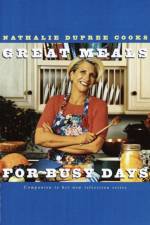
More than 90 million television viewers have come to count on Nathalie Dupree''s popular PBS series for down-home recipes that make sense in today''s world. With this book, Nathalie proves once again that anyone can make delicious home-cooked meals, even if they can''t spend long, uninterrupted hours in the kitchen. Line drawings.
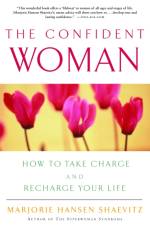
How Confident Are You?Marjorie Hansen Shaevitz has won national awards for her work in women''s health and has enjoyed the success some people only dream of: a prosperous professional life; a long, happy marriage; two Stanford-educated children; and a bestselling book, The Superwoman Syndrome, which coined a term for a generation of women. Despite all of her accomplishments, however, she struggled with the issue of confidence. After conducting extensive research, she found that she was far from alone: Many women experience the paradox of enjoying success in their business and personal lives while lacking confidence in themselves.The Confident Woman focuses on the issues that women face in growing up as girls in this society. Using a series of seven steps, complete with techniques and questions, Shaevitz presents an accessible and proven program that helps women regain their confidence. It is written for women of all ages, ending with an epilogue for mothers who want practical tips for raising confident daughters. In clear, concise prose -- filled with anecdotes and humor -- The Confident Woman focuses on what women say they want: practical advice that they can use now.
Best Friends provides the missing link to understanding and recognizing the impact of some of the most important relationships in girls'' and women''s lives. Every woman remembers the sting of betrayal of a girlfriend, and every parent of a daughter has seen her come home from school in tears because a girl she thought was her best friend suddenly and inexplicably became her enemy. While boys hash out differences with fists and kicks, girls'' societies are marked by secrets and whispers and shifting affection. The lessons learned as an adolescent girl are often carried into adulthood, making women fear confrontation--especially with other women. But the intensity of the struggles reflects the support and healing to be found within these friendships. Girls find themselves in the mirror of other girls, hence the power each has to influence the other. Ruthellen Josselson and Terri Apter''s many years of working with hundreds of girls and women have given them insight into the emotionally important relationships that are integral to a girl''s self-image. Best Friends explores the bonds of friendship between girls and between women and the sorrows and joys they experience together, from early adolescence and throughout their lives.
Beyond Obedience is a revolutionary new training program for you and your dog from one of our country''s foremost animal advocates and holistic practitioners. The idea that your canine companion is a fully emotional being and acutely sensitive to your changing feelings and moods is the foundation of April Frost''s original and highly effective training program.One of the most difficult aspects of training a dog is clearly communicating your intentions. Beyond Obedience is the first book to work on the way you communicate with your dog, providing you with the necessary tools to truly understand how your dog''s mind works and, therefore, how you can create an effective and mutually satisfying relationship.Drawing on her extensive experiences as an animal behaviorist, Frost teaches you that training your dog should not be a tedious chore limited to exerting physical and psychological control over an animal''s drives, but instead an enriching and spiritually fulfilling experience--gratifying for both human and animal. Frost discusses such essential concepts as mutual respect, unconditional love, mental and emotional discipline, and your expectations and priorities. She shows you how the insights gained from working with your dog can have positive, far-ranging effects on many areas of your life. Beyond Obedience offers valuable insight into the emotional bonds that enrich the lives of animals and their companions.
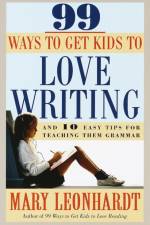
Strong writing skills are essential for success in school, college, and on the job. In 99 Ways to Get Kids to Love Writing, educator Mary Leonhardt provides parents with practical, easy-to-follow tips on how to teach their children the fundamentals of writing and make it fun for them at the same time. Here are just a few of her nuggets of advice: ¸ Always be encouraging about your children''s writing. ¸ Don''t worry about teaching grammar to kids when they are just beginning to write. Most grammar knowledge is acquired rather than directly learned. ¸ Provide plenty of writing material. ¸ Encourage your preschool children to dictate stories to you. Leonhardt follows up with 10 Easy Ways to Teach Them Grammar, essential tools for all budding writers.
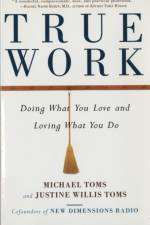
Here is wisdom for the workplace from the husband-and-wife team of the nationally syndicated public radio series New Dimensions, which airs each week on more than 300 stations and is often described as "Bill Moyers on radio." Some people are consumed by their work, others simply endure it as they anticipate the weekend or retirement, and hardly anyone enjoys it anymore. If we could find a way to transform how we view what we do so that it becomes a source of enjoyment and refreshment, it would be a cause for celebration. And indeed, this is exactly what Michael and Justine Toms provide in their remarkable book--the fruit of their own twenty-five years of practical experience.According to the Toms, the bottom line is: Has our compassion grown with our business? Has our wisdom expanded with our budget? And has our laughter increased with our staff? Their book looks at work as service and as a spiritually sustaining activity that promotes healing. It is brimful with stories and helpful techniques culled from their radio interviews with Joseph Campbell, Buckminster Fuller, the Dalai Lama, Alice Walker, Jon Kabat-Zinn, Marsha Sinetar, and many others.
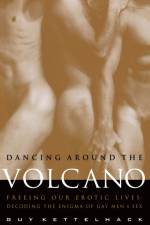
A provocative, honest, and forthright look at the sex lives and sexual attitudes of gay men. "Guy Kettelhack has written one of the smartest, wisest books on sex I've ever read. . . . DANCING AROUND THE VOLCANO shows us that the sexual journey is the journey of the soul, and like all significant voyages, it cannot, must not be a safe journey".--Frank Browning, author of THE CULTURE OF DESIRE.
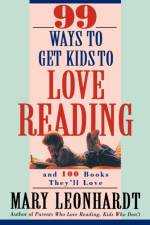
he author of Parents Who Love Reading, Kids Who Don''t now offers a cornucopia of simple, practical tips that will help children--no matter what their age or level of reading ability--learn to read. A separate section identifies books suited to different kinds of readers, such as girls who love horses, teenagers who like rock bands, and computer nuts.
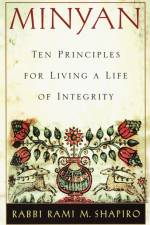
In Minyan, Rabbi Shapiro offers a Judaism immediate and vital to living in the world with both integrity and enjoyment. According to rabbinic law, "Minyan" is a quorum of ten Jews—the number required for a service of any kind. Rabbi Shapiro infuses this concept with new meaning as he describes a practical tenfold path, based on the eighteenth-century Hasidic tradition of the Baal Shem Tov and his followers, a path accessible not only to Jews but also to all spiritual seekers. The ten practices of Minyan are meditation, repetition of a sacred phrase, inspirational reading, attention to the present moment, generosity, kindness performed with no thought of reward, dreamwork, ethical consumption, self-perfection, and celebration of the Sabbath. Here is a Jewish spiritual primer that teaches how to apply the wisdom of the ancient Jewish sages to our lives today.
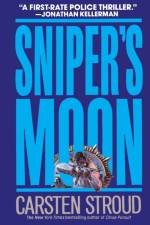
“A first-rate police thriller.”—Jonathan Kellerman Detective Frank Keogh. He’s a man who trades on nerve and luck—and a cop who’s about to become an executioner’s target. Detective Frank Keogh has a rare gift—for killing. He picked it up in the jungles of Vietnam and perfected it on New York’s mean streets. It’s a talent that comes in handy when you’re a sniper for the NYPD. But over the years his calling has produced a numbness that has his partner worries: Is Frank finding it too easy to pull the trigger now? Then, on a steamy August night in the South Bronx, a cop connected to Frank is found bizarrely murdered. No one really believes that Keogh is capable of such a brutal act . . . until a second savagely mutilated body is found, and the MO echoes a famous case solved by Frank’s father, a retired detective. Suddenly, Frank Keogh is a fugitive, dodging cops and meeting violence as he takes off on a cross-country chase to the Southwest desert . . . desperately searching for the man who framed him—and the father who could be his last, best hope of staying alive. “An epic police thriller . . . crackling with narrative energy . . . and a deep-grained savvy about cop ways and mores.”—Kirkus Reviews
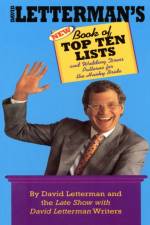
Get the book that tells the world: “I like to read large-print TV tie-ins!” Top ten wise-ass things to say to the clerk as you purchase this book: 10. “Don’t bother wrapping it. I’ll eat it here.” 9. “I can’t believe some jerks just go to the library and check out books for free!” 8. “MEEEEOW!! You sell books to kitties, don’t you?” 7. “Whoa! You must go to Letterman’s barber.” 6. “You know, they really ought to do one of those Cops-type shows about bookstore clerks.” 5. “I was going to shoplift this book, but my pants are already full of supermarket steaks.” 4. “Do you have a bag or something? I don’t want anyone to see me with this.” 3. “If this book gives me a paper cut, I’m suing your sorry ass.” 2. “Can you Super Size this?” 1. “You gotta sell me some diphthongs, man! I’m Hooked on Phonics!”
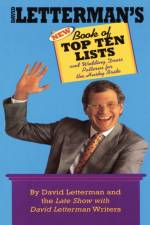
David Letterman''s Book of Top Ten Lists and Zesty Lo-Cal Chicken Recipesby David Letterman and the Late Show with David Letterman WritersIt''s like watching TV -- with the added danger of paper cuts!Top Ten Apologies to People Buying This Book:10. Cheap glue will only hold the thing together for about six days.9. Some kids sneaked into the printing plant and added the word "ass" to a lot of the lists.8. It costs about a dime to print one of these babies -- now take a look at the retail price, sucker!7. We''re using the money we make to buy "little Dutch girl" outfits for Dave''s poodles.6. The book was hastily assembled overseas by jabbering foreigners who don''t give a damn about you or your family.5. A drunk maintenance guy fell into the press and parts of him appear on pages 68-87.4. Felt safe making jokes about the Amish on TV; forgot some of them might actually see the book.3. Dave insisted on writing some of these and we had to play along..2. There is no remote control. Don''t look for one.1. The book ain''t much better than the TV show.
Abonner på vårt nyhetsbrev og få rabatter og inspirasjon til din neste leseopplevelse.
Ved å abonnere godtar du vår personvernerklæring.