








Gjør som tusenvis av andre bokelskere
Abonner på vårt nyhetsbrev og få rabatter og inspirasjon til din neste leseopplevelse.
Ved å abonnere godtar du vår personvernerklæring.Du kan når som helst melde deg av våre nyhetsbrev.

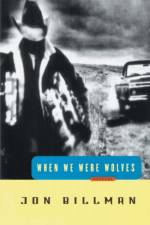
"If you could have been around a hundred and fifty years ago, and passed through the landscape as a beaver-trapping tough with Jim Bridger or Jedediah Smith, before coal barons, before soda ash and oil, before Mormons, before you could stand outside and watch satellites pass through the night sky or silhouettes kissing in warm apartment windows, when this history was wild and new, you could have just pointed and named something of permanence, a mountain, a river--at least a creek--after yourself. Or they would have named it for you, a permanent mark, just for being here."From a new talent that Annie Proulx has called an "important emerging writer" comes a surprising and expansive collection of stories, steeped in the lore of the frontier but unmistakably fresh and of our time. When We Were Wolves roams over a West we never knew existed--colonized by rogues and tricksters, Custer impersonators, firefighters with a weakness for arson, and the other rootless folk who come to rest under the vast and forgiving desert sky. Jon Billman writes about accidental lives: people who are trapped in unsuitable marriages, impossible situations, but who handle them with the odd grace of those who are determined to live by their own strange code. He mingles the skewed humor of David Sedaris with the loping, rough-edged appeal of Tom McGuane. This is a beguiling new entry on the map of American fiction.
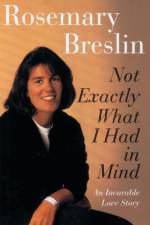
One week in 1989, Rosemary Breslin got a headache that wouldn''t go away. After countless tests and treatments, doctors knew little about her strange disease except that it wasn''t AIDS or cancer. Two years later, out of a job, in debt, and worried about insurance, Rosemary was invited out by friends--not knowing this would be the night she met her future husband. This is one woman''s story about having a real life while facing the question of how long she might live. Serialized in Self magazine. 208 pp. National ads. Author tour. 40,000 print.
The Food of Campanile skillfully blends sophistication and simplicity, making the recipes not only mouthwatering but entirely approachable for the home cook. A Sampling of Recipes: • Cold Steamed Mussels with Marjoram Pesto • Baked Radicchio with Gorgonzola and Red Pears • Farro and Mushroom Soup • Torn Pasta with Lobster, Fava Beans, and Currant Tomatoes • Saffron Risotto with Clams, Spanish Sausage, and Borlotti Beans • Kale with Crisp Garlic • Grilled Prime Rib Steak with Red Wine Sauce • Crisp Flattened Chicken with Wilted Parsley • Grilled Scallops with Warm Leek and Bacon Salad • Potato Parsnip Puree • Lemon Meringue Tart with Champagne Vinegar Sauce • Chocolate-Hazelnut Biscotti
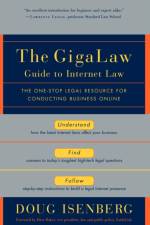
Advance praise for The GigaLaw Guide to Internet Law“I read this book from cover to cover. The examples of case law are of enormous illustrative value. Some of them will raise your blood pressure (well, mine went up several notches, anyway). Well worth the time to read!” —Vint Cerf, chairman, Internet Corporation for Assigned Names and Numbers (ICANN)“Doug Isenberg pulls off the toughest hat trick in legal writing—he and his contributing authors map out the legal landscape of cyberspace in language accessible and friendly to lay readers, providing a comprehensive guide for lawyers who want to gain a quick grasp of cyberlaw, and they do all this with scholarly care for accuracy and precision.” —Mike Godwin, author of Cyber Rights: Defending Free Speech in the Digital Age“A treasure trove of information that is a relief to find, a pleasure to read, and a snap to apply to dozens of your most pressing Internet legal questions.”—Carol Darr, director of the Institute for Politics, Democracy and the Internet“Doug Isenberg is the authority on all issues regarding Internet law. His insight is exceptional, his experience unsurpassed. This book is both a reference work and a bible, enlightening and showing the way—a quintessential, all-encompassing work for both the novice and the veteran.” —Marc Adler, chairman and CEO, Macquarium Intelligent CommunicationsDoug Isenberg is an attorney and the founder of GigaLaw.com, an award-winning website about Internet law. He writes regularly as a columnist for The Wall Street Journal Online and CNET News.com and has represented numerous high-tech and Internet clients.For more information about The GigaLaw Guide to Internet Law, visit: http://GigaLaw.com/guide
Few scientific topics since the theory of biological evolution have inspired as much controversy as artificial intelligence has. Even now, fifty years after the term first made its appearance in academic journals, many philosophers and more than a few prominent scientists and software programmers dismiss the pursuit of thinking machines as the modern-day equivalent of medieval alchemists’ hunt for the philosopher’s stone-a pursuit based more on faith than on skeptical inquiry.In Arguing A.I., journalist Sam Williams charts both the history of artificial intelligence from its scientific and philosophical roots and the history of the A.I. debate. He examines how and why the tenor of the debate has changed over the last half-decade in particular, as scientists are struggling to take into account the latest breakthroughs in computer science, information technology, and human biology. For every voice predicting machines like 2001’s HAL within the next twenty to thirty years, others have emerged with more pessimistic forecasts. From artificial intelligence’s pioneers John McCarthy and Marvin Minsky, to futurist authors Ray Kurzweil and Hans Moravec, to software architects Bill Joy and Jaron Lanier, Arguing A.I. introduces readers to the people participating in the current debate, both proponents and critics of A.I. who are changing the way computers “think” and the way we think about computers.Ultimately, Arguing A.I. is as much a history of thought as it is a history of science. Williams notes that many of the questions plaguing modern scientists and software programmers are the same questions that have concerned scientists and philosophers since time immemorial: What are the fundamental limitations of science and scientific inquiry? What is the nature of intelligence? And, most important, what does it really mean to be human?
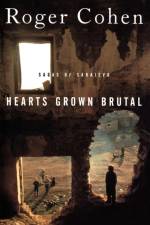
In this brilliant book, Roger Cohen of The New York Times weaves together the history of Yugoslavia and the story of the Bosnian War of 1992 to 1995, as experienced by four families. “I have tried to treat the story of Yugoslavia, which lived for seventy-three years, as a human one,” Cohen writes in this masterly book, which, like Thomas L. Friedman’s From Beirut to Jerusalem and David Remnick’s Lenin’s Tomb, makes us eyewitnesses at the center of historic events. In the aftermath of the Cold War, the Bosnian conflict shattered the West’s confidence, reviving Europe’s darkest ghosts and exposing an America reluctant to confront or acknowledge an act of genocide on European soil. Through Cohen’s compelling reconstruction of the twentieth-century history that led up to the war, and his account of the war’s effect on everyday lives, we at last find the key to understanding Europe’s most explosive region and its peoples. “This was a war of intimate betrayals,” Cohen goes on to say, and in Hearts Grown Brutal, the betrayals begin in the family of a man named Sead. Through his search for his lost father, we relive the history of Yugoslavia, founded at the end of World War I with the encouragement of President Woodrow Wilson. Sead’s desperate quest is punctuated by the lies, half truths, and pain that mark other sagas of Yugoslavia. Through three more families—one Muslim-Serb, one Muslim, and one Serb-Croat—we experience the war in Bosnia as it breaks up marriages and sets relative against relative. The reality of the Balkans is illuminated, even as the hypocrisy of the international response to the war is exposed. Hearts Grown Brutal is a remarkable book, a testament to the loss of a multi-ethnic European state and a warning that the violence could return. It is a magnificent achievement that blends history and journalism into a profoundly moving human story.
Hair! Mankind''s Historic Quest to End Baldness is a social history of one of humanity''s most irksome problems: male pattern baldness. Throughout the centuries, Man (not his real name) has tried everything to hide, treat and repair baldness, as well as a host of nostrums designed to coax hair growth from the scalp (or, at least, money from the wallets of unsuspecting baldies). Yet we stand on the brink of a truly historic epoch: Two drugs are now federally approved remedies for baldness and more are on the way while surgical techniques continue to improve, and even hairpieces are becoming acceptable again. Will baldness, the stigma it carries, and the profound psychological toll it takes on men soon be things of the past? Will bald men someday be electable? Are these even rhetorical questions?Gersh Kuntzman takes you from the laboratories of Merck, maker of Propecia, to the operating rooms of the nation''s best hair-transplant surgeons, to the rug men working on the cutting edge of artificial hair design. Hair! covers baldness like nothing before.
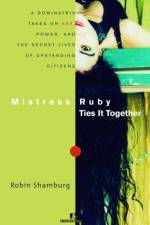
Equal parts memoir, how-to and social satire, Mistress Ruby Ties it Together is a guided tour through New York''s S underworld, where the author worked as a professional dominatrix to subsidize her writing career. As Mistress Ruby, this former Catholic school girl took confessions from some of the country''s most powerful men. Within the sanctity of the dungeon, they revealed to her their darkest lusts, fears and frailties -- as well as their sincere desire to connect with the opposite sex. Each of these provocative essays provides an insider''s view of human deviation; together, they present a startling portrait of our everyday selves. Mistress Ruby is a striking, candid, and humorous look behind the dungeon doors to a darker -- and often unexplored -- side of human nature.
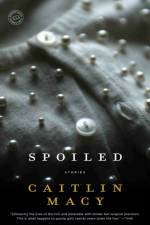
A young woman does a good deed for her nanny, only to have it go horribly wrong. A newly married woman struggles to gain the upper hand with her self-assured cleaning woman. An anxious woman desperate for an authentic experience makes a rash decision to leave the grounds of her Moroccan luxury hotel. In this sophisticated and provocative story collection, acclaimed author Caitlin Macy turns her unsparing eye on well-heeled thirtysomething women who, despite their education and affluence, struggle to keep their footing in their relationships with their friends, spouses, and children—not to mention their help. Full of surprising, sometimes shocking insights and brimming with outrage and compassion, Spoiled is a remarkable collection from a boldly talented writer.
This is part cookbook, part how-to for non-Republicans, part payback (“Thanks, Mom, for all the swell tricks with Lipton Onion Soup Mix”), and part sheer revenge, as in for one horrifying night when the author was invited to dinner by a coven of Democrats under the pretext of eating a decent whole roasted prime tenderloin and was cruelly served a whole roasted baby tuna. Her date, a Republican fish-hater (a Republican redundancy, by the way, see Chapter 3, Fish), memorably reacted by getting dead drunk and passing out at the table with his face in the tuna. This capriciously organized collection of the kinds of homey recipes Republicans grow up on pays little regard to attribution, since, in the words of the author, “Nobody ever remembers where the recipe originally came from anyway.”
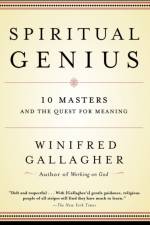
In Spiritual Genius, journalist Winifred Gallagher, the acclaimed author of Working on God, asks Rabbi Lawrence Kushner to define holiness. "Standing in the presence of God," he says. "Everyone has it, but some people seem to have more of a knack for accessing it." Like holiness, the gift that Gallagher calls "spiritual genius"--which she defines as "the uniquely human ability to search for and find life’s meaning, then express it in our lives as only each of us can"--is one we all possess but don’t necessarily recognize. Whether they are called saints, gurus, tzaddiks, or shamans, there have always been people who possess exceptional insight, altruism, and charisma. In this disarmingly inspirational book, Gallagher investigates what ordinary people trying to live decent, meaningful lives can learn from such extraordinary men and women, who are specially attuned to the deepest truths, and who exemplify-and radiate-spiritual genius. In a clear-eyed, ecumenical approach that''s free of dogma and bias and suffused with profound respect, Winifred Gallagher highlights the common wisdom-and down-to-earth good humor-of these religious leaders, revels in their differences, and identifies the capacity for spiritual genius that all of us share with them. On an island in the Arabian Sea, Gallagher visits Mata Amritanandamayi, regarded by devotees as a Hindu goddess, who transmits divine love through hugs and charities. She travels through America''s inner cities with Tony Campolo, an Evangelical preacher who counsels national leaders and serves the poor. She learns how Riffat Hassan, a Pakistani theologian, uses the Qur’an to defend the rights of her Muslim sisters. She journeys to a Tibetan Buddhist monastery in the Himalayas to understand how an exiled minority has enchanted the world with their deep, resilient spirituality. In these diverse lives, Gallagher argues, we can glimpse our own potential for spiritual genius writ large. Each story testifies to the profound good in the world, even during a troubled time, and to Gallagher’s groundbreaking theory of a human capacity for finding life’s meaning that is nothing less than genius.
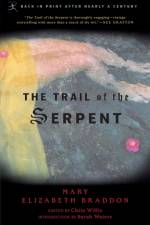
Mary Elizabeth Braddon (1837–1915), Victorian England’s bestselling woman writer, blends Dickensian humor with chilling suspense in this “exuberantly campy” (Kirkus Reviews) mystery. The novel features Jabez North, a manipulative orphan who becomes a ruthless killer; Valerie de Cevennes, a stunning heiress who falls into North’s diabolical trap; and Mr. Peters, a mute detective who communicates his brilliant reasoning through sign language. This edition includes a critical Afterword and endnotes by Victorian scholar Dr. Chris Willis.
Here are the eight skills this book will help you master:1. Identify your thoughts and feelings: how to tap into your feelings, especially the negative ones 2. Evaluate your negative feelings, negative thoughts, and options: how to decide when to take action 3. Communicate better: how to be a more effective listener and speaker 4. Empathize with others to understand their behavior: how to appreciate a situation from someone else''s point of view5. Do problem-solving: how to define the problem, generate alternatives, and evaluate the outcomes6. Practice assertion: how to get others to do what you want7. Practice acceptance: how to back off without feeling like a failure8. Emphasize the positive: how to build better relationships using a proven ratio of positive to negative interactionsLifeskills shows how building better relationships is an essential part of preserving health--and offers eight clear steps anyone can use to make that happen.
"What''s happening to me? Is my baby going to be okay?"Maybe you''re reading this guide because you''ve been told you''re at high risk for having a premature baby. Or perhaps you''re reading it after your baby''s unexpectedly early birth, and you''re wondering what the future holds for this incredibly tiny person. You''ll find all the answers you need in this comprehensive guide for parents, the first book to fully discuss both coping with high-risk pregnancy and caring for your premature baby. Topics include:Managing the High-Risk Pregnancy: Stalling preterm labor, coping with bed rest, medications to help the babyThe First Twenty-four Hours after Delivery: What to expect right after the baby''s born, coping with insurance, and moreYour Preemie''s Growth and Maturation: What to expect in terms of physical appearance and development for 24-, 28-, and 32-week preemiesThe NICU: What the neonatal intensive care unit looks like, equipment and staff, and how to be a good NICU parent Bringing Your Preemie Home: Getting your home ready, managing anxiety, feeding your preemie, keeping Dad involvedLater-Life Development: Health, growth, and cognitive and psychological development as your baby maturesPrematurity and the Special Needs Child: How to help your child lead a full lifeFeaturing the most up-to-date medical information available and filled with the voices of dozens of parents who''ve been in your shoes, this reassuring guide will help you make the best choices for yourself and your baby.
Open The Urban Tree Book and discover the joys of forest trekking--right in your city or town. This first-of-a-kind field guide introduces readers to the trees on their block, in neighborhood parks, and throughout the urban landscape. Unlike traditional tree guides with dizzying numbers of woodland species, The Urban Tree Book explores nature in the city, describing some 200 tree types likely to be found on North America''s streets and surrounding spaces, including suburban settings.With telling descriptions and precise botanical detail, this unique guide not only identifies trees but brings them to life through history, lore, anecdotes, up-to-date facts, and hundreds of fascinating characteristics. More than 175 graceful illustrations capture the charm of trees in urban settings and depict leaf, flower, fruit, and bark features for identification and appreciation. The Urban Tree Book will inform even the most knowledgeable plant person and delight urbanites who simply enjoy strolling beneath the shade of welcoming trees. An engaging excursion into the "urban forest," this complete guide to city trees will both entertain and enlighten nature lovers, urban hikers, gardeners, and everyone curious about their environment. Includes a tree planting-and-care section, tree primer, and exploration guideIs backed by the expertise of the renowned Morton ArboretumIncorporates new "urban forestry" perspectivesCovers urban trees across the continentLists key organizations and institutions for tree loversSelects the best tree sites on the InternetUpdates many guides by 20 years
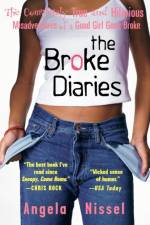
“People always say I’m going to look back on these days and laugh — why put it off?”When Angela Nissel found herself struggling financially while in college, instead of sulking, she decided to entertain herself by creating an online journal that chronicled her day-to-day trials and tribulations. Written with humor and intelligence, her “Broke Diary” quickly found an audience as people wrote to Angela to empathize with, console, and laugh with her about her experiences and even share their own. The Broke Diaries is the first complete compilation of her experiences, written in a voice that is funny, unique, and dead-on.On buying ramen noodles: I am sooooooo embarassed. I only have 33 cents. I (please don’t laugh) put the money on the counter and quickly attempt to dash out with my Chicken Flavored Salt Noodles. The guy calls me back! I look up instinctively, I should have run . . . Why didn’t I run???!! He tells me the noodles are 35 cents. I try to apologize sincerely. I thought the sign said 33 cents yesterday, so that’s all I brought with me. Could he wait while I ran home and get the 2 cents? I show him my student I.D. to let him know I am not a thief. He shakes his head and motions either for me to get the hell out of his store and never come back again or get the money as do come back. I don’t know. He said something like “Nyeh” and swiped his hand in my direction. I can’t translate hand motions well.The noodles: tasty!!!
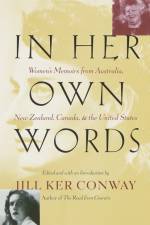
Jill Ker Conway, author of one of the most celebrated memoirs of recent decades, is also the premier anthologist of women''s autobiographical writing. In Her Own Words is Conway''s distillation of women''s experience from the British Commonwealth world she came from, compared with major themes in women''s lives in the United States, which is now her home.In this dazzling collection, we meet twelve remarkable women—from Shirley Chisholm, the West Indian-raised girl who became the first black woman to be elected to the U.S. Congress, to Janet Frame, the brilliant New Zealand writer who overcame involuntary treatment in a mental institution to write one of the archetypal analyses of the postcolonial experience. We learn how the world of politics and the private self intersect in the four offshoots of the old British world, and see how these women have made a difference—by their honesty, by the scale of their struggle for self-knowledge and autonomy, and by the power of their writing.Includes writing from: Patricia Adam-Smith Lillian Hellman Rosemary Brown Dorothy Hewett Kim Chernin Robin Hyde Shirley Chisholm Dorothy Livesay Lauris Edmond Sally Morgan Janet Frame Gabrielle Roy
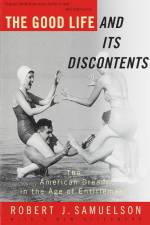
A New York Times Business Book Bestseller"Shrewd and optimistic. . . . [The Good Life and Its Discontents] combines first-rate analysis with persuasive historical, political and sociological insights." —The New RepublicToday Americans are wealthier, healthier, and live longer than at any previous time in our history. As a society, we have never had it so good. Yet, paradoxically, many of us have never felt so bad. For, as Robert J. Samuelson observes in this visionary book, our country suffers from a national sense of entitlement—a feeling that someone, whether Big Business or Big Government, should guarantee us secure jobs, rising living standards, social harmony, and personal fulfillment.In The Good Life and Its Discontents, Samuelson, a national columnist for Newsweek and the Washington Post, links our rising expectations with our belief in a post-Cold War vision of an American utopia. Using history, economics, and psychology, he exposes the hubris of economists and corporate managers and indicts a government that promises too much to too many constituencies. Like David Reisman''s The Lonely Crowd and John Kenneth Galbraith''s The Affluent Society, the result is a book that defines its time—and that is sure to shape the national debate for years to come."A smart, balanced epitaph for an era—with a few clues for what''s ahead." —Business Week"Lucid [and] nonsectarian . . . Samuelson traces how the reasonable demand for progress has given way to the excessive demand for perfection." —The New York Times
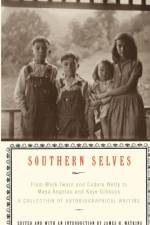
The memoirist seek to capture not just a self but an entire world, and in this marvelous anthology thirty-one of the South''s finest writers—writers like Kaye Gibbons and Reynolds Price, Eudora Welty and Harry Crews, Richard Wright and Dorothy Allison—make their intensely personal contributions to a vibrant collective picture of southern life. In the hands of these superb artists, the South''s rich tradition of storytelling is brilliantly revealed. Whether slave or master, intellectual or "redneck," each voice in this moving and unforgettable collection is proof that southern literature richly deserves its reputation for irreverent humor, exquisite language, a feeling for place, and an undying, often heartbreaking sense of the past.
Updated with the latest informationA completely revised edition of the classic guide to PMS-the first book on this pressing health issue ever published in the United StatesSoon after Self-Help for Premenstrual Syndrome came out more than fifteen years ago, it was established as the definitive resource. In this third edition, you''ll find accurate, up-to-date information on Symptoms and causes of PMS PMS and perimenopause Premenstrual magnification (PMM) Diagnosing PMS Treating PMS through diet, exercise, and stress management Vitamins, minerals, oil of evening primrose, and other nonprescription remedies Progesterone Antiprostaglandins, antidepressants, and diuretics Acupuncture and alternative therapies Psychotherapy PMS and its effect on sexuality, the family, and creativity Support groups Social and political implications of PMS Other resources, including information on using the Internet for further researchWith its practical advice, friendly approach, and comprehensive resource section, you''ll find Self-Help for Premenstrual Syndrome an invaluable guide to the answers you need.
"A love story, a memoir, a haunting tale of grief and healing. This book is all that and more." --Chicago TribuneIn the tradition of Susanna Kaysen''s Girl, Interrupted and Caroline Knapp''s Drinking: A Love Story, Mary Allen tells a riveting love story that explores the uncharted territory between passion and addiction, grief and madness, this world and the next.When Mary Allen falls in love with Jim Beaman, she doesn''t know he has a drug problem, but she does sense demons and angels around him, like "a disturbance in the air, a sound just beyond the register of human hearing." And when Jim--discouraged and depressed, struggling with his addiction--kills himself a year into their relationship, Allen is unable to let him go. In her desperate attempts to recover from the loss, she uses a Ouija board and automatic writing to pull back from reality into the dark recesses of her mind, where she believes she can find him. The result is a mesmerizing trip across the boundaries between this world and the afterlife, a journey that leads her to the brink of insanity and ultimately back to herself.
In Freud: Conflict and Culture, Michael S. Roth presents eithgteen essays on the man who has become, in W.H. Auden''s phrase, "a whole climate of opinion." This fascinating collections explores Freud''s work, the absorption of his theories into mainstream culture, and his hotly contested legacy. Oliver Sacks demonstrates how Freud''s early studies anticipated contemporary neuropsychology. Scholar Muriel Dimen reveals a paradoxical liaison between psychoanalysis and feminism. Art Spiegelman (Maus) provides a comic strip that explores Freud''s ideas about humor. And Peter Kramer (Listening to Prozac) projects how future generations may look upon the man who, along with Marx, Darwin, and Einstein, shaped an era. By turns moving, contentious, and amusing, Freud: Conflict and Culture boasts a body of work as eclectic and engaging as the revolutionary genius himself.
Seeking help with his basketball game, Shainberg embraced Zen Buddhism in 1951 and was catapulted on a life-long spiritual journey. Alternately comic and reverential, Ambivalent Zen chronicles the rewards and dangers of spiritual ambition and presents a poignant reflection of the experiences faced by many Americans involved in the Zen movement.
Likened by Pet News to a Dr. Spock for canines, this is the one dog book owners need to ensure their pets’ health and well-being. Dr. Terri McGinnis, a practicing veterinarian with over twenty years’ experience, thoroughly covers every aspect of dog care: anatomy, daily care, diagnostic medicine, medical emergencies, and home medical care, as well as breeding and reproduction. The Well Dog Book is a comprehensive, easy-to-follow guide that answers the questions most frequently asked by dog owners:• What’s the best way to house-train my dog?• How can I remove tar or paint from my dog’s coat?• What’s the right diet for a puppy, a new mother, an older dog?• What vaccinations does my dog need, and when?• How can I get rid of fleas on my dog and in my house?• What does it mean if my dog is feverish, excessively thirsty, irritable?• What are the special needs of my pregnant dog? How can I help her during delivery?• If my dog has an accident, what do I do?• What problems can I handle myself and when do I need a veterinarian?With over 120 illustrations, a general index for rapid reference, and an invaluable index of signs, The Well Dog Book gives dog owners the knowledge, skills, and confidence to raise a well dog.
In Home, eighteen of our finest writers evoke different rooms--from their pasts, their present, or simply their imaginations--in order to investigate the ways in which homes contain our lives. The results are touching, provocative, and sometimes hilarious. And since a portion of the editors'' proceeds will go to organizations that help the homeless, Home is really where the heart is. Contributors include: Lynda Barry, Richard Bausch, Tony Earley, James Finn Garner, Henry Louis Gates, Jr., Allan Gurganus, Colin Harrison, Kathryn Harrison, Gish Jen, Karen Karbo, Alex Kotlowitz, Clint McCown, Susan Power, Esmeralda Santiago, Mona Simpson, Jane Smiley, Sallie Tisdale, and Bailey White."Unforgettable...These pages are filled with the kind of details that etch a childhood place into the deep recesses of memory, that distinguish the sensual life of one family from another."--Los Angeles Times Book Review
Why, for two hundred years, have some American citizens seen this country as an endangered Eden, to be purged of corrupting peoples or ideas by any means necessary?To the Know-Nothings of the 1850s, the enemy was Irish immigrants. To the Ku Klux Klan, it was Jews, blacks, and socialists. To groups like the Michigan Militia, the enemy is the government itself -- and some of them are willing to take arms against it. The Party of Fear -- which has now been updated to examine the right-wing resurgence of the 1990s -- is the first book to reveal the common values and anxieties that lie beneath the seeming diversity of the far right. From the anti-Catholic riots that convulsed Philadelphia in 1845 to the 1995 bombing in Oklahoma City, it casts a brilliant, cautionary light not only on our political fringes but on the ways in which ordinary Americans define themselves and demonize outsiders.
In Glory''s Shadow explores the history of The Citadel, an institution set on preserving tradition in the face of profound change. Established as protection against slave insurrections feared by the white minority of Charleston, South Carolina, a generation later The Citadel was a school of privilege for young white men. Through two world wars it grew in size and reputation, proudly providing the United States with (male) military leaders, paying little heed to what was happening in the country around it.In 1993, when the school rescinded Shannon Faulkner''s admission because of her gender, a landmark legal battle ensued. Faulkner won, and although she faced vicious harassment and left after a week, The Citadel was forced to reform: nearly 30 women have graduated since her brief time at The Citadel. In Glory''s Shadow is an engrossing and illuminating look at this pivotal event in military history and the history of women.
“A remarkably skillful job of bringing authentic Indian flavors to the American kitchen.”—David Rosegarten, author of The Dean & Deluca Cookbook and host of Taste (TV Food Network)Recipes include: • Cucumber Pirogue• Spicy Potato Soup• Fruit Salad with Yogurt Cheese Dressing• Sautéed Eggplant and Bell Pepper Curry• Spinach with Homemade Cheese (Saag Paneer)• Mixed Vegetable Korma (Navarathna Korma)•Rice Pilaf with Cashews, Black Pepper, and Coconut• Vegetable Biryani• Basic Toovar Dal• Spicy Black-eyed Pea Curry• Chapatis (Whole Wheat Flat Breads)• Parathas (Whole Wheat Flaky Griddle Breads)• Aloo Parathas (Potato-stuffed Breads)• Masala Dosa• Rava Idli• Minty Yogurt Drink• Sweet Vermicelli Pudding• Almond Milk Fudgeand more!“Vasantha Prasad’s book is a must-read for anyone who loves healthy Indian vegetarian fare. Her recipes are wonderful and use all five of the senses!”—Nina Griscom, co-host of Dining Around (TV Food Network)
In a fiercely provocative book that will generate debate for years to come, Bernstein shows how multicultural orthodoxy has created a highly lucrative bureaucracy, even as it shortchanged the very people it is meant to benefit. "Graceful and lucid. . . . reading the book is arguably a civic duty."--Boston Globe.
A travel writer describes in detail forty of the world''s most singular and offbeat travel adventures, from paddling by sea kayak around the fjords of Greenland to an elephant safari through Botswana, detailing tour outfitters, gear, health tips, and more.
Abonner på vårt nyhetsbrev og få rabatter og inspirasjon til din neste leseopplevelse.
Ved å abonnere godtar du vår personvernerklæring.