








Gjør som tusenvis av andre bokelskere
Abonner på vårt nyhetsbrev og få rabatter og inspirasjon til din neste leseopplevelse.
Ved å abonnere godtar du vår personvernerklæring.Du kan når som helst melde deg av våre nyhetsbrev.

In this first-ever history of contemporary liberal theory, Forrester shows how liberal egalitarianism--a set of ideas about justice, equality, obligation, and the state--became dominant, and traces its emergence from the political and ideological context of the postwar United States and Britain.d Britain.
An illuminating history of how religious belief lost its uncontested status in the WestThis landmark book traces the history of belief in the Christian West from the Middle Ages to the Enlightenment, revealing for the first time how a distinctively modern category of belief came into being. Ethan Shagan focuses not on what people believed, which is the normal concern of Reformation history, but on the more fundamental question of what people took belief to be.Shagan shows how religious belief enjoyed a special prestige in medieval Europe, one that set it apart from judgment, opinion, and the evidence of the senses. But with the outbreak of the Protestant Reformation, the question of just what kind of knowledge religious belief was-and how it related to more mundane ways of knowing-was forced into the open. As the warring churches fought over the answer, each claimed belief as their exclusive possession, insisting that their rivals were unbelievers. Shagan challenges the common notion that modern belief was a gift of the Reformation, showing how it was as much a reaction against Luther and Calvin as it was against the Council of Trent. He describes how dissidents on both sides came to regard religious belief as something that needed to be justified by individual judgment, evidence, and argument.Brilliantly illuminating, The Birth of Modern Belief demonstrates how belief came to occupy such an ambivalent place in the modern world, becoming the essential category by which we express our judgments about science, society, and the sacred, but at the expense of the unique status religion once enjoyed.
A global history of human rights in a world of nation-states that grant rights to some while denying them to othersOnce dominated by vast empires, the world is now divided into close to 200 independent countries with laws and constitutions proclaiming human rights-a transformation that suggests that nations and human rights inevitably developed together. But the reality is far more problematic, as Eric Weitz shows in this compelling global history of the fate of human rights in a world of nation-states.Through vivid histories drawn from virtually every continent, A World Divided describes how, since the eighteenth century, nationalists have struggled to establish their own states that grant human rights to some people. At the same time, they have excluded others through forced assimilation, ethnic cleansing, or even genocide. From Greek rebels, American settlers, and Brazilian abolitionists in the nineteenth century to anticolonial Africans and Zionists in the twentieth, nationalists have confronted a crucial question: Who has the "e;right to have rights?"e; A World Divided tells these stories in colorful accounts focusing on people who were at the center of events. And it shows that rights are dynamic. Proclaimed originally for propertied white men, rights were quickly demanded by others, including women, American Indians, and black slaves.A World Divided also explains the origins of many of today's crises, from the existence of more than 65 million refugees and migrants worldwide to the growth of right-wing nationalism. The book argues that only the continual advance of international human rights will move us beyond the quandary of a world divided between those who have rights and those who don't.
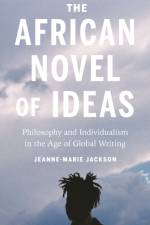
"This study focuses on the role of the philosophical novel--a genre that favors abstract concepts, or 'thinking about thinking,' over style, plot, or character development--and the role of philosophy more broadly in the intellectual life of the African continent"
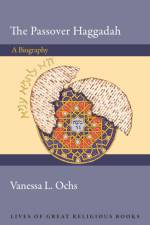
The life and times of a treasured book read by generations of Jewish families at the seder tableEvery year at Passover, Jews around the world gather for the seder, a festive meal where family and friends come together to sing, pray, and enjoy traditional food while retelling the biblical story of the Exodus. The Passover Haggadah provides the script for the meal and is a religious text unlike any other. It is the only sacred book available in so many varieties-from the Maxwell House edition of the 1930s to the countercultural Freedom Seder-and it is the rare liturgical work that allows people with limited knowledge to conduct a complex religious service. The Haggadah is also the only religious book given away for free at grocery stores as a promotion. Vanessa Ochs tells the story of this beloved book, from its emergence in antiquity as an oral practice to its vibrant proliferation today.Ochs provides a lively and incisive account of how the foundational Jewish narrative of liberation is remembered in the Haggadah. She discusses the book's origins in biblical and rabbinical literature, its flourishing in illuminated manuscripts in the medieval period, and its mass production with the advent of the printing press. She looks at Haggadot created on the kibbutz, those reflecting the Holocaust, feminist and LGBTQ-themed Haggadot, and even one featuring a popular television show, The Marvelous Mrs. Maisel. Ochs shows how this enduring work of liturgy that once served to transmit Jewish identity in Jewish settings continues to be reinterpreted and reimagined to share the message of freedom for all.
Abonner på vårt nyhetsbrev og få rabatter og inspirasjon til din neste leseopplevelse.
Ved å abonnere godtar du vår personvernerklæring.