





















Gjør som tusenvis av andre bokelskere
Abonner på vårt nyhetsbrev og få rabatter og inspirasjon til din neste leseopplevelse.
Ved å abonnere godtar du vår personvernerklæring.Du kan når som helst melde deg av våre nyhetsbrev.

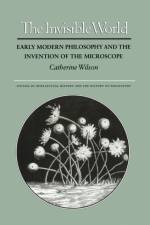
Focusing on the earliest forays into microscopical research, from 1620 to 1720, this book provides technological history of the knowledge that helped launch philosophy into the modern era. It argues that the discovery of microworld presented metaphysicians with the task of reconciling the ubiquity of life with human-centered theological systems.
What makes humans unique? This work presents an alternative to this puzzling question. Based on insights into the behavior of chimps and other great apes, our now extinct human ancestors, and existing hunting and gathering societies, it shows the remarkable role that meat has played in these societies.
Shows what the Badger State did and how it was done. Wisconsin's welfare reform was the most radical in the country, and it began far earlier than that in most other states. It was the achievement of legislators and administrators who were unusually high-minded and effective by national standards.
Shows how enlightened aristocrats, reactionary romantics, and the theorists and victims of totalitarianism have variously fashioned their vision of Russian society in musical terms. This book focuses on four individual composers, each characterized both as a self-consciously Russian creator and as a European.
Gene Grossman and Elhanan Helpman are widely acclaimed for their pioneering theoretical studies of how special interest groups seek to influence the policymaking process in democratic societies. This collection of eight of their articles is a companion to their monograph, "Special Interest Politics".
Why do countries differ so greatly in their patterns of political cleavage and coalition? Extending some basic findings of economic theories of international trade, this title suggests an answer.
Includes a collection of physics demonstrations, which illustrate key concepts in simple and playful ways. This book is suitable for a wide range of educational levels, from middle school physical science to university physics.
Tells the story of a long-forgotten criminal case: the poisoning of the communion wine in Zurich's main cathedral in 1776. This work shows how this affair became a cause celebre, the object of a lively public debate that focused on an issue much on the minds of intellectuals in the age of Enlightenment: the problem of evil.
Chemists have created superconducting ceramics for brain scanners, designed liquid crystal flat screens for televisions and watch displays, and made fabrics that change color while you wear them. This book lets the lay reader into the world of modern chemistry.
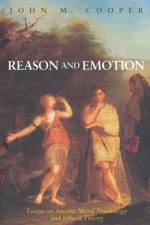
Brings together twenty-three essays on ancient moral philosophy. This book gives an account of many issues and texts in ancient moral psychology and ethical theory, providing a way of reflecting on the fields as they developed from Socrates and Plato through Aristotle to Epicurus and the Stoic philosophers Chrysippus and Posidonius, and beyond.
Optimization theory is designed to find the best ways of doing things. This work shows how extraordinarily diverse branches of biology are illuminated by the powerful methods of optimization theory. It also explains the mathematics involved, with biology students in mind. It is also useful for professionals, ranging from teachers to researchers.
About 375 million people are infected with the hepatitis B virus. The discovery of this virus and the vaccine against it was one of the triumphs of twentieth-century medicine. This book describes how Baruch Blumberg and a team of researchers found a virus they were not looking for and created a vaccine for a disease they knew little about.
The quantum theory of macroscopic systems is an area of science that serves to relate the properties of physical objects to those of their constituent particles. This book provides an approach, based on a 'macrostatistical mechanics', which contrasts with the standard microscopic treatments of many-body problems.
Takes a different approach to a question central to comparative politics and economics: why do some leaders of fragile democracies attain political success - culminating in reelection victories - when pursuing drastic, painful economic reforms while others see their political careers implode?
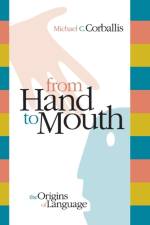
Marshaling far-flung evidence from anthropology, animal behavior, neurology, molecular biology, anatomy, linguistics, and evolutionary psychology, the author makes the case that language developed, with the emergence of Homo sapiens, from primate gestures to a true signed language, complete with grammar and syntax.
The black man suffering at the hands of whites, the white woman sexually threatened by the black man. Both images have long been burned into the American conscience through popular entertainment, and they exert a disturbing influence on Americans' understanding of race. This work explores how these images took root.
Physics has the reputation of being difficult to understand and remote from everyday life. This book presents a collection of physics demonstrations and experiments that prove that physics can, in fact, be 'made simple.' It uses 'low tech' and inexpensive materials from everyday life to make key principles of physics easy to understand.
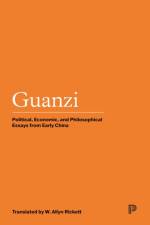
Named for the famous Chinese minister of state Guan Zhong (d. 645 B.C.), the Guanzi is one of the largest collections of ancient Chinese writings still in existence. With this volume, W. Allyn Rickett completes the first full translation of the Guanzi into English. Throughout the text, Rickett provides extensive notes. He also supplies an introduction to the volume and a comprehensive index.
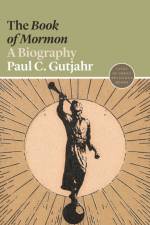
Late one night in 1823 Joseph Smith, Jr., was reportedly visited in his family's farmhouse in upstate New York by an angel named Moroni. According to Smith, Moroni told him of a buried stack of gold plates that were inscribed with a history of the Americas' ancient peoples, and which would restore the pure Gospel message as Jesus had delivered it to them. Thus began the unlikely career of the Book of Mormon, the founding text of the Mormon religion, and perhaps the most important sacred text ever to originate in the United States. Here Paul Gutjahr traces the life of this book as it has formed and fractured different strains of Mormonism and transformed religious expression around the world. Gutjahr looks at how the Book of Mormon emerged from the burned-over district of upstate New York, where revivalist preachers, missionaries, and spiritual entrepreneurs of every stripe vied for the loyalty of settlers desperate to scratch a living from the land. He examines how a book that has long been the subject of ridicule--Mark Twain called it "e;chloroform in print"e;--has more than 150 million copies in print in more than a hundred languages worldwide. Gutjahr shows how Smith's influential book launched one of the fastest growing new religions on the planet, and has featured in everything from comic books and action figures to feature-length films and an award-winning Broadway musical.
In this brief and incisive book, Pulitzer Prize-winning historian Garry Wills tells the story of the Confessions--what motivated Augustine to dictate it, how it asks to be read, and the many ways it has been misread in the one-and-a-half millennia since it was composed. Following Wills's biography of Augustine and his translation of the Confessions, this is an unparalleled introduction to one of the most important books in the Christian and Western traditions. Understandably fascinated by the story of Augustine's life, modern readers have largely succumbed to the temptation to read the Confessions as autobiography. But, Wills argues, this is a mistake. The book is not autobiography but rather a long prayer, suffused with the language of Scripture and addressed to God, not man. Augustine tells the story of his life not for its own significance but in order to discern how, as a drama of sin and salvation leading to God, it fits into sacred history. "e;We have to read Augustine as we do Dante,"e; Wills writes, "e;alert to rich layer upon layer of Scriptural and theological symbolism."e; Wills also addresses the long afterlife of the book, from controversy in its own time and relative neglect during the Middle Ages to a renewed prominence beginning in the fourteenth century and persisting to today, when the Confessions has become an object of interest not just for Christians but also historians, philosophers, psychiatrists, and literary critics. With unmatched clarity and skill, Wills strips away the centuries of misunderstanding that have accumulated around Augustine's spiritual classic.
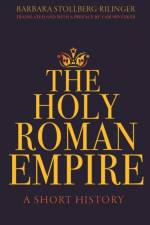
"First published in Germany as Das Heilige Reomische Reich Deutscher Nation: Vom Ende des Mittelalters bis 1806; Munich: Verlag C.H. Beck oHG, 2013"--Title page verso.
Abonner på vårt nyhetsbrev og få rabatter og inspirasjon til din neste leseopplevelse.
Ved å abonnere godtar du vår personvernerklæring.