














Gjør som tusenvis av andre bokelskere
Abonner på vårt nyhetsbrev og få rabatter og inspirasjon til din neste leseopplevelse.
Ved å abonnere godtar du vår personvernerklæring.Du kan når som helst melde deg av våre nyhetsbrev.

How many traditions of oral chant existed before the tenth century? What precursors might there have been to the notational system used in all the surviving manuscripts? In answering such questions, this work seeks to change long-held perceptions about certain crucial stages of the evolution and dissemination of the old corpus of plainchant.
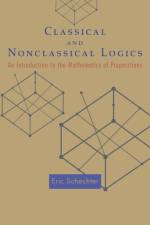
In this book, the author introduces classical logic alongside constructive, relevant, comparative, and other nonclassical logics. It begins with brief introductions to informal set theory and general topology, and avoids advanced algebra; thus it is self-contained and suitable for readers with little background in mathematics.
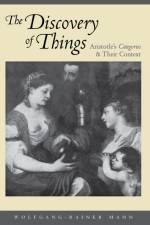
Aristotle's Categories can easily seem to be a statement of a naive, pre-philosophical ontology, centered around ordinary items. This book reveals that Aristotle's conception of things - now so engrained in Western thought as to seem a natural expression of common sense - was a hard-won philosophical achievement.
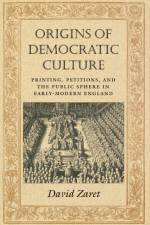
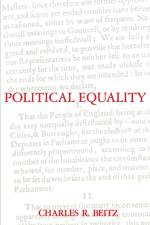
Locates the origins of modern democratic discourse in the culture of printing in early modern England. This work of historical sociology explores the unanticipated liberating effects of printing and printed communication in transforming the world of political secrecy into a culture of open discourse and eventually a politics of public opinion.
Proposes philosophical theory of scientific explanation proposed that involves a treatment of causality that accords with the pervasively statistical character of contemporary science. This title describes three fundamental conceptions of scientific explanation - the epistemic, modal, and ontic.
Attempts to investigate the question of how matter has evolved since its origin in the Big Bang, from the cosmological synthesis of hydrogen and helium to the generation of the complex set of nuclei that comprise our world and our selves. This book also presents an understanding by combining simple analytic models with computer simulations.
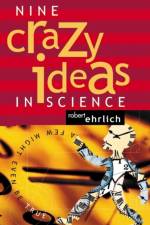
AIDS is not caused by HIV. Coal and oil are not fossil fuels. Radiation exposure is good for you. Distributing more guns reduces crime. These ideas make headlines, but most educated people scoff at them. This title evaluates, for the general reader or student, nine seemingly far-out propositions culled from physics, biology, and social science.
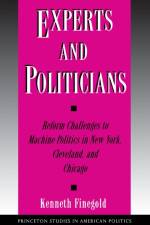
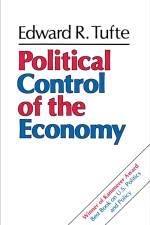
Demonstrates the significance of expertise as a potential source of change in American politics and policy, and of each city's electoral and administrative organizations as mediating institutions within a national system of urban political economies. This book draws on original research and quantitative analysis of electoral data.
In the second half of the twentieth century Dominicans became New York City's largest, and poorest, new immigrant group. By 1990, one of every ten Dominicans lived in New York. This book tells the fascinating story of this emblematic migration from Latin America to the United States.
Examines the overall constitutionality of America's role in Vietnam. This title shows that Congress authorized different phases of American involvement without committing itself to the stated aims of intervention.
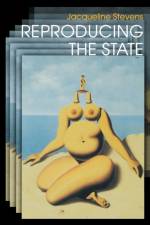
Challenges the conventional view, as well as post-structuralist scholarship that minimizes state power. Useful for scholars in many fields, this book examines birth-based theories of membership and group affiliations in political societies ranging from the Athenian polis, to tribes of Australia, to the French Republic, to the contemporary US.
Reviews the historical evidence to explain why some nations embraced Keynesian policies while others did not. This book examines the central issue of how and why particular ideas acquire influence over policy and politics. It also examines central themes in contemporary economics, political science, and history.
Demonstrates the originality and coherence of Jonathan Edwards' philosophical theology using his dynamic reconception of reality as the interpretive key. This book also explicates the way in which Edwards' dynamic reconception of reality informs his theories of imagination, aesthetic perception, the knowledge of God, and the meaning of history.
Links the literary and intellectual history of England, Scotland, Ireland, and Britain's overseas colonies during the late eighteenth and early nineteenth centuries to redraw our picture of the origins of cultural nationalism, the lineages of the novel, and the literary history of the English-speaking world.
A comprehensive interpretations of the relationship between East and West Germany and of the problems of contemporary German unity. It dissects the complex process by which East and West German leaders moved over the years from first pursuing the ideal of German unity, to accepting what they believed to be the inescapable reality of division.
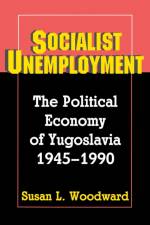
Argues that the bloody conflicts that are destroying Yugoslavia stem not so much from ancient ethnic hatreds as from the political and social divisions created by a failed socialist program to prevent capitalist joblessness.
The book's basic analytic assumption is that there is a distinction between state and society. "Defending the National Interest" shows that the problem for political analysis is how to identify the underlying social structure and the political mechanisms through which particular societal groups determine the government's behavior.
Did Chinese mysticism vanish after its first appearance in ancient Taoist philosophy, to surface only after a thousand years had passed, when the Chinese had adapted Buddhism to their own culture? This survey of the mystical dimension of Taoism disputes the commonly accepted idea of such a hiatus.
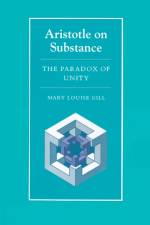
Explores a fundamental tension in Aristotle's metaphysics: how can an entity such as a living organism, a composite generated through the imposition of form on preexisting matter have the conceptual unity that Aristotle demands of primary substances?
Examines the Japanese state's involvement in and manipulation of shinto from the Meiji Restoration. This book shows why State shinto symbols, such as the Yasukuni Shrine and its prefectural branches, are the focus for bitter struggles over who will have the right to articulate their significance.
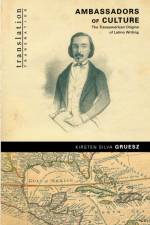
Argues that Latinos are not newcomers in the United States by documenting a network of Spanish-language cultural activity in the nineteenth century. Juxtaposing poems and essays by both powerful and peripheral writers, this title proposes a major revision of the 19th-century US canon and its historical contexts.
Challenges the notion that the eighteenth-century principles underlying the American separation of powers system are incompatible with the demands of twentieth-century governance. This book demostrates the continuing relevance of these principles by questioning the dominant scholarship on the legislative veto.
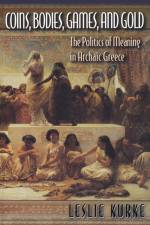
Analyzes the ideological functions of Greek coinage. By linking the imagery of metals and coinage to stories about oracles, prostitutes, Eastern tyrants, counterfeiting, retail trade, and games, this book traces the rising egalitarian ideology of the polis, as well as the resistance of an elitist tradition to that development.
Francis Bacon (1561 - 1626), commonly regarded as one of the founders of the Scientific Revolution, exerted a powerful influence on the intellectual development of the modern world. This book provides an account of the sweep of his thought and its influence. It begins by sketching Bacon's complex personality and troubled public career.
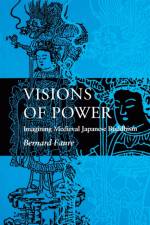
Looks at Chan/Zen with an array of postmodernist critical techniques. This book probes the imaginaire, or mental universe, of the Buddhist Soto Zen master Keizan Jokin (1268-1325). It draws on texts particularly the "Record of Tokoku" and the kirigami, or secret initiation documents.
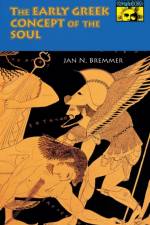
Presents a picture of the historical development of beliefs regarding the soul in ancient Greece. In exploring Greek ideas of human souls as well as those of plants and animals, this title illuminates an important stage in the genesis of the Greek mind.
Probes central theoretical questions about physiological rhythms. Topics discussed include: how are rhythms generated? How do they start and stop? What are the effects of perturbation of the rhythms? How are oscillations organized in space? This book is useful for biological scientists, physicians, physical scientists, and mathematicians.
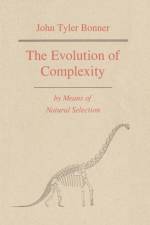
How is it that an egg turns into an elaborate adult? How is it that a bacterium, given many millions of years, could have evolved into an elephant? The author argues that we can understand this progression in terms of natural selection, but that in order to do so we must consider the role of development in evolutionary change.
Abonner på vårt nyhetsbrev og få rabatter og inspirasjon til din neste leseopplevelse.
Ved å abonnere godtar du vår personvernerklæring.