





















Gjør som tusenvis av andre bokelskere
Abonner på vårt nyhetsbrev og få rabatter og inspirasjon til din neste leseopplevelse.
Ved å abonnere godtar du vår personvernerklæring.Du kan når som helst melde deg av våre nyhetsbrev.

A comprehensive introduction to ocean ecology and a new way of thinking about ocean lifeMarine ecology is more interdisciplinary, broader in scope, and more intimately linked to human activities than ever before. Ocean Ecology provides advanced undergraduates, graduate students, and practitioners with an integrated approach to marine ecology that reflects these new scientific realities, and prepares students for the challenges of studying and managing the ocean as a complex adaptive system. This authoritative and accessible textbook advances a framework based on interactions among four major features of marine ecosystems-geomorphology, the abiotic environment, biodiversity, and biogeochemistry-and shows how life is a driver of environmental conditions and dynamics. Ocean Ecology explains the ecological processes that link organismal to ecosystem scales and that shape the major types of ocean ecosystems, historically and in today's Anthropocene world.Provides an integrated new approach to understanding and managing the oceanShows how biological diversity is the heart of functioning ecosystemsSpans genes to earth systems, surface to seafloor, and estuary to ocean gyreLinks species composition, trait distribution, and other ecological structures to the functioning of ecosystemsExplains how fishing, fossil fuel combustion, industrial fertilizer use, and other human impacts are transforming the Anthropocene oceanAn essential textbook for students and an invaluable resource for practitioners
The belief that U.S. presidents' legislative policy formation has centralized over time, shifting inexorably out of the executive departments and into the White House, is shared by many who have studied the American presidency. Andrew Rudalevige argues that such a linear trend is neither at all certain nor necessary for policy promotion. In Managing the President's Program, he presents a far more complex and interesting picture of the use of presidential staff. Drawing on transaction cost theory, Rudalevige constructs a framework of "e;contingent centralization"e; to predict when presidents will use White House and/or departmental staff resources for policy formulation. He backs his assertions through an unprecedented quantitative analysis of a new data set of policy proposals covering almost fifty years of the postwar era from Truman to Clinton.Rudalevige finds that presidents are not bound by a relentless compulsion to centralize but follow a more subtle strategy of staff allocation that makes efficient use of limited bargaining resources. New items and, for example, those spanning agency jurisdictions, are most likely to be centralized; complex items follow a mixed process. The availability of expertise outside the White House diminishes centralization. However, while centralization is a management strategy appropriate for engaging the wider executive branch, it can imperil an item's fate in Congress. Thus, as this well-written book makes plain, presidential leadership hinges on hard choices as presidents seek to simultaneously manage the executive branch and attain legislative success.
In this brief book the author examines the central doctrine of important Christian, Jewish, and Muslim philosophers and shows the contributions of medieval thought to present-day philosophy. Intended not only for philosophers, but for anyone seeking a concise and reliable survey.
Islam is often portrayed, especially in Western media, as an alien, violent, hostile, and monolithic religion, whose adherents are intent upon battling nonbelievers throughout the world. Shattering the Myth demonstrates that these conceptions more accurately reflect the bias of Western reporters than they do the realities of contemporary Islam. Westerners are barraged by images of violence that usually originate from armed confrontations in one small corner of the world. Islam, Bruce Lawrence argues, is a complex, international religious system that cannot be reduced to stereotypes. As Lawrence demonstrates, Islam is a religion shaped as much by its own postulates and ethical demands as by the specific circumstances of Muslim people in the modern world. The last two hundred years have brought many challenges for Muslims, from colonial subjugation through sporadic revivalism to elitist reform movements and, most recently, pervasive struggles with fundamentalism. During each period, Muslims have had to address internal tensions, as well as external threats. Today Muslims in the post-colonial era, only some of whom are Arab and living in the Middle East, are playing ever greater roles in economic changes, both regional and international. As the impact of these changes has become evident in societies around the globe, new leaders have come into public view. The most remarkable emerging presence is that of Muslim women. Lawrence argues that it is the experience of Muslim women in particular that calls for a more nuanced understanding of Islam today. It is time, Lawrence believes, to replace inaccurate images of Islam with a recognition of the multifaceted character of this global religion and of its widely diverse adherents. Here he describes changes that are taking place throughout the world, particularly in Southeast Asia, enacted by governments and nongovernmental organizations alike. In a time of rapid international change, Lawrence suggests that it is time for our images of Islam to reflect more clearly the realities of Islam as it is lived. Shattering the Myth provides significant insights into the history of Islam and a greater understanding of the varied experiences of Muslims today. "e;An informed interpretation of the contemporary Muslim experience . . . Lawrence's explanations for the particular states of affairs in Egypt, Iran, Pakistan, and Malaysia, among other cases, are compelling . . . [A] distinguished contribution."e;--From the foreword by James Piscatori and Dale F. Eickelman
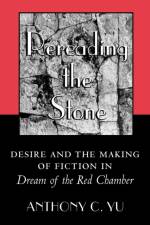
The eighteenth-century Hongloumeng, known in English as Dream of the Red Chamber or The Story of the Stone, is generally considered to be the greatest of Chinese novels--one that masterfully blends realism and romance, psychological motivation and fate, daily life and mythical occurrences, as it narrates the decline of a powerful Chinese family. In this path-breaking study, Anthony Yu goes beyond the customary view of Hongloumeng as a vivid reflection of late imperial Chinese culture by examining the novel as a story about fictive representation. Through a maze of literary devices, the novel challenges the authority of history as well as referential biases in reading. At the heart of Hongloumeng, Yu argues, is the narration of desire. Desire appears in this tale as the defining trait and problem of human beings and at the same time shapes the novel's literary invention and effect. According to Yu, this focalizing treatment of desire may well be Hongloumeng's most distinctive accomplishment. Through close readings of selected episodes, Yu analyzes principal motifs of the narrative, such as dream, mirror, literature, religious enlightenment, and rhetorical reflexivity in relation to fictive representation. He contextualizes his discussions with a comprehensive genealogy of qing--desire, disposition, sentiment, feeling--a concept of fundamental importance in historical Chinese culture, and shows how the text ingeniously exploits its multiple meanings. Spanning a wide range of comparative literary sources, Yu creates a new conceptual framework in which to reevaluate this masterpiece.
Collaboration in the Holocaust. Murderous and torturous medical experiments. The "e;euthanasia"e; of hundreds of thousands of people with mental or physical disabilities. Widespread sterilization of "e;the unfit."e; Nazi doctors committed these and countless other atrocities as part of Hitler's warped quest to create a German master race. Robert Proctor recently made the explosive discovery, however, that Nazi Germany was also decades ahead of other countries in promoting health reforms that we today regard as progressive and socially responsible. Most startling, Nazi scientists were the first to definitively link lung cancer and cigarette smoking. Proctor explores the controversial and troubling questions that such findings raise: Were the Nazis more complex morally than we thought? Can good science come from an evil regime? What might this reveal about health activism in our own society? Proctor argues that we must view Hitler's Germany more subtly than we have in the past. But he also concludes that the Nazis' forward-looking health activism ultimately came from the same twisted root as their medical crimes: the ideal of a sanitary racial utopia reserved exclusively for pure and healthy Germans. Author of an earlier groundbreaking work on Nazi medical horrors, Proctor began this book after discovering documents showing that the Nazis conducted the most aggressive antismoking campaign in modern history. Further research revealed that Hitler's government passed a wide range of public health measures, including restrictions on asbestos, radiation, pesticides, and food dyes. Nazi health officials introduced strict occupational health and safety standards, and promoted such foods as whole-grain bread and soybeans. These policies went hand in hand with health propaganda that, for example, idealized the Fuhrer's body and his nonsmoking, vegetarian lifestyle. Proctor shows that cancer also became an important social metaphor, as the Nazis portrayed Jews and other "e;enemies of the Volk"e; as tumors that must be eliminated from the German body politic. This is a disturbing and profoundly important book. It is only by appreciating the connections between the "e;normal"e; and the "e;monstrous"e; aspects of Nazi science and policy, Proctor reveals, that we can fully understand not just the horror of fascism, but also its deep and seductive appeal even to otherwise right-thinking Germans.
Hailed as one of the greatest mathematical results of the twentieth century, the recent proof of Fermat's Last Theorem by Andrew Wiles brought to public attention the enigmatic problem-solver Pierre de Fermat, who centuries ago stated his famous conjecture in a margin of a book, writing that he did not have enough room to show his "e;truly marvelous demonstration."e; Along with formulating this proposition--xn+yn=zn has no rational solution for n > 2--Fermat, an inventor of analytic geometry, also laid the foundations of differential and integral calculus, established, together with Pascal, the conceptual guidelines of the theory of probability, and created modern number theory. In one of the first full-length investigations of Fermat's life and work, Michael Sean Mahoney provides rare insight into the mathematical genius of a hobbyist who never sought to publish his work, yet who ranked with his contemporaries Pascal and Descartes in shaping the course of modern mathematics.</p>
Just one generation ago, lawyers dominated Mexico's political elite, and Mexican economists were a relatively powerless group of mostly leftist nationalists. Today, in contrast, the country is famous, or perhaps infamous, for being run by American-trained neoclassical economists. In 1993, the Economist suggested that Mexico had the most economically literate government in the world--a trend that has continued since Mexico's transition to multi-party democracy. To the accompanying fanfare of U.S. politicians and foreign investors, these technocrats embarked on the ambitious program of privatization, deregulation, budget-cutting, and opening to free trade--all in keeping with the prescriptions of mainstream American economics. This book chronicles the evolution of economic expertise in Mexico over the course of the twentieth century, showing how internationally credentialed experts came to set the agenda for the Mexican economics profession and to dominate Mexican economic policymaking. It also reveals how the familiar language of Mexico's new experts overlays a professional structure that is still alien to most American economists. Sarah Babb mines diverse sources--including Mexican undergraduate theses, historical documents, and personal interviews--to address issues relevant not only to Latin American studies, but also to the sociology of professions, political sociology, economic sociology, and neoinstitutionalist sociology. She demonstrates with skill how peculiarly national circumstances shape what economic experts think and do. At the same time, Babb shows how globalization can erode national systems of economic expertise in developing countries, creating a new class of ''global experts.''
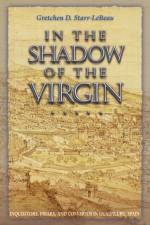
On June 11, 1485, in the pilgrimage town of Guadalupe, the Holy Office of the Inquisition executed Alonso de Paredes--a converted Jew who posed an economic and political threat to the town's powerful friars--as a heretic. Wedding engrossing narratives of Paredes and other figures with astute historical analysis, this finely wrought study reconsiders the relationship between religious identity and political authority in late-Medieval and early-modern Spain. Gretchen Starr-LeBeau concentrates on the Inquisition's handling of conversos (converted Jews and their descendants) in Guadalupe, taking religious identity to be a complex phenomenon that was constantly re-imagined and reconstructed in light of changing personal circumstances and larger events. She demonstrates that the Inquisition reified the ambiguous religious identities of conversos by defining them as devout or (more often) heretical. And she argues that political figures used this definitional power of the Inquisition to control local populations and to increase their own authority. In the Shadow of the Virgin is unique in pointing out that the power of the Inquisition came from the collective participation of witnesses, accusers, and even sometimes its victims. For the first time, it draws the connection between the malleability of religious identity and the increase in early modern political authority. It shows that, from the earliest days of the modern Spanish Inquisition, the Inquisition reflected the political struggles and collective religious and cultural anxieties of those who were drawn into participating in it.
This is a comprehensive and detailed account of the economichistory of Puerto Rico from the period of Spanish colonial dominationto the present. Interweaving findings of the "e;new"e; Puerto Ricanhistoriography with those of earlier historical studies, and usingthe most recent theoretical concepts to interpret them, James Dietzexamines the complex manner in which productive and class relationswithin Puerto Rico have interacted with changes in its placein the world economy.Besides including aggregate data on Puerto Rico's economy, theauthor offers valuable information on workers' living conditionsand women workers, plus new interpretations of development sinceOperation Bootstrap. His evaluation of the island's export-orientedeconomy has implications for many other developing countries.
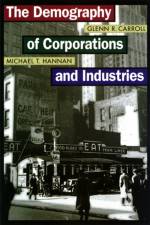
Most analysts of corporations and industries adopt the focal perspective of a single prototypical organization. Many analysts also study corporations primarily in terms of their internal organizational structures or as complex systems of financial contracts. Glenn Carroll and Michael Hannan bring fresh insight to our understanding of corporations and the industries they comprise by looking beyond prototypical structures to focus on the range and diversity of organizations in their social and economic setting. The result is a rich rendering of analysis that portrays whole populations and communities of corporations. The Demography of Corporations and Industries is the first book to present the demographic approach to organizational studies in its entirety. It examines the theory, models, methods, and data used in corporate demographic research. Carroll and Hannan explore the processes by which corporate populations change over time, including organizational founding, growth, decline, structural transformation, and mortality. They review and synthesize the major theoretical mechanisms of corporate demography, ranging from aging and size dependence to population segregation and density dependence. The book also explores some selected implications of corporate demography for public policy, including employment and regulation. In this path-breaking book, Carroll and Hannan demonstrate why demographic research on corporations is important; describe how to conduct demographic research; specify fruitful areas of future research; and suggest how the demographic perspective can enrich the public discussion of issues surrounding the corporation in our constantly evolving industrial society. All researchers and analysts with an interest in this topic will find The Demography of Corporations and Industries an invaluable resource.
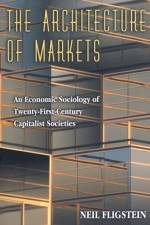
Market societies have created more wealth, and more opportunities for more people, than any other system of social organization in history. Yet we still have a rudimentary understanding of how markets themselves are social constructions that require extensive institutional support. This groundbreaking work seeks to fill this gap, to make sense of modern capitalism by developing a sociological theory of market institutions. Addressing the unruly dynamism that capitalism brings with it, leading sociologist Neil Fligstein argues that the basic drift of any one market and its actors, even allowing for competition, is toward stabilization. The Architecture of Markets represents a major and timely step beyond recent, largely empirical studies that oppose the neoclassical model of perfect competition but provide sparse theory toward a coherent economic sociology. Fligstein offers this theory. With it he interprets not just globalization and the information economy, but developments more specific to American capitalism in the past two decades--among them, the 1980s merger movement. He makes new inroads into the ''theory of fields,'' which links the formation of markets and firms to the problems of stability. His political-cultural approach explains why governments remain crucial to markets and why so many national variations of capitalism endure. States help make stable markets possible by, for example, establishing the rule of law and adjudicating the class struggle. State-building and market-building go hand in hand. Fligstein shows that market actors depend mightily upon governments and the members of society for the social conditions that produce wealth. He demonstrates that systems favoring more social justice and redistribution can yield stable markets and economic growth as readily as less egalitarian systems. This book will surely join the classics on capitalism. Economists, sociologists, policymakers, and all those interested in what makes markets function as they do will read it for many years to come.
On a rainy day in May 1988, a lowland gorilla named Willie B. stepped outdoors for the first time in twenty-seven years, into a new landscape immersion exhibit. Born in Africa, Willie B. had been captured by an animal collector and sold to a zoo. During the decades he spent in a cage, zoos stopped collecting animals from the wild and Americans changed the ways they wished to view animals in the zoo. Zoos developed new displays to simulate landscapes like the Amazon River basin and African forests. Exhibits similar to animals' natural habitats began to replace old-fashioned animal houses. But such displays are only the most recent effort of zoos to present their audiences with an authentic experience of nature. Since the first zoological park opened in the United States in Philadelphia in 1874, zoos have promised their visitors a journey into the natural world. And for more than a century they have been popular places for education and recreation: every year more than 130 million Americans go to zoos to look at the animals and enjoy a day outdoors. The first book-length history of American zoos, Animal Attractions examines the meaning of nature in the city by looking at the ways zoos have assembled and displayed their animal collections. Situated literally and culturally in the American middle landscape, zoos are concrete expressions of longstanding tensions between wildness and civilization, science and popular culture, education and entertainment. In their efforts to promote nature appreciation, they reveal much about how our culture envisions the natural world and the human place in it and how these ideas have changed.
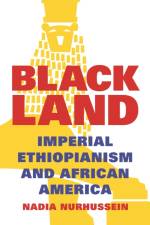
The first book to explore how African-American writing and art engaged with visions of Ethiopia during the late 19th and early 20th centuries illuminates the increasing tensions and ironies behind cultural celebrations of an African country asserting itself as an imperial power.
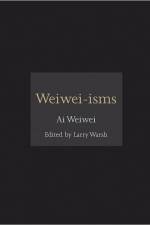
The quotable Ai WeiweiThis collection of quotes demonstrates the elegant simplicity of Ai Weiwei's thoughts on key aspects of his art, politics, and life. A master at communicating powerful ideas in astonishingly few words, Ai Weiwei is known for his innovative use of social media to disseminate his views. The short quotations presented here have been carefully selected from articles, tweets, and interviews given by this acclaimed Chinese artist and activist. The book is organized into six categories: freedom of expression; art and activism; government, power, and moral choices; the digital world; history, the historical moment, and the future; and personal reflections.Together, these quotes span some of the most revealing moments of Ai Weiwei's eventful career-from his risky investigation into student deaths in the 2008 Sichuan earthquake to his arbitrary arrest in 2011-providing a window into the mind of one of the world's most electrifying and courageous contemporary artists.Select Quotes from the Book:On Freedom of Expression"e;Say what you need to say plainly, and then take responsibility for it."e;"e;A small act is worth a million thoughts."e;"e;Liberty is about our rights to question everything."e;On Art and Activism"e;Everything is art. Everything is politics."e;"e;The art always wins. Anything can happen to me, but the art will stay."e;"e;Life is art. Art is life. I never separate it. I don't feel that much anger. I equally have a lot of joy."e;On Government, Power, and Making Moral Choice"e;Once you've tasted freedom, it stays in your heart and no one can take it. Then, you can be more powerful than a whole country."e;"e;I feel powerless all the time, but I regain my energy by making a very small difference that won't cost me much."e;"e;Tips on surviving the regime: Respect yourself and speak for others. Do one small thing every day to prove the existence of justice."e;On the Digital World"e;Only with the Internet can a peasant I have never met hear my voice and I can learn what's on his mind. A fairy tale has come true."e;"e;The Internet is uncontrollable. And if the Internet is uncontrollable, freedom will win. It's as simple as that."e;"e;The Internet is the best thing that could have happened to China."e;On History, the Historical Moment, and the Future"e;If a nation cannot face its past, it has no future."e;"e;We need to get out of the old language."e;"e;The world is a sphere, there is no East or West."e;Personal Reflection"e;I've never planned any part of my career-except being an artist. And I was pushed into that corner because I thought being an artist was the only way to have a little freedom."e;"e;Anyone fighting for freedom does not want to totally lose their freedom."e;"e;Expressing oneself is like a drug. I'm so addicted to it."e;
Abonner på vårt nyhetsbrev og få rabatter og inspirasjon til din neste leseopplevelse.
Ved å abonnere godtar du vår personvernerklæring.