












Gjør som tusenvis av andre bokelskere
Abonner på vårt nyhetsbrev og få rabatter og inspirasjon til din neste leseopplevelse.
Ved å abonnere godtar du vår personvernerklæring.Du kan når som helst melde deg av våre nyhetsbrev.

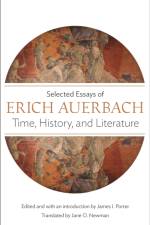
Important essays from one of the giants of literary criticism, including a dozen published here in English for the first timeErich Auerbach (1892-1957), best known for his classic literary study Mimesis, is celebrated today as a founder of comparative literature, a forerunner of secular criticism, and a prophet of global literary studies. Yet the true depth of Auerbach's thinking and writing remains unplumbed. Time, History, and Literature presents a wide selection of Auerbach's essays, many of which are little known outside the German-speaking world. Of the twenty essays culled for this volume from the full length of his career, twelve have never appeared in English before, and one is being published for the first time.Foregrounded in this major new collection are Auerbach's complex relationship to the Judaeo-Christian tradition, his philosophy of time and history, and his theory of human ethics and responsible action. Auerbach effectively charts out the difficult discovery, in the wake of Christianity, of the sensuous, the earthly, and the human and social worlds. A number of the essays reflect Auerbach's responses to an increasingly hostile National Socialist environment. These writings offer a challenging model of intellectual engagement, one that remains as compelling today as it was in Auerbach's own time.
Every day on eBay, millions of people buy and sell a vast array of goods, from rare collectibles and antiques to used cars and celebrity memorabilia. The internet auction site is remarkably easy to use, which accounts in part for its huge popularity. But how does eBay really work, and how does it compare to other kinds of auctions? These are questions that led Ken Steiglitz--computer scientist, collector of ancient coins, and a regular eBay user--to examine the site through the revealing lens of auction theory. The result is this book, in which Steiglitz shows us how human behaviors in open markets like eBay can be substantially more complex than those predicted by standard economic theory. In these pages we meet the sniper who outbids you in an auction's closing seconds, the early bidder who treats eBay as if it were an old-fashioned outcry auction, the shill who bids in league with the seller to artificially inflate the price--and other characters as well. Steiglitz guides readers through the fascinating history of auctions, how they functioned in the past and how they work today in online venues like eBay. Drawing on cutting-edge economics as well as his own stories from eBay, he reveals practical auction strategies and introduces readers to the fundamentals of auction theory and the mathematics behind eBay. Complete with exercises and a detailed appendix, this book is a must for sophisticated users of online auctions, and essential reading for students seeking an accessible introduction to the study of auction theory.
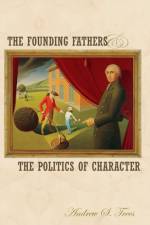
The American Revolution swept away old certainties and forced revolutionaries to consider what it meant to be American. Andrew Trees examines four attempts to answer the question of national identity that Americans faced in the wake of the Revolution. Through the writings of Thomas Jefferson, John Adams, Alexander Hamilton, and James Madison, Trees explores a complicated political world in which boundaries between the personal and the political were fluid and ill-defined. Melding history and literary study, he shows how this unsettled landscape challenged and sometimes confounded the founders' attempts to forge their own--and the nation's--identity. Trees traces the intimately linked shaping of self and country by four men distrustful of politics and yet operating in an increasingly democratic world. Jefferson sought to recast the political along the lines of friendship, while Hamilton hoped that honor would provide a secure foundation for self and country. Adams struggled to create a nation virtuous enough to sustain a republican government, and Madison worked to establish a government based on justice. Giving a new context to the founders' mission, Trees studies their contributions not simply as policy prescriptions but in terms of a more elusive and symbolic level of action. His work illuminates the tangled relationship among rhetoric, politics, self, and nation--as well as the larger question of national identity that remains with us today.
A small but increasing number of economists have begun to use laboratory experiments to evaluate economic propositions under carefully controlled conditions. Experimental Economics is the first comprehensive treatment of this rapidly growing area of research. While the book acknowledges that laboratory experiments are no panacea, it argues cogently for their effectiveness in selected situations. Covering methodological and procedural issues as well as theory, Experimental Economics is not only a textbook but also a useful introduction to laboratory methods for professional economists.Although the authors present some new material, their emphasis is on organizing and evaluating existing results. The book can be used as an anchoring device for a course at either the graduate or advanced undergraduate level. Applications include financial market experiments, oligopoly price competition, auctions, bargaining, provision of public goods, experimental games, and decision making under uncertainty. The book also contains instructions for a variety of laboratory experiments.
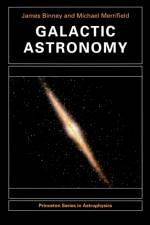
This is the definitive treatment of the phenomenology of galaxies--a clear and comprehensive volume that takes full account of the extraordinary recent advances in the field. The book supersedes the classic text Galactic Astronomy that James Binney wrote with Dimitri Mihalas, and complements Galactic Dynamics by Binney and Scott Tremaine. It will be invaluable to researchers and is accessible to any student who has a background in undergraduate physics. The book draws on observations both of our own galaxy, the Milky Way, and of external galaxies. The two sources are complementary, since the former tends to be highly detailed but difficult to interpret, while the latter is typically poorer in quality but conceptually simpler to understand. Binney and Merrifield introduce all astronomical concepts necessary to understand the properties of galaxies, including coordinate systems, magnitudes and colors, the phenomenology of stars, the theory of stellar and chemical evolution, and the measurement of astronomical distances. The book's core covers the phenomenology of external galaxies, star clusters in the Milky Way, the interstellar media of external galaxies, gas in the Milky Way, the structure and kinematics of the stellar components of the Milky Way, and the kinematics of external galaxies. Throughout, the book emphasizes the observational basis for current understanding of galactic astronomy, with references to the original literature. Offering both new information and a comprehensive view of its subject, it will be an indispensable source for professionals, as well as for graduate students and advanced undergraduates.
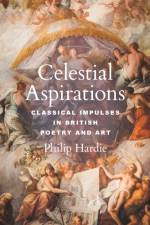
A unique look at how classical notions of ascent and flight preoccupied early modern British writers and artistsBetween the late sixteenth century and early nineteenth century, the British imagination-poetic, political, intellectual, spiritual and religious-displayed a pronounced fascination with images of ascent and flight to the heavens. Celestial Aspirations explores how British literature and art during that period exploited classical representations of these soaring themes-through philosophical, scientific and poetic flights of the mind; the ascension of the disembodied soul; and the celestial glorification of the ruler.From textual reachings for the heavens in Spenser, Marlowe, Shakespeare, Donne and Cowley, to the ceiling paintings of Rubens, Verrio and Thornhill, Philip Hardie focuses on the ways that the history, ideologies and aesthetics of the postclassical world received and transformed the ideas of antiquity. In England, narratives of ascent appear on the grandest scale in Milton's Paradise Lost, an epic built around a Christian plot of falling and rising, and one of the most intensely classicizing works of English poetry. Examining the reception of flight up to the Romanticism of Wordsworth and Tennyson, Hardie considers the Whig sublime, as well as the works of Alexander Pope and Edward Young. Throughout, he looks at motivations both public and private for aspiring to the heavens-as a reward for political and military achievement on the one hand, and as a goal of individual intellectual and spiritual exertion on the other.Celestial Aspirations offers an intriguing look at how creative minds reworked ancient visions of time and space in the early modern era.
This major interpretation of the Revolution of 1848-1849 in Germany stresses its character as a mass political phenomenon. Building skillfully on the theme of the interaction of self-conscious radicalism and spontaneous popular movements, Jonathan Sperber analyzes the social and religious antagonisms of pre-1848 German society and shows how they were politicized by the democratic political opposition.
Brook Thomas explores the new historicism and the challenges posed to it by a postmodern world that questions the very possibility of newness. He considers new historicism's engagement with poststructuralism and locates the former within a tradition of pragmatic historiography in the United States.
How do corporations and other organizations maintain and transmit their cultures over time? Culture and Demography in Organizations offers the most reliable and comprehensive answer to this complex question to date. The first book on the subject to ground its analysis in mathematical tools and computer simulation, it goes beyond standard approaches, which focus on socialization within organizations, by explicitly considering the effects of demographic processes of entry, exit, and organizational growth. J. Richard Harrison and Glenn R. Carroll base their analysis on a formal model with three components: hiring, socialization, and employee turnover. In exploring the model's implications through computer simulation methods, the authors cover topics such as organizational growth and decline, top management teams, organizational influence networks, terrorist organizations, cultural integration following mergers, and organizational failure. For each topic, they identify the conditions influencing cultural transmission. In general, they find that demographic processes play a central role in influencing organizational culture and that studying these processes leads to some surprising insights unavailable when considering socialization alone. This book, which also serves as an ideal introduction to the increasingly popular use of computer simulation, will be an indispensable resource for scholars and students of organization theory and behavior, cultural studies, strategic management, sociology, economics, and social simulation.
The Grand Contraption tells the story of humanity's attempts through 4,000 years of written history to make sense of the world in its cosmic totality, to understand its physical nature, and to know its real and imagined inhabitants. No other book has provided as coherent, compelling, and learned a narrative on this subject of subjects. David Park takes us on an incredible journey that illuminates the multitude of elaborate "e;contraptions"e; by which humans in the Western world have imagined the earth they inhabit--and what lies beyond. Intertwining history, religion, philosophy, literature, and the physical sciences, this eminently readable book is, ultimately, about the "e;grand contraption"e; we've constructed through the ages in an effort to understand and identify with the universe. According to Park, people long ago conceived of our world as a great rock slab inhabited by gods, devils, and people and crowned by stars. Thinkers imagined ether to fill the empty space, and in the comforting certainty of celestial movement they discerned numbers, and in numbers, order. Separate sections of the book tell the fascinating stories of measuring and mapping the Earth and Heavens, and later, the scientific exploration of the universe. The journey reveals many common threads stretching from ancient Mesopotamians and Greeks to peoples of today. For example, humans have tended to imagine Earth and Sky as living creatures. Not true, say science-savvy moderns. But truth isn't always the point. The point, says Park, is that Earth is indeed the fragile bubble we surmise, and we must treat it with the reverence it deserves.
The first comprehensive account of how and why architects learned to communicate through colorArchitectural drawings of the Italian Renaissance were largely devoid of color, but from the seventeenth century through the nineteenth, polychromy in architectural representation grew and flourished. Basile Baudez argues that colors appeared on paper when architects adapted the pictorial tools of imitation, cartographers' natural signs, military engineers' conventions, and, finally, painters' affective goals in an attempt to communicate with a broad public.Inessential Colors traces the use of color in European architectural drawings and prints, revealing how this phenomenon reflected the professional anxieties of an emerging professional practice that was simultaneously art and science. Traversing national borders, the book addresses color as a key player in the long history of rivalry and exchange between European traditions in architectural representation and practice.Featuring a wealth of previously unpublished drawings, Inessential Colors challenges the long-standing misreading of architectural drawings as illustrations rather than representations, pointing instead to their inherent qualities as independent objects whose beauty paved the way for the visual system architects use today.
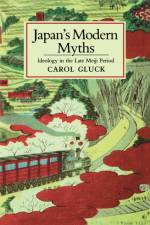
Ideology played a momentous role in modern Japanese history. Not only did the elite of imperial Japan (1890-1945) work hard to influence the people to "e;yield as the grasses before the wind,"e; but historians of modern Japan later identified these efforts as one of the underlying pathologies of World War II. Available for the first time in paperback, this study examines how this ideology evolved. Carol Gluck argues that the process of formulating and communicating new national values was less consistent than is usually supposed. By immersing the reader in the talk and thought of the late Meiji period, Professor Gluck recreates the diversity of ideological discourse experienced by Japanese of the time. The result is a new interpretation of the views of politics and the nation in imperial Japan.
A valuable synthesis of the physics of magmatism for students and scholarsMagma genesis and segregation have shaped Earth since its formation more than 4.5 billion years ago. Now, for the first time, the mathematical theory describing the physics of magmatism is presented in a single volume. The Dynamics of Partially Molten Rock offers a detailed overview that emphasizes the fundamental physical insights gained through an analysis of simplified problems. This textbook brings together such topics as fluid dynamics, rock mechanics, thermodynamics and petrology, geochemical transport, plate tectonics, and numerical modeling. End-of-chapter exercises and solutions as well as online Python notebooks provide material for courses at the advanced undergraduate or graduate level.This book focuses on the partial melting of Earth's asthenosphere, but the theory presented is also more broadly relevant to natural systems where partial melting occurs, including ice sheets and the deep crust, mantle, and core of Earth and other planetary bodies, as well as to rock-deformation experiments conducted in the laboratory. For students and researchers aiming to understand and advance the cutting edge, the work serves as an entree into the field and a convenient means to access the research literature. Notes in each chapter reference both classic papers that shaped the field and newer ones that point the way forward.The Dynamics of Partially Molten Rock requires a working knowledge of fluid mechanics and calculus, and for some chapters, readers will benefit from prior exposure to thermodynamics and igneous petrology.The first book to bring together in a unified way the theory for partially molten rocksEnd-of-chapter exercises with solutions and an online supplement of Jupyter notebooksCoverage of the mechanics, thermodynamics, and chemistry of magmatism, and their coupling in the context of plate tectonics and mantle convectionNotes at the end of each chapter highlight key papers for further reading
A compelling book that casts the Qur'anic encounter with Jews in an entirely new lightIn this panoramic and multifaceted book, Meir Bar-Asher examines how Jews and Judaism are depicted in the Qur'an and later Islamic literature, providing needed context to those passages critical of Jews that are most often invoked to divide Muslims and Jews or to promote Islamophobia. He traces the Qur'anic origins of the protection of Jews and other minorities living under the rule of Islam, and shows how attitudes toward Jews in Shi'i Islam are substantially different from those in Sunni Islam. Bar-Asher sheds light on the extraordinary contribution of Jewish tradition to the Muslim exegesis of the Qur'an, and draws important parallels between Jewish religious law, or halakha, and shari'a law.An illuminating work on a topic of vital relevance today, Jews and the Qur'an offers a nuanced understanding of Islam's engagement with Judaism in the time of Muhammad and his followers, and serves as a needed corrective to common misperceptions about Islam.
A new look at the interrelationship of architecture and sculpture during one of the richest periods of American modern designAlloys looks at a unique period of synergy and exchange in the postwar United States, when sculpture profoundly shaped architecture, and vice versa. Leading architects such as Gordon Bunshaft and Eero Saarinen turned to sculptors including Harry Bertoia, Alexander Calder, Richard Lippold, and Isamu Noguchi to produce site-determined, large-scale sculptures tailored for their buildings' highly visible and well-traversed threshold spaces. The parameters of these spaces-atriums, lobbies, plazas, and entryways-led to various designs like sculptural walls, ceilings, and screens that not only embraced new industrial materials and processes, but also demonstrated art's ability to merge with lived architectural spaces.Marin Sullivan argues that these sculptural commissions represent an alternate history of midcentury American art. Rather than singular masterworks by lone geniuses, some of the era's most notable spaces-Philip Johnson's Four Seasons Restaurant in Mies van der Rohe's Seagram Building, Max Abramovitz's Philharmonic Hall at Lincoln Center, and Pietro Belluschi and Walter Gropius's Pan Am Building-would be diminished without the collaborative efforts of architects and artists. At the same time, the artistic creations within these spaces could not exist anywhere else. Sullivan shows that the principle of synergy provides an ideal framework to assess this pronounced relationship between sculpture and architecture. She also explores the afterlives of these postwar commissions in the decades since their construction.A fresh consideration of sculpture's relationship to architectural design and functionality following World War II, Alloys highlights the affinities between the two fields and the ways their connections remain with us today.
How the urban spectator became the archetypal modern viewer and a central subject in late nineteenth-century French artGawkers explores how artists and writers in late nineteenth-century Paris represented the seductions, horrors, and banalities of street life through the eyes of curious viewers known as badauds. In contrast to the singular and aloof bourgeois flaneur, badauds were passive, collective, instinctive, and highly impressionable. Above all, they were visual, captivated by the sights of everyday life. Beautifully illustrated and drawing on a wealth of new research, Gawkers excavates badauds as a subject of deep significance in late nineteenth-century French culture, as a motif in works of art, and as a conflicted model of the modern viewer.Bridget Alsdorf examines the work of painters, printmakers, and filmmakers who made badauds their artistic subject, including Felix Vallotton, Pierre Bonnard, Henri de Toulouse-Lautrec, Honore Daumier, Edgar Degas, Jean-Leon Gerome, Eugene Carriere, Charles Angrand, and Auguste and Louise Lumiere. From morally and intellectually empty to sensitive, empathetic, and humane, the gawkers these artists portrayed cut across social categories. They invite the viewer's identification, even as they appear to threaten social responsibility and the integrity of art.Delving into the ubiquity of a figure that has largely eluded attention, idling on the margins of culture and current events, Gawkers traces the emergence of social and aesthetic problems that are still with us today.
A richly illustrated history of textiles in the Mughal EmpireIn the sixteenth and seventeenth centuries, a vast array of textiles circulated throughout the Mughal Empire. Made from rare fibers and crafted using virtuosic techniques, these exquisite objects animated early modern experience, from the intimate, sensory pleasure of garments to the monumentality of imperial tents. The Art of Cloth in Mughal India tells the story of textiles crafted and collected across South Asia and beyond, illuminating how cloth participated in political negotiations, social conversations, and the shared seasonal rhythms of the year.Drawing on small-scale paintings, popular poetry, chronicle histories, and royal inventory records, Sylvia Houghteling charts the travels of textiles from the Mughal imperial court to the kingdoms of Rajasthan, the Deccan sultanates, and the British Isles. She shows how the "e;art of cloth"e; encompassed both the making of textiles as well as their creative uses. Houghteling asks what cloth made its wearers feel, how it acted in space, and what images and memories it conjured in the mind. She reveals how woven objects began to evoke the natural environment, convey political and personal meaning, and span the distance between faraway people and places.Beautifully illustrated, The Art of Cloth in Mughal India offers an incomparable account of the aesthetics and techniques of cloth and cloth making and the ways that textiles shaped the social, political, religious, and aesthetic life of early modern South Asia.
A beautifully illustrated exploration of the ways birds cohabitFeaturing dramatic and delightful wild bird colonies and communities, How Birds Live Together offers a broad overview of social living in the avian world. From long-established seabird colonies that use the same cliffs for generations to the fast-shifting dynamics of flock formation, leading wildlife writer Marianne Taylor explores the different ways birds choose to dwell together.Through fascinating text, color photos, maps, and other graphics, Taylor examines the advantages of avian sociality and social breeding. Chapters provide detailed information on diverse types of bird colonies, including those species that construct single-family nests close together in trees; those that share large, communal nests housing multiple families; those that nest in tunnels dug into the earth; those that form exposed colonies on open ground and defend them collectively, relying on ferocious aggression; those that live communally on human-made structures in towns and cities; and more. Taylor discusses the challenges, benefits, hazards, and social dynamics of each style of living, and features a wealth of species as examples.Showcasing colonies from the edge of Scotland and the tropical delta of the Everglades to the Namib Desert in Africa, How Birds Live Together gives bird enthusiasts a vivid understanding of avian social communities.
With the transformation and expansion of the nineteenth-century American literary canon in the past two decades, the work of the era's American women poets has come to be widely anthologized. But scant scholarship has arisen to make full sense of it. From School to Salon responds to this glaring gap. Mary Loeffelholz presents the work of nineteenth-century women poets in the context of the history, culture, and politics of the times. She uses a series of case studies to discuss why the recovery of nineteenth-century women's poetry has been a process of anthologization without succeeding analysis. At the same time, she provides a much-needed account of the changing social contexts through which nineteenth-century American women became poets: initially by reading, reciting, writing, and publishing poetry in school, and later, by doing those same things in literary salons, institutions created by the high-culture movement of the day. Along the way, Loeffelholz provides detailed analyses of the poetry, much of which has received little or no recent critical attention. She focuses on the works of a remarkably diverse array of poets, including Lucretia Maria Davidson, Lydia Sigourney, Maria Lowell, Frances Ellen Watkins Harper, Emily Dickinson, Helen Hunt Jackson, and Annie Fields. Impeccably researched and gracefully written, From School to Salon moves the study of nineteenth-century women's poetry to a new and momentous level.
This engaging chronicle of how the author and the great horned owl "e;Bubo"e; came to know one another over three summers spent in the Maine woods--and of how Bubo eventually grew into an independent hunter--is now available in an edition that has been abridged and revised so as to be more accessible to the general reader.
The reordering of France into a new hierarchy of administrative and judicial regions in 1791 unleashed an intense rivalry among small towns for seats of authority, while raising vital issues for the vast majority of the French population. Here Ted Margadant tells a lively story of the process of politicization: magistrates, lawyers, merchants, and other townspeople who petitioned the National Assembly not only boasted of their own communities and denigrated rival towns, but also adopted revolutionary slogans and disseminated new political ideas and practices throughout the countryside. The history of this movement offers a unique vantage point for analyzing the regional context of town life and the political dynamics of bourgeois leadership during the French Revolution. Margadant explores the institutional crisis of the old regime that brought about the reordering, considers the rhetoric and politics of space in the first year of the Revolution, and examines the fate of small towns whose districts and law courts were suppressed. Combining descriptive narrative with statistical analysis and computer mapping, he reveals the important consequences of the new hierarchy for the urban development of France in the post-Revolutionary era.
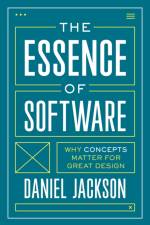
A revolutionary concept-based approach to thinking about, designing, and interacting with softwareAs our dependence on technology increases, the design of software matters more than ever before. Why then is so much software flawed? Why hasn't there been a systematic and scalable way to create software that is easy to use, robust, and secure?Examining these issues in depth, The Essence of Software introduces a theory of software design that gives new answers to old questions. Daniel Jackson explains that a software system should be viewed as a collection of interacting concepts, breaking the functionality into manageable parts and providing a new framework for thinking about design. Through this radical and original perspective, Jackson lays out a practical and coherent path, accessible to anyone-from strategist and marketer to UX designer, architect, or programmer-for making software that is empowering, dependable, and a delight to use.Jackson explores every aspect of concepts-what they are and aren't, how to identify them, how to define them, and more-and offers prescriptive principles and practical tips that can be applied cost-effectively in a wide range of domains. He applies these ideas to contemporary software designs, drawing examples from leading software manufacturers such as Adobe, Apple, Dropbox, Facebook, Google, Microsoft, Twitter, and others. Jackson shows how concepts let designers preserve and reuse design knowledge, rather than starting from scratch in every project.An argument against the status quo and a guide to improvement for both working designers and novices to the field, The Essence of Software brings a fresh approach to software and its creation.
"e;A perfect blend of cutting-edge science and compelling storytelling."e;-Bill BrysonA revolutionary new vision of human biology and the scientific breakthroughs that will transform our livesImagine knowing years in advance whether you are likely to get cancer or having a personalized understanding of your individual genes, organs, and cells. Imagine being able to monitor your body's well-being, or have a diet tailored to your microbiome. The Secret Body reveals how these and other stunning breakthroughs and technologies are transforming our understanding of how the human body works, what it is capable of, how to protect it from disease, and how we might manipulate it in the future.Taking readers to the cutting edge of research, Daniel Davis shows how radical new possibilities are becoming realities thanks to the visionary efforts of scientists who are revealing the invisible and secret universe within each of us. Focusing on six important frontiers, Davis describes what we are learning about cells, the development of the fetus, the body's immune system, the brain, the microbiome, and the genome-areas of human biology that are usually understood in isolation. Bringing them together here for the first time, Davis offers a new vision of the human body as a biological wonder of dizzying complexity and possibility.Written by an award-winning scientist at the forefront of this adventure, The Secret Body is a gripping drama of discovery and a landmark account of the dawning revolution in human health.
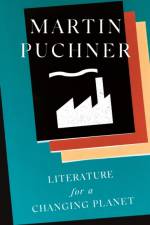
Why we must learn to tell new stories about our relationship with the earth if we are to avoid climate catastropheReading literature in a time of climate emergency can sometimes feel a bit like fiddling while Rome burns. Yet, at this turning point for the planet, scientists, policymakers, and activists have woken up to the power of stories in the fight against global warming. In Literature for a Changing Planet, Martin Puchner ranges across four thousand years of world literature to draw vital lessons about how we put ourselves on the path of climate change-and how we might change paths before it's too late.From the Epic of Gilgamesh and the West African Epic of Sunjata to the Communist Manifesto, Puchner reveals world literature in a new light-as an archive of environmental exploitation and a product of a way of life responsible for climate change. Literature depends on millennia of intensive agriculture, urbanization, and resource extraction, from the clay of ancient tablets to the silicon of e-readers. Yet literature also offers powerful ways to change attitudes toward the environment. Puchner uncovers the ecological thinking behind the idea of world literature since the early nineteenth century, proposes a new way of reading in a warming world, shows how literature can help us recognize our shared humanity, and discusses the possible futures of storytelling.If we are to avoid environmental disaster, we must learn to tell the story of humans as a species responsible for global warming. Filled with important insights about the fundamental relationship between storytelling and the environment, Literature for a Changing Planet is a clarion call for readers and writers who care about the fate of life on the planet.
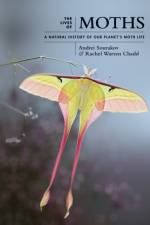
A richly illustrated look at the natural history of mothsMoths are among the most underappreciated insects on the planet, yet they make up the majority of some 180,000 known species of Lepidoptera. Filled with striking images, The Lives of Moths looks at the remarkable world of these amazing and beautiful creatures.While butterflies may get more press than moths, Andrei Sourakov and Rachel Warren Chadd reveal that the lopsided attention is unjust. Moths evolved long before butterflies, and their importance cannot be overestimated. From the tiniest leaf miners to exotic hawk moths that are two hundred to three hundred times larger, these creatures are often crucial pollinators of flowers, including many that bloom at night or in twilight. The authors show that moths and their larvae are the main food source for thousands of animal species, and interact with other insect, plant, and vertebrate communities in ecosystems around the world, from tropical forests and alpine meadows to deserts and wetlands. The authors also explore such topics as evolution, life cycles, methods of communication, and links to humans.A feast of remarkable facts and details, The Lives of Moths will appeal to insect lovers everywhere.
A modern approach to classical electromagnetismElectromagnetism is one of the pillars of modern physics. Robert Wald provides graduate students with a clear, concise, and mathematically precise introduction to the subject, covering all the core topics while bringing the teaching of electromagnetism up to date with our modern understanding of the subject. Electromagnetism is usually taught in a quasi-historical fashion, starting from concepts formulated in the eighteenth and nineteenth centuries, but this tends to promote outdated ways of thinking about the theory. Wald begins with Maxwell's equations-the foundation of electromagnetism-together with the formulas for the energy density, momentum density, and stress tensor of the electromagnetic field. He then proceeds through all the major topics in classical electromagnetism, such as electrostatics, dielectrics, magnetostatics, electrodynamics and radiation, diffraction, and special relativity. The last two chapters discuss electromagnetism as a gauge theory and the notion of a point charge-topics not normally treated in electromagnetism texts.Completely rethinks how to teach electromagnetism to first-year graduate studentsPresents electromagnetism from a modern, mathematically precise perspective, formulating key conceptual ideas and results clearly and conciselyWritten by a world-class physicist and proven in the classroomCovers all the subjects found in standard electromagnetism textbooks as well as additional topics such as the derivation of the initial value formulation for Maxwell's equationsAlso ideal as a supplementary text or for self-study
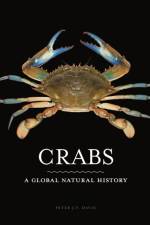
A richly illustrated natural history of the world's crabs that examines their diversity, ecology, anatomy, behavior, and moreThis lavishly illustrated book offers a remarkable look at the world's crabs. More than 7,000 crab species, in 100 different families, are known today. Their unique physiology and complex behaviors have made them one of the most diverse and adaptable of all animal groups. They can thrive in the darkness of abyssal seas, on the edges of scalding hot volcanic hydrothermal vents, on sunlit coral reefs, on wave-washed rocky shores, and in tropical rain forests at the tops of mountains. They even persist in some of the harshest desert conditions. Playing a vital role in marine and coastal ecology, crabs have been identified as keystone species in habitats such as coral reefs and coastal tropical swamps.Crabs comprises five chapters: evolutionary pathways; anatomy and physiology; ecology; reproduction, cognition, and behavior; and exploitation and conservation. Individual chapters include a variety of subtopics, each illustrated by exceptional images, and followed by numerous double full-page species' profiles. Each profile has been chosen to emphasize remarkable and intriguing aspects of the life of these fascinating creatures. Some species may be familiar, but many are beyond anything you have probably seen before and will stretch your understanding of what a crab is.Written by a world authority, Crabs offers an accessible overview of these fascinating crustaceans.More than 190 spectacular color photographsAccessible and well-organized chaptersFull profiles on 42 iconic species from across the world
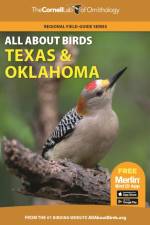
The perfect guide to the birds of Texas and Oklahoma, from the #1 birding website AllAboutBirds.orgThe All About Birds Regional Field-Guide Series brings birding enthusiasts the best information from the renowned Cornell Lab of Ornithology's website, AllAboutBirds.org, used by more than 17 million people each year. These definitive books provide the most up-to-date resources and expert coverage on bird species throughout North America.This dynamic guide is the perfect companion for anyone interested in the birds of Texas and Oklahoma. The guide features fascinating details about the birds around you, useful bird ID tips, and handy bird-watching information. It presents full accounts of the 238 species most commonly seen in these two states; beautiful photographs of male, female, and immature birds, as well as morphs, and breeding and nonbreeding plumage (so you can ID birds all year long); current range maps; and so much more. The Texas and Oklahoma edition of All About Birds is easy to use and easy to share.Descriptions of 238 bird species, including four photos for each bird chosen specifically for better ID and sourced from the Macaulay Library (a collection of bird photos from citizen scientists)Quick and easy index with illustrations on cover flaps, with complete index at the backInformation on Cornell Lab citizen-science programs and how to participateBonus content includes identification best practices and tips on photography, birdscaping, food and feeding, and moreFree MERLIN Bird ID app (downloaded more than 5 million times) for quick ID in the wild using photos and birdsong
The perfect guide to the birds of California, from the #1 birding website AllAboutBirds.orgThe All About Birds Regional Field-Guide Series brings birding enthusiasts the best information from the renowned Cornell Lab of Ornithology's website, AllAboutBirds.org, used by more than 17 million people each year. These definitive books provide the most up-to-date resources and expert coverage on bird species throughout North America.This dynamic guide is the perfect companion for anyone interested in the birds of California. The guide features fascinating details about the birds around you, useful bird ID tips, and handy bird-watching information. It presents full accounts of 218 species commonly seen in this popular state; beautiful photographs of male, female, and immature birds, as well as morphs, and breeding and nonbreeding plumage (so you can ID birds all year long); current range maps; and so much more. The California edition of All About Birds is easy to use and easy to share.Descriptions of 218 bird species, including four photos for each bird chosen specifically for better ID and sourced from the Macaulay Library (a collection of bird photos from citizen scientists)Quick and easy index with illustrations on cover flaps, with complete index at the backInformation on Cornell Lab citizen-science programs and how to participateBonus content includes identification best practices and tips on bird photography, birdscaping, food and feeding, and moreFree MERLIN Bird ID app (downloaded more than 5 million times) for quick ID in the wild using photos and birdsong
The perfect guide to the birds of the southwestern United States, from the #1 birding website AllAboutBirds.orgThe All About Birds Regional Field-Guide Series brings birding enthusiasts the best information from the renowned Cornell Lab of Ornithology's website, AllAboutBirds.org, used by more than 17 million people each year. These definitive books provide the most up-to-date resources and expert coverage on bird species throughout North America.This dynamic guide is the perfect companion for anyone interested in the birds of the southwestern United States. The guide offers fascinating details about the birds around you, useful bird ID tips, and handy bird-watching information. It presents full accounts of the 203 species most commonly seen in the Southwest; beautiful photographs of male, female, and immature birds, as well as morphs, and breeding and nonbreeding plumage (so you can ID birds all year long); current range maps; and so much more. The southwestern edition of All About Birds is easy to use and easy to share.This volume features the following states: Arizona, Colorado, New Mexico, Nevada, and Utah.Descriptions of 203 bird species, including four photos for each bird chosen specifically for better ID and sourced from the Macaulay Library (a collection of bird photos from citizen scientists)Quick and easy index with illustrations on cover flaps, with complete index at the backInformation on Cornell Lab citizen-science programs and how to participateBonus content includes identification best practices and tips on photography, birdscaping, food and feeding, and moreFree MERLIN Bird ID app (downloaded more than 5 million times) for quick ID in the wild using photos and birdsong
Abonner på vårt nyhetsbrev og få rabatter og inspirasjon til din neste leseopplevelse.
Ved å abonnere godtar du vår personvernerklæring.