

Gjør som tusenvis av andre bokelskere
Abonner på vårt nyhetsbrev og få rabatter og inspirasjon til din neste leseopplevelse.
Ved å abonnere godtar du vår personvernerklæring.Du kan når som helst melde deg av våre nyhetsbrev.

Opens on Christmas Eve, 1920, in the waning days of the Wilson administration. The end of the Wilson presidency evokes an outpouring of letters to Wilson and editorials in leading newspapers. As Wilson's health improves, he forms a law partnership with his former Secretary of State, Bainbridge Colby, and privately seeks political influence.
Woodrow Wilson cannot remain silent on the single great issue of the campaign - American membership in the League of Nations. Not many people heed Wilson's appeals, however, and on November 2, the voters seemingly repudiate Wilson and all he stands for in a landslide majority for Harding and Coolidge.
Begins with the controversy over ratification of the Versailles Treaty as it enters its climactic stage. Wilson refuses the advice of supporters who beg him to accept Republican reservations in order to put the Treaty through the Senate, and he puts heavy pressure on those Democratic senators who want to consent to reservations.
Woodrow Wilson is severely disabled from the effects of his massive stroke of October 2, 1919, and is unable to deal with a nationwide coal strike and a crisis with Mexico. Slowly recovering, he is able to prevent Democratic senators from voting for approval of a version of the Versailles Treaty that contains reservations.
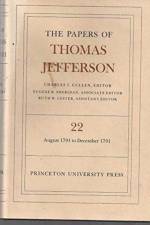
Brings Jefferson into retirement after his tenure as Secretary of State and returns him to private life at Monticello. He professes his desire to be free of public responsibilities and live the life of a farmer, spending his time tending to his estates. This volume also covers his friends, especially James Madison, with whom he exchanges letters.
Aims to bring to a close Jefferson's increasingly stormy tenure as Secretary of State, documenting, among many things, his epochal duel with Treasury Secretary Alexander Hamilton over the conduct of American foreign policy.
Discusses the dramatic escalation in the conflict between Thomas Jefferson and Alexander Hamilton to determine the future course of the new American nation.
Describes Thomas Jefferson grappling with problems arising from the radicalization of the French Revolution in Europe and the polarization of domestic politics in the US. The overthrow of the French monarchy leads the Secretary of State to suspend debt payments and to formulate a diplomatic recognition policy that will guide American diplomacy.
Opens with Wilson's tour of the Middle West and West to generate popular support for the League of Nations and to force the Senate to consent to the ratification of the Versailles Treaty without any significant reservations to the League Covenant. The nation's state of affairs is parlous as the volume ends.
Begins with Woodrow Wilson facing domestic and international problems nearly as complex and urgent as those he had faced in Paris a month before. His main task is to assure the Senate's approval of the Treaty of Versailles, but his abilities are severely compromised by what was almost certainly a "small" stroke on July 19.
Beginning with Wilson's tour of Belgium, this title then moves to the last days of the peace conference. A great wave of relief sweeps over council chambers in Paris when a new German government sends word that it will accept the peace treaty unconditionally: restoration of peace occurs with the signing of the treaty.
Shows the Big Four in the midst of the gravest crisis of the peace conference set off by the British cabinet's demand for drastic softening of the terms of the peace treaty to be concluded with Germany.
Talks about the interchange between the German government and the Council of Four over all aspects of the preliminary treaty of peace, but particularly over the Saar Basin, responsibility for the war, the fate of former German territory awarded to Poland, and German membership in the League of Nations and the International Labour Organization.
Issuing an appeal to the Italian people for a fair and just settlement of the Adriatic problem, the author accepts a compromise that gives only Germany's former economic rights in Shantung to the Japanese and requires of them a promise to return Shantung to the full political control of China.
Presents a collection which includes the important letters, speeches, interviews, press conferences, and public papers on Woodrow Wilson. This volumes also features materials essential to understanding Wilson's personality, his intellectual, religious, and political development, and his careers as educator, writer, orator, and statesman.
Presents a collection which includes the important letters, speeches, interviews, press conferences, and public papers on Woodrow Wilson. This volumes also features materials essential to understanding Wilson's personality, his intellectual, religious, and political development, and his careers as educator, writer, orator, and statesman.
Covers the controversy that erupts over the disposition of the Rhineland and demands by France to annex the Saar Basin.
Deals with an unusually active, dramatic period during Thomas Jefferson's tenure as Secretary of State.
Includes the important letters, speeches, interviews, press conferences, and public papers on Woodrow Wilson. This collection contains materials to understand Wilson's personality, his intellectual, religious, and political development, and his careers as educator, writer, orator, and statesman. It also reveals the era in which he lived.
Includes the important letters, speeches, interviews, press conferences, and public papers on Woodrow Wilson. This collection contains materials to understand Wilson's personality, his intellectual, religious, and political development, and his careers as educator, writer, orator, and statesman. It also reveals the era in which he lived.
Begins on November 9, 1918, the eve of the Armistice between the Allied and Associated Powers and the principal Central Powers, Germany and Austria-Hungary. This book ends on January 11, 1919, before the first plenary session of the Paris Peace Conference. It also covers the interval when Wilson is preoccupied with preparations for the conference.
Includes the important letters, speeches, interviews, press conferences, and public papers on Woodrow Wilson. This collection contains materials to understand Wilson's personality, his intellectual, religious, and political development, and his careers as educator, writer, orator, and statesman. It also reveals the era in which he lived.
Although previous Presidents had maintained contact with reporters, Woodrow Wilson was the first to conduct regular press conferences. This book contains the transcripts of these sessions, which reveal the range of Wilson's day-to-day concerns and his stance in what might be termed intellectual combat.
Includes the important letters, speeches, interviews, press conferences, and public papers on Woodrow Wilson. This collection contains materials to understand Wilson's personality, his intellectual, religious, and political development, and his careers as educator, writer, orator, and statesman. It also reveals the era in which he lived.
Includes the important letters, speeches, interviews, press conferences, and public papers on Woodrow Wilson. This collection contains materials to understand Wilson's personality, his intellectual, religious, and political development, and his careers as educator, writer, orator, and statesman. It also reveals the era in which he lived.
Covers the nine weeks that are a transitional period in Wilson's conduct of the war and sees the emergence of the War Industries Board, the so-called War Cabinet, and the National War Labor Board.
Tells how Wilson and his administration find themselves in a 'winter crisis', set off by the Fuel Administrator's limitations on use of coal by manufacturing and business concerns. This book shows how the critics, led by Senator George E Chamberlain, demand the creation of a super war cabinet to take control of the war effort from Wilson.
Includes the important letters, speeches, interviews, press conferences, and public papers on Woodrow Wilson. This collection contains materials to understand Wilson's personality, his intellectual, religious, and political development, and his careers as educator, writer, orator, and statesman. It also reveals the era in which he lived.
Tells how the combined German and Austro-Hangarian armies rout the Italian army at Caporetto and threaten to knock Italy out of the war. This book also covers the Bolsheviks seize of power in Petrograd, and tells how Russia's withdrawal from the war seems inevitable.
Abonner på vårt nyhetsbrev og få rabatter og inspirasjon til din neste leseopplevelse.
Ved å abonnere godtar du vår personvernerklæring.