


















Gjør som tusenvis av andre bokelskere
Abonner på vårt nyhetsbrev og få rabatter og inspirasjon til din neste leseopplevelse.
Ved å abonnere godtar du vår personvernerklæring.Du kan når som helst melde deg av våre nyhetsbrev.

Professor Baker is concerned primarily with Shelley's development ns a philosophical and psychological poet, and it is precisely in this that the great achievement of the book lies Originally published in 1966. The Princeton Legacy Library uses the latest print-on-demand technology to again make available previously out-of-print books from the di
The specific social and historical role of the immigrant is considered. Originally published in 1966. The Princeton Legacy Library uses the latest print-on-demand technology to again make available previously out-of-print books from the distinguished backlist of Princeton University Press. These editions preserve the original texts of these impor
These twelve essays, all in English, include studies on Shakespeare, Schiller, Goethe, Chamisso, Hauptmann, Mann, and Brach. The selection was made by the author himself, an eminent American Germanist recently retired from Yale University. Penetrating and precise, each essay achieves what he has attempted to make it, "an adventure in empathy, in cr
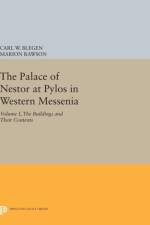
Homer's King Nestor of "sandy Pylas" passes from legend into history in this first volume of the report of excavations on a hill called Englianos in Messenia, conducted by the Archaeological Expedition of the University of Cincinnati. The palace with its contents and the surrounding lower town indicate that this was an administrative center and the
The years between 1900 and 1915 were a crucial period in Wallace Stevens' poetic career. But until Robert Buttel was given access to 30 manuscript poems written during this time, these years constituted the largest gap in our knowledge of Stevens' artistic development. These poems, as well as those printed in the Harvard Advocate, are presented in
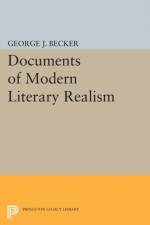
Using selections by American, British, French, German, Russian, Scandinavian, Spanish, Portuguese, and South American critics and authors, Professor Becker illustrates how realism arose as a reaction to romanticism, and how the practitioners of realism developed conflicting ideas about the means they should use and the ends toward which they should
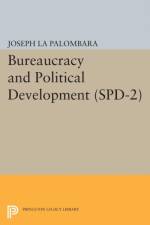
What is the role of the public bureaucracy in social, economic, and political development? What are the alternatives of development for newly emerging nation-states? How does a bureaucracy satisfy or inhibit the requisites of democratic development? Twelve outstanding scholars--Joseph LaPalombara, Fritz Morstein Marx, S. N. Eisenstadt, Fred W. Rigg
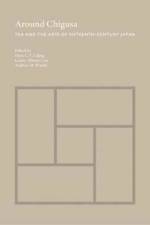
Contributors compare and analyze the modernization experiences of Japan and Turkey: John Whitney Hall, Halil Inalcik, Robert A. Scalapino, Roderic H. Davison, William W. Lockwood, Peter F. Sugar, R.P. Dore, Frederick W. Frey, Shuichi Kato, Kemal H. Karpat, Masamichi Inoki, Richard L. Chambers, Roger P. Hackett, Dankwart A. Rustow, Nobutaka Ike, and
Perspectives on Schoenberg and Stravinsky is an analytical and historical study of the twentieth century's most influential figures, by Milton Babbitt, Arthur Berger, Edward T. Cone, Robert Craft, Claudio Spies, and others; with new bibliographic and discographic studies prepared especially for this revised edition. Originally published in 1968.
The results of the process of modernization which started in Japan in the 19th century and continues today are remarkable in history. This volume contains essays by leading scholars on Japan, including two important studies on the impact of modernization on the life of the country. It is the first in a series of five volumes that stems from the Ass
This is the first volume in a large-scale collaborative research project intended to focus the attention of international lawyers and social scientists on the near future of the international legal order. Sponsored by Princeton University with support from the Ford Foundation, the project seeks to stimulate research and provide an intellectual focu
"There is no comparable book in English. The translation looks quite fine! This is quite original work by one of the most prominent scholars of the Caucasus in this hemisphere, one who is also most knowledgeable in Indo-European mythology and is an accomplished linguist."--Edgar C. Polomé, author of Indo-European Religion after Dumeziland Language, Society, and Paleoculture"Reminiscent of the Grimm fairytales and the Icelandic Eddas, these lively tales abound with giants and witches and dwarves and mountain-sized monsters born of rock, ice, and fire. This is a major new resource for students in mythology, linguistics, and folklore, for which John Colarusso provides a sober and expert commentary as guide."--Elizabeth Wayland Barber, author of The Mummies of Urumchi"This book will introduce a wide readership to a unique and ancient relic of human lore still tenaciously preserved in the North Caucasus--a fabulous world of gods and goddesses, demigods and antigods, monsters and ogres, giants and lilliputians, witches and warlocks, Caucasian Medusas and tree-ladies. Further, it is timely in that the Northwest Caucasians are stirring from a long slumber and are grappling to reforge their identity and find their place in the comity of nations. Professor Colarusso has rendered this culture a great service, enriching world culture in the process."--Amjad Jaimoukha, author of The Circassians: A Handbook"The translations offered by Colarusso include fascinating, strange, and sometimes grotesque mythic tales that show amazing parallels with Classical and other Indo-European stories. The characters are enormously interesting, especially the figure of Satanya, a powerful female heroine/goddess, which will have an instant appeal to those, scholars and general readers alike, now discovering Goddess myths. As pure narratives, these stories, with their tales-within-tales, giants, stolen brides, and wise elders, also command attention."--Richard P. Martin, Stanford University"Reading this book was an exciting intellectual experience. These tales are extremely rich and thought-provoking. Doubtless many other readers will respond just as enthusiastically as I have, and recognize the importance of the Nart corpus--and Colarusso's commnentary on it--for their own research. This represents the first compendium in any language, to my knowledge, of Nart sagas from all of the Northwest-Caucasian-speaking peoples."--Kevin Tuite, Université de Montréal
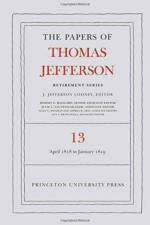
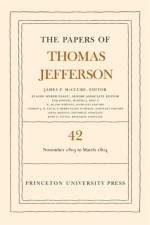
This volume''s 598 documents span 22 April 1818 to 31 January 1819. Jefferson spends months preparing for a meeting to choose the site of the state university. He drafts the Rockfish Gap Report recommending the location of the University of Virginia at Charlottesville as well as legislation confirming this decision. Jefferson travels to Warm Springs to cure his rheumatism but instead contracts a painful infection on his buttocks. His enforced absence from Poplar Forest leads to detailed correspondence with plantation manager Joel Yancey. A work that Jefferson helped translate, Destutt de TracyΓÇÖs Treatise on Political Economy, is finally published. Salma Hale visits Monticello and describes JeffersonΓÇÖs views on food, wine, and religion. In acknowledging an oration by Mordecai M. Noah, Jefferson remarks that the suffering of members of the Jewish faith "has furnished a remarkable proof of the universal spirit of religious intolerance." He receives long discussions of occult science and the nature of light by Robert Miller and Gabriel Crane. Abigail Adams dies, and Jefferson assures John Adams that their own demise will result in ΓÇ£an ecstatic meeting with the friends we have loved & lost and whom we shall still love and never lose again.ΓÇ¥
In this visually stunning and much anticipated book, acclaimed art historian Joseph Koerner casts the paintings of Hieronymus Bosch and Pieter Bruegel in a completely new light, revealing how the painting of everyday life was born from what seems its polar opposite: the depiction of an enemy hell-bent on destroying us.Supreme virtuoso of the bizarre, diabolic, and outlandish, Bosch embodies the phantasmagorical force of painting, while Bruegel, through his true-to-life landscapes and frank depictions of peasants, is the artistic avatar of the familiar and ordinary. But despite their differences, the works of these two artists are closely intertwined. Bruegel began his career imitating Bosch''s fantasies, and it was Bosch who launched almost the whole repertoire of later genre painting. But Bosch depicts everyday life in order to reveal it as an alluring trap set by a metaphysical enemy at war with God, whereas Bruegel shows this enemy to be nothing but a humanly fabricated mask. Attending closely to the visual cunning of these two towering masters, Koerner uncovers art historyΓÇÖs unexplored underside: the image itself as an enemy.An absorbing study of the dark paradoxes of human creativity, Bosch and Bruegel is also a timely account of how hatred can be converted into tolerance through the agency of art. It takes readers through all the major paintings, drawings, and prints of these two unforgettable artistsΓÇöincluding BoschΓÇÖs notoriously elusive Garden of Earthly Delights, which forms the core of this historical tour de force. Elegantly written and abundantly illustrated, the book is based on KoernerΓÇÖs A. W. Mellon Lectures in the Fine Arts, a series given annually at the National Gallery of Art, Washington.
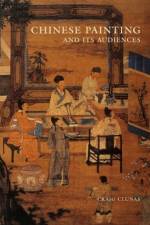
What is Chinese painting? When did it begin? And what are the different associations of this term in China and the West? In Chinese Painting and Its Audiences, which is based on the A. W. Mellon Lectures in the Fine Arts given at the National Gallery of Art, leading art historian Craig Clunas draws from a wealth of artistic masterpieces and lesser-known pictures, some of them discussed here in English for the first time, to show how Chinese painting has been understood by a range of audiences over five centuries, from the Ming Dynasty to today. Richly illustrated, Chinese Painting and Its Audiences demonstrates that viewers in China and beyond have irrevocably shaped this great artistic tradition.Arguing that audiences within China were crucially important to the evolution of Chinese painting, Clunas considers how Chinese artists have imagined the reception of their own work. By examining paintings that depict people looking at paintings, he introduces readers to ideal types of viewers: the scholar, the gentleman, the merchant, the nation, and the people. In discussing the changing audiences for Chinese art, Clunas emphasizes that the diversity and quantity of images in Chinese culture make it impossible to generalize definitively about what constitutes Chinese painting.Exploring the complex relationships between works of art and those who look at them, Chinese Painting and Its Audiences sheds new light on how the concept of Chinese painting has been formed and reformed over hundreds of years.
The Atlas of Ancient Rome provides a comprehensive archaeological survey of the city of Rome from prehistory to the early medieval period. Lavishly illustrated throughout with full-color maps, drawings, photos, and 3D reconstructions, this magnificent two-volume slipcased edition features the latest discoveries and scholarship, with new descriptions of more than 500 monuments, including the Sanctuary of Vesta, the domus Augusti, and the Mausoleum of Augustus. It is destined to become the standard reference for scholars, students, and anyone interested in the history of the city of Rome.The Atlas of Ancient Rome is monumental in scope. It examines the city''s topography and political-administrative divisions, trade and economic production, and social landscape and infrastructureΓÇöfrom residential neighborhoods and gardens to walls, roads, aqueducts, and sewers. It describes the fourteen regions of Rome and the urban history of each in unprecedented detail, and includes profiles and reconstructions of major monuments and works of art. This is the only atlas of the ancient city to incorporate the most current archaeological findings and use the latest mapping technologies.Authoritative and easy to use, The Atlas of Ancient Rome is the definitive illustrated reference book on Rome from its origins to the sixth century AD.Fully updated from the Italian edition to include the latest discoveries and scholarshipFeatures a wealth of maps, illustrations, and 3D reconstructionsCovers RomeΓÇÖs topography, economy, urban infrastructure, and moreIncludes profiles of major monuments and works of artDraws on the latest archaeological findings and mapping technologiesTwenty years in the making by a team of leading experts
"This new edition collects over 200 entries from The Princeton Encyclopedia of Poetry and Poetics: Fourth Edition (2012). Roland Greene and Stephen Cushman have selected the terms most common in literary study to create a reference ideal for graduate, MFA, and undergraduate students, and any scholar of poetry. The entries illuminate crucial critical concepts, genres, forms, movements, and poetic elements, adding up to a resource that is authoritative and broad in scope, yet convenient for use in literature and writing courses. The book includes a new introduction by Greene and Cushman"--
"The articles in this reference book, all fully updated and from the Princeton Encyclopedia of Poetry and Poetics, Fourth Edition, provide a complete survey of the poetic history and practice in over 100 major national, regional, and diasporic literatures and language traditions throughout the world"--
"The articles in this reference book, all fully updated and from the Princeton Encyclopedia of Poetry and Poetics, Fourth Edition, provide a complete survey of the poetic history and practice in over 100 major national, regional, and diasporic literatures and language traditions throughout the world"--
Abonner på vårt nyhetsbrev og få rabatter og inspirasjon til din neste leseopplevelse.
Ved å abonnere godtar du vår personvernerklæring.