











Gjør som tusenvis av andre bokelskere
Abonner på vårt nyhetsbrev og få rabatter og inspirasjon til din neste leseopplevelse.
Ved å abonnere godtar du vår personvernerklæring.Du kan når som helst melde deg av våre nyhetsbrev.

Captured centaurs and satyrs, talking animals, people who suddenly change sex, men who give birth, the temporarily insane and the permanently thick-witted, delicate sensualists, incompetent seers, a woman who remembers too much, a man who cannot laugh--these are just some of the colorful characters who feature in the unforgettable stories that ancient Greeks and Romans told in their daily lives. Together they created an incredibly rich body of popular oral stories that include, but range well beyond, mythology--from heroic legends, fairy tales, and fables to ghost stories, urban legends, and jokes. This unique anthology presents the largest collection of these tales ever assembled. Featuring nearly four hundred stories in authoritative and highly readable translations, this is the first book to offer a representative selection of the entire range of traditional classical storytelling. Set mostly in the world of humans, not gods, these stories focus on figures such as lovers, tricksters, philosophers, merchants, rulers, athletes, artists, and soldiers. The narratives range from the well-known--for example, Cupid and Psyche, Diogenes and his lantern, and the tortoise and the hare--to lesser-known tales that deserve wider attention. Entertaining and fascinating, they offer a unique window into the fantasies, anxieties, humor, and passions of the people who told them. Complete with beautiful illustrations by Glynnis Fawkes, a comprehensive introduction, notes, and more, this one-of-a-kind anthology will delight general readers as well as students of classics, fairy tales, and folklore.
Arithmetic and Geometry presents highlights of recent work in arithmetic algebraic geometry by some of the world's leading mathematicians. Together, these 2016 lectures-which were delivered in celebration of the tenth anniversary of the annual summer workshops in Alpbach, Austria-provide an introduction to high-level research on three topics: Shimu
Price theory is a powerful analytical toolkit for measuring, explaining, and predicting human behavior in the marketplace. This incisive textbook provides an essential introduction to the subject, offering a diverse array of practical methods that empower students to learn by doing.
In this stunningly illustrated volume, Fuller provides a rich and moving portrait of elephants, exploring their natural history, the legends that have grown up around them, their unique place in art and literature, and their urgent need for protection today.
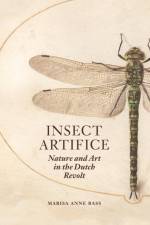
How the nature illustrations of a Renaissance polymath reflect his turbulent ageThis pathbreaking and stunningly illustrated book recovers the intersections between natural history, politics, art, and philosophy in the late sixteenth-century Low Countries. Insect Artifice explores the moment when the seismic forces of the Dutch Revolt wreaked havoc on the regionΓÇÖs creative and intellectual community, compelling its members to seek solace in intimate exchanges of art and knowledge. At its center is a neglected treasure of the late Renaissance: the Four Elements manuscripts of Joris Hoefnagel (1542ΓÇô1600), a learned Netherlandish merchant, miniaturist, and itinerant draftsman who turned to the study of nature in this era of political and spiritual upheaval. Presented here for the first time are more than eighty pages in color facsimile of HoefnagelΓÇÖs encyclopedic masterwork, which showcase both the splendor and eccentricity of its meticulously painted animals, insects, and botanical specimens.Marisa Anne Bass unfolds the circumstances that drove the creation of the Four Elements by delving into HoefnagelΓÇÖs writings and larger oeuvre, the works of his friends, and the rich world of classical learning and empirical inquiry in which he participated. Bass reveals how Hoefnagel and his colleagues engaged with natural philosophy as a means to reflect on their experiences of war and exile, and found refuge from the threats of iconoclasm and inquisition in the manuscript medium itself. This is a book about how destruction and violence can lead to cultural renewal, and about the transformation of Netherlandish identity on the eve of the Dutch Golden Age.
Authorship critically examines emergent themes in contemporary architecture by revisiting the seemingly defunct notion of design authorship. As we revel in the death of the master architect, how do we come to terms with the shifting role of creativity in architecture's cultural production? In Authorship, a cross-disciplinary group of designers and scholars explores this topic through a myriad of lenses. Subjects include the impact of digital tools and computational scripts on the conception of buildings in the age of robotics, the current climate of appropriation and sampling as a counter-form of authorship, and the rise of reauthored materials in a postdigital age. These questions are cast against alternative ideas of authorship that, in turn, reposition the history of architecture. Featured essays investigate the separation between the personal and the authored while other contributions expose meaning, symbolism, and iconography as the subjects of authority--not authorship. Ultimately, this book dismantles, realigns, and reassembles disparate architectural conditions to form new ways of thinking. Discourse is a biannual publication series that presents timely themes on and around architecture. A selective compilation of essays, interviews, roundtable discussions, featured exhibitions, photo-essays, and collateral materials--such as architectural models, sketches, and built works--highlight architectural culture, practice, and theory.
A rare look at the life and music of renowned Russian composer Nikolai Rimsky-KorsakovDuring his lifetime, Nikolai Rimsky-Korsakov (1844-1908) was a composer whose work had great influence not only in his native Russia but also internationally. While he remains well-known in Russia-where many of his fifteen operas and various orchestral pieces
"Eugene Delacroix (1798-1863) was a solitary genius who produced stormy Romantic works like The Death of Sardanapalus as well as more classically inspired paintings such as Liberty Leading the People. Over the long span of his career, he responded to the literary fascination with Orientalism, the politics of French imperialism, and the popular interest in travel, painting everything from sweeping, epic tales to intitimate interiors. In this ... illustrated book, Barthâelâemy Jobert delves into all facets of Delacroix's life and art, providing [a] ... portrait of perhaps the greatest and most elusive painter of the French Romantic movement"--Back cover.
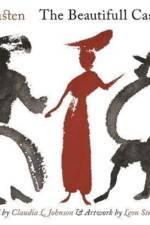
Most people think Jane Austen wrote only six novels. Fortunately for us, she wrote several others, though very short ones, while still a young girl. Austen was only twelve or thirteen when she wrote The Beautifull Cassandra, an irreverent and humorous little masterpiece. Weighing in at 465 occasionally misspelled words, it is a complete and perfect novel-in-miniature, made up of a dedication to her older sister Cassandra and twelve chapters, each consisting of a sentence or two. Narrating the slightly criminal adventures of the sixteen-year-old title character, The Beautifull Cassandra gives us Austen's most irrepressible heroine, who, after stealing a hat, leaves her mother's shop to flounce around London, eating ice cream (without paying), taking coach rides (without paying), and encountering handsome young ladies and gentlemen (without speaking)--all to return home hours later with whispered joy: "This is a day well spent." This charming edition features elegant and edgy watercolor drawings by Leon Steinmetz and is edited by leading Austen scholar Claudia L. Johnson. In her illuminating afterword, Johnson calls The Beautifull Cassandra "among the most brilliant and polished" of Austen's youthful writings--a precocious work written for the amusement of her family but already anticipating her mature irony, sense of the absurd, gift for parody, and, above all, stylistic mastery.
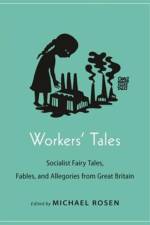
In the late 19th and early 20th centuries, unique tales inspired by traditional literary forms appeared frequently in socialist-leaning British periodicals. Acclaimed critic and author Rosen collects more than 40 of the best and most enduring examples of these stories in one beautiful volume.
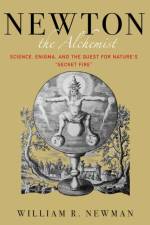
When Isaac Newton's alchemical papers surfaced at a Sotheby's auction in 1936, the quantity and seeming incoherence of the manuscripts was shocking. No longer the exemplar of Enlightenment rationality, the legendary physicist suddenly became "the last of the magicians." Newton the Alchemist unlocks the secrets of Newton's alchemical quest, providing a radically new understanding of the uncommon genius who probed nature at its deepest levels in pursuit of empirical knowledge. In this evocative and superbly written book, William Newman blends in-depth analysis of newly available texts with laboratory replications of Newton's actual experiments in alchemy. He does not justify Newton's alchemical research as part of a religious search for God in the physical world, nor does he argue that Newton studied alchemy to learn about gravitational attraction. Newman traces the evolution of Newton's alchemical ideas and practices over a span of more than three decades, showing how they proved fruitful in diverse scientific fields. A precise experimenter in the realm of "chymistry," Newton put the allusive riddles of alchemy to the test in his lab. He also used ideas drawn from the alchemical texts to great effect in his optical experimentation. In his hands, alchemy was a tool for attaining the material benefits associated with the philosopher's stone and an instrument for acquiring scientific knowledge of the most sophisticated kind.
The yearΓÇÖs finest mathematical writing from around the worldThis annual anthology brings together the yearΓÇÖs finest mathematics writing from around the world. Featuring promising new voices alongside some of the foremost names in the field, The Best Writing on Mathematics 2018 makes available to a wide audience many pieces not easily found anywhere elseΓÇöand you donΓÇÖt need to be a mathematician to enjoy them. These essays delve into the history, philosophy, teaching, and everyday aspects of math, offering surprising insights into its nature, meaning, and practiceΓÇöand taking readers behind the scenes of todayΓÇÖs hottest mathematical debates.James Grime shows how to build subtly mischievous dice for playing slightly unfair games, David Rowe investigates the many different meanings and pedigrees of mathematical models, and Michael Barany traces how our appreciation of the societal importance of mathematics has developed since World War II. In other essays, Francis Su extolls the inherent values of learning, doing, and sharing mathematics, and Margaret Wertheim takes us on a mathematical exploration of the mind and the worldΓÇöwith glimpses at science, philosophy, music, art, and even crocheting. And thereΓÇÖs much, much more.In addition to presenting the yearΓÇÖs most memorable math writing, this must-have anthology includes an introduction by the editor and a bibliography of other notable pieces on mathematics.This is a must-read for anyone interested in where math has taken usΓÇöand where it is headed.
The concluding volume of a critical English edition of the monumental Indian epicThe seventh and final book of the monumental Ramayana of Valmiki, the Uttarakanda, brings the epic saga to a close with an account of the dramatic events of King Rama's millennia-long reign. It opens with a colorful history of the demonic race of the raksasas and t
"Filled with insight and analytical wisdom, the book's appraisals sharpen understanding of current conundrums while revealing the power of well-crafted contemporary history. Readers will gain fresh perspectives about the structural conditions, political experiences, and ideological challenges that shaped the Obama presidency's policy achievements and disappointments."--Ira Katznelson, author of Fear Itself: The New Deal and the Origins of Our Time"A brilliant and timely examination of one of the most important presidencies in American history. Avoiding narrow-minded critique and uncritical celebration, this book masterfully analyzes the unheralded victories and unexamined contradictions of the Obama presidency."--Marc Lamont Hill, author of Nobody: Casualties of America's War on the Vulnerable, from Ferguson to Flint and Beyond"As the Obama presidency becomes history, historians have a unique ability to put its successes and failures in perspective. This is a rich and stimulating volume from a distinguished group of scholars."--Anne-Marie Slaughter, President & CEO, New America"This book captures the paradox of Barack Obama's presidency better than any so far: Conventional wisdom aside, Obama was a better policymaker than a politician. His accomplishments are more impressive and numerous than even many supporters perceived, yet he never fully understood the ferocity of the opposition he engendered and didn't do enough to fight the forces of reaction that led to Trump's unlikely victory. The Presidency of Barack Obama will help readers understand what Obama, sadly, did not--until it was too late."--Joan Walsh, author of What's the Matter with White People?: Finding Our Way in the Next America"Early versions of history can be tricky, but Julian Zelizer and his colleagues have provided a firm foundation for the many books analyzing the presidency of Barack Obama that will follow."--Norman Ornstein, The American Enterprise Institute"The essays in this volume are among the most nuanced, thorough, and incisive perspectives we've yet seen regarding the complex, contradictory, and besieged tenure of the first black president. Amid the veil of partisan rancor, conspiracy theory, and recrimination that has defined its aftermath, this kind of lucid analysis is even more impressive. We will be assessing the implications of the Obama presidency for many years to come--and this book will remain a crucial part of that dialogue."--Jelani Cobb, staff writer for The New Yorker "Julian Zelizer has assembled a superb collection of essays by the nation's finest historians of U.S. politics and policymaking. This excellent book immediately takes its place as the indispensable one-volume guide to what Barack Obama accomplished--and failed to accomplish--over the course of eight years."--Eric Patashnik, author of Reforms at Risk: What Happens after Major Policy Changes Are Enacted "This is a smart, timely collection of essays that will serve as an important first assessment of the Obama administration. It will be useful to scholars of modern American politics, but also to journalists and policy makers, as well as many politically minded general readers."--Joseph Crespino, author of Strom Thurmond's America
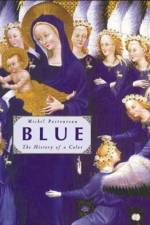
Blue has had a long and topsy-turvy history in the Western world. The ancient Greeks scorned it as ugly and barbaric, but most Americans and Europeans now cite it as their favorite color. In this fascinating history, the renowned medievalist Michel Pastoureau traces the changing meanings of blue from its rare appearance in prehistoric art to its international ubiquity today. Beautifully illustrated, Blue tells the intriguing story of our favorite color and the cultures that have hated it, loved it, and made it essential to some of our greatest works of art.
"National Portrait Gallery, Smithsonian Institution, Washington, D.C. in association with Princeton University Press, Princeton and Oxford".
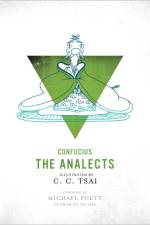
For the first time in one volume, The Analects illustrated by bestselling cartoonist C. C. TsaiC. C. Tsai is one of Asia''s most popular cartoonists, and his editions of the Chinese classics have sold more than 40 million copies in over twenty languages. This volume presents Tsai''s delightful graphic adaptation of The Analects, one of the most influential books of all time and a work that continues to inspire countless readers today.Tsai''s expressive drawings bring Confucius and his students to life as no other edition of the Analects does. See Confucius engage his students over the question of how to become a leader worth following in a society of high culture, upward mobility, and vicious warfare. Which virtues should be cultivated, what makes for a harmonious society, and what are the important things in life? Unconcerned with religious belief but a staunch advocate of tradition, Confucius emphasizes the power of society to create sensitive, respectful, and moral individuals. In many ways, Confucius speaks directly to modern concerns--about how we can value those around us, educate the next generation, and create a world in which people are motivated to do the right thing.A marvelous introduction to a timeless classic, this book also features an illuminating foreword by Michael Puett, coauthor of The Path: What Chinese Philosophers Can Teach Us about the Good Life. In addition, Confucius''s original Chinese text is artfully presented in narrow sidebars on each page, enriching the books for readers and students of Chinese without distracting from the self-contained English-language cartoons. The text is skillfully translated by Brian Bruya, who also provides an introduction.
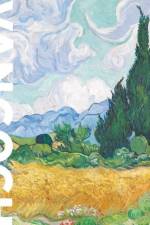
A new look at the ways van Gogh represented the seasons and the natural world throughout his careerThe changing seasons captivated Vincent van Gogh (1853–90), who saw in their unending cycle the majesty of nature and the existence of a higher force. Van Gogh and the Seasons is the first book to explore this central aspect of van Gogh''s life and work.Van Gogh often linked the seasons to rural life and labor as men and women worked the land throughout the year. From his depictions of peasants and sowers to winter gardens, riverbanks, orchards, and harvests, he painted scenes that richly evoke the sensory pleasures and deprivations particular to each season. This stunning book brings to life the locales that defined his tumultuous career, from Arles, where he experienced his most crucial period of creativity, to Auvers-sur-Oise, where he committed suicide. It looks at van Gogh''s interpretation of nature, the religious implications of the seasons in his time, and how his art was perceived against the backdrop of various symbolist factions, antimaterialist debates, and esoteric beliefs in fin de siècle Paris. The book also features revealing extracts from the artist''s correspondence and artworks from his own collection that provide essential context to the themes in his work.Breathtakingly illustrated and featuring informative essays by Sjraar van Heugten, Joan Greer, and Ted Gott, Van Gogh and the Seasons shines new light on the extraordinary creative vision of one of the world''s most beloved artists.
Early Americans claimed that they looked to "the Bible alone" for authority, but the Bible was never, ever alone. Bible Culture and Authority in the Early United States is a wide-ranging exploration of the place of the Christian Bible in America in the decades after the Revolution. Attending to both theoretical concerns about the nature of scriptures and to the precise historical circumstances of a formative period in American history, Seth Perry argues that the Bible was not a "source" of authority in early America, as is often said, but rather a site of authority: a cultural space for editors, commentators, publishers, preachers, and readers to cultivate authoritative relationships. While paying careful attention to early national bibles as material objects, Perry shows that "the Bible" is both a text and a set of relationships sustained by a universe of cultural practices and assumptions. Moreover, he demonstrates that Bible culture underwent rapid and fundamental changes in the early nineteenth century as a result of developments in technology, politics, and religious life. At the heart of the book are typical Bible readers, otherwise unknown today, and better-known figures such as Zilpha Elaw, Joseph Smith, Denmark Vesey, and Ellen White, a group that includes men and women, enslaved and free, Baptists, Catholics, Episcopalians, Methodists, Mormons, Presbyterians, and Quakers. What they shared were practices of biblical citation in writing, speech, and the performance of their daily lives. While such citation contributed to the Bible''s authority, it also meant that the meaning of the Bible constantly evolved as Americans applied it to new circumstances and identities.
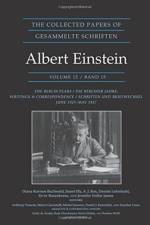
A translation of selected non-English texts included in Volume 15 is available in paperback. Since this supplementary paperback includes only select portions of Volume 15, it is not recommended for purchase without the main volume.Every document in The Collected Papers of Albert Einstein appears in the language in which it was written, and this supplementary paperback volume presents the English translations of select portions of non-English materials in Volume 15. This translation does not include notes or annotation of the documentary volume and is not intended for use without the original language documentary edition which provides the extensive editorial commentary necessary for a full historical and scientific understanding of the documents.
This volume covers one of the most thrilling two-year periods in twentieth-century physics, as matrix mechanicsΓÇödeveloped chiefly by W. Heisenberg, M. Born, and P. JordanΓÇöand wave mechanicsΓÇödeveloped by E. Schr├╢dingerΓÇösupplanted the earlier quantum theory. The almost one hundred writings by Einstein, of which a third have never been published, and the more than thirteen hundred letters show EinsteinΓÇÖs immense productivity and hectic pace of life.Einstein quickly grasps the conceptual peculiarities involved in the new quantum mechanics, such as the difference between Schr├╢dingerΓÇÖs wave function and a field defined in spacetime, or the emerging statistical interpretation of both matrix and wave mechanics. Inspired by correspondence with G. Y. Rainich, he investigates with Jakob Grommer the problem of motion in general relativity, hoping for a hint at a new avenue to unified field theory.Einstein falls victim to scientific fraud when, in a collaboration with E. Rupp, he becomes convinced that the latterΓÇÖs experiments, aimed at deciding whether excited atoms emit light instantaneously (in quanta) or in a finite time (in waves), confirm a wave-theoretic explanation.While it was known that the teenage Einstein had been romantically involved with Marie Winteler in 1895, newly discovered documents reveal that his love for Marie was rekindled in 1909ΓÇô10 while he was still married to Mileva Mari─ç.The 1925 Locarno Treaties renew EinsteinΓÇÖs optimism in European reconciliation. He backs the ΓÇ£International manifesto against compulsory military serviceΓÇ¥ and continues his participation in the League of NationsΓÇÖ International Committee on Intellectual Cooperation. He remains intensely committed to the shaping of the Hebrew University in Jerusalem, although his enthusiasm for this cause is sorely tested.
"Published on the occasion of the exhibition Gorey's Worlds, organized by the Wadsworth Atheneum Museum of Art."
Molecular Machines presents a dynamic new approach to the physics of enzymes and DNA from the perspective of materials science. Unified around the concept of molecular deformabilityΓÇöhow proteins and DNA stretch, fold, and change shapeΓÇöthis book describes the complex molecules of life from the innovative perspective of materials properties and dynamics, in contrast to structural or purely chemical approaches. It covers a wealth of topics, including nonlinear deformability of enzymes and DNA; the chemo-dynamic cycle of enzymes; supra-molecular constructions with internal stress; nano-rheology and viscoelasticity; and chemical kinetics, Brownian motion, and barrier crossing. Essential reading for researchers in materials science, engineering, and nanotechnology, the book also describes the landmark experiments that have established the materials properties and energy landscape of large biological molecules.Molecular Machines is also ideal for the classroom. It gives graduate students a working knowledge of model building in statistical mechanics, making it an essential resource for tomorrow''s experimentalists in this cutting-edge field. In addition, mathematical methods are introduced in the bio-molecular contextΓÇöfor example, DNA conformational transitions are used to illustrate the transfer matrix formalism. The result is a generalized approach to mathematical problem solving that enables students to apply their findings more broadly.Molecular Machines represents the next leap forward in nanoscience, as researchers strive to harness proteins, enzymes, and DNA as veritable machines in medicine, technology, and beyond.
Abonner på vårt nyhetsbrev og få rabatter og inspirasjon til din neste leseopplevelse.
Ved å abonnere godtar du vår personvernerklæring.