











Gjør som tusenvis av andre bokelskere
Abonner på vårt nyhetsbrev og få rabatter og inspirasjon til din neste leseopplevelse.
Ved å abonnere godtar du vår personvernerklæring.Du kan når som helst melde deg av våre nyhetsbrev.

This is the first work to set one of the great bloodless revolutions of the twentieth century in its proper historical context. John Dunlop pays particular attention to Yeltsin's role in opposing the covert resurgence of Communist interests in post-coup Russia, and faces the possibility that new institutions may not survive long enough to sink roots in a traditionally undemocratic culture.
In recent years the popular media have described Vietnamese Americans as the quintessential American immigrant success story, attributing their accomplishments to the values they learn in the traditional, stable, hierarchical confines of their family. Questioning the accuracy of such family portrayals, Nazli Kibria draws on in-depth interviews and participant observation with Vietnamese immigrants in Philadelphia to show how they construct their family lives in response to the social and economic challenges posed by migration and resettlement. To a surprising extent, the "e;traditional"e; family unit rarely exists, and its hierarchical organization has been greatly altered.
In this provocative examination of collective identity in Jordan, Linda Layne challenges long-held Western assumptions that Arabs belong to easily recognizable corporate social groups. Who is a "e;true"e; Jordanian? Who is a "e;true"e; Bedouin? These questions, according to Layne, are examples of a kind of pigeonholing that has distorted the reality of Jordanian national politics. In developing an alternate approach, she shows that the fluid social identities of Jordan emerge from an ongoing dialogue among tribespeople, members of the intelligentsia Hashemite rulers, and Western social scientists.Many commentators on social identity in the Middle East limit their studies to the village level, but Layne's goal is to discover how the identity-building processes of the locality and of the nation condition each other. She finds that the tribes creates their own cultural "e;homes"e; through a dialogue with official nationalist rhetoric and Jordanian urbanites, while King Hussein, in turn, maintains the idea of the "e;homeland"e; in many ways that are powerfully influenced by the tribespeople. The identities so formed resemble the shifting, irregular shapes of postmodernist landscapes-but Hussein and the Jordanian people are also beginning to use a classically modernist linear narrative to describe themselves. Layne maintains, however, that even with this change Jordanian identities will remain resistant to all-or-nothing descriptions.Linda L. Layne is Alma and H. Erwin Hale Teaching Professor of Humanities and Social Sciences in the Department of Science and Technology Studies at Rensselaer Polytechnic Institute.Originally published in 1994.The Princeton Legacy Library uses the latest print-on-demand technology to again make available previously out-of-print books from the distinguished backlist of Princeton University Press. These editions preserve the original texts of these important books while presenting them in durable paperback and hardcover editions. The goal of the Princeton Legacy Library is to vastly increase access to the rich scholarly heritage found in the thousands of books published by Princeton University Press since its founding in 1905.
Are we what we eat? What does food reveal about how we live and how we think of ourselves in relation to others? Why do people have a strong attachment to their own cuisine and an aversion to the foodways of others? In this engaging account of the crucial significance rice has for the Japanese, Rice as Self examines how people use the metaphor of a principal food in conceptualizing themselves in relation to other peoples. Emiko Ohnuki-Tierney traces the changing contours that the Japanese notion of the self has taken as different historical Others--whether Chinese or Westerner--have emerged, and shows how rice and rice paddies have served as the vehicle for this deliberation. Using Japan as an example, she proposes a new cross-cultural model for the interpretation of the self and other.
Through a blend of lively detail and elegant narration, James Faubion immerses us in the cosmopolitan intellectual life of Athens, a centerless city of multiplicities and fragmentations, a city on the "e;margins of Europe"e; recovering from the repressive rule of a military junta. Drawing inspiration from Athens and its cultural elite, Faubion explores the meaning of modernity, finding it not in the singular character of "e;Western civilization"e; but instead in an increasingly diverse family of practices of reform.
Eugene Skolnikoff treats the roles of science and technology across the entire range of relations among nations, including security and economic issues, environmental questions, international economic competitiveness, the spread of weapons technology, the demise of communism, the new content of dependency relations, and the demanding new problems of national and international governance. He shows how the structure and operation of the scientific and technological enterprises have interacted with international affairs to lead to the dramatic evolution of world politics experienced in this century, particularly after World War II.
"e;This is a most timely, intelligent, well-written, and absorbing essay on a central and painful social and political problem of out time."e;--Sir Isaiah Berlin "e;The major achievement of this remarkable book is a critical theory of nationalism, worked through historical and contemporary examples, explaining the value of national commitments and defining their moral limits. Tamir explores a set of problems that philosophers have been notably reluctant to take on, and leaves us all in her debt."e;--Michael Walzer In this provocative work, Yael Tamir urges liberals not to surrender the concept of nationalism to conservative, chauvinist, or racist ideologies. In her view, liberalism, with its respect for personal autonomy, reflection, and choice, and nationalism, with its emphasis on belonging, loyalty, and solidarity are not irreconcilable. Here she offers a new theory, "e;liberal nationalism,"e; which allows each set of values to accommodate the other. Tamir sees nationalism as an affirmation of communal and cultural memberships and as a quest for recognition and self-respect. Persuasively she argues that national groups can enjoy these benefits through political arrangements other than the nation-state. While acknowledging that nationalism places members of national minorities at a disadvantage, the author offers guidelines for alleviating the problems involved using examples from currents conflicts in the Middle East and in Eastern Europe. Liberal Nationalismis an impressive attempt to tie together a wide range of issues often kept apart: personal autonomy, cultural membership, political obligations, particularity versus impartiality in moral duties, and global justice. Drawing on material from disparate fields--including political philosophy, ethics, law, and sociology--Tamir brings out important and previously unnoticed interconnections between them, offering a new perspective on the influence of nationalism on modern political philosophy.
Relations between Jews and non-Jews in the Hellenistic-Roman period were marked by suspicion and hate, maintain most studies of that topic. But if such conjectures are true, asks Louis Feldman, how did Jews succeed in winning so many adherents, whether full-fledged proselytes or "e;sympathizers"e; who adopted one or more Jewish practices? Systematically evaluating attitudes toward Jews from the time of Alexander the Great to the fifth century A.D., Feldman finds that Judaism elicited strongly positive and not merely unfavorable responses from the non-Jewish population. Jews were a vigorous presence in the ancient world, and Judaism was strengthened substantially by the development of the Talmud. Although Jews in the Diaspora were deeply Hellenized, those who remained in Israel were able to resist the cultural inroads of Hellenism and even to initiate intellectual counterattacks. Feldman draws on a wide variety of material, from Philo, Josephus, and other Graeco-Jewish writers through the Apocrypha, the Pseudepigrapha, the Church Councils, Church Fathers, and imperial decrees to Talmudic and Midrashic writings and inscriptions and papyri. What emerges is a rich description of a long era to which conceptions of Jewish history as uninterrupted weakness and suffering do not apply.
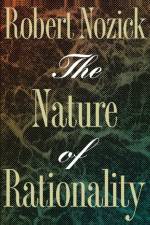
Repeatedly and successfully, the celebrated Harvard philosopher Robert Nozick has reached out to a broad audience beyond the confines of his discipline, addressing ethical and social problems that matter to every thoughtful person. Here Nozick continues his search for the connections between philosophy and "e;ordinary"e; experience. In the lively and accessible style that his readers have come to expect, he offers a bold theory of rationality, the one characteristic deemed to fix humanity's "e;specialness."e; What are principles for? asks Nozick. We could act simply on whim, or maximize our self-interest and recommend that others do the same. As Nozick explores rationality of decision and rationality of belief, he shows how principles actually function in our day-to-day thinking and in our efforts to live peacefully and productively with each other.Throughout, the book combines daring speculations with detailed investigations to portray the nature and status of rationality and the essential role that imagination plays in this singular human aptitude.
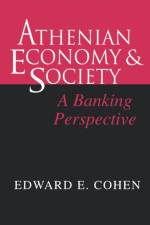
In this ground-breaking analysis of the world's first private banks, Edward Cohen convincingly demonstrates the existence and functioning of a market economy in ancient Athens while revising our understanding of the society itself. Challenging the "e;primitivistic"e; view, in which bankers are merely pawnbrokers and money-changers, Cohen reveals that fourth-century Athenian bankers pursued sophisticated transactions. These dealings--although technologically far removed from modern procedures--were in financial essence identical with the lending and deposit-taking that separate true "e;banks"e; from other businesses. He further explores how the Athenian banks facilitated tax and creditor avoidance among the wealthy, and how women and slaves played important roles in these family businesses--thereby gaining legal rights entirely unexpected in a society supposedly dominated by an elite of male citizens. Special emphasis is placed on the reflection of Athenian cognitive patterns in financial practices. Cohen shows how transactions were affected by the complementary opposites embedded in the very structure of Athenian language and thought. In turn, his analysis offers great insight into daily Athenian reality and cultural organization.
Accepting Dante's prophetic truth claims on their own terms, Teodolinda Barolini proposes a "e;detheologized"e; reading as a global new approach to the Divine Comedy. Not aimed at excising theological concerns from Dante, this approach instead attempts to break out of the hermeneutic guidelines that Dante structured into his poem and that have resulted in theologized readings whose outcomes have been overdetermined by the poet. By detheologizing, the reader can emerge from this poet's hall of mirrors and discover the narrative techniques that enabled Dante to forge a true fiction. Foregrounding the formal exigencies that Dante masked as ideology, Barolini moves from the problems of beginning to those of closure, focusing always on the narrative journey. Her investigation--which treats such topics as the visionary and the poet, the One and the many, narrative and time--reveals some of the transgressive paths trodden by a master of mimesis, some of the ways in which Dante's poetic adventuring is indeed, according to his own lights, Ulyssean.
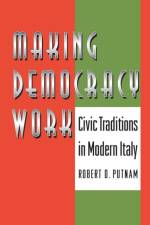
Why do some democratic governments succeed and others fail? In a book that has received attention from policymakers and civic activists in America and around the world, Robert Putnam and his collaborators offer empirical evidence for the importance of "e;civic community"e; in developing successful institutions. Their focus is on a unique experiment begun in 1970 when Italy created new governments for each of its regions. After spending two decades analyzing the efficacy of these governments in such fields as agriculture, housing, and health services, they reveal patterns of associationism, trust, and cooperation that facilitate good governance and economic prosperity.
Whether Goethe actually cried "e;More light!"e; on his deathbed, or whether Conrad Hilton checked out of this world after uttering "e;Leave the shower curtain on the inside of the tub,"e; last words, regardless of authenticity, have long captured the imagination of Western society. In this playfully serious investigation based on factual accounts, anecdotes, literary works, and films, Karl Guthke explores the cultural importance of those words spoken at the border between this world and the next. The exit lines of both famous and ordinary people embody for us a sense of drama and truthfulness and reveal much about our thoughts on living and dying. Why this interest in last words? Presenting statements from such figures as Socrates, Nathan Hale, Marie Antoinette, and Oscar Wilde ("e;I am dying as I have lived, beyond my means"e;), Guthke examines our fascination in terms of our need for closure, our desire for immortality, and our attraction to the mystique of death scenes. The author considers both authentic and invented final statements as he looks at the formation of symbols and legends and their function in our culture. Last words, handed down from generation to generation like cultural heirlooms, have a good chance of surviving in our collective memory. They are shown to epitomize a life, convey a sense of irony, or play to an audience, as in the case of the assassinated Mexican revolutionary Pancho Villa, who is said to have died imploring journalists: "e;Don't let it end like this. Tell them I said something."e;Originally published in 1992.The Princeton Legacy Library uses the latest print-on-demand technology to again make available previously out-of-print books from the distinguished backlist of Princeton University Press. These editions preserve the original texts of these important books while presenting them in durable paperback and hardcover editions. The goal of the Princeton Legacy Library is to vastly increase access to the rich scholarly heritage found in the thousands of books published by Princeton University Press since its founding in 1905.
What determines the strategies by which a state mobilizes resources for war? And does war preparation strengthen or weaken the state in relation to society? In addressing these questions, Michael Barnett develops a novel theoretical framework that traces the connection between war preparation and changes in state-society relations, and applies that framework to Egypt from 1952 to 1977 and Israel from 1948 through 1977. Confronting the Costs of War addresses major issues in international relations, comparative politics, and Middle Eastern studies.
Post-modernism offers a revolutionary approach to the study of society: in questioning the validity of modern science and the notion of objective knowledge, this movement discards history, rejects humanism, and resists any truth claims. In this comprehensive assessment of post-modernism, Pauline Rosenau traces its origins in the humanities and describes how its key concepts are today being applied to, and are restructuring, the social sciences. Serving as neither an opponent nor an apologist for the movement, she cuts through post-modernism's often incomprehensible jargon in order to offer all readers a lucid exposition of its propositions. Rosenau shows how the post-modern challenge to reason and rational organization radiates across academic fields. For example, in psychology it questions the conscious, logical, coherent subject; in public administration it encourages a retreat from central planning and from reliance on specialists; in political science it calls into question the authority of hierarchical, bureaucratic decision-making structures that function in carefully defined spheres; in anthropology it inspires the protection of local, primitive cultures from First World attempts to reorganize them. In all of the social sciences, she argues, post-modernism repudiates representative democracy and plays havoc with the very meaning of "e;left-wing"e; and "e;right-wing."e; Rosenau also highlights how post-modernism has inspired a new generation of social movements, ranging from New Age sensitivities to Third World fundamentalism. In weighing its strengths and weaknesses, the author examines two major tendencies within post-modernism, the largely European, skeptical form and the predominantly Anglo-North-American form, which suggests alternative political, social, and cultural projects. She draws examples from anthropology, economics, geography, history, international relations, law, planning, political science, psychology, sociology, urban studies, and women's studies, and provides a glossary of post-modern terms to assist the uninitiated reader with special meanings not found in standard dictionaries.
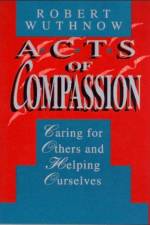
Robert Wuthnow finds that those who are most involved in acts of compassion are no less individualistic than anyone else--and that those who are the most intensely individualistic are no less involved in caring for others.
A study in obsession, Marcel Proust's A la recherche du temps perdu is seemingly a self-sufficient universe of remarkable internal consistency and yet is full of complex, gargantuan digressions. Richard Goodkin follows the dual spirit of the novel through highly suggestive readings of the work in its interactions with music, psychoanalysis, philosophy, and cinema, and such literary genres as epic, lyric poetry, and tragedy. In exploring this fascinating intertextual network, Goodkin reveals some of Proust's less obvious creative sources and considers his influence on later art forms. The artistic and intellectual entities examined in relation to Proust's novel are extremely diverse, coming from periods ranging from antiquity (Homer, Zeno of Elea) to the 1950s (Hitchcock) and belonging to the cultures of the Greek, French, German, and English-speaking worlds. In spite of this variety of form and perspective, all of these analyses share a common methodology, that of "e;digressive"e; reading. They explore Proust's novel not only in light of such famous passages as those of the madeleine and the good-night kiss, but also on the basis of seemingly small details that ultimately take us, like the novel itself, in unexpected directions.
When Chinese leaders announced in late 1978 that China would "e;open to the outside world,"e; they embarked on a strategy for attracting private foreign capital to spur economic development. At the same time, they were concerned about possible negative repercussions of this policy. Margaret Pearson examines government efforts to control the terms of foreign investment between 1979 and 1988 and, more broadly, the abilities of socialist states in general to establish the terms of their own participation in the world economy. Drawing on interviews with Chinese and foreigners involved in joint ventures, Pearson focuses on the years from 1979 through 1988, but she also comments on the fate of the "e;open"e; policy following the economic retrenchment and political upheavals of the late 1980s. "e;Since the policy of `opening' was launched in Beijing in 1979 some Chinese leaders have favoured foreign investment, while others have feared that it would carry ideas and institutions that would corrupt Chinese socialism. This study of Chinese policies toward foreign-invested enterprises (FIFs) during the 1980s broadly charts significant changes in the impact of these competing views on policy. . . . Pearson's overview and analysis provide thought-provoking perspectives. . . . Pearson furnishes excellent evidence that throughout the 1980s the pressure for reform was so great that the conservatives had to retreat repeatedly, despite their concerns about the decline of collectivist values and the Maoist dream."e;--Stanley Lubman, The China Quarterly
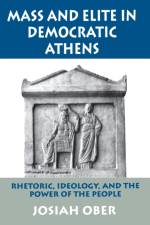
This book asks an important question often ignored by ancient historians and political scientists alike: Why did Athenian democracy work as well and for as long as it did? Josiah Ober seeks the answer by analyzing the sociology of Athenian politics and the nature of communication between elite and nonelite citizens. After a preliminary survey of the development of the Athenian "e;constitution,"e; he focuses on the role of political and legal rhetoric. As jurymen and Assemblymen, the citizen masses of Athens retained important powers, and elite Athenian politicians and litigants needed to address these large bodies of ordinary citizens in terms understandable and acceptable to the audience. This book probes the social strategies behind the rhetorical tactics employed by elite speakers. A close reading of the speeches exposes both egalitarian and elitist elements in Athenian popular ideology. Ober demonstrates that the vocabulary of public speech constituted a democratic discourse that allowed the Athenians to resolve contradictions between the ideal of political equality and the reality of social inequality. His radical reevaluation of leadership and political power in classical Athens restores key elements of the social and ideological context of the first western democracy.
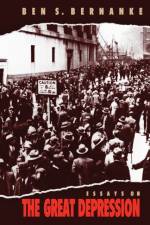
Few periods in history compare to the Great Depression. Stock market crashes, bread lines, bank runs, and wild currency speculation were worldwide phenomena--all occurring with war looming in the background. This period has provided economists with a marvelous laboratory for studying the links between economic policies and institutions and economic performance. Here, Ben Bernanke has gathered together his essays on why the Great Depression was so devastating. This broad view shows us that while the Great Depression was an unparalleled disaster, some economies pulled up faster than others, and some made an opportunity out of it. By comparing and contrasting the economic strategies and statistics of the world's nations as they struggled to survive economically, the fundamental lessons of macroeconomics stand out in bold relief against a background of immense human suffering. The essays in this volume present a uniquely coherent view of the economic causes and worldwide propagation of the depression.
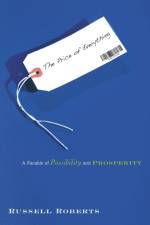
Stanford University student and Cuban American tennis prodigy Ramon Fernandez is outraged when a nearby mega-store hikes its prices the night of an earthquake. He crosses paths with provost and economics professor Ruth Lieber when he plans a campus protest against the price-gouging retailer--which is also a major donor to the university. Ruth begins a dialogue with Ramon about prices, prosperity, and innovation and their role in our daily lives. Is Ruth trying to limit the damage from Ramon's protest? Or does she have something altogether different in mind? As Ramon is thrust into the national spotlight by events beyond the Stanford campus, he learns there's more to price hikes than meets the eye, and he is forced to reconsider everything he thought he knew. What is the source of America's high standard of living? What drives entrepreneurs and innovation? What upholds the hidden order that allows us to choose our careers and pursue our passions with so little conflict? How does economic order emerge without anyone being in charge? Ruth gives Ramon and the reader a new appreciation for how our economy works and the wondrous role that the price of everything plays in everyday life. The Price of Everything is a captivating story about economic growth and the unseen forces that create and sustain economic harmony all around us.
This book is a comprehensive study of cooperation among the advanced capitalist countries. Can cooperation persist without the dominance of a single power, such as the United States after World War II? To answer this pressing question, Robert Keohane analyzes the institutions, or "e;international regimes,"e; through which cooperation has taken place in the world political economy and describes the evolution of these regimes as American hegemony has eroded. Refuting the idea that the decline of hegemony makes cooperation impossible, he views international regimes not as weak substitutes for world government but as devices for facilitating decentralized cooperation among egoistic actors. In the preface the author addresses the issue of cooperation after the end of the Soviet empire and with the renewed dominance of the United States, in security matters, as well as recent scholarship on cooperation.
The first publication of the unknown poetry of a major twentieth-century sculptorIn 1955, long before he became famous for his abstract metal sculptures, John Chamberlain lived at Black Mountain College, writing poetry alongside Robert Creeley, Robert Duncan, and Charles Olson. By the time he moved to New York City in 1956 and began to develop his unique sculptural style, Chamberlain had completed a series of poems with marginal comments by Olson and himself, but the work remained unpublished and unknown-until now. In Black Mountain Chamberlain, Julie Sylvester presents a facsimile of this fascinating typescript along with an introduction based on interviews conducted with Chamberlain in the 1980s, conversations in which he described the strong connections between the poems and his later work.At first glance, Chamberlain's delicate and quiet poems appear to be the antithesis of his bold and brash sculpture. But in the introduction Chamberlain says that in fact the way he made poems at Black Mountain influenced the way he made sculptures throughout his career: "It's actually doing things in the same way, with words or with metal. It's all in the fit."Beautifully produced, Black Mountain Chamberlain reveals a remarkable and unexpected new side of an important twentieth-century artist.Distributed for Edition Julie Sylvester
An in-depth and beautifully illustrated look at one of the most revered works of antiquity, the Ishtar Gate of ancient BabylonIn the ancient Near East, expert craftspeople were more than technicians: they numbered among those special members of society who could access the divine. While the artisans’ names are largely unknown today, their legacy remains in the form of spectacular artworks and monuments. One of the most celebrated works of antiquity—the Ishtar Gate and its affiliated Processional Way—featured a dazzling array of colorful beasts assembled from molded, baked, and glazed bricks. Such an awe-inspiring structure demanded the highest level of craft; each animal was created from dozens of bricks that interlocked like a jigsaw. Yet this display of technical and artistic skill also served a ritual purpose, since the Gate provided a divinely protected entrance to the sacred inner city of Babylon.A Wonder to Behold explores ancient Near Eastern ideas about the transformative power of materials and craftsmanship in relation to the Ishtar Gate. This beautifully illustrated catalogue accompanies an exhibition at New York University’s Institute for the Study of the Ancient World. Essays by archaeologists, art historians, curators, conservators, and text specialists examine a wide variety of artifacts from major American and European institutions.Contributors include Anastasia Amrhein, Heather Baker, Jean-François de Lapérouse, Eduardo Escobar, Anja Fügert, Sarah Graff, Helen Gries, Elizabeth Knott, Katherine Larson, Beate Pongratz-Leisten, Shiyanthi Thavapalan, and May-Sarah Zeßin.Distributed for the Institute for the Study of the Ancient World at New York UniversityExhibition ScheduleInstitute for the Study of the Ancient World, New York UniversityExhibition Dates: November 6, 2019–May 24, 2020
The legendary splendor of Genoese baroque artGenoa completed its transformation from a faded maritime power into a thriving banking center for Europe in the seventeenth century. The wealth accumulated by its leading families spurred investment in the visual arts on an enormous scale. This volume explores how artists both foreign and native created a singularly rich and extravagant expression of the baroque in works of extraordinary variety, sumptuousness, and exuberance. This art, however, has remained largely hidden behind the facades of the city''s palaces, with few works, apart from those by the school''s great expatriates, found beyond its borders. As a result, the Genoese baroque has been insufficiently considered or appreciated.Lavishly illustrated, A Superb Baroque is comprehensive, encompassing all the major media and participants. Presented are some 140 select works by the celebrated foreigners drawn to the city and its flourishing environmentΓÇöfrom Peter Paul Rubens, Anthony van Dyck, and Giulio Cesare Procaccini to Pierre Puget, Marcantonio Franceschini, and Francesco Solimena; by the major Genoese masters active for much of their careers in other settingsΓÇöBernardo Strozzi, Giovanni Benedetto Castiglione, Filippo Parodi, and Alessandro Magnasco; and above all by the brilliantly synthetic but unfamiliar masters who worked primarily in Genoa itselfΓÇöGioacchino Assereto, Valerio Castello, Domenico Piola, and Gregorio De Ferrari. Offering three levels of explorationΓÇöessays that frame and interpret, section introductions that characterize principal currents and stages, and texts that elucidate individual worksΓÇöthis volume is by far the most extensive study of the Genoese baroque in the English language.Published in association with the National Gallery of Art, Washington, DCExhibition ScheduleNational Gallery of Art, Washington, DCMay 3ΓÇôAugust 16, 2020Scuderie del Quirinale, RomeOctober 3, 2020ΓÇôJanuary 10, 2021
The definitive reference guide to all of Africa's venomous and dangerous snakes Africa is home to several hundred snake species, including some of the world's most dangerous. The Dangerous Snakes of Africa is an indispensable guide to all 137 of these perilous species, both venomous and nonvenomous, and also looks at another 70 species that can be easily mistaken for them. All species accounts include details on identification, habitat, distribution, behavior, and venom, along with information on how to treat bites, a selection of photographs, and an accurate range map. Introductory sections discuss the major snake groups, their venom characteristics, how to avoid snake bites, and first-aid advice. Comprehensive and definitive, this is an essential guide for snake lovers and herpetologists, and a useful tool for naturalists, conservationists, educators, field workers, and medical personnel throughout Africa.Features all 137 species of dangerous snakes found in AfricaLooks at venomous and nonvenomous varieties, including pythons and constrictorsIncludes details on identification, habitat, distribution, and behaviorIntroduces major snake groups, their venom characteristics, how to avoid snake bites, and first-aid advice
Jonathan Edwards (1703-1758) is widely recognized as one of the greatest philosopher-theologians America has ever produced, and recent years have seen a remarkable increase in research on his writings. To date, however, there has been no single authoritative volume that introduces and interprets the key aspects of Edwards' thought as a whole. The Princeton Companion to Jonathan Edwards provides just such a concise and comprehensive work, one that will be invaluable to students and scholars of American religion and theology as well as of literature, philosophy, and history. Comprising twenty essays by leading scholars on Edwards, the book will inform and challenge readers on subjects ranging from Edwards' understanding of the Trinity, God and the world, Christ, and salvation, as well as of history, typology, the church, and mission to Native Americans. It also includes a chronology of Edwards' life and writings that incorporates current research. Those familiar with Edwards' writings will find in these essays succinct expositions as well as bold new interpretations, and others will find an accessible, authoritative, up-to-date orientation to his multifaceted thought. The essays are by Robert E. Brown, Allen C. Guezlo, Robert W. Jenson, Wilson H. Kimnach, Janice Knight, Sang Hyun Lee, Gerald R. McDermott, Kenneth P. Minkema, Mark Noll, Richard R. Niebuhr, Amy Plantinga Pauw, John E. Smith, Stephen J. Stein, Harry S. Stout, Douglas A. Sweeney, Peter J. Thuesen, and John F. Wilson.
"In a world in which monetization seems to be gobbling up every remote corner of social life, Money Talks makes a bold case for the continuing importance not only of subjective meaning in our understanding of money, but of social relations above and beyond exchanges between rational actors. This book brings together an interdisciplinary band of uncommonly smart and influential scholars to take stock of what we know about the myriad uses and meanings of money."--Frank Dobbin, Harvard University
An indispensable survey of new developments and results in experimental economics When The Handbook of Experimental Economics first came out in 1995, the notion of economists conducting lab experiments to generate data was relatively new. Since then, the field has exploded. This second volume of the Handbook covers some of the most exciting new growth areas in experimental economics, presents the latest results and experimental methods, and identifies promising new directions for future research. Featuring contributions by leading practitioners, the Handbook describes experiments in macroeconomics, charitable giving, neuroeconomics, other-regarding preferences, market design, political economy, subject population effects, gender effects, auctions, and learning and the economics of small decisions. Contributors focus on key developments and report on experiments, highlighting the dialogue between experimenters and theorists. While most of the experiments consist of laboratory studies, the book also includes several chapters that report extensively on field experiments related to the subject area studied.Covers exciting new growth areas in experimental economicsFeatures contributions by leading expertsDescribes experiments in macroeconomics, charitable giving, neuroeconomics, market design, political economy, gender effects, auctions, and moreHighlights the dialogue by experimenters with theorists and each otherIncludes several chapters covering field experiments related to the subject area studied
"The origins of modern economic growth have been a central preoccupation of economic historians since, well, there has been modern economic growth. As this volume edited by Greif, Kiesling, and Nye makes clear, that preoccupation is very much alive, and scholarship on the subject is alive and well. For readers interested in understanding the state of the art, there is no better place to start."--Barry Eichengreen, University of California, Berkeley"Institutions, Innovation, and Industrialization provides a set of pioneering and provocative essays inspired by Joel Mokyr's vision of the integration of history and economics. This book will have an enduring impact and at the same time open up new avenues of investigation at the intersection of institutional economics and careful case-based research."--Stephen H. Haber, Stanford University"These essays are high-level pieces, based on cutting-edge research, and with a coordinated set of themes concerned with the interaction between ideas, innovation, and institutional change. This book is an important contribution to the literature on growth and innovation."--Harold James, Princeton University
Abonner på vårt nyhetsbrev og få rabatter og inspirasjon til din neste leseopplevelse.
Ved å abonnere godtar du vår personvernerklæring.