
























Gjør som tusenvis av andre bokelskere
Abonner på vårt nyhetsbrev og få rabatter og inspirasjon til din neste leseopplevelse.
Ved å abonnere godtar du vår personvernerklæring.Du kan når som helst melde deg av våre nyhetsbrev.

Among the first anthropologists to work in Eastern Europe, Katherine Verdery had built up a significant base of ethnographic and historical expertise when the major political transformations in the region began to take place. In this collection of essays dealing with the aftermath of Soviet-style socialism and the different forms that may replace it, she explores the nature of socialism in order to understand more fully its consequences. By analyzing her primary data from Romania and Transylvania and synthesizing information from other sources, Verdery lends a distinctive anthropological perspective to a variety of themes common to political and economic studies on the end of socialism: themes such as "e;civil society,"e; the creation of market economies, privatization, national and ethnic conflict, and changing gender relations. Under Verdery's examination, privatization and civil society appear not only as social processes, for example, but as symbols in political rhetoric. The classic pyramid scheme is not just a means of enrichment but a site for reconceptualizing the meaning of money and an unusual form of post-Marxist millenarianism. Land being redistributed as private property stretches and shrinks, as in the imaginings of the farmers struggling to tame it. Infused by this kind of ethnographic sensibility, the essays reject the assumption of a transition to capitalism in favor of investigating local processes in their own terms.
Mark Graber looks at the history of abortion law in action to argue that the only defensible, constitutional approach to the issue is to afford all women equal choice--abortion should remain legal or bans should be strictly enforced. Steering away from metaphysical critiques of privacy, Graber compares the philosophical, constitutional, and democratic merits of the two systems of abortion regulation witnessed in the twentieth century: pre-Roe v. Wade statutory prohibitions on abortion and Roe's ban on significant state interference with the market for safe abortion services. He demonstrates that before Roe, pro-life measures were selectively and erratically administered, thereby subverting our constitutional commitment to equal justice. Claiming that these measures would be similarly administered if reinstated, the author seeks to increase support for keeping abortion legal, even among those who have reservations about its morality. Abortion should remain legal, Graber argues, because statutory bans on abortion have a history of being enforced in ways that intentionally discriminate against poor persons and persons of color. In the years before Roe, the same law enforcement officials who routinely ignored and sometimes assisted those physicians seeking to terminate pregnancies for their private patients too often prevented competent abortionists from offering the same services to the general public. This double standard violated the fundamental human and constitutional right of equal justice under law, a right that remains a major concern of the equal protection clause of the Fourteenth Amendment.
Is all human behavior based on self-interest? Many social and biological theories would argue so, but such a perspective does not explain the many truly heroic acts committed by people willing to risk their lives to help others. In The Heart of Altruism, Kristen Renwick Monroe boldly lays the groundwork for a social theory receptive to altruism by examining the experiences described by altruists themselves: from Otto, a German businessman who rescued over a hundred Jews in Nazi Germany, to Lucille, a newspaper poetry editor, who, armed with her cane, saved a young girl who was being raped. Monroe's honest and moving interviews with these little-known heroes enable her to explore the causes of altruism and the differences between altruists and other people. By delineating an overarching perspective of humanity shared by altruists, Monroe demonstrates how social theories may begin to account for altruism and debunks the notions of scientific inevitability that stem from an overemphasis on self-interest. As Monroe has discovered, the financial and religious backgrounds of altruists vary greatly--as do their views on issues such as welfare, civil rights, and morality. Altruists do, however, share a certain way of looking at the world: where the rest of us see a stranger, altruists see a fellow human being. It is this perspective that many social theories overlook. Monroe restores altruism to a general theory of ethical political behavior. She argues that to understand what makes one person act out of concern for others and not the self, we need to ask how that individual's perspective sets the range of options he or she finds available.
As far back as we know, there have been individuals incapacitated by memories that have filled them with sadness and remorse, fright and horror, or a sense of irreparable loss. Only recently, however, have people tormented with such recollections been diagnosed as suffering from "e;post-traumatic stress disorder."e; Here Allan Young traces this malady, particularly as it is suffered by Vietnam veterans, to its beginnings in the emergence of ideas about the unconscious mind and to earlier manifestations of traumatic memory like shell shock or traumatic hysteria. In Young's view, PTSD is not a timeless or universal phenomenon newly discovered. Rather, it is a "e;harmony of illusions,"e; a cultural product gradually put together by the practices, technologies, and narratives with which it is diagnosed, studied, and treated and by the various interests, institutions, and moral arguments mobilizing these efforts. This book is part history and part ethnography, and it includes a detailed account of everyday life in the treatment of Vietnam veterans with PTSD. To illustrate his points, Young presents a number of fascinating transcripts of the group therapy and diagnostic sessions that he observed firsthand over a period of two years. Through his comments and the transcripts themselves, the reader becomes familiar with the individual hospital personnel and clients and their struggle to make sense of life after a tragic war. One observes that everyone on the unit is heavily invested in the PTSD diagnosis: boundaries between therapist and patient are as unclear as were the distinctions between victim and victimizer in the jungles of Southeast Asia.
In November 1893, Daniel Paul Schreber, recently named presiding judge of the Saxon Supreme Court, was on the verge of a psychotic breakdown and entered a Leipzig psychiatric clinic. He would spend the rest of the nineteenth century in mental institutions. Once released, he published his Memoirs of My Nervous Illness (1903), a harrowing account of real and delusional persecution, political intrigue, and states of sexual ecstasy as God's private concubine. Freud's famous case study of Schreber elevated the Memoirs into the most important psychiatric textbook of paranoia. In light of Eric Santner's analysis, Schreber's text becomes legible as a sort of "e;nerve bible"e; of fin-de-siecle preoccupations and obsessions, an archive of the very phantasms that would, after the traumas of war, revolution, and the end of empire, coalesce into the core elements of National Socialist ideology. The crucial theoretical notion that allows Santner to pass from the "e;private"e; domain of psychotic disturbances to the "e;public"e; domain of the ideological and political genesis of Nazism is the "e;crisis of investiture."e; Schreber's breakdown was precipitated by a malfunction in the rites and procedures through which an individual is endowed with a new social status: his condition became acute just as he was named to a position of ultimate symbolic authority. The Memoirs suggest that we cross the threshold of modernity into a pervasive atmosphere of crisis and uncertainty when acts of symbolic investiture no longer usefully transform the subject's self understanding. At such a juncture, the performative force of these rites of institution may assume the shape of a demonic persecutor, some "e;other"e; who threatens our borders and our treasures. Challenging other political readings of Schreber, Santner denies that Schreber's delusional system--his own private Germany--actually prefigured the totalitarian solution to this defining structural crisis of modernity. Instead, Santner shows how this tragic figure succeeded in avoiding the totalitarian temptation by way of his own series of perverse identifications, above all with women and Jews.
This book is a profoundly moving and analytically incisive attempt to shift the terms of discussion in American politics. It speaks to the intellectual and political weaknesses within the liberal tradition that have put the United States at the mercy of libertarian, authoritarian populist, nakedly racist, and traditionalist elitist versions of the right-wing; and it seeks to identify resources that can move the left away from the stunned intellectual incoherence with which it has met the death of Bolshevism. In Ira Katznelson's view, Americans are squandering a tremendous ethical and political opportunity to redefine and reorient the liberal tradition. In an opening essay and two remarkable letters addressed to Adam Michnik, who is arguably East Europe's emblematic democratic intellectual, Katznelson seeks to recover this possibility. By examining issues that once occupied Michnik's fellow dissidents in the Warsaw group known as the Crooked Circle, Katznelson brings a fresh realism to old ideals and posits a liberalism that "e;stares hard"e; at cruelty, suffering, coercion, and tyrannical abuses of state power. Like the members of Michnik's club, he recognizes that the circumference of liberalism's circle never runs smooth and that tolerance requires extremely difficult judgments. Katznelson's first letter explores how the virtues of socialism, including its moral stand on social justice, can be related to liberalism while overcoming debilitating aspects of the socialist inheritance. The second asks whether liberalism can recognize, appreciate, and manage human difference. Situated in the lineage of efforts by Richard Hofstadter, C. Wright Mills, and Lionel Trilling to "e;thicken"e; liberalism, these letters also draw on personal experience in the radical politics of the 1960s and in the dissident culture of East and Central Europe in the years immediately preceding communism's demise. Liberalism's Crooked Circle could help foster a substantive debate in the American elections of 1996 and determine the contents of that desperately needed discussion.
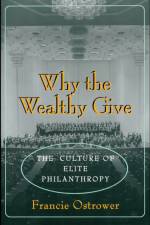
Through a series of candid personal interviews with nearly one hundred donors, Why the Wealthy Give offers an in-depth look at the world of elite philanthropy. Francie Ostrower focuses on the New York City area, with its high concentration of affluent donors, to explore both the motivations of individual donors and the significance of philanthropy for the culture and organization of elite groups. In so doing, she offers an account of why the wealthy give that also provides insight into the nature of elite culture, status, identity, and cohesion. Emphasizing the diversity of philanthropy, the book also shows how and why different types of donors support different causes. It further demonstrates how, in the face of considerable change, elite philanthropy has adapted and therefore endured. A timely discussion explores the ways in which elite donors view the respective roles of government and philanthropy. Why the Wealthy Give shows that elite philanthropy involves far more than writing a check. The wealthy take philanthropy and adapt it into an entire way of life that serves as a vehicle for the social and cultural life of their class. This is reflected in the widespread popularity of educational and cultural causes among donors. At the same time, Ostrower finds divergent patterns of giving that reflect alternative sources of donor identity, such as religion, ethnicity, and gender, and explains why certain kinds of donors are more or less likely to diverge from the prestige hierarchy of their class in their philanthropy.
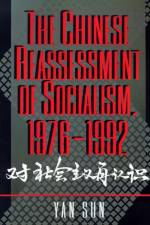
A momentous debate has been unfolding in China over the last fifteen years, only intermittently in public view, concerning the merits of socialism as a philosophy of social justice and as a program for national development. Just as Deng Xiaoping's better advertised experiment with market- based reforms has challenged Marxist-Leninist dogma on economic policy, the years since the death of Mao Zedong have seen a profound reexamination of a more basic question: to what extent are the root problems of the system due to Chinese socialism and Marxism generally? Here Yan Sun gathers a remarkable group of primary materials, drawn from an unusual range of sources, to present the most systematic and comprehensive study of post-Mao reappraisal of China's socialist theory and practice. Rejecting an assumption often made in the West, that Chinese socialist thought has little bearing on politics and policymaking, Sun takes the arguments of the post-Mao era seriously on their own terms. She identifies the major factions in the debate, reveals the interplay among official and unofficial forces, and charts the development of the debate from an initially parochial concern with problems raised by Chinese practice to a grand critique of the theory of socialism itself. She concludes with an enlightening comparison of the reassessments undertaken by Deng Xiaoping with those of Gorbachev, linking them to the divergent outcomes of reform and revolution in their respective countries.
Can foreign invaders successfully exploit industrial economies? Since control over economic resources is a key source of power, the answer affects the likelihood of aggression and how strenuously states should counter it. The resurgence of nationalism has led many policymakers and scholars to doubt that conquest still pays. But, until now, the "e;cumulativity"e; of industrial resources has never been subjected to systematic analysis. Does Conquest Pay? demonstrates that expansion can, in fact, provide rewards to aggressor nations. Peter Liberman argues that invaders can exploit industrial societies for short periods of time and can maintain control and economic performance over the long term. This is because modern societies are uniquely vulnerable to coercion and repression. Hence, by wielding a gun in one hand and offering food with the other, determined conquerors can compel collaboration and suppress resistance. Liberman's argument is supported by several historical case studies: Germany's capture of Belgium and Luxembourg during World War I and of nearly all of Europe during World War II; France's seizure of the Ruhr in 1923-24; the Japanese Empire during 1910-45; and Soviet hegemony over Eastern Europe in 1945-89. Does Conquest Pay? suggests that the international system is more war-prone than many optimists claim. Liberman's findings also contribute to debates about the stability of empires and other authoritarian regimes, the effectiveness of national resistance strategies, and the sources of rebellious collective action.
In recent years, debate on the state's economic role has too often devolved into diatribes against intervention. Peter Evans questions such simplistic views, offering a new vision of why state involvement works in some cases and produces disasters in others. To illustrate, he looks at how state agencies, local entrepreneurs, and transnational corporations shaped the emergence of computer industries in Brazil, India, and Korea during the seventies and eighties. Evans starts with the idea that states vary in the way they are organized and tied to society. In some nations, like Zaire, the state is predatory, ruthlessly extracting and providing nothing of value in return. In others, like Korea, it is developmental, promoting industrial transformation. In still others, like Brazil and India, it is in between, sometimes helping, sometimes hindering. Evans's years of comparative research on the successes and failures of state involvement in the process of industrialization have here been crafted into a persuasive and entertaining work, which demonstrates that successful state action requires an understanding of its own limits, a realistic relationship to the global economy, and the combination of coherent internal organization and close links to society that Evans called "e;embedded autonomy."e;
The ideology of the American dream--the faith that an individual can attain success and virtue through strenuous effort--is the very soul of the American nation. According to Jennifer Hochschild, we have failed to face up to what that dream requires of our society, and yet we possess no other central belief that can save the United States from chaos. In this compassionate but frightening book, Hochschild attributes our national distress to the ways in which whites and African Americans have come to view their own and each other's opportunities. By examining the hopes and fears of whites and especially of blacks of various social classes, Hochschild demonstrates that America's only unifying vision may soon vanish in the face of racial conflict and discontent. Hochschild combines survey data and vivid anecdote to clarify several paradoxes. Since the 1960s white Americans have seen African Americans as having better and better chances to achieve the dream. At the same time middle-class blacks, by now one-third of the African American population, have become increasingly frustrated personally and anxious about the progress of their race. Most poor blacks, however, cling with astonishing strength to the notion that they and their families can succeed--despite their terrible, perhaps worsening, living conditions. Meanwhile, a tiny number of the estranged poor, who have completely given up on the American dream or any other faith, threaten the social fabric of the black community and the very lives of their fellow blacks. Hochschild probes these patterns and gives them historical depth by comparing the experience of today's African Americans to that of white ethnic immigrants at the turn of the century. She concludes by claiming that America's only alternative to the social disaster of intensified racial conflict lies in the inclusiveness, optimism, discipline, and high-mindedness of the American dream at its best.
Should "e;hate speech"e; be made a criminal offense, or does the First Amendment oblige Americans to permit the use of epithets directed against a person's race, religion, ethnic origin, gender, or sexual preference? Does a campus speech code enhance or degrade democratic values? When the American flag is burned in protest, what rights of free speech are involved? In a lucid and balanced analysis of contemporary court cases dealing with these problems, as well as those of obscenity and workplace harassment, acclaimed First Amendment scholar Kent Greenawalt now addresses a broad general audience of readers interested in the most current free speech issues.
Twenty-five years ago one could list by name the tiny number of multiple personalities recorded in the history of Western medicine, but today hundreds of people receive treatment for dissociative disorders in every sizable town in North America. Clinicians, backed by a grassroots movement of patients and therapists, find child sexual abuse to be the primary cause of the illness, while critics accuse the "e;MPD"e; community of fostering false memories of childhood trauma. Here the distinguished philosopher Ian Hacking uses the MPD epidemic and its links with the contemporary concept of child abuse to scrutinize today's moral and political climate, especially our power struggles about memory and our efforts to cope with psychological injuries. What is it like to suffer from multiple personality? Most diagnosed patients are women: why does gender matter? How does defining an illness affect the behavior of those who suffer from it? And, more generally, how do systems of knowledge about kinds of people interact with the people who are known about? Answering these and similar questions, Hacking explores the development of the modern multiple personality movement. He then turns to a fascinating series of historical vignettes about an earlier wave of multiples, people who were diagnosed as new ways of thinking about memory emerged, particularly in France, toward the end of the nineteenth century. Fervently occupied with the study of hypnotism, hysteria, sleepwalking, and fugue, scientists of this period aimed to take the soul away from the religious sphere. What better way to do this than to make memory a surrogate for the soul and then subject it to empirical investigation? Made possible by these nineteenth-century developments, the current outbreak of dissociative disorders is embedded in new political settings. Rewriting the Soul concludes with a powerful analysis linking historical and contemporary material in a fresh contribution to the archaeology of knowledge. As Foucault once identified a politics that centers on the body and another that classifies and organizes the human population, Hacking has now provided a masterful description of the politics of memory : the scientizing of the soul and the wounds it can receive.
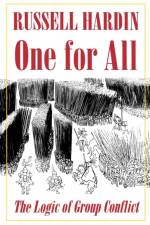
In a book that challenges the most widely held ideas of why individuals engage in collective conflict, Russell Hardin offers a timely, crucial explanation of group action in its most destructive forms. Contrary to those observers who attribute group violence to irrationality, primordial instinct, or complex psychology, Hardin uncovers a systematic exploitation of self-interest in the underpinnings of group identification and collective violence. Using examples from Mafia vendettas to ethnic violence in places such as Bosnia and Rwanda, he describes the social and economic circumstances that set this violence into motion. Hardin explains why hatred alone does not necessarily start wars but how leaders cultivate it to mobilize their people. He also reveals the thinking behind the preemptive strikes that contribute to much of the violence between groups, identifies the dangers of "e;particularist"e; communitarianism, and argues for government structures to prevent any ethnic or other group from having too much sway. Exploring conflict between groups such as Serbs and Croats, Hutu and Tutsi, Northern Irish Catholics and Protestants, Hardin vividly illustrates the danger that arises when individual and group interests merge. In these examples, groups of people have been governed by movements that managed to reflect their members' personal interests--mainly by striving for political and economic advances at the expense of other groups and by closing themselves off from society at large. The author concludes that we make a better and safer world if we design our social institutions to facilitate individual efforts to achieve personal goals than if we concentrate on the ethnic political makeup of our respective societies.
This new investigation of the Brandenburg Concertos explores musical, social, and religious implications of Bach's treatment of eighteenth-century musical hierarchies. By reference to contemporary music theory, to alternate notions of the meaning of "e;concerto,"e; and to various eighteenth-century conventions of form and instrumentation, the book argues that the Brandenburg Concertos are better understood not as an arbitrary collection of unrelated examples of "e;pure"e; instrumental music, but rather as a carefully compiled and meaningfully organized set. It shows how Bach's concertos challenge (as opposed to reflect) existing musical and social hierarchies. Careful consideration of Lutheran theology and Bach's documented understanding of it reveals, however, that his music should not be understood to call for progressive political action. One important message of Lutheranism, and, in this interpretation, of Bach's concertos, is that in the next world, the heavenly one, the hierarchies of the present world will no longer be necessary. Bach's music more likely instructs its listeners how to think about and spiritually cope with contemporary hierarchies than how to act upon them. In this sense, contrary to currently accepted views, Bach's concertos share with his extensive output of vocal music for the Lutheran liturgy an essentially religious character.
Did Freud present a scientific hypothesis about the unconscious, as he always maintained and as many of his disciples keep repeating? This question has long prompted debates concerning the legitimacy and usefulness of psychoanalysis, and it is of utmost importance to Lacanian analysts, whose main project has been to stress Freud's scientific grounding. Here Jacques Bouveresse, a noted authority on Ludwig Wittgenstein, contributes to the debate by turning to this Austrian-born philosopher and contemporary of Freud for a candid assessment of the early issues surrounding psychoanalysis. Wittgenstein, who himself had delivered a devastating critique of traditional philosophy, sympathetically pondered Freud's claim to have produced a scientific theory in proposing a new model of the human psyche. What Wittgenstein recognized--and what Bouveresse so eloquently stresses for today's reader--is that psychoanalysis does not aim to produce a change limited to the intellect but rather seeks to provoke an authentic change of human attitudes. The beauty behind the theory of the unconscious for Wittgenstein is that it breaks away from scientific, causal explanations to offer new forms of thinking and speaking, or rather, a new mythology. Offering a critical view of all the texts in which Wittgenstein mentions Freud, Bouveresse immerses us in the intellectual climate of Vienna in the early part of the twentieth century. Although we come to see why Wittgenstein did not view psychoanalysis as a science proper, we are nonetheless made to feel the philosopher's sense of wonder and respect for the cultural task Freud took on as he found new ways meaningfully to discuss human concerns. Intertwined in this story of Wittgenstein's grappling with the theory of the unconscious is the story of how he came to question the authority of science and of philosophy itself. While aiming primarily at the clarification of Wittgenstein's opinion of Freud, Bouveresse's book can be read as a challenge to the French psychoanalytic school of Lacan and as a provocative commentary on cultural authority.
In this first ethnographic study of the European Space Agency, Stacia Zabusky explores the complex processes involved in cooperation on space science missions in the contemporary context of European integration. Zabusky argues that the practice of cooperation does not depend on a homogenizing of interests in a bland unity. Instead, it consists of ongoing negotiation of and conflict over often irreconcilable differences. In this case, those differences are put into play by both technical and political divisions of labor (in particular, those of big science and of European integration). Zabusky shows how participants on space science missions make use of these differences, particularly those manifest in identities of work and of nationality, as they struggle together not only to produce space satellites but also to create European integration. She argues that the dialectical processes of production include and depend on conflict and contradiction to maintain energy and excitement and thus to be successful. Participants in these processes are not, however, working only to produce tangible success. In her epilogue, Zabusky argues that European space science missions can be interpreted as sacred journeys undertaken collectively, and that these journeys are part of a fundamental cultural project of modernity: the legitimation of and aspiration for purity. She suggests, finally, that this project characterizes not only the institution of technoscience but those of bureaucracy and nationalism as well.
This book presents a fresh view of Russian political change in the Gorbachev and early post-Soviet periods not by examining perestroika and glasnost in and of themselves, but by investigating the autonomous political organizations that responded to liberalization. Extensive study of these political groups, in Moscow and several provincial cities, has led M. Steven Fish to conclude that they were shaped to a far greater degree by the nature of the Soviet state than by socioeconomic modernization, political culture, native psychology, or Russian historical tradition. Fish's statist theory of societal change in Russia yields a powerful explanation of why Russia's new political society differs radically not only from the "e;totalized,"e; sub-jugated country of the pre-1985 period but also from the "e;civil societies"e; found in the West and in many developing countries. In addition, the author shows how the legacy of the Soviet experience continues to influence the development--arguably the underdevelopment--of representative political institutions in post-Soviet Russia, making the establishment of stable democracy unlikely in the near term. This book proposes a novel and theoretically sophisticated way to study Russian politics. It offers a rigorous approach to understanding social movements, political party formation, regime change, and democratization in general. While focusing primarily on a single country, it is vigorously comparative at the same time.
In Natural Rights and the New Republicanism, Michael Zuckert proposes a new view of the political philosophy that lay behind the founding of the United States. In a book that will interest political scientists, historians, and philosophers, Zuckert looks at the Whig or opposition tradition as it developed in England. He argues that there were, in fact, three opposition traditions: Protestant, Grotian, and Lockean. Before the English Civil War the opposition was inspired by the effort to find the "e;one true Protestant politics--an effort that was seen to be a failure by the end of the Interregnum period. The Restoration saw the emergence of the Whigs, who sought a way to ground politics free from the sectarian theological-scriptural conflicts of the previous period. The Whigs were particularly influenced by the Dutch natural law philosopher Hugo Grotius. However, as Zuckert shows, by the mid-eighteenth century John Locke had replaced Grotius as the philosopher of the Whigs. Zuckert's analysis concludes with a penetrating examination of John Trenchard and Thomas Gordon, the English "e;Cato,"e; who, he argues, brought together Lockean political philosophy and pre-existing Whig political science into a new and powerful synthesis. Although it has been misleadingly presented as a separate "e;classical republican"e; tradition in recent scholarly discussions, it is this "e;new republicanism"e; that served as the philosophical point of departure for the founders of the American republic.
George Kennedy's three volumes on classical rhetoric have long been regarded as authoritative treatments of the subject. This new volume, an extensive revision and abridgment of The Art of Persuasion in Greece, The Art of Rhetoric in the Roman World, and Greek Rhetoric under Christian Emperors, provides a comprehensive history of classical rhetoric, one that is sure to become a standard for its time. Kennedy begins by identifying the rhetorical features of early Greek literature that anticipated the formulation of "e;metarhetoric,"e; or a theory of rhetoric, in the fifth and fourth centuries b.c.e. and then traces the development of that theory through the Greco-Roman period. He gives an account of the teaching of literary and oral composition in schools, and of Greek and Latin oratory as the primary rhetorical genre. He also discusses the overlapping disciplines of ancient philosophy and religion and their interaction with rhetoric. The result is a broad and engaging history of classical rhetoric that will prove especially useful for students and for others who want an overview of classical rhetoric in condensed form.
In this major reinterpretation of the evolution of the American corporation, Mark Roe convincingly demonstrates that the ownership structure of large U.S. firms owes its distinctive character as much to politics as to economics and technology. His provocative examination addresses essential issues facing American businesses today as they compete in the new international marketplace.
The Classical Athenians were the first to articulate and implement the notion that ordinary citizens of no particular affluence or education could make responsible political decisions. For this reason, reactions to Athenian democracy have long provided a prime Rorschach test for political thought. Whether praising Athens's government as the legitimizing ancestor of modern democracies or condemning it as mob rule, commentators throughout history have revealed much about their own notions of politics and society. In this book, Jennifer Roberts charts responses to Athenian democracy from Athens itself through the twentieth century, exploring a debate that touches upon historiography, ethics, political science, anthropology, sociology, philosophy, gender studies, and educational theory.
In The Wager of Lucien Goldmann, Mitchell Cohen provides the first full-length study of this major figure of postwar French intellectual life and champion of socialist humanism. While many Parisian leftists staunchly upheld Marxism's "e;scientificity"e; in the 1950s and 1960s, Lucien Goldmann insisted that Marxism was by then in severe crisis and had to reinvent itself radically if it were to survive. He rejected the traditional Marxist view of the proletariat and contested the structuralist and antihumanist theorizing that infected French left-wing circles in the tumultuous 1960s.Highly regarded by thinkers as diverse as Jean Piaget and Alasdair MacIntyre, Goldmann is shown here as a socialist who, unlike many others of his time, refused to portray his aspirations for humanity's future as an inexorable unfolding of history's laws. He saw these aspirations instead as a wager akin to Pascal's in the existence of God. "e;Risk,"e; Goldmann wrote in his classic study of Pascal and Racine, The Hidden God, "e;possibility of failure, hope of success, and the synthesis of the three in a faith which is a wager are the essential constituent elements of the human condition."e; In The Wager of Lucien Goldmann, Cohen retrieves Goldmann's achievement-his "e;genetic structuralist"e; method, his sociology of literature, his libertarian socialist politics.Originally published in 1994.The Princeton Legacy Library uses the latest print-on-demand technology to again make available previously out-of-print books from the distinguished backlist of Princeton University Press. These editions preserve the original texts of these important books while presenting them in durable paperback and hardcover editions. The goal of the Princeton Legacy Library is to vastly increase access to the rich scholarly heritage found in the thousands of books published by Princeton University Press since its founding in 1905.
The theory of infinite loop spaces has been the center of much recent activity in algebraic topology. Frank Adams surveys this extensive work for researchers and students. Among the major topics covered are generalized cohomology theories and spectra; infinite-loop space machines in the sense of Boadman-Vogt, May, and Segal; localization and group completion; the transfer; the Adams conjecture and several proofs of it; and the recent theories of Adams and Priddy and of Madsen, Snaith, and Tornehave.
This book collects a number of Martin Shefter's most important articles on political parties. They address three questions: Under what conditions will strong party organizations emerge? What influences the character of parties--in particular, their reliance on patronage? In what circumstances will the parties that formerly dominated politics in a nation or city come under attack? Shefter's work exemplifies the "e;new institutionalism"e; in political science, arguing that the reliance of parties on patronage is a function not so much of mass political culture as of their relationship with public bureaucracies. The book's opening chapters analyze the circumstances conducive to the emergence of strong political parties and the changing balance between parties and bureaucracies in Europe and America. The middle chapters discuss the organization and exclusion of the American working classes by machine and reform regimes. The book concludes by examining party organizations as instruments of political control in the largest American city, New York.
The contemporary organization of global violence is neither timeless nor natural, argues Janice Thomson. It is distinctively modern. In this book she examines how the present arrangement of the world into violence-monopolizing sovereign states evolved over the six preceding centuries.
Drawing on recently declassified documents and extensive interviews with Soviet and American policy-makers, among them several important figures speaking for public record for the first time, Ned Lebow and Janice Stein cast new light on the effect of nuclear threats in two of the tensest moments of the Cold War: the Cuban Missile Crisis of 1962 and the confrontations arising out of the Arab-Israeli war of 1973. They conclude that the strategy of deterrence prolonged rather than ended the conflict between the superpowers.
By illuminating the conflict-resolving mechanisms inherent in the relationships between democracies, Bruce Russett explains one of the most promising developments of the modern international system: the striking fact that the democracies that it comprises have almost never fought each other.
A recent explosion of publishing activity by a wide range of talented writers has placed Asian American literature in the limelight. As the field of Asian American literary studies gains increasing recognition, however, questions of misreading and appropriation inevitably arise. How is the growing body of Asian American works to be read? What holds them together to constitute a tradition? What distinguishes this tradition from the "e;mainstream"e; canon and other "e;minority"e; literatures? In the first comprehensive book on Asian American literature since Elaine Kim's ground-breaking 1982 volume, Sau-ling Wong addresses these issues and explores their implications for the multiculturalist agenda. Wong does so by establishing the "e;intertextuality"e; of Asian American literature through the study of four motifs--food and eating, the Doppelg,nger figure, mobility, and play--in their multiple sociohistorical contexts. Occurring across ethnic subgroup, gender, class, generational, and historical boundaries, these motifs resonate with each other in distinctly Asian American patterns that universalistic theories cannot uncover. Two rhetorical figures from Maxine Hong Kingston's The Woman Warrior, "e;Necessity"e; and "e;Extravagance,"e; further unify this original, wide-ranging investigation. Authors studied include Carlos Bulosan, Frank Chin, Ashley Sheun Dunn, David Henry Hwang, Lonny Kaneko, Maxine Hong Kingston, Joy Kogawa, David Wong Louie, Darrell Lum, Wing Tek Lum, Toshio Mori, Bharati Mukherjee, Fae Myenne Ng, Bienvenido Santos, Monica Sone, Amy Tan, Yoshiko Uchida, Shawn Wong, Hisaye Yamamoto, and Wakako Yamauchi.
Advocates of school vouchers and other choice proposals couch their arguments in the fashionable language of economic theory. Choice initiatives at all levels of government have succeeded, it is claimed, because they shift responsibility for education reform from government to market forces. This timely book disputes the appropriateness of the market metaphor as a guide to education policy.
Abonner på vårt nyhetsbrev og få rabatter og inspirasjon til din neste leseopplevelse.
Ved å abonnere godtar du vår personvernerklæring.