




























Gjør som tusenvis av andre bokelskere
Abonner på vårt nyhetsbrev og få rabatter og inspirasjon til din neste leseopplevelse.
Ved å abonnere godtar du vår personvernerklæring.Du kan når som helst melde deg av våre nyhetsbrev.

Do small but wealthy interest groups influence referendums, ballot initiatives, and other forms of direct legislation at the expense of the broader public interest? Many observers argue that they do, often lamenting that direct legislation has, paradoxically, been captured by the very same wealthy interests whose power it was designed to curb. Elisabeth Gerber, however, challenges that argument. In this first systematic study of how money and interest group power actually affect direct legislation, she reveals that big spending does not necessarily mean big influence. Gerber bases her findings on extensive surveys of the activities and motivations of interest groups and on close examination of campaign finance records from 168 direct legislation campaigns in eight states. Her research confirms what such wealthy interests as the insurance industry, trial lawyer associations, and tobacco companies have learned by defeats at the ballot box: if citizens do not like a proposed new law, even an expensive, high-profile campaign will not make them change their mind. She demonstrates, however, that these economic interest groups have considerable success in using direct legislation to block initiatives that others are proposing and to exert pressure on politicians. By contrast, citizen interest groups with broad-based support and significant organizational resources have proven to be extremely effective in using direct legislation to pass new laws. Clearly written and argued, this is a major theoretical and empirical contribution to our understanding of the role of citizens and organized interests in the American legislative process.
Why is it so difficult to design and implement fundamental educational reform in large city schools in spite of broad popular support for change? How does the politics of race complicate the challenge of building and sustaining coalitions for improving urban schools? These questions have provoked a great deal of theorizing, but this is the first book to explore the issues on the basis of extensive, solid evidence. Here a group of political scientists examines education reform in Atlanta, Baltimore, Detroit, and Washington, D.C., where local governmental authority has passed from white to black leaders. The authors show that black administrative control of big-city school systems has not translated into broad improvements in the quality of public education within black-led cities. Race can be crucial, however, in fostering the broad civic involvement perhaps most needed for school reform. In each city examined, reform efforts often arise but collapse, partly because leaders are unable to craft effective political coalitions that would commit community resources to a concrete policy agenda. What undermines the leadership, according to the authors, is the complex role of race in each city. First, public authority does not guarantee access to private resources, usually still controlled by white economic elites. Second, local authorities must interact with external actors, at the state and national levels, who remain predominantly white. Finally, issues of race divide the African American community itself and often place limits on what leaders can and cannot do. Filled with insightful explanations together with recommendations for policy change, this book is an important component of the debate now being waged among researchers, education activists, and the community as a whole.
As each power vies for its national interests on the world stage, how do its own citizens' democratic interests fare at home? Alan Gilbert speaks to an issue at the heart of current international-relations debate. He contends that, in spite of neo-realists' assumptions, a vocal citizen democracy can and must have a role in global politics. Further, he shows that all the major versions of realism and neo-realism, if properly stated with a view of the national interest as a common good, surprisingly lead to democracy. His most striking example focuses on realist criticisms of the Vietnam War. Democratic internationalism, as Gilbert terms it, is really the linking of citizens' interests across national boundaries to overcome the antidemocratic actions of their own governments. Realist misinterpretations have overlooked Thucydides' theme about how a democracy corrupts itself through imperial expansion as well as Karl Marx's observations about the positive effects of democratic movements in one country on events in others. Gilbert also explodes the democratic peace myth that democratic states do not wage war on one another. He suggests instead policies to accord with the interests of ordinary citizens whose shared bond is a desire for peace. Gilbert shows, through such successes as recent treaties on land mines and policies to slow global warming that citizen movements can have salutary effects. His theory of "e;deliberative democracy"e; proposes institutional changes that would give the voice of ordinary citizens a greater influence on the international actions of their own government.
The acceptance of human rights and minority rights, the increasing role of international financial institutions, and globalization have led many observers to question the continued viability of the sovereign state. Here a leading expert challenges this conclusion. Stephen Krasner contends that states have never been as sovereign as some have supposed. Throughout history, rulers have been motivated by a desire to stay in power, not by some abstract adherence to international principles. Organized hypocrisy--the presence of longstanding norms that are frequently violated--has been an enduring attribute of international relations. Political leaders have usually but not always honored international legal sovereignty, the principle that international recognition should be accorded only to juridically independent sovereign states, while treating Westphalian sovereignty, the principle that states have the right to exclude external authority from their own territory, in a much more provisional way. In some instances violations of the principles of sovereignty have been coercive, as in the imposition of minority rights on newly created states after the First World War or the successor states of Yugoslavia after 1990; at other times cooperative, as in the European Human Rights regime or conditionality agreements with the International Monetary Fund. The author looks at various issues areas to make his argument: minority rights, human rights, sovereign lending, and state creation in the nineteenth and twentieth centuries. Differences in national power and interests, he concludes, not international norms, continue to be the most powerful explanation for the behavior of states.
According to conventional wisdom, big business wields enormous influence over America's political agenda and is responsible for the relatively limited scale of the country's social policies. In Stuck in Neutral, however, Cathie Jo Martin challenges that view, arguing that big business has limited involvement in social policy and in many instances desires broader social interventions. Combining hundreds of in-depth interviews with careful quantitative analysis, Martin shows that there is strong support among managers for government-sponsored training, health, work, and family initiatives to enhance workers' skills and productivity. This support does not translate into political action, surprisingly, because big firms are not organized to intervene effectively. Every large company has its own staff to deal with government affairs, but overarching organizations for the most part lobby ineffectively for the collective interests of big business in the social realm. By contrast, small firms, which cannot afford to lobby the government directly, rely on representative associations to speak for them. The unified voice of small business comes through much more clearly in policy circles than the diverse messages presented by individual corporations, ensuring that the small-business agenda of limited social policy prevails. A vivid portrayal of the interplay between business and politics, Stuck in Neutral offers a fresh take on some of the most controversial issues of our day. It is a must read for anyone interested in the past, present, and future of the American welfare state and political economy.
This book seeks to explain why different systems of sovereign states have built different types of fundamental institutions to govern interstate relations. Why, for example, did the ancient Greeks operate a successful system of third-party arbitration, while international society today rests on a combination of international law and multilateral diplomacy? Why did the city-states of Renaissance Italy develop a system of oratorical diplomacy, while the states of absolutist Europe relied on naturalist international law and "e;old diplomacy"e;? Conventional explanations of basic institutional practices have difficulty accounting for such variation. Christian Reus-Smit addresses this problem by presenting an alternative, "e;constructivist"e; theory of international institutional development, one that emphasizes the relationship between the social identity of the state and the nature and origin of basic institutional practices. Reus-Smit argues that international societies are shaped by deep constitutional structures that are based on prevailing beliefs about the moral purpose of the state, the organizing principle of sovereignty, and the norm of procedural justice. These structures inform the imaginations of institutional architects as they develop and adjust institutional arrangements between states. As he shows with detailed reference to ancient Greece, Renaissance Italy, absolutist Europe, and the modern world, different cultural and historical contexts lead to profoundly different constitutional structures and institutional practices. The first major study of its kind, this book is a significant addition to our theoretical and empirical understanding of international relations, past and present.
In Culture on the Margins, Jon Cruz recounts the "e;discovery"e; of black music by white elites in the nineteenth century, boldly revealing how the episode shaped modern approaches to studying racial and ethnic cultures. Slave owners had long heard black song making as meaningless "e;noise."e; Abolitionists began to attribute social and political meaning to the music, inspired, as many were, by Frederick Douglass's invitation to hear slaves' songs as testimonies to their inner, subjective worlds. This interpretive shift--which Cruz calls "e;ethnosympathy"e;--marks the beginning of a mainstream American interest in the country's cultural margins. In tracing the emergence of a new interpretive framework for black music, Cruz shows how the concept of "e;cultural authenticity"e; is constantly redefined by critics for a variety of purposes--from easing anxieties arising from contested social relations to furthering debates about modern ethics and egalitarianism. In focusing on the spiritual aspect of black music, abolitionists, for example, pivoted toward an idealized religious singing subject at the expense of absorbing the more socially and politically elaborate issues presented in the slave narratives and other black writings. By the end of the century, Cruz maintains, modern social science also annexed much of this cultural turn. The result was a fully modern tension-ridden interest in culture on the racial margins of American society that has long had the effect of divorcing black culture from politics.
Drawing on a wide array of literary, historical, and theoretical sources, Rachel Lee addresses current debates on the relationship among Asian American ethnic identity, national belonging, globalization, and gender. Lee argues that scholars have traditionally placed undue emphasis on ethnic-based political commitments--whether these are construed as national or global--in their readings of Asian American texts. This has constrained the intelligibility of stories that are focused less on ethnicity than on kinship, family dynamics, eroticism, and gender roles. In response, Lee makes a case for a reconceptualized Asian American criticism that centrally features gender and sexuality. Through a critical analysis of select literary texts--novels by Carlos Bulosan, Gish Jen, Jessica Hagedorn, and Karen Yamashita--Lee probes the specific ways in which some Asian American authors have steered around ethnic themes with alternative tales circulating around gender and sexual identity. Lee makes it clear that what has been missing from current debates has been an analysis of the complex ways in which gender mediates questions of both national belonging and international migration. From anti-miscegenation legislation in the early twentieth century to poststructuralist theories of language to Third World feminist theory to critical studies of global cultural and economic flows, The Americas of Asian American Literature takes up pressing cultural and literary questions and points to a new direction in literary criticism.
Pale Fire is regarded by many as Vladimir Nabokov's masterpiece. The novel has been hailed as one of the most striking early examples of postmodernism and has become a famous test case for theories about reading because of the apparent impossibility of deciding between several radically different interpretations. Does the book have two narrators, as it first appears, or one? How much is fantasy and how much is reality? Whose fantasy and whose reality are they? Brian Boyd, Nabokov's biographer and hitherto the foremost proponent of the idea that Pale Fire has one narrator, John Shade, now rejects this position and presents a new and startlingly different solution that will permanently shift the nature of critical debate on the novel. Boyd argues that the book does indeed have two narrators, Shade and Charles Kinbote, but reveals that Kinbote had some strange and highly surprising help in writing his sections. In light of this interpretation, Pale Fire now looks distinctly less postmodern--and more interesting than ever. In presenting his arguments, Boyd shows how Nabokov designed Pale Fire for readers to make surprising discoveries on a first reading and even more surprising discoveries on subsequent readings by following carefully prepared clues within the novel. Boyd leads the reader step-by-step through the book, gradually revealing the profound relationship between Nabokov's ethics, aesthetics, epistemology, and metaphysics. If Nabokov has generously planned the novel to be accessible on a first reading and yet to incorporate successive vistas of surprise, Boyd argues, it is because he thinks a deep generosity lies behind the inexhaustibility, complexity, and mystery of the world. Boyd also shows how Nabokov's interest in discovery springs in part from his work as a scientist and scholar, and draws comparisons between the processes of readerly and scientific discovery. This is a profound, provocative, and compelling reinterpretation of one of the greatest novels of the twentieth century.
A study of how asceticism was promoted through Biblical interpretation, Reading Renunciation uses contemporary literary theory to unravel the writing strategies of the early Christian authors. Not a general discussion of early Christian teachings on celibacy and marriage, the book is a close examination, in the author's words, of how "e;the Fathers' axiology of abstinence informed their interpretation of Scriptural texts and incited the production of ascetic meaning."e; Elizabeth Clark begins with a survey of scholarship concerning early Christian asceticism that is designed to orient the nonspecialist. Section Two is organized around potentially troubling issues posed by Old Testament texts that demanded skillful handling by ascetically inclined Christian exegetes. The third section, "e;Reading Paul,"e; focuses on the hermeneutical problems raised by I Corinthians 7, and the Deutero-Pauline and Pastoral Epistles. Elizabeth Clark's remarkable work will be of interest to scholars of late antiquity, religion, literary theory, and history.
By the end of World War II, religion appeared to be on the decline throughout the United States and Europe. Recent world events had cast doubt on the relevance of religious belief, and modernizing trends made religious rituals look out of place. It was in this atmosphere that the careers of Scholem, Eliade, and Corbin--the twentieth century's legendary scholars in the respective fields of Judaism, History of Religions, and Islam--converged and ultimately revolutionized how people thought about religion. Between 1949 and 1978, all three lectured to Carl Jung's famous Eranos circle in Ascona, Switzerland, where each in his own way came to identify the symbolism of mystical experience as a central element of his monotheistic tradition. In this, the first book ever to compare the paths taken by these thinkers, Steven Wasserstrom explores how they overturned traditional approaches to studying religion by de-emphasizing law, ritual, and social history and by extolling the role of myth and mysticism. The most controversial aspect of their theory of religion, Wasserstrom argues, is that it minimized the binding character of moral law associated with monotheism. The author focuses on the lectures delivered by Scholem, Eliade, and Corbin to the Eranos participants, but also shows how these scholars generated broader interest in their ideas through radio talks, poetry, novels, short stories, autobiographies, and interviews. He analyzes their conception of religion from a broadly integrated, comparative perspective, sets their distinctive thinking into historical and intellectual context, and interprets the striking success of their approaches.
The ancient Greek lyric poet Simonides of Keos was the first poet in the Western tradition to take money for poetic composition. From this starting point, Anne Carson launches an exploration, poetic in its own right, of the idea of poetic economy. She offers a reading of certain of Simonides' texts and aligns these with writings of the modern Romanian poet Paul Celan, a Jew and survivor of the Holocaust, whose "e;economies"e; of language are notorious. Asking such questions as, What is lost when words are wasted? and Who profits when words are saved? Carson reveals the two poets' striking commonalities. In Carson's view Simonides and Celan share a similar mentality or disposition toward the world, language and the work of the poet. Economy of the Unlost begins by showing how each of the two poets stands in a state of alienation between two worlds. In Simonides' case, the gift economy of fifth-century b.c. Greece was giving way to one based on money and commodities, while Celan's life spanned pre- and post-Holocaust worlds, and he himself, writing in German, became estranged from his native language. Carson goes on to consider various aspects of the two poets' techniques for coming to grips with the invisible through the visible world. A focus on the genre of the epitaph grants insights into the kinds of exchange the poets envision between the living and the dead. Assessing the impact on Simonidean composition of the material fact of inscription on stone, Carson suggests that a need for brevity influenced the exactitude and clarity of Simonides' style, and proposes a comparison with Celan's interest in the "e;negative design"e; of printmaking: both poets, though in different ways, employ a kind of negative image making, cutting away all that is superfluous. This book's juxtaposition of the two poets illuminates their differences--Simonides' fundamental faith in the power of the word, Celan's ultimate despair--as well as their similarities; it provides fertile ground for the virtuosic interplay of Carson's scholarship and her poetic sensibility.
In the first English-language edition of a general, synthetic history of French Jewry from antiquity to the present, Esther Benbassa tells the intriguing tale of the social, economic, and cultural vicissitudes of a people in diaspora. With verve and insight, she reveals the diversity of Jewish life throughout France's regions, while showing how Jewish identity has constantly redefined itself in a country known for both the Rights of Man and the Dreyfus affair. Beginning with late antiquity, she charts the migrations of Jews into France and traces their fortunes through the making of the French kingdom, the Revolution, the rise of modern anti-Semitism, and the current renewal of interest in Judaism. As early as the fourth century, Jews inhabited Roman Gaul, and by the reign of Charlemagne, some figured prominently at court. The perception of Jewish influence on France's rulers contributed to a clash between church and monarchy that would culminate in the mass expulsion of Jews in the fourteenth century. The book examines the re-entry of small numbers of Jews as New Christians in the Southwest and the emergence of a new French Jewish population with the country's acquisition of Alsace and Lorraine. The saga of modernity comes next, beginning with the French Revolution and the granting of citizenship to French Jews. Detailed yet quick-paced discussions of key episodes follow: progress made toward social and political integration, the shifting social and demographic profiles of Jews in the 1800s, Jewish participation in the economy and the arts, the mass migrations from Eastern Europe at the turn of the twentieth century, the Dreyfus affair, persecution under Vichy, the Holocaust, and the postwar arrival of North African Jews. Reinterpreting such themes as assimilation, acculturation, and pluralism, Benbassa finds that French Jews have integrated successfully without always risking loss of identity. Published to great acclaim in France, this book brings important current issues to bear on the study of Judaism in general, while making for dramatic reading.
We live in an age of economic paradox. The dynamism of America's economy is astounding--the country's industries are the most productive in the world and spin off new products and ideas at a bewildering pace. Yet Americans feel deeply uneasy about their economic future. The reason, Paul Osterman explains, is that our recent prosperity is built on the ruins of the once reassuring postwar labor market. Workers can no longer expect stable, full-time jobs and steadily rising incomes. Instead, they face stagnant wages, layoffs, rising inequality, and the increased likelihood of merely temporary work. In Securing Prosperity, Osterman explains in clear, accessible terms why these changes have occurred and lays out an innovative plan for new economic institutions that promises a more secure future. Osterman begins by sketching the rise and fall of the postwar labor market, showing that firms have been the driving force behind recent change. He draws on original surveys of nearly 1,000 corporations to demonstrate that firms have reorganized and downsized not just for the obvious reasons--technological advances and shifts in capital markets--but also to take advantage of new, team-oriented ways of working. We can't turn the clock back, Osterman writes, since that would strip firms of the ability to compete. But he also argues that we should not simply give ourselves up to the mercies of the market. Osterman argues that new policies must engage on two fronts: addressing both higher rates of mobility in the labor market and a major shift in the balance of power against employees. To deal with greater mobility, Osterman argues for portable benefits, a stronger Unemployment Insurance system, and new labor market intermediaries to help workers navigate the labor market. To redress the imbalance of power, Osterman assesses the possibilities of reforming corporate governance but concludes the best approach is to promote "e;countervailing power"e; through innovative unions and creative strategies for organizing employee voice in communities. Osterman gives life to these arguments with numerous examples of promising institutional experiments.
How does a scientist go about solving problems? How do scientific discoveries happen? Why are cold fusion and parapsychology different from mainstream science? What is a scientific worldview? In this lively and wide-ranging book, Gregory Derry talks about these and other questions as he introduces the reader to the process of scientific thinking. From the discovery of X rays and semiconductors to the argument for continental drift to the invention of the smallpox vaccine, scientific work has proceeded through honest observation, critical reasoning, and sometimes just plain luck. Derry starts out with historical examples, leading readers through the events, experiments, blind alleys, and thoughts of scientists in the midst of discovery and invention. Readers at all levels will come away with an enriched appreciation of how science operates and how it connects with our daily lives. An especially valuable feature of this book is the actual demonstration of scientific reasoning. Derry shows how scientists use a small number of powerful yet simple methods--symmetry, scaling, linearity, and feedback, for example--to construct realistic models that describe a number of diverse real-life problems, such as drug uptake in the body, the inner workings of atoms, and the laws of heredity. Science involves a particular way of thinking about the world, and Derry shows the reader that a scientific viewpoint can benefit most personal philosophies and fields of study. With an eye to both the power and limits of science, he explores the relationships between science and topics such as religion, ethics, and philosophy. By tackling the subject of science from all angles, including the nuts and bolts of the trade as well as its place in the overall scheme of life, the book provides a perfect place to start thinking like a scientist.
In large chain bookstores the "e;religion"e; section is gone and in its place is an expanding number of topics including angels, Sufism, journey, recovery, meditation, magic, inspiration, Judaica, astrology, gurus, Bible, prophesy, evangelicalism, Mary, Buddhism, Catholicism, and esoterica. As Wade Clark Roof notes, such changes over the last two decades reflect a shift away from religion as traditionally understood to more diverse and creative approaches. But what does this splintering of the religious perspective say about Americans? Have we become more interested in spiritual concerns or have we become lost among trends? Do we value personal spirituality over traditional religion and no longer see ourselves united in a larger community of faith? Roof first credited this religious diversity to the baby boomers in his bestselling A Generation of Seekers (1993). He returns to interview many of these people, now in mid-life, to reveal a generation with a unique set of spiritual values--a generation that has altered our historic interpretations of religious beliefs, practices, and symbols, and perhaps even our understanding of the sacred itself. The quest culture created by the baby boomers has generated a "e;marketplace"e; of new spiritual beliefs and practices and of revisited traditions. As Roof shows, some Americans are exploring faiths and spiritual disciplines for the first time; others are rediscovering their lost traditions; others are drawn to small groups and alternative communities; and still others create their own mix of values and metaphysical beliefs. Spiritual Marketplace charts the emergence of five subcultures: dogmatists, born-again Christians, mainstream believers, metaphysical believers and seekers, and secularists. Drawing on surveys and in-depth interviews for over a decade, Roof reports on the religious and spiritual styles, family patterns, and moral vision and values for each of these subcultures. The result is an innovative, engaging approach to understanding how religious life is being reshaped as we move into the next century.
How can we best forge a theoretical practice that directly addresses the struggles of once-colonized countries, many of which face the collapse of both state and society in today's era of economic reform? David Scott argues that recent cultural theories aimed at "e;deconstructing"e; Western representations of the non-West have been successful to a point, but that changing realities in these countries require a new approach. In Refashioning Futures, he proposes a strategic practice of criticism that brings the political more clearly into view in areas of the world where the very coherence of a secular-modern project can no longer be taken for granted. Through a series of linked essays on culture and politics in his native Jamaica and in Sri Lanka, the site of his long scholarly involvement, Scott examines the ways in which modernity inserted itself into and altered the lives of the colonized. The institutional procedures encoded in these modern postcolonial states and their legal systems come under scrutiny, as do our contemporary languages of the political. Scott demonstrates that modern concepts of political representation, community, rights, justice, obligation, and the common good do not apply universally and require reconsideration. His ultimate goal is to describe the modern colonial past in a way that enables us to appreciate more deeply the contours of our historical present and that enlarges the possibility of reshaping it.
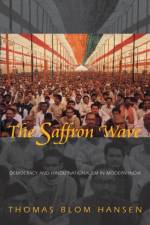
The rise of strong nationalist and religious movements in postcolonial and newly democratic countries alarms many Western observers. In The Saffron Wave, Thomas Hansen turns our attention to recent events in the world's largest democracy, India. Here he analyzes Indian receptivity to the right-wing Hindu nationalist party and its political wing, the Bharatiya Janata Party (BJP), which claims to create a polity based on "e;ancient"e; Hindu culture. Rather than interpreting Hindu nationalism as a mainly religious phenomenon, or a strictly political movement, Hansen places the BJP within the context of the larger transformations of democratic governance in India. Hansen demonstrates that democratic transformation has enabled such developments as political mobilization among the lower castes and civil protections for religious minorities. Against this backdrop, the Hindu nationalist movement has successfully articulated the anxieties and desires of the large and amorphous Indian middle class. A form of conservative populism, the movement has attracted not only privileged groups fearing encroachment on their dominant positions but also "e;plebeian"e; and impoverished groups seeking recognition around a majoritarian rhetoric of cultural pride, order, and national strength. Combining political theory, ethnographic material, and sensitivity to colonial and postcolonial history, The Saffron Wave offers fresh insights into Indian politics and, by focusing on the links between democracy and ethnic majoritarianism, advances our understanding of democracy in the postcolonial world.
In Landscapes of Loss, Naomi Greene makes new sense of the rich variety of postwar French films by exploring the obsession with the national past that has characterized French cinema since the late 1960s. Observing that the sense of grandeur and destiny that once shaped French identity has eroded under the weight of recent history, Greene examines the ways in which French cinema has represented traumatic and defining moments of the nation's past: the political battles of the 1930s, the Vichy era, decolonization, the collapse of ideologies. Drawing upon a broad spectrum of films and directors, she shows how postwar films have reflected contemporary concerns even as they have created images and myths that have helped determine the contours of French memory. This study of the intricate links between French history, memory, and cinema begins by examining the long shadow cast by the Vichy past: the repressed memories and smothered unease that characterize the cinema of Alain Resnais are seen as a kind of prelude to a fierce battle for national memory that marked so-called retro films of the 1970s and 1980s. The shifting political and historical perspectives toward the nation's more distant past, which also emerged in these years, are explored in the light of the films of one of France's leading directors, Bertrand Tavernier. Finally, the mood of nostalgia and melancholy that appears to haunt contemporary France is analyzed in the context of films about the nation's imperial past as well as those that hark back to a "e;golden age,"e; a remembered paradis perdu, of French cinema itself.
Americans should not just tolerate dissent. They should encourage it. In this provocative and wide-ranging book, Steven Shiffrin makes this case by arguing that dissent should be promoted because it lies at the heart of a core American value: free speech. He contends, however, that the country's major institutions--including the Supreme Court and the mass media--wrongly limit dissent. And he reflects on how society and the law should change to encourage nonconformity. Shiffrin is one of the country's leading first-amendment theorists. He advances his dissent-based theory of free speech with careful reference to its implications for such controversial topics of constitutional debate as flag burning, cigarette advertising, racist speech, and subsidizing the arts. He shows that a dissent-based approach would offer strong protection for free speech--he defends flag burning as a legitimate form of protest, for example--but argues that it would still allow for certain limitations on activities such as hate speech and commercial speech. Shiffrin adds that a dissent-based approach reveals weaknesses in the approaches to free speech taken by postmodernism, Republicanism, deliberative democratic theory, outsider jurisprudence, and liberal theory. Throughout the book, Shiffrin emphasizes the social functions of dissent: its role in combating injustice and its place in cultural struggles over the meanings of America. He argues, for example, that if we took a dissent-based approach to free speech seriously, we would no longer accept the unjust fact that public debate is dominated by the voices of the powerful and the wealthy. To ensure that more voices are heard, he argues, the country should take such steps as making defamation laws more hospitable to criticism of powerful people, loosening the grip of commercial interests on the media, and ensuring that young people are taught the importance of challenging injustice. Powerfully and clearly argued, Shiffrin's book is a major contribution to debate about one of the most important subjects in American public life.
In this revised edition of his 1979 classic Political Theory and International Relations, Charles Beitz rejects two highly influential conceptions of international theory as empirically inaccurate and theoretically misleading. In one, international relations is a Hobbesian state of nature in which moral judgments are entirely inappropriate, and in the other, states are analogous to persons in domestic society in having rights of autonomy that insulate them from external moral assessment and political interference. Beitz postulates that a theory of international politics should include a revised principle of state autonomy based on the justice of a state's domestic institutions, and a principle of international distributive justice to establish a fair division of resources and wealth among persons situated in diverse national societies.
The adversary professions--law, business, and government, among others--typically claim a moral permission to violate persons in ways that, if not for the professional role, would be morally wrong. Lawyers advance bad ends and deceive, business managers exploit and despoil, public officials enforce unjust laws, and doctors keep confidences that, if disclosed, would prevent harm. Ethics for Adversaries is a philosophical inquiry into arguments that are offered to defend seemingly wrongful actions performed by those who occupy what Montaigne called "e;necessary offices."e; Applbaum begins by examining the career of Charles-Henri Sanson, who is appointed executioner of Paris by Louis XVI and serves the punitive needs of the ancien regime for decades. Come the French Revolution, the King's Executioner becomes the king's executioner, and he ministers with professional detachment to each defeated political faction throughout the Terror and its aftermath. By exploring one extraordinary role and the arguments that can be offered in its defense, Applbaum raises unsettling doubts about arguments in defense of less sanguinary professions and their practices. To justify harmful acts, adversaries appeal to arguments about the rules of the game, fair play, consent, the social construction of actions and actors, good outcomes in equilibrium, and the legitimate authority of institutions. Applbaum concludes that these arguments are weaker than supposed and do not morally justify much of the violation that professionals and public officials inflict. Institutions and the roles they create ordinarily cannot mint moral permissions to do what otherwise would be morally prohibited.
Who should have the authority to shape the education of citizens in a democracy? This is the central question posed by Amy Gutmann in the first book-length study of the democratic theory of education. The author tackles a wide range of issues, from the democratic case against book banning to the role of teachers' unions in education, as well as the vexed questions of public support for private schools and affirmative action in college admissions.
Virtue has been rediscovered in the United States as a subject of public debate and of philosophical inquiry. Politicians from both parties, leading intellectuals, and concerned citizens from diverse backgrounds are addressing questions about the content of our character. William Bennett's moral guide for children, A Book of Virtues, was a national bestseller. Yet many continue to associate virtue with a prudish, Victorian morality or with crude attempts by government to legislate morals. Peter Berkowitz clarifies the fundamental issues, arguing that a certain ambivalence toward virtue reflects the liberal spirit at its best. Drawing on recent scholarship as well as classical political philosophy, he makes his case with penetrating analyses of four central figures in the making of modern liberalism: Hobbes, Locke, Kant, and Mill. These thinkers are usually understood to have neglected or disparaged virtue. Yet Berkowitz shows that they all believed that government resting on the fundamental premise of liberalism--the natural freedom and equality of all human beings--could not work unless citizens and officeholders possess particular qualities of mind and character. These virtues, which include reflective judgment, sympathetic imagination, self-restraint, the ability to cooperate, and toleration do not arise spontaneously but must be cultivated. Berkowitz explores the various strategies the thinkers employ as they seek to give virtue its due while respecting individual liberty. Liberals, he argues, must combine energy and forbearance, finding public and private ways to support such nongovernmental institutions as the family and voluntary associations. For these institutions, the liberal tradition powerfully suggests, play an indispensable role not only in forming the virtues on which liberal democracy depends but in overcoming the vices that it tends to engender. Clearly written and vigorously argued, this is a provocative work of political theory that speaks directly to complex issues at the heart of contemporary philosophy and public discussion. New Forum Books makes available to general readers outstanding, original, interdisciplinary scholarship with a special focus on the juncture of culture, law, and politics. New Forum Books is guided by the conviction that law and politics not only reflect culture, but help to shape it. Authors include leading political scientists, sociologists, legal scholars, philosophers, theologians, historians, and economists writing for nonspecialist readers and scholars across a range of fields. Looking at questions such as political equality, the concept of rights, the problem of virtue in liberal politics, crime and punishment, population, poverty, economic development, and the international legal and political order, New Forum Books seeks to explain--not explain away--the difficult issues we face today.
In this trenchant challenge to social engineering, Paul Gottfried analyzes a patricide: the slaying of nineteenth-century liberalism by the managerial state. Many people, of course, realize that liberalism no longer connotes distributed powers and bourgeois moral standards, the need to protect civil society from an encroaching state, or the virtues of vigorous self-government. Many also know that today's "e;liberals"e; have far different goals from those of their predecessors, aiming as they do largely to combat prejudice, to provide social services and welfare benefits, and to defend expressive and "e;lifestyle"e; freedoms. Paul Gottfried does more than analyze these historical facts, however. He builds on them to show why it matters that the managerial state has replaced traditional liberalism: the new regimes of social engineers, he maintains, are elitists, and their rule is consensual only in the sense that it is unopposed by any widespread organized opposition. Throughout the western world, increasingly uprooted populations unthinkingly accept centralized controls in exchange for a variety of entitlements. In their frightening passivity, Gottfried locates the quandary for traditionalist and populist adversaries of the welfare state. How can opponents of administrative elites show the public that those who provide, however ineptly, for their material needs are the enemies of democratic self-rule and of independent decision making in family life? If we do not wake up, Gottfried warns, the political debate may soon be over, despite sporadic and ideologically confused populist rumblings in both Europe and the United States.
In this magisterial work, Roland Omnes takes us from the academies of ancient Greece to the laboratories of modern science as he seeks to do no less than rebuild the foundations of the philosophy of knowledge. One of the world's leading quantum physicists, Omnes reviews the history and recent development of mathematics, logic, and the physical sciences to show that current work in quantum theory offers new answers to questions that have puzzled philosophers for centuries: Is the world ultimately intelligible? Are all events caused? Do objects have definitive locations? Omnes addresses these profound questions with vigorous arguments and clear, colorful writing, aiming not just to advance scholarship but to enlighten readers with no background in science or philosophy. The book opens with an insightful and sweeping account of the main developments in science and the philosophy of knowledge from the pre-Socratic era to the nineteenth century. Omnes then traces the emergence in modern thought of a fracture between our intuitive, commonsense views of the world and the abstract and--for most people--incomprehensible world portrayed by advanced physics, math, and logic. He argues that the fracture appeared because the insights of Einstein and Bohr, the logical advances of Frege, Russell, and Godel, and the necessary mathematics of infinity of Cantor and Hilbert cannot be fully expressed by words or images only. Quantum mechanics played an important role in this development, as it seemed to undermine intuitive notions of intelligibility, locality, and causality. However, Omnes argues that common sense and quantum mechanics are not as incompatible as many have thought. In fact, he makes the provocative argument that the "e;consistent-histories"e; approach to quantum mechanics, developed over the past fifteen years, places common sense (slightly reappraised and circumscribed) on a firm scientific and philosophical footing for the first time. In doing so, it provides what philosophers have sought through the ages: a sure foundation for human knowledge. Quantum Philosophy is a profound work of contemporary science and philosophy and an eloquent history of the long struggle to understand the nature of the world and of knowledge itself.
The international monetary system has changed radically in the last twenty years. Capital, information, goods, and services move around the globe with unprecedented ease. Countries from the former communist bloc have joined the system. Europe is on the verge of monetary union. Financial crises in East Asia and Mexico have rocked the world economy. In this book, Robert Solomon--author of the definitive history of the monetary order between 1945 and 1981--presents the first comprehensive history of these and other aspects of this revolution in international finance. Authoritative, accessible, and elegantly written, the book will be indispensable for anyone who wishes to understand how today's international monetary system works. Solomon begins with the spectacular rise and subsequent decline of the foreign exchange value of the U.S. dollar in the 1980s. He covers the debt crisis of developing countries in the 1980s. He explores the shift from central planning to market economies in many countries in the 1990s and explains the origins, implications, and problems of the move to a single European currency. Solomon examines in detail the striking increase in the mobility of capital--paying particular attention to the costs and benefits for developing countries, and to the role of capital mobility in the Mexican crisis of 1994 and the Asian crisis that began in 1997. In the book's final chapter, Solomon provides an overview of the international monetary system and considers how it might evolve in the future. In this section, he focuses on the key subjects of balance-of-payments adjustments, supply of reserves, and stability. He also evaluates a variety of much-debated policy instruments, including inflation targeting, currency boards, target zones for exchange rates, free-floating exchange rates, the Tobin tax, macroeconomic policy coordination, and special drawings rights. Throughout, Solomon relates developments in the international monetary system to macroeconomic conditions in the countries involved--arguing that it is impossible to understand one without understanding the other. As a clear, thorough, and unusually perceptive account of global finance and monetary economics in the late twentieth century, Money on the Move will be vital reading for economists, policymakers, and general readers.
Once there was a golden age of American thrift, when citizens lived sensibly within their means and worked hard to stay out of debt. The growing availability of credit in this century, however, has brought those days to an end--undermining traditional moral virtues such as prudence, diligence, and the delay of gratification while encouraging reckless consumerism. Or so we commonly believe. In this engaging and thought-provoking book, Lendol Calder shows that this conception of the past is in fact a myth. Calder presents the first book-length social and cultural history of the rise of consumer credit in America. He focuses on the years between 1890 and 1940, when the legal, institutional, and moral bases of today's consumer credit were established, and in an epilogue takes the story up to the present. He draws on a wide variety of sources--including personal diaries and letters, government and business records, newspapers, advertisements, movies, and the words of such figures as Benjamin Franklin, Mark Twain, and P. T. Barnum--to show that debt has always been with us. He vigorously challenges the idea that consumer credit has eroded traditional values. Instead, he argues, monthly payments have imposed strict, externally reinforced disciplines on consumers, making the culture of consumption less a playground for hedonists than an extension of what Max Weber called the "e;iron cage"e; of disciplined rationality and hard work. Throughout, Calder keeps in clear view the human face of credit relations. He re-creates the Dickensian world of nineteenth-century pawnbrokers, takes us into the dingy backstairs offices of loan sharks, into small-town shops and New York department stores, and explains who resorted to which types of credit and why. He also traces the evolving moral status of consumer credit, showing how it changed from a widespread but morally dubious practice into an almost universal and generally accepted practice by World War II. Combining clear, rigorous arguments with a colorful, narrative style, Financing the American Dream will attract a wide range of academic and general readers and change how we understand one of the most important and overlooked aspects of American social and economic life.
The relationship between Russia and Germany has been pivotal in some of the most fateful events of the twentieth century: the two World Wars, the Cold War, and the emergence of a new Europe from the ashes of communism. This is the first book to examine the recent evolution of that tense and often violent relationship from both the Russian and German perspectives. Angela Stent combines interviews with key international figures--including Mikhail Gorbachev--with insights gleaned from newly declassified archives in East Germany and her own profound understanding of Russian-German relations. She presents a remarkable review of the events and trends of the past three decades: the onset of d tente, the unification of Germany, the collapse of the Soviet Union, and the rise of an uncertain new European order. Stent reveals the chaos and ambivalence behind the Soviet negotiating strategy that led--against Gorbachev's wishes--to that old Soviet nightmare, a united Germany in NATO. She shows how German strength and Russian weakness have governed the delicate dance of power between recently unified Germany and newly democratized Russia. Finally, she lays out several scenarios for the future of Russian-German relations--some optimistic and others darkened by the threat of a new authoritarianism. Russia and Germany Reborn is crucial reading for anyone interested in a relationship that changed the course of the twentieth century and that will have a powerful impact on the next.
Does the business of daily living distance us from life's mysteries? Do most Americans value spiritual thinking more as a hobby than as an all-encompassing approach to life? Will the concept of the soul be defunct after the next few generations? Child psychiatrist and best-selling author Robert Coles offers a profound meditation on how secular culture has settled into the hearts and minds of Americans. This book is a sweeping essay on the shift from religious control over Western society to the scientific dominance of the mind. Interwoven into the story is Coles's personal quest for understanding how the sense of the sacred has stood firm in the lives of individuals--both the famous and everyday people whom he has known--even as they have struggled with doubt. As a student, Coles questioned Paul Tillich on the meaning of the "e;secular mind,"e; and his fascination with the perceived opposition between secular and sacred intensified over the years. This book recounts conversations Coles has had with such figures as Anna Freud, Karen Horney, William Carlos Williams, Walker Percy, and Dorothy Day. Their words dramatize the frustration and the joy of living in both the secular and sacred realms. Coles masterfully draws on a variety of literary sources that trace the relationship of the sacred and the secular: the stories of Abraham and Moses, the writings of St. Paul, Augustine, Kierkegaard, Darwin, and Freud, and the fiction of George Eliot, Hardy, Meredith, Flannery O'Connor, and Huxley. Ever since biblical times, Coles shows us, the relationship between these two realms has thrived on conflict and accommodation. Coles also notes that psychoanalysis was first viewed as a rival to religion in terms of getting a handle on inner truths. He provocatively demonstrates how psychoanalysis has either been incorporated into the thinking of many religious denominations or become a type of religion in itself. How will people in the next millennium deal with advances in chemistry and neurology? Will these sciences surpass psychoanalysis in controlling how we think and feel? This book is for anyone who has wondered about the fate of the soul and our ability to seek out the sacred in our constantly changing world.
Abonner på vårt nyhetsbrev og få rabatter og inspirasjon til din neste leseopplevelse.
Ved å abonnere godtar du vår personvernerklæring.