
























Gjør som tusenvis av andre bokelskere
Abonner på vårt nyhetsbrev og få rabatter og inspirasjon til din neste leseopplevelse.
Ved å abonnere godtar du vår personvernerklæring.Du kan når som helst melde deg av våre nyhetsbrev.

In the decades following World War II, American scientists were celebrated for their contributions to social and technological progress. They were also widely criticized for their increasingly close ties to military and governmental power--not only by outside activists but from among the ranks of scientists themselves. Disrupting Science tells the story of how scientists formed new protest organizations that democratized science and made its pursuit more transparent. The book explores how scientists weakened their own authority even as they invented new forms of political action. Drawing extensively from archival sources and in-depth interviews, Kelly Moore examines the features of American science that made it an attractive target for protesters in the early cold war and Vietnam eras, including scientists' work in military research and activities perceived as environmentally harmful. She describes the intellectual traditions that protesters drew from--liberalism, moral individualism, and the New Left--and traces the rise and influence of scientist-led protest organizations such as Science for the People and the Union of Concerned Scientists. Moore shows how scientist protest activities disrupted basic assumptions about science and the ways scientific knowledge should be produced, and recast scientists' relationships to political and military institutions. Disrupting Science reveals how the scientific community cumulatively worked to unbind its own scientific authority and change how science and scientists are perceived. In doing so, the book redefines our understanding of social movements and the power of insider-led protest.
The concept of mass is one of the most fundamental notions in physics, comparable in importance only to those of space and time. But in contrast to the latter, which are the subject of innumerable physical and philosophical studies, the concept of mass has been but rarely investigated. Here Max Jammer, a leading philosopher and historian of physics, provides a concise but comprehensive, coherent, and self-contained study of the concept of mass as it is defined, interpreted, and applied in contemporary physics and as it is critically examined in the modern philosophy of science. With its focus on theories proposed after the mid-1950s, the book is the first of its kind, covering the most recent experimental and theoretical investigations into the nature of mass and its role in modern physics, from the realm of elementary particles to the cosmology of galaxies. The book begins with an analysis of the persistent difficulties of defining inertial mass in a noncircular manner and discusses the related question of whether mass is an observational or a theoretical concept. It then studies the notion of mass in special relativity and the delicate problem of whether the relativistic rest mass is the only legitimate notion of mass and whether it is identical with the classical (Newtonian) mass. This is followed by a critical analysis of the different derivations of the famous mass-energy relationship E = mc2 and its conflicting interpretations. Jammer then devotes a chapter to the distinction between inertial and gravitational mass and to the various versions of the so-called equivalence principle with which Newton initiated his Principia but which also became the starting point of Einstein's general relativity, which supersedes Newtonian physics. The book concludes with a presentation of recently proposed global and local dynamical theories of the origin and nature of mass. Destined to become a much-consulted reference for philosophers and physicists, this book is also written for the nonprofessional general reader interested in the foundations of physics.
In ancient Greece, the spoken word connoted power, whether in the free speech accorded to citizens or in the voice of the poet, whose song was thought to know no earthly bounds. But how did silence fit into the mental framework of a society that valued speech so highly? Here Silvia Montiglio provides the first comprehensive investigation into silence as a distinctive and meaningful phenomenon in archaic and classical Greece. Arguing that the notion of silence is not a universal given but is rather situated in a complex network of associations and values, Montiglio seeks to establish general principles for understanding silence through analyses of cultural practices, including religion, literature, and law. Unlike the silence of a Christian before an ineffable God, which signifies the uselessness of words, silence in Greek religion paradoxically expresses the power of logos--for example, during prayer and sacrifice, it serves as a shield against words that could offend the gods. Montiglio goes on to explore silence in the world of the epic hero, where words are equated with action and their absence signals paralysis or tension in power relationships. Her other examples include oratory, a practice in which citizens must balance their words with silence in very complex ways in order to show that they do not abuse their right to speak. Inquiries into lyric poetry, drama, medical writings, and historiography round out this unprecedented study, revealing silence as a force in its own right.
From the refusal of the U.S. Congress to approve fast-track trade authority and certain foreign aid packages to the obstacles placed by Western European parliaments in the path of economic integration, legislatures often interfere with national leaders' efforts to reach and implement predictable international agreements. This seems to give an advantage to dictators, who can bluff with confidence and make decisions without consultation, and many assume that even democratic governments would do better to minimize political dissent and speak foreign policy from a single mouth. In this thoughtful, empirically grounded challenge to the assumption that messy domestic politics undermine democracies' ability to conduct international relations, Lisa Martin argues that legislatures--and particularly the apparently problematic openness of their proceedings--actually serve foreign policy well by giving credibility to the international commitments that are made. Examining the American cases of economic sanctions, the use of executive agreements versus treaties, and food assistance, in addition to the establishment of the European Union, Martin concludes that--if institutionalized--even rancorous domestic conversations between executives and legislatures augment rather than impede states' international dealings. Such interactions strengthen and legitimize states' bargaining positions and international commitments, increasing their capacity to realize international cooperation. By expanding our comprehension of how domestic politics affect international dialogue, this work is a major advance in the field of international relations and critical reading for those who study or forge foreign policy.
The last few decades have witnessed an extraordinary transfer of policy-making prerogatives from individual nation-states to supranational institutions. If you think this is cause for celebration, you are not alone. Within the academic community (and not only among students of international cooperation), the notion that political institutions are mutually beneficial--that they would never come into existence, much less grow in size and assertiveness, were they not "e;Pareto-improving"e;--is today's conventional wisdom. But is it true? In this richly detailed and strikingly original study, Lloyd Gruber suggests that this emphasis on cooperation's positive-sum consequences may be leading scholars of international relations down the wrong theoretical path. The fact that membership in a cooperative arrangement is voluntary, Gruber argues, does not mean that it works to everyone's advantage. To the contrary, some cooperators may incur substantial losses relative to the original, non-cooperative status quo. So what, then, keeps these participants from withdrawing? Gruber's answer, in a word, is power--specifically the "e;go-it-alone power"e; exercised by the regime's beneficiaries, many of whom would continue to benefit even if their partners, the losers, were to opt out. To lend support to this thesis, Gruber takes a fresh look at the political origins and structures of European Monetary Unification and NAFTA. But the theoretical arguments elaborated in Ruling the World extend well beyond money and trade, touching upon issues of long-standing interest to students of security cooperation, environmental politics, nation-building--even political philosophy. Bold and compelling, this book will appeal to anyone interested in understanding how "e;power politics"e; really operates and why, for better or worse, it is fueling much of the supranational activity we see today.
Here James Mittelman explains the systemic dynamics and myriad consequences of globalization, focusing on the interplay between globalizing market forces, in some instances guided by the state, and the needs of society. Mittelman finds that globalization is hardly a unified phenomenon but rather a syndrome of processes and activities: a set of ideas and a policy framework. More specifically, globalization is propelled by a changing division of labor and power, manifested in a new regionalism, and challenged by fledgling resistance movements. The author argues that a more complete understanding of globalization requires an appreciation of its cultural dimensions. From this perspective, he considers the voices of those affected by this trend, including those who resist it and particularly those who are hurt by it. The Globalization Syndrome is among the first books to present a holistic and multilevel analysis of globalization, connecting the economic to the political and cultural, joining agents and multiple structures, and interrelating different local, regional, and global arenas. Mittelman's findings are drawn mainly from the non-Western worlds. He provides a cross-regional analysis of Eastern Asia, an epicenter of globalization, and Southern Africa, a key node in the most marginalized continent. The evidence shows that while offering many benefits to some, globalization has become an uneasy correlation of deep tensions, giving rise to a range of alternative scenarios.
Following World War II, the Catholic Church in Europe faced the challenge of establishing political influence with newly emerging democratic governments. The Church became, as Carolyn Warner pointedly argues, an interest group like any other, seeking to attain and solidify its influence by forming alliances with political parties. The author analyzes the Church's differing strategies in Italy, France, and Germany using microeconomic theories of the firm and historical institutionalism. She demonstrates how only a strategic perspective can explain the choice and longevity of the alliances in each case. In so doing, the author challenges earlier work that ignores the costs to interest groups and parties of sustaining or breaking their reciprocal links. Confessions of an Interest Group challenges the view of the Catholic Church as solely a moral force whose interests are seamlessly represented by the Christian Democratic parties. Blending theory, cultural narrative, and archival research, Warner demonstrates that the French Church's superficial and brief connection with a political party was directly related to its loss of political influence during the War. The Italian Church's power, on the other hand, remained stable through the War, so the Church and the Christian Democrats more easily found multiple grounds for long-term cooperation. The German Church chose yet another path, reluctantly aligning itself with a new Catholic-Protestant party. This book is an important work that expands the growing literature on the economics of religion, interest group behavior, and the politics of the Catholic Church.
Is it time to give up on rehabilitating criminals? Record numbers of Americans are going to prison, and most of them will eventually return to society with a high chance of becoming repeat offenders. But a decision to abandon rehabilitation programs now would be premature warns Ann Chih Lin, who finds that little attention has been given to how these programs are actually implemented and why they tend to fail. In Reform in the Making, she not only supplies much-needed information on the process of program implementation but she also considers its social context, the daily realities faced by prison staff and inmates. By offering an in-depth look at common rehabilitation programs currently in operation--education, job training, and drug treatment--and examining how they are used or misused, Lin offers a practical approach to understanding their high failure rate and how the situation could be improved. Based on extensive observation and over 350 interviews with staff and prisoners in five medium-security male prisons, the book contrasts successfully implemented programs with subverted, abandoned, or neglected programs (those which staff reject or which do not teach prisoners anything useful). Lin explains that staff and prisoners have little patience with programs aimed at long-range goals when they must face the ongoing, immediate challenge of surviving prison life. Finding incentives to make both sides participate fully in rehabilitation is among the book's many contributions to improving prison policy.
For generations, critics have noticed in nineteenth-century American women's sentimentality a streak of masochism, but their discussions of it have over-simplified its complex relationship to women's power. Marianne Noble argues that tropes of eroticized domination in sentimental literature must be recognized for what they were: a double-edged sword of both oppression and empowerment. She begins by exploring the cultural forces that came together to create this ideology of desire, particularly Protestant discourses relating suffering to love and middle-class discourses of "e;true womanhood."e; She goes on to demonstrate how sentimental literature takes advantage of the expressive power in the convergence of these two discourses to imagine women's romantic desire. Therefore, in sentimental literature, images of eroticized domination are not antithetical to female pleasure but rather can be constitutive of it. The book, however, does not simply celebrate that fact. In readings of Warner's The Wide Wide World, Stowe's Uncle Tom's Cabin, and Dickinson's sentimental poetry, it addresses the complex benefits and costs of nineteenth-century women's literary masochism. Ultimately it shows how these authors both exploited and were shaped by this discursive practice. The Masochistic Pleasures of Sentimental Literature exemplifies new trends in "e;Third Wave"e; feminist scholarship, presenting cultural and historical research informed by clear, lucid discussions of psychoanalytic and literary theory. It demonstrates that contemporary theories of masochism--including those of Deleuze, Bataille, Kristeva, Benjamin, Bersani, Noyes, Mansfield--are more relevant and comprehensible when considered in relation to sentimental literature.
Siegfried Kracauer has been misunderstood as a naive realist, appreciated as an astute critic of early German film, and noticed as the interesting exile who exchanged letters with Erwin Panofsky. But he is most widely thought of as the odd uncle of famed Frankfurt School critical theorists Jurgen Habermas, Theodor Adorno, Walter Benjamin, and Max Horkheimer. Recently, however, scholars have rediscovered in Kracauer's writings a philosopher, sociologist, and film theorist important beyond his associations--and perhaps one of the most significant cultural critics of the twentieth century. Gertrud Koch advances this Kracauer renaissance with the first-ever critical assessment of his entire body of work. Koch's analysis, which is concise without sacrificing thoroughness or sophistication, covers both Kracauer's best-known publications (e.g., From Caligari to Hitler, in which he gleans the roots of National Socialism in the films of the Weimar Republic) and previously underexamined texts, including two newly discovered autobiographical novels. Because Kracauer's wide-ranging works emerge from no rigidly unified approach, instead always remaining open to unusual and highly individual perspectives, Koch resists the temptation to force generalization. She does, however, identify recurring tropes in Kracauer's lifetime effort to perceive the basic posture and composition of particular cultures through their visual surfaces. Koch also finds in Kracauer a surprisingly contemporary cultural commentator, whose ideas speak directly to current discussions on film, urban modernity, feminism, cultural representation, violence, and other themes. This book was long-awaited in Germany, as well as widely and well reviewed. Now translated into English for the first time, it will fuel already growing interest in the United States, where Kracauer lived and wrote from 1941 until his death in 1966. It will attract the attention of students and scholars working in Film Studies, German Studies, Comparative Literature, Critical Theory, Cultural Studies, Philosophy, and History.
The marriage of Virginia and Leonard Woolf is best understood as a dialogue of two outsiders about ideas of social and political belonging and exclusion. These ideas infused the written work of both partners and carried over into literary modernism itself, in part through the influence of the Woolfs' groundbreaking publishing company, the Hogarth Press. In this book, the first to focus on Virginia Woolf's writings in conjunction with those of her husband, Natania Rosenfeld illuminates Leonard's sense of ambivalent social identity and its affinities to Virginia's complex ideas of subjectivity. At the time of the Woolfs' marriage, Leonard was a penniless ex-colonial administrator, a fervent anti-imperialist, a committed socialist, a budding novelist, and an assimilated Jew who vacillated between fierce pride in his ethnicity and repudiation of it. Virginia was an "e;intellectual aristocrat,"e; socially privileged by her class and family background but hobbled through gender. Leonard helped Virginia elucidate her own prejudices and elitism, and his political engagements intensified her identification with outsiders in British society. Rosenfeld discovers an aesthetic of intersubjectivity constantly at work in Virginia Woolf's prose, links this aesthetic to the intermeshed literary lives of the Woolfs, and connects both these sites of dialogue to the larger sociopolitical debates--about imperialism, capitalism, women, sexuality, international relations, and, finally, fascism--of their historical place and time.
In this book, the first to offer a comprehensive examination of the emerging study of law as literature, Guyora Binder and Robert Weisberg show that law is not only a scheme of social order, but also a process of creating meaning, and a crucial dimension of modern culture. They present lawyers as literary innovators, who creatively interpret legal authority, narrate disputed facts and hypothetical fictions, represent persons before the law, move audiences with artful rhetoric, and invent new legal forms and concepts. Binder and Weisberg explain the literary theories and methods increasingly applied to law, and they introduce and synthesize the work of over a hundred authors in the fields of law, literature, philosophy, and cultural studies. Drawing on these disparate bodies of scholarship, Binder and Weisberg analyze law as interpretation, narration, rhetoric, language, and culture, placing each of these approaches within the history of literary and legal thought. They sort the styles of analysis most likely to sharpen critical understanding from those that risk self-indulgent sentimentalism or sterile skepticism, and they endorse a broadly synthetic cultural criticism that views law as an arena for composing and contesting identity, status, and character. Such a cultural criticism would evaluate law not simply as a device for realizing rights and interests but also as the framework for a vibrant cultural life.
A deepening interest in both social and interior experience was a distinguishing feature of the cultural life of eighteenth-century Britain, influencing writers in all genres from fiction to philosophy. Focusing on this interplay of ideas and genres, Mark Phillips explores the ways in which writers and readers of history, memoir, biography and related literatures responded to the social and sentimental concerns of a modern, commercial society. He shows that the writing of history, which once concentrated exclusively on political events, widened its horizons in ways that often paralleled better-known developments in the contemporary novel. Ultimately, Phillips proposes a new model for the study of historiographical narrative. Countering tropological readings identified with Hayden White, he offers a more historically nuanced approach that stresses questions of genre and reception as a guide to understanding how narratives were reshaped by new audiences and new social needs. Drawing inspiration from both the social analysis of the Scottish Enlightenment and the sentimental aesthetics of the contemporary novel, historical writing began to explore the areas of social experience and private life for which there was no place in classical historiography. The consequence, Phillips argues, was a significant reframing of historical thought that expressed itself through new themes, including the histories of commerce, manners, literature, and women, and through some lively experiments in narrative form. This book offers a rich picture of historiography that will interest students of history and fiction alike.
The Methodists and Revolutionary America is the first in-depth narrative of the origins of American Methodism, one of the most significant popular movements in American history. Placing Methodism's rise in the ideological context of the American Revolution and the complex social setting of the greater Middle Atlantic where it was first introduced, Dee Andrews argues that this new religion provided an alternative to the exclusionary politics of Revolutionary America. With its call to missionary preaching, its enthusiastic revivals, and its prolific religious societies, Methodism competed with republicanism for a place at the center of American culture. Based on rare archival sources and a wealth of Wesleyan literature, this book examines all aspects of the early movement. From Methodism's Wesleyan beginnings to the prominence of women in local societies, the construction of African Methodism, the diverse social profile of Methodist men, and contests over the movement's future, Andrews charts Methodism's metamorphosis from a British missionary organization to a fully Americanized church. Weaving together narrative and analysis, Andrews explains Methodism's extraordinary popular appeal in rich and compelling new detail.
Although Franz Rosenzweig is arguably the most important Jewish philosopher of the twentieth century, his thought remains little understood. Here, Leora Batnitzky argues that Rosenzweig's redirection of German-Jewish ethical monotheism anticipates and challenges contemporary trends in religious studies, ethics, philosophy, anthropology, theology, and biblical studies. This text, which captures the hermeneutical movement of Rosenzweig's corpus, is the first to consider the full import of the cultural criticism articulated in his writings on the modern meanings of art, language, ethics, and national identity. In the process, the book solves significant conundrums about Rosenzweig's relation to German idealism, to other major Jewish thinkers, to Jewish political life, and to Christianity, and brings Rosenzweig into conversation with key contemporary thinkers. Drawing on Rosenzweig's view that Judaism's ban on idolatry is the crucial intellectual and spiritual resource available to respond to the social implications of human finitude, Batnitzky interrogates idolatry as a modern possibility. Her analysis speaks not only to the question of Judaism's relationship to modernity (and vice versa), but also to the generic question of the present's relationship to the past--a subject of great importance to anyone contemplating the modern statuses of religious tradition, reason, science, and historical inquiry. By way of Rosenzweig, Batnitzky argues that contemporary philosophers and ethicists must relearn their approaches to religious traditions and texts to address today's central ethical problems.
Conventional wisdom holds that Judaism is indifferent or even suspiciously hostile to the visual arts due to the Second Commandment's prohibition on creating "e;graven images,"e; the dictates of monotheism, and historical happenstance. This intellectual history of medieval and modern Jewish attitudes toward art and representation overturns the modern assumption of Jewish iconophobia that denies to Jewish culture a visual dimension. Kalman Bland synthesizes evidence from medieval Jewish philosophy, mysticism, poetry, biblical commentaries, travelogues, and law, concluding that premodern Jewish intellectuals held a positive, liberal understanding of the Second Commandment and did, in fact, articulate a certain Jewish aesthetic. He draws on this insight to consider modern ideas of Jewish art, revealing how they are inextricably linked to diverse notions about modern Jewish identity that are themselves entwined with arguments over Zionism, integration, and anti-Semitism. Through its use of the past to illuminate the present and its analysis of how the present informs our readings of the past, this book establishes a new assessment of Jewish aesthetic theory rooted in historical analysis. Authoritative and original in its identification of authentic Jewish traditions of painting, sculpture, and architecture, this volume will ripple the waters of several disciplines, including Jewish studies, art history, medieval and modern history, and philosophy.
Covenantal Rights is a groundbreaking work of political theory: a comprehensive, philosophically sophisticated attempt to bring insights from the Jewish political tradition into current political and legal debates about rights and to bring rights discourse more fully into Jewish thought. David Novak pursues these aims by presenting a theory of rights founded on the covenant between God and the Jewish people as that covenant is constituted by Scripture and the rabbinic tradition. In doing so, he presents a powerful challenge to prevailing liberal and conservative positions on rights and duties and opens a new chapter in contemporary Jewish political thinking. For Novak, "e;covenantal rights"e; are rooted in God's primary rights as creator of the universe and as the elector of a particular community whose members relate to this God as their sovereign. The subsequent rights of individuals and communities flow from God's covenantal promises, which function as irrevocable entitlements. This presents a sharp contrast to the liberal tradition, in which rights flow above all from individuals. It also challenges the conservative idea that duties can take precedence over rights, since Novak argues that there are no covenantal duties that are not backed by correlative rights. Novak explains carefully and clearly how this theory of covenantal rights fits into Jewish tradition and applies to the relationships among God, the covenanted community, and individuals. This work is a profound and provocative contribution to contemporary religious and political theory.
In Rousseau's Republican Romance, Elizabeth Wingrove combines political theory and narrative analysis to argue that Rousseau's stories of sex and sexuality offer important insights into the paradoxes of democratic consent. She suggests that despite Rousseau's own protestations, "e;man"e; and "e;citizen"e; are not rival or contradictory ideals. Instead, they are deeply interdependent. Her provocative reconfiguration of republicanism introduces the concept of consensual nonconsensuality--a condition in which one wills the circumstances of one's own domination. This apparently paradoxical possibility appears at the center of Rousseau's republican polity and his romantic dyad: in both instances, the expression and satisfaction of desire entail a twin experience of domination and submission. Drawing on a wide variety of Rousseau's political and literary writings, Wingrove shows how consensual nonconsensuality organizes his representations of desire and identity. She demonstrates the inseparability of republicanism and accounts of heterosexuality in an analysis that emphasizes the sentimental and somatic aspects of citizenship. In Rousseau's texts, a politics of consent coincides with a performative politics of desire and of emotion. Wingrove concludes that understanding his strategies of democratic governance requires attending to his strategies of symbolization. Further, she suggests that any understanding of political practice requires attending to bodily practices.
Is liberal democracy a universal ideal? Proponents of "e;Asian values"e; argue that it is a distinctive product of the Western experience and that Western powers shouldn't try to push human rights and democracy onto Asian states. Liberal democrats in the West typically counter by questioning the motives of Asian critics, arguing that Asian leaders are merely trying to rationalize human-rights violations and authoritarian rule. In this book--written as a dialogue between an American democrat named Demo and three East Asian critics--Daniel A. Bell attempts to chart a middle ground between the extremes of the international debate on human rights and democracy. Bell criticizes the use of "e;Asian values"e; to justify oppression, but also draws on East Asian cultural traditions and contributions by contemporary intellectuals in East Asia to identify some powerful challenges to Western-style liberal democracy. In the first part of the book, Bell makes use of colorful stories and examples to show that there is a need to take into account East Asian perspectives on human rights and democracy. The second part--a fictitious dialogue between Demo and Asian senior statesman Lee Kuan Yew--examines the pros and cons of implementing Western-style democracy in Singapore. The third part of the book is an argument for an as-yet-unrealized Confucian political institution that justifiably differs from Western-style liberal democracy. This is a thought-provoking defense of distinctively East Asian challenges to Western-style liberal democracy that will stimulate interest and debate among students of political theory, Asian studies, and international human rights.
Roderick Hart may be among the few Americans who believe that what politicians say in a campaign actually matters. He also believes that campaigns work. Even as television coverage, political ads, and opinion polls turn elections into field days for marketing professionals, Hart argues convincingly that campaigns do play their role in sustaining democracy, mainly because they bring about a dialogue among candidates, the press, and the people. Here he takes a close look at the exchange of ideas through language used in campaign speeches, political advertising, public debates, print and broadcast news, and a wide variety of letters to the editor. In each case, the participants choose their words differently, and this, according to Hart, can be a frustrating challenge to anyone trying to make sense of the issues. Yet he finds that the process is good for Americans: campaigns inform us about issues, sensitize us to the concerns of others, and either encourage us to vote or at least heighten our sense of the political world. Hart comes to his conclusions by using DICTION, a computer program that has enabled him to unearth substantive data, such as the many subtle shifts found in political language, over the past fifty years. This approach yields a rich variety of insights, including empirically based explanations of impressions created by political candidates. For example, in 1996 Bill Clinton successfully connected with voters by using many human-interest words--"e;you,"e; "e;us,"e; "e;people,"e; "e;family."e; Bob Dole, however, alienated the public and even undermined his own claims of optimism by using an abundance of denial words--"e;can't,"e; "e;shouldn't,"e; "e;couldn't."e; Hart also tracks issue buzzwords such as "e;Medicare"e; to show how candidates and voters define and readjust their positions throughout the campaign dialogue. In the midst of today's increased media hype surrounding elections, Americans and the candidates they elect do seem to be listening to each other--as much as they did in years gone by. Hart's wide-ranging, objective investigation upends many of our stereotypes about political life and presents a new, more bracing, understanding of contemporary electoral behavior.
Can charter schools save public education? This radical question has unleashed a flood of opinions from Americans struggling with the contentious challenges of education reform. There has been plenty of heat over charter schools and their implications, but, until now, not much light. This important new book supplies plenty of illumination. Charter schools--independently operated public schools of choice--have existed in the United States only since 1992, yet there are already over 1,500 of them. How are they doing? Here prominent education analysts Chester Finn, Bruno Manno, and Gregg Vanourek offer the richest data available on the successes and failures of this exciting but controversial approach to education reform. After studying one hundred schools, interviewing hundreds of participants, surveying thousands more, and analyzing the most current data, they have compiled today's most authoritative, comprehensive explanation and appraisal of the charter phenomenon. Fact-filled, clear-eyed, and hard-hitting, this is the book for anyone concerned about public education and interested in the role of charter schools in its renewal. Can charter schools boost student achievement, drive educational innovation, and develop a new model of accountability for public schools? Where did the idea of charter schools come from? What would the future hold if this phenomenon spreads? These are some of the questions that this book answers. It addresses pupil performance, enrollment patterns, school start-up problems, charges of inequity, and smoldering political battles. It features close-up looks at five real--and very different--charter schools and two school districts that have been deeply affected by the charter movement, including their setbacks and triumphs. After outlining a new model of education accountability and describing how charter schools often lead to community renewal, the authors take the reader on an imaginary tour of a charter-based school system. Charter schools are the most vibrant force in education today. This book suggests that their legacy will consist not only of helping millions of families obtain a better education for their children but also in renewing American public education itself.
The great romance and fear of bloody revolution--strange blend of idealism and terror--have been superseded by blind faith in the bloodless expansion of human rights and global capitalism. Flying in the face of history, violence is dismissed as rare, immoral, and counterproductive. Arguing against this pervasive wishful thinking, the distinguished historian Arno J. Mayer revisits the two most tumultuous and influential revolutions of modern times: the French Revolution of 1789 and the Russian Revolution of 1917. Although these two upheavals arose in different environments, they followed similar courses. The thought and language of Enlightenment France were the glories of western civilization; those of tsarist Russia's intelligentsia were on its margins. Both revolutions began as revolts vowed to fight unreason, injustice, and inequality; both swept away old regimes and defied established religions in societies that were 85% peasant and illiterate; both entailed the terrifying return of repressed vengeance. Contrary to prevalent belief, Mayer argues, ideologies and personalities did not control events. Rather, the tide of violence overwhelmed the political actors who assumed power and were rudderless. Even the best plans could not stem the chaos that at once benefited and swallowed them. Mayer argues that we have ignored an essential part of all revolutions: the resistances to revolution, both domestic and foreign, which help fuel the spiral of terror. In his sweeping yet close comparison of the world's two transnational revolutions, Mayer follows their unfolding--from the French Declaration of the Rights of Man and the Bolshevik Declaration of the Rights of the Toiling and Exploited Masses; the escalation of the initial violence into the reign of terror of 1793-95 and of 1918-21; the dismemberment of the hegemonic churches and religion of both societies; the "e;externalization"e; of the terror through the Napoleonic wars; and its "e;internalization"e; in Soviet Russia in the form of Stalin's "e;Terror in One Country."e; Making critical use of theory, old and new, Mayer breaks through unexamined assumptions and prevailing debates about the attributes of these particular revolutions to raise broader and more disturbing questions about the nature of revolutionary violence attending new foundations.
Dragon in a Three-Piece Suit is an innovative sociological examination of what is perhaps the main engine of economic reform in China, the large industrial firm. Doug Guthrie, who spent more than a year in Shanghai studying firms, interviewing managers, and gathering data on firms' performance and practices, provides the first detailed account of how these firms have been radically transformed since the mid-1980s. Guthrie shows that Chinese firms are increasingly imitating foreign firms in response both to growing contact with international investors and to being cut adrift from state support. Many firms, for example, are now less likely to use informal hiring practices, more likely to have formal grievance filing procedures, and more likely to respect international institutions, such as the Chinese International Arbitration Commission. Guthrie argues that these findings support the de-linking of Western trade policy from human rights, since it is clear that economic engagement leads to constructive reform. Yet Guthrie also warns that reform in China is not a process of inevitable Westernization or of managers behaving as rational, profit-maximizing agents. Old habits, China's powerful state administration, and the hierarchy of the former command economy will continue to have profound effects on how firms act and how they adjust to change. With its combination of rigorous argument and uniquely rich detail, this book gives us the most complete picture yet of Chinese economic reform at the crucial level of the industrial firm.
Clifford Geertz, one of the most influential thinkers of our time, here discusses some of the most urgent issues facing intellectuals today. In this collection of personal and revealing essays, he explores the nature of his anthropological work in relation to a broader public, serving as the foremost spokesperson of his generation of scholars, those who came of age after World War II. His reflections are written in a style that both entertains and disconcerts, as they engage us in topics ranging from moral relativism to the relationship between cultural and psychological differences, from the diversity and tension among activist faiths to "e;ethnic conflict"e; in today's politics. Geertz, who once considered a career in philosophy, begins by explaining how he got swept into the revolutionary movement of symbolic anthropology. At that point, his work began to encompass not only the ethnography of groups in Southeast Asia and North Africa, but also the study of how meaning is made in all cultures--or, to use his phrase, to explore the "e;frames of meaning"e; in which people everywhere live out their lives. His philosophical orientation helped him to establish the role of anthropology within broader intellectual circles and led him to address the work of such leading thinkers as Charles Taylor, Thomas Kuhn, William James, and Jerome Bruner. In this volume, Geertz comments on their work as he explores questions in political philosophy, psychology, and religion that have intrigued him throughout his career but that now hold particular relevance in light of postmodernist thinking and multiculturalism. Available Light offers insightful discussions of concepts such as nation, identity, country, and self, with a reminder that like symbols in general, their meanings are not categorically fixed but grow and change through time and place. This book treats the reader to an analysis of the American intellectual climate by someone who did much to shape it. One can read Available Light both for its revelation of public culture in its dynamic, evolving forms and for the story it tells about the remarkable adventures of an innovator during the "e;golden years"e; of American academia.
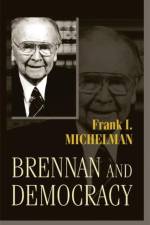
In Brennan and Democracy, a leading thinker in U.S. constitutional law offers some powerful reflections on the idea of "e;constitutional democracy,"e; a concept in which many have seen the makings of paradox. Here Frank Michelman explores the apparently conflicting commitments of a democratic governmental system where key aspects of such important social issues as affirmative action, campaign finance reform, and abortion rights are settled not by a legislative vote but by the decisions of unelected judges. Can we--or should we--embrace the values of democracy together with constitutionalism, judicial supervision, and the rule of law? To answer this question, Michelman calls into service the judicial career of Supreme Court Justice William Brennan, the country's model "e;activist"e; judge for the past forty years. Michelman draws on Brennan's record and writings to suggest how the Justice himself might have understood the judiciary's role in the simultaneous promotion of both democratic and constitutional government. The first chapter prompts us to reflect on how tough and delicate an act it is for the members of a society to attempt living together as a people devoted to self-government. The second chapter seeks to renew our appreciation for democratic liberal political ideals, and includes an extensive treatment of Brennan's judicial opinions, which places them in relation to opposing communitarian and libertarian positions. Michelman also draws on the views of two other prominent constitutional theorists, Robert Post and Ronald Dworkin, to build a provocative discussion of whether democracy is best conceived as a "e;procedural"e; or a "e;substantive"e; ideal.
Can the Supreme Court be free of politics? Do we want it to be? Normative constitutional theory has long concerned itself with the legitimate scope and limits of judicial review. Too often, theorists seek to resolve that issue by eliminating politics from constitutional decisionmaking. In contrast, Terri Peretti argues for an openly political role for the Supreme Court. Peretti asserts that politically motivated constitutional decisionmaking is not only inevitable, it is legitimate and desirable as well. When Supreme Court justices decide in accordance with their ideological values, or consider the likely political reaction to the Court's decisions, a number of benefits result. The Court's performance of political representation and consensus-building functions is enhanced, and the effectiveness of political checks on the Court is increased. Thus, political motive in constitutional decision making does not lead to judicial tyranny, as many claim, but goes far to prevent it. Using pluralist theory, Peretti further argues that a political Court possesses instrumental value in American democracy. As one of many diverse and redundant political institutions, the Court enhances both system stability and the quality of policymaking, particularly regarding the breadth of interests represented.
American metropolitan areas today are divided into neighborhoods of privilege and poverty, often along lines of ethnicity and race. City residents traveling through these neighborhoods move from feeling at home to feeling like tourists to feeling so out of place they fear for their security. As Gerald Frug shows, this divided and inhospitable urban landscape is not simply the result of individual choices about where to live or start a business. It is the product of government policies--and, in particular, the policies embedded in legal rules. A Harvard law professor and leading expert on urban affairs, Frug presents the first-ever analysis of how legal rules shape modern cities and outlines a set of alternatives to bring down the walls that now keep city dwellers apart. Frug begins by describing how American law treats cities as subdivisions of states and shows how this arrangement has encouraged the separation of metropolitan residents into different, sometimes hostile groups. He explains in clear, accessible language the divisive impact of rules about zoning, redevelopment, land use, and the organization of such city services as education and policing. He pays special attention to the underlying role of anxiety about strangers, the widespread desire for good schools, and the pervasive fear of crime. Ultimately, Frug calls for replacing the current legal definition of cities with an alternative based on what he calls "e;community building"e;--an alternative that gives cities within the same metropolitan region incentives to forge closer links with each other. An incisive study of the legal roots of today's urban problems, City Making is also an optimistic and compelling blueprint for enabling American cities once again to embrace their historic role of helping people reach an accommodation with those who live in the same geographic area, no matter how dissimilar they are.
According to Judith Baer, feminist legal scholarship today does not effectively address the harsh realities of women's lives. Feminists have marginalized themselves, she argues, by withdrawing from mainstream intellectual discourse. In Our Lives Before the Law, Baer thus presents the framework for a new feminist jurisprudence--one that would return feminism to relevance by connecting it in fresh and creative ways with liberalism. Baer starts from the traditional feminist premise that the legal system has a male bias and must do more to help women combat violence and overcome political, economic, and social disadvantages. She argues, however, that feminist scholarship has over-corrected for this bias. By emphasizing the ways in which the system fails women, feminists have lost sight of how it can be used to promote women's interests and have made it easy for conventional scholars to ignore legitimate feminist concerns. In particular, feminists have wrongly linked the genuine flaws of conventional legal theory to its basis in liberalism, arguing that liberalism focuses too heavily on individual freedom and not enough on individual responsibility. In fact, Baer contends, liberalism rests on a presumption of personal responsibility and can be used as a powerful intellectual foundation for holding men and male institutions more accountable for their actions. The traditional feminist approach, Baer writes, has led to endless debates about such abstract matters as character differences between men and women, and has failed to deal sufficiently with concrete problems with the legal system. She thus constructs a new feminist interpretation of three central components of conventional theory--equality, rights, and responsibility--through analysis of such pressing legal issues as constitutional interpretation, reproductive choice, and fetal protection. Baer concludes by presenting the outline of what she calls "e;feminist post-liberalism"e;: an approach to jurisprudence that not only values individual freedoms but also recognizes our responsibility for addressing individuals' needs, however different those may be for men and women. Powerfully and passionately written, Our Lives Before the Law will have a major impact on the future course of feminist legal scholarship.
The First Amendment ideal of an independent press allows American journalists to present critical perspectives on government policies and actions; but are the media independent of government in practice? Here Jonathan Mermin demonstrates that when it comes to military intervention, journalists over the past two decades have let the government itself set the terms and boundaries of foreign policy debate in the news. Analyzing newspaper and television reporting of U.S. intervention in Grenada and Panama, the bombing of Libya, the Gulf War, and U.S. actions in Somalia and Haiti, he shows that if there is no debate over U.S. policy in Washington, there is no debate in the news. Journalists often criticize the execution of U.S. policy, but fail to offer critical analysis of the policy itself if actors inside the government have not challenged it. Mermin ultimately offers concrete evidence of outside-Washington perspectives that could have been reported in specific cases, and explains how the press could increase its independence of Washington in reporting foreign policy news. The author constructs a new framework for thinking about press-government relations, based on the observation that bipartisan support for U.S. intervention is often best interpreted as a political phenomenon, not as evidence of the wisdom of U.S. policy. Journalists should remember that domestic political factors often influence foreign policy debate. The media, Mermin argues, should not see a Washington consensus as justification for downplaying critical perspectives.
Milwaukee, one of the nation's most segregated metropolitan areas, implemented in 1990 a school choice program aimed at improving the education of inner-city children by enabling them to attend a selection of private schools. The results of this experiment, however, have been overshadowed by the explosion of emotional debate it provoked nationwide. In this book, John Witte provides a broad yet detailed framework for understanding the Milwaukee experiment and its implications for the market approach to American education. In a society supposedly devoted to equality of opportunity, the concept of school choice or voucher programs raises deep issues about liberty versus equality, government versus market, and about our commitment to free and universal education. Witte brings a balanced perspective to the picture by demonstrating why it is wrongheaded to be pro- or anti-school choice in the abstract. He explains why the voucher program seems to be working in the specific case of Milwaukee, but warns that such programs would not necessarily promote equal education--and most likely harm the poor--if applied universally, across the socioeconomic spectrum. The book begins with a theoretical discussion of the provision of education in America. It goes on to situate the issue of school choice historically and politically, to describe the program and private schools in Milwaukee, and to provide statistical analyses of the outcomes for children and their parents in the experiment. Witte concludes with some persuasive arguments about the importance of specifying the structural details of any choice program and with a call supporting vouchers for poor inner-city children, but not a universal program for all private schools. Voucher programs continue to be the most controversial approach to educational reform. The Market Approach to Education provides a thorough review of where the choice debate stands through 1998. It not only includes the "e;Milwaukee story"e; but also provides an analysis of the role, history, and politics of court decisions in this most important First Amendment area.
Abonner på vårt nyhetsbrev og få rabatter og inspirasjon til din neste leseopplevelse.
Ved å abonnere godtar du vår personvernerklæring.