



















Gjør som tusenvis av andre bokelskere
Abonner på vårt nyhetsbrev og få rabatter og inspirasjon til din neste leseopplevelse.
Ved å abonnere godtar du vår personvernerklæring.Du kan når som helst melde deg av våre nyhetsbrev.

A major revision of our understanding of long-range bombing, this book examines how Anglo-American ideas about "e;strategic"e; bombing were formed and implemented. It argues that ideas about bombing civilian targets rested on--and gained validity from--widespread but substantially erroneous assumptions about the nature of modern industrial societies and their vulnerability to aerial bombardment. These assumptions were derived from the social and political context of the day and were maintained largely through cognitive error and bias. Tami Davis Biddle explains how air theorists, and those influenced by them, came to believe that strategic bombing would be an especially effective coercive tool and how they responded when their assumptions were challenged. Biddle analyzes how a particular interpretation of the World War I experience, together with airmen's organizational interests, shaped interwar debates about strategic bombing and preserved conceptions of its potentially revolutionary character. This flawed interpretation as well as a failure to anticipate implementation problems were revealed as World War II commenced. By then, the British and Americans had invested heavily in strategic bombing. They saw little choice but to try to solve the problems in real time and make long-range bombing as effective as possible. Combining narrative with analysis, this book presents the first-ever comparative history of British and American strategic bombing from its origins through 1945. In examining the ideas and rhetoric on which strategic bombing depended, it offers critical insights into the validity and robustness of those ideas--not only as they applied to World War II but as they apply to contemporary warfare.
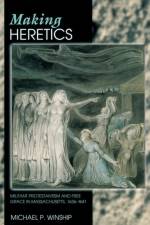
Making Heretics is a major new narrative of the famous Massachusetts disputes of the late 1630s misleadingly labeled the "e;antinomian controversy"e; by later historians. Drawing on an unprecedented range of sources, Michael Winship fundamentally recasts these interlocked religious and political struggles as a complex ongoing interaction of personalities and personal agendas and as a succession of short-term events with cumulative results. Previously neglected figures like Sir Henry Vane and John Wheelwright assume leading roles in the processes that nearly ended Massachusetts, while more familiar "e;hot Protestants"e; like John Cotton and Anne Hutchinson are relocated in larger frameworks. The book features a striking portrayal of the minister Thomas Shepard as an angry heresy-hunting militant, helping to set the volatile terms on which the disputes were conducted and keeping the flames of contention stoked even as he ostensibly attempted to quell them. The first book-length treatment in forty years, Making Heretics locates its story in rich contexts, ranging from ministerial quarrels and negotiations over fine but bitterly contested theological points to the shadowy worlds of orthodox and unorthodox lay piety, and from the transatlantic struggles over the Massachusetts Bay Company's charter to the fraught apocalyptic geopolitics of the Reformation itself. An object study in the ways that puritanism generated, managed, and failed to manage diversity, Making Heretics carries its account on into England in the 1640s and 1650s and helps explain the differing fortunes of puritanism in the Old and New Worlds.
The Funeral Casino is a heretical ethnography of the global age. Setting his book within Thailand's pro-democracy movement and the street massacres that accompanied it, Alan Klima offers a strikingly original interpretation of mass-mediated violence through a study of funeral gambling and Buddhist meditation on death. The fieldwork for the book began in 1992, when a freewheeling market of illegal "e;massacre-imagery"e; videos blossomed in Bangkok on the very site where, days earlier, for the third time in two decades, a military-controlled government had killed scores of unarmed pro-democracy protesters. Such killings and their subsequent representation have lent force to Thailand's transition from military control to a "e;media-financial complex."e; Probing the ways in which death is marketed, visualized, and remembered through practices both local and global, Klima inverts conventional relationships between ethnography and theory through a compelling narrative that reveals a surprising new direction available to anthropology and critical theory. Ethnography here engages with the philosophy of activism and the politics of memory, media representation of violence, and globalization. In focusing on the particular array of tactics in Thai Buddhism and protest politics for connecting death and life, past and present, this book unveils a vivid and haunting picture of community, responsibility, and accountability in the new world order.
Reading Rape examines how American culture talks about sexual violence and explains why, in the latter twentieth century, rape achieved such significance as a trope of power relations. Through attentive readings of a wide range of literary and cultural representations of sexual assault--from antebellum seduction narratives and "e;realist"e; representations of rape in nineteenth-century novels to Deliverance, American Psycho, and contemporary feminist accounts--Sabine Sielke traces the evolution of a specifically American rhetoric of rape. She considers the kinds of cultural work that this rhetoric has performed and finds that rape has been an insistent figure for a range of social, political, and economic issues. Sielke argues that the representation of rape has been a major force in the cultural construction of sexuality, gender, race, ethnicity, class, and indeed national identity. At the same time, her acute analyses of both canonical and lesser-known texts explore the complex anxieties that motivate such constructions and their function within the wider cultural imagination. Provoked in part by contemporary feminist criticism, Reading Rape also challenges feminist positions on sexual violence by interrogating them as part of the history in which rape has been a convenient and conventional albeit troubling trope for other concerns and conflicts. This book teaches us what we talk about when we talk about rape. And what we're talking about is often something else entirely: power, money, social change, difference, and identity.
This book examines how English writers from the Elizabethan period to the Restoration transformed and contested the ancient ideal of the virtuous mean. As early modern authors learned at grammar school and university, Aristotle and other classical thinkers praised "e;golden means"e; balanced between extremes: courage, for example, as opposed to cowardice or recklessness. By uncovering the enormous variety of English responses to this ethical doctrine, Joshua Scodel revises our understanding of the vital interaction between classical thought and early modern literary culture. Scodel argues that English authors used the ancient schema of means and extremes in innovative and contentious ways hitherto ignored by scholars. Through close readings of diverse writers and genres, he shows that conflicting representations of means and extremes figured prominently in the emergence of a self-consciously modern English culture. Donne, for example, reshaped the classical mean to promote individual freedom, while Bacon held extremism necessary for human empowerment. Imagining a modern rival to ancient Rome, georgics from Spenser to Cowley exhorted England to embody the mean or lauded extreme paths to national greatness. Drinking poetry from Jonson to Rochester expressed opposing visions of convivial moderation and drunken excess, while erotic writing from Sidney to Dryden and Behn pitted extreme passion against the traditional mean of conjugal moderation. Challenging his predecessors in various genres, Milton celebrated golden means of restrained pleasure and self-respect. Throughout this groundbreaking study, Scodel suggests how early modern treatments of means and extremes resonate in present-day cultural debates.
One of South America's most celebrated contemporary poets takes us on a fantastic voyage to mysterious lands and seas, into the psyche, and to the heart of the poem itself. Night Journey is the English-language debut of the work that won Maria Negroni an Argentine National Book Award. It is a book of dreams--dreams she renders with surreal beauty that recalls the work of her compatriot Alejandra Pizarnik, with the penetrating subtlety of Borges and Calvino. In sixty-two tightly woven prose poems, Negroni deftly infuses haunting imagery with an ironic, personal spirituality. Effortlessly she navigates the nameless subject to the slopes of the Himalayas, to a bar in Buenos Aires, through war, from icy Scandinavian landscapes to the tropics, across seas, toward a cemetery in the wake of Napoleon's hearse, by train, by taxis headed in unrequested directions, past mirrors and birds, between life and death. Night Journey reflects a mastery of a traditional form while brilliantly expressing a modern condition: the multicultural, multifaceted individual, ever in motion. Displacement abounds: a "e;medieval tabard"e; where a pelvis should be, a "e;lipless grin,"e; a "e;beach severed from the ocean."e; In one poem "e;nomadic cities"e; whisk past. In another, smiling cockroaches loom in a visiting mother's eyes. Anne Twitty, whose elegant translations are accompanied by the Spanish originals, remarks in her preface that the book's "e;indomitable literary intelligence"e; subdues an unspoken terror--helplessness. Yet, as observed by the angel Gabriel, the consoling voice of wisdom, only by accepting the journey for what it is can one discover its "e;hidden splendor,"e; the "e;invisible center of the poem."e; As readers of this magnificent work will discover, this is a journey that, because its every fleeting image conjures a thousand words of fertile silence, can be savored again and again.
Nearly half a century after the fighting stopped, the 1953 Armistice has yet to be replaced with a peace treaty formally ending the Korean War. While Russia and China withdrew the last of their forces in 1958, the United States maintains 37,000 troops in South Korea and is pledged to defend it with nuclear weapons. In Korean Endgame, Selig Harrison mounts the first authoritative challenge to this long-standing U.S. policy. Harrison shows why North Korea is not--as many policymakers expect--about to collapse. And he explains why existing U.S. policies hamper North-South reconciliation and reunification. Assessing North Korean capabilities and the motivations that have led to its forward deployments, he spells out the arms control concessions by North Korea, South Korea, and the United States necessary to ease the dangers of confrontation, centering on reciprocal U.S. force redeployments and U.S. withdrawals in return for North Korean pullbacks from the thirty-eighth parallel. Similarly, he proposes specific trade-offs to forestall the North's development of nuclear weapons and missile delivery systems, calling for the withdrawal of the U.S. nuclear umbrella in conjunction with agreements to denuclearize Korea embracing China, Russia, and Japan. The long-term goal of U.S. policy, he argues, should be the full disengagement of U.S. combat forces from Korea as part of regional agreements insulating the peninsula from all foreign conventional and nuclear forces. A veteran journalist with decades of extensive firsthand knowledge of North Korea and long-standing contacts with leaders in Washington, Seoul, and Pyongyang, Harrison is perfectly placed to make these arguments. Throughout, he supports his analysis with revealing accounts of conversations with North Korean, South Korean, and U.S. leaders over thirty-five years. Combining probing scholarship with a seasoned reporter's on-the-ground experience and insights, he has given us the definitive book on U.S. policy in Korea--past, present, and future.
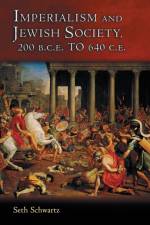
This provocative new history of Palestinian Jewish society in antiquity marks the first comprehensive effort to gauge the effects of imperial domination on this people. Probing more than eight centuries of Persian, Greek, and Roman rule, Seth Schwartz reaches some startling conclusions--foremost among them that the Christianization of the Roman Empire generated the most fundamental features of medieval and modern Jewish life. Schwartz begins by arguing that the distinctiveness of Judaism in the Persian, Hellenistic, and early Roman periods was the product of generally prevailing imperial tolerance. From around 70 C.E. to the mid-fourth century, with failed revolts and the alluring cultural norms of the High Roman Empire, Judaism all but disintegrated. However, late in the Roman Empire, the Christianized state played a decisive role in ''re-Judaizing'' the Jews. The state gradually excluded them from society while supporting their leaders and recognizing their local communities. It was thus in Late Antiquity that the synagogue-centered community became prevalent among the Jews, that there re-emerged a distinctively Jewish art and literature--laying the foundations for Judaism as we know it today. Through masterful scholarship set in rich detail, this book challenges traditional views rooted in romantic notions about Jewish fortitude. Integrating material relics and literature while setting the Jews in their eastern Mediterranean context, it addresses the complex and varied consequences of imperialism on this vast period of Jewish history more ambitiously than ever before. Imperialism in Jewish Society will be widely read and much debated.
This book concerns the way we read--or rather, imagine we are listening to--ancient Greek and Latin poetry. Through clear and penetrating analysis Mark Edwards shows how an understanding of the effects of word order and meter is vital for appreciating the meaning of classical poetry, composed for listening audiences. The first of four chapters examines Homer's emphasis of certain words by their positioning; a passage from the Iliad is analyzed, and a poem of Tennyson illustrates English parallels. The second considers Homer's techniques of disguising the break in the narrative when changing a scene's location or characters, to maintain his audience's attention. In the third we learn, partly through an English translation matching the rhythm, how Aeschylus chose and adapted meters to arouse listeners' emotions. The final chapter examines how Latin poets, particularly Propertius, infused their language with ambiguities and multiple meanings. An appendix examines the use of classical meters by twentieth-century American and English poets. Based on the author's Martin Classical Lectures at Oberlin College in 1998, this book will enrich the appreciation of classicists and their students for the immense possibilities of the languages they read, translate, and teach. Since the Greek and Latin quotations are translated into English, it will also be welcomed by non-classicists as an aid to understanding the enormous influence of ancient Greek and Latin poetry on modern Western literature.
Much political thinking today, particularly that influenced by liberalism, assumes a clear distinction between the public and the private, and holds that the correct understanding of this should weigh heavily in our attitude to human goods. It is, for instance, widely held that the state may address human action in the ''public'' realm but not in the ''private.'' In Public Goods, Private Goods Raymond Geuss exposes the profound flaws of such thinking and calls for a more nuanced approach. Drawing on a series of colorful examples from the ancient world, he illustrates some of the many ways in which actions can in fact be understood as public or private. The first chapter discusses Diogenes the Cynic, who flouted conventions about what should be public and what should be private by, among other things, masturbating in the Athenian marketplace. Next comes an analysis of Julius Caesar's decision to defy the Senate by crossing the Rubicon with his army; in doing so, Caesar asserted his dignity as a private person while acting in a public capacity. The third chapter considers St. Augustine's retreat from public life to contemplate his own, private spiritual condition. In the fourth, Geuss goes on to examine recent liberal views, questioning, in particular, common assumptions about the importance of public dialogue and the purportedly unlimited possibilities humans have for reaching consensus. He suggests that the liberal concern to maintain and protect, even at a very high cost, an inviolable ''private sphere'' for each individual is confused. Geuss concludes that a view of politics and morality derived from Hobbes and Nietzsche is a more realistic and enlightening way than modern liberalism to think about human goods. Ultimately, he cautions, a simplistic understanding of privacy leads to simplistic ideas about what the state is and is not justified in doing.
More than one million American children are schooled by their parents. As their ranks grow, home schoolers are making headlines by winning national spelling bees and excelling at elite universities. The few studies conducted suggest that homeschooled children are academically successful and remarkably well socialized. Yet we still know little about this alternative to one of society's most fundamental institutions. Beyond a vague notion of children reading around the kitchen table, we don't know what home schooling looks like from the inside. Sociologist Mitchell Stevens goes behind the scenes of the homeschool movement and into the homes and meetings of home schoolers. What he finds are two very different kinds of home education--one rooted in the liberal alternative school movement of the 1960s and 1970s and one stemming from the Christian day school movement of the same era. Stevens explains how this dual history shapes the meaning and practice of home schooling today. In the process, he introduces us to an unlikely mix of parents (including fundamentalist Protestants, pagans, naturalists, and educational radicals) and notes the core values on which they agree: the sanctity of childhood and the primacy of family in the face of a highly competitive, bureaucratized society. Kingdom of Children aptly places home schoolers within longer traditions of American social activism. It reveals that home schooling is not a random collection of individuals but an elaborate social movement with its own celebrities, networks, and characteristic lifeways. Stevens shows how home schoolers have built their philosophical and religious convictions into the practical structure of the cause, and documents the political consequences of their success at doing so. Ultimately, the history of home schooling serves as a parable about the organizational strategies of the progressive left and the religious right since the 1960s.Kingdom of Children shows what happens when progressive ideals meet conventional politics, demonstrates the extraordinary political capacity of conservative Protestantism, and explains the subtle ways in which cultural sensibility shapes social movement outcomes more generally.
Alexis de Tocqueville may be the most influential political thinker in American history. He also led an unusually active and ambitious career in French politics. In this magisterial book, one of America's most important contemporary theorists draws on decades of research and thought to present the first work that fully connects Tocqueville's political and theoretical lives. In doing so, Sheldon Wolin presents sweeping new interpretations of Tocqueville's major works and of his place in intellectual history. As he traces the origins and impact of Tocqueville's ideas, Wolin also offers a profound commentary on the general trajectory of Western political life over the past two hundred years. Wolin proceeds by examining Tocqueville's key writings in light of his experiences in the troubled world of French politics. He portrays Democracy in America, for example, as a theory of discovery that emerged from Tocqueville's contrasting experiences of America and of France's constitutional monarchy. He shows us how Tocqueville used Recollections to reexamine his political commitments in light of the revolutions of 1848 and the threat of socialism. He portrays The Old Regime and the French Revolution as a work of theoretical history designed to throw light on the Bonapartist despotism he saw around him. Throughout, Wolin highlights the tensions between Tocqueville's ideas and his activities as a politician, arguing that--despite his limited political success--Tocqueville was ''perhaps the last influential theorist who can be said to have truly cared about political life.'' In the course of the book, Wolin also shows that Tocqueville struggled with many of the forces that constrain politics today, including the relentless advance of capitalism, of science and technology, and of state bureaucracy. He concludes that Tocqueville's insights and anxieties about the impotence of politics in a ''postaristocratic'' era speak directly to the challenges of our own ''postdemocratic'' age. A monumental new study of Tocqueville, this is also a rich and provocative work about the past, the present, and the future of democratic life in America and abroad.
On two hundred and one days between May 1, 1245, and August 1, 1246, more than five thousand people from the Lauragais were questioned in Toulouse about the heresy of the good men and the good women (more commonly known as Catharism). Nobles and diviners, butchers and monks, concubines and physicians, blacksmiths and pregnant girls--in short, all men over fourteen and women over twelve--were summoned by Dominican inquisitors Bernart de Caux and Jean de Saint-Pierre. In the cloister of the Saint-Sernin abbey, before scribes and witnesses, they confessed whether they, or anyone else, had ever seen, heard, helped, or sought salvation through the heretics. This inquisition into heretical depravity was the single largest investigation, in the shortest time, in the entire European Middle Ages. Mark Gregory Pegg examines the sole surviving manuscript of this great inquisition with unprecedented care--often in unexpected ways--to build a richly textured understanding of social life in southern France in the early thirteenth century. He explores what the interrogations reveal about the individual and communal lives of those interrogated and how the interrogations themselves shaped villagers' perceptions of those lives. The Corruption of Angels, similar in breadth and scope to Emmanuel Le Roy Ladurie's Montaillou, is a major contribution to the field. It shows how heretical and orthodox beliefs flourished side by side and, more broadly, what life was like in one particular time and place. Pegg's passionate and beautifully written evocation of a medieval world will fascinate a diverse readership within and beyond the academy.
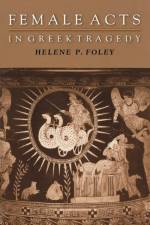
Although Classical Athenian ideology did not permit women to exercise legal, economic, and social autonomy, the tragedies of Aeschylus, Sophocles, and Euripides often represent them as influential social and moral forces in their own right. Scholars have struggled to explain this seeming contradiction. Helene Foley shows how Greek tragedy uses gender relations to explore specific issues in the development of the social, political, and intellectual life in the polis. She investigates three central and problematic areas in which tragic heroines act independently of men: death ritual and lamentation, marriage, and the making of significant ethical choices. Her anthropological approach, together with her literary analysis, allows for an unusually rich context in which to understand gender relations in ancient Greece. This book examines, for example, the tragic response to legislation regulating family life that may have begun as early as the sixth century. It also draws upon contemporary studies of virtue ethics and upon feminist reconsiderations of the Western ethical tradition. Foley maintains that by viewing public issues through the lens of the family, tragedy asks whether public and private morality can operate on the same terms. Moreover, the plays use women to represent significant moral alternatives. Tragedy thus exploits, reinforces, and questions cultural cliches about women and gender in a fashion that resonates with contemporary Athenian social and political issues.
At a time when campaign finance reform is widely viewed as synonymous with cleaning up Washington and promoting political equality, Bradley Smith, a nationally recognized expert on campaign finance reform, argues that all restriction on campaign giving should be eliminated. In Unfree Speech, he presents a bold, convincing argument for the repeal of laws that regulate political spending and contributions, contending that they violate the right to free speech and ultimately diminish citizens' power. Smith demonstrates that these laws, which often force ordinary people making modest contributions of cash or labor to register with the Federal Election Commission or various state agencies, fail to accomplish their stated objectives. In fact, they have worked to entrench incumbents in office, deaden campaign discourse, burden grassroots political activity with needless regulation, and distance Americans from an increasingly professional, detached political class. Rather than attempting to plug "e;loopholes"e; in campaign finance law or instituting taxpayer-financed campaigns, Smith proposes a return to core First Amendment values of free speech and an unfettered right to engage in political activity. Smith finds that campaign contributions have little corrupting effect on the legislature and shows that an unrestrained system of contributions and spending actually enhances equality. More money, not less, is needed in the political system, Smith concludes. Unfree Speech draws upon constitutional law and historical research to explain why campaign finance regulation is doomed and to illustrate the potentially drastic costs of efforts to make it succeed. Whatever one thinks about the impact of money on electoral politics, no one should take a final stand without reading Smith's controversial and important arguments.
How should we live? What do we owe to other people? In Goodness and Advice, the eminent philosopher Judith Jarvis Thomson explores how we should go about answering such fundamental questions. In doing so, she makes major advances in moral philosophy, pointing to some deep problems for influential moral theories and describing the structure of a new and much more promising theory. Thomson begins by lamenting the prevalence of the idea that there is an unbridgeable gap between fact and value--that to say something is good, for example, is not to state a fact, but to do something more like expressing an attitude or feeling. She sets out to challenge this view, first by assessing the apparently powerful claims of Consequentialism. Thomson makes the striking argument that this familiar theory must ultimately fail because its basic requirement--that people should act to bring about the "e;most good"e;--is meaningless. It rests on an incoherent conception of goodness, and supplies, not mistaken advice, but no advice at all. Thomson then outlines the theory that she thinks we should opt for instead. This theory says that no acts are, simply, good: an act can at most be good in one or another way--as, for example, good for Smith or for Jones. What we ought to do is, most importantly, to avoid injustice; and whether an act is unjust is a function both of the rights of those affected, including the agent, and of how good or bad the act is for them. The book, which originated in the Tanner lectures that Thomson delivered at Princeton University's Center for Human Values in 1999, includes two chapters by Thomson ("e;Goodness"e; and "e;Advice"e;), provocative comments by four prominent scholars--Martha Nussbaum, Jerome Schneewind, Philip Fisher, and Barbara Herrnstein Smith--and replies by Thomson to those comments.
What pleasures did Plautus' heroic tricksters provide their original audience? How should we understand the compelling mix of rebellion and social conservatism that Plautus offers? Through a close reading of four plays representing the full range of his work (Menaechmi, Casina, Persa, and Captivi), Kathleen McCarthy develops an innovative model of Plautine comedy and its social effects. She concentrates on how the plays are shaped by the interaction of two comic modes: the socially conservative mode of naturalism and the potentially subversive mode of farce. It is precisely this balance of the naturalistic and the farcical that allows everyone in the audience--especially those well placed in the social hierarchy--to identify both with and against the rebel, to feel both the thrill of being a clever underdog and the complacency of being a securely ensconced authority figure. Basing her interpretation on the workings of farce and naturalism in Plautine comedy, McCarthy finds a way to understand the plays' patchwork literary style as well as their protean social effects. Beyond this, she raises important questions about popular literature and performance not only on ancient Roman stages but in cultures far from Plautus' Rome. How and why do people identify with the fictional figures of social subordinates? How do stock characters, happy endings, and other conventions operate? How does comedy simultaneously upset and uphold social hierarchies? Scholars interested in Plautine theater will be rewarded by the detailed analyses of the plays, while those more broadly interested in social and cultural history will find much that is useful in McCarthy's new way of grasping the elusive ideological effects of comedy.
The American health care industry has undergone such dizzying transformations since the 1960s that many patients have lost confidence in a system they find too impersonal and ineffectual. Is their distrust justified and can confidence be restored? David Dranove, a leading health care economist, tackles these and other key questions in the first major economic and historical investigation of the field. Focusing on the doctor-patient relationship, he begins with the era of the independently practicing physician--epitomized by Marcus Welby, the beloved father figure/doctor in the 1960s television show of the same name--who disappeared with the growth of managed care. Dranove guides consumers in understanding the rapid developments of the health care industry and offers timely policy recommendations for reforming managed care as well as advice for patients making health care decisions. The book covers everything from start-up troubles with the first managed care organizations to attempts at government regulation to the mergers and quality control issues facing MCOs today. It also reflects on how difficult it is for patients to shop for medical care. Up until the 1970s, patients looked to autonomous physicians for recommendations on procedures and hospitals--a process that relied more on the patient's trust of the physician than on facts, and resulted in skyrocketing medical costs. Newly emerging MCOs have tried to solve the shopping problem by tracking the performance of care providers while obtaining discounts for their clients. Many observers accuse MCOs of caring more about cost than quality, and argue for government regulation. Dranove, however, believes that market forces can eventually achieve quality care and cost control. But first, MCOs must improve their ways of measuring provider performance, medical records must be made more complete and accessible (a task that need not compromise patient confidentiality), and patients must be willing to seek and act on information about the best care available. Dranove argues that patients can regain confidence in the medical system, and even come to trust MCOs, but they will need to rely on both their individual doctors and their own consumer awareness.
Adam Seligman, one of our most important social thinkers, continues the incisive critique of modernity he began in his previously acclaimed The Idea of Civil Society and The Problem of Trust. In this provocative new work of social philosophy, Seligman evaluates modernity's wager, namely, the gambit to liberate the modern individual from external social and religious norms by supplanting them with the rational self as its own moral authority. Yet far from ensuring the freedom of the individual, Seligman argues, "e;the fundamentalist doctrine of enlightened reason has called into being its own nemesis"e; in the forms of ethnic, racial, and identity politics. Seligman counters that the modern human must recover a notion of authority that is essentially transcendent, but which extends tolerance to those of other--or no--faiths. Through its denial of an authority rooted in an experience of transcendence, modernity fails to account for individual and collective moral action. First, deprived of a sacred source of the self, depictions of moral action are reduced to motives of self interest. Second, dismissing the sacred leaves the resurgence of religious movements unexplained. In this rigorous and imaginative study, Seligman seeks to discover a durable source of moral authority in a liberalized world. His study of shame, pride, collective guilt, and collective responsibility demonstrates the mutual relationship between individual responsibility and communal authority. Furthermore, Seligman restores the indispensable role of religious traditions--as well as the features of those traditions that enhance, rather than denigrate, tolerance. Sociologists, political theorists, moral philosophers, and intellectual historians will find Seligman's thesis enlightening, as will anyone concerned with the ethical and religious foundations of a tolerant society.
In this lively and provocative book, cultural critic Marjorie Garber, who has written on topics as different as Shakespeare, dogs, cross-dressing, and real estate, explores the pleasures and pitfalls of the academic life. Academic Instincts discusses three of the perennial issues that have surfaced in recent debates about the humanities: the relation between "e;amateurs"e; and "e;professionals,"e; the relation between one academic discipline and another, and the relation between "e;jargon"e; and "e;plain language."e; Rather than merely taking sides, the book explores the ways in which such debates are essential to intellectual life. Garber argues that the very things deplored or defended in discussions of the humanities cannot be either eliminated or endorsed because the discussion itself is what gives humanistic thought its vitality. Written in spirited and vivid prose, and full of telling detail drawn both from the history of scholarship and from the daily press, Academic Instincts is a book by a well-known Shakespeare scholar and prize-winning teacher who offers analysis rather than polemic to explain why today's teachers and scholars are at once breaking new ground and treading familiar paths. It opens the door to an important nationwide and worldwide conversation about the reorganization of knowledge and the categories in and through which we teach the humanities. And it does so in a spirit both generous and optimistic about the present and the future of these disciplines.
By the end of the eighteenth century, the French dominated the world of science. And although science and politics had little to do with each other directly, there were increasingly frequent intersections. This is a study of those transactions between science and state, knowledge and power--on the eve of the French Revolution. Charles Gillispie explores how the links between science and polity in France were related to governmental reform, modernization of the economy, and professionalization of science and engineering.
During the 1990s, the United States underwent a dramatic transformation: investing in stocks, once the province of a privileged elite, became a mass activity involving more than half of Americans. Pop Finance follows the trajectory of this new market populism via the rise of investment clubs, through which millions of people across the socioeconomic spectrum became investors for the first time. As sociologist Brooke Harrington shows, these new investors pour billions of dollars annually into the U.S. stock market and hold significant positions in some of the nation's largest firms. Drawing upon Harrington's long-term observation of investment clubs, along with in-depth interviews and extensive survey data, Pop Finance is the first book to examine the origins and impact of this mass engagement in investing. One of Harrington's most intriguing findings is that gender-based differences in investing can create a "e;diversity premium"e;--groups of men and women together are more profitable than single-sex groups. In examining the sources of this effect, she delves into the interpersonal dynamics that distinguish effective decision-making groups from their dysfunctional counterparts. In addition, Harrington shows that most Americans approach investing not only to make a profit but also to make a statement. In effect, portfolios have become like consumer products, serving both utilitarian and social ends. This ties into the growth of socially responsible investing and shareholder activism--matters relevant not only to social scientists but also to corporate leaders, policymakers, and the millions of Americans planning for retirement.Some images inside the book are unavailable due to digital copyright restrictions.
The delegates to the 1787 Constitutional Convention blocked the establishment of Christianity as a national religion. But they could not keep religion out of American politics. From the election of 1800, when Federalist clergymen charged that deist Thomas Jefferson was unfit to lead a "e;Christian nation,"e; to today, when some Democrats want to embrace the so-called Religious Left in order to compete with the Republicans and the Religious Right, religion has always been part of American politics. In Religion in American Politics, Frank Lambert tells the fascinating story of the uneasy relations between religion and politics from the founding to the twenty-first century. Lambert examines how antebellum Protestant unity was challenged by sectionalism as both North and South invoked religious justification; how Andrew Carnegie's "e;Gospel of Wealth"e; competed with the anticapitalist "e;Social Gospel"e; during postwar industrialization; how the civil rights movement was perhaps the most effective religious intervention in politics in American history; and how the alliance between the Republican Party and the Religious Right has, in many ways, realized the founders' fears of religious-political electoral coalitions. In these and other cases, Lambert shows that religion became sectarian and partisan whenever it entered the political fray, and that religious agendas have always mixed with nonreligious ones. Religion in American Politics brings rare historical perspective and insight to a subject that was just as important--and controversial--in 1776 as it is today.
We say the camera doesn't lie, but we also know that pictures distort and deceive. In Picture Perfect, Kiku Adatto brilliantly examines the use and abuse of images today. Ranging from family albums to Facebook, political campaigns to popular movies, images of war to pictures of protest. Adatto reveals how the line between the person and the pose, the real and the fake, news and entertainment is increasingly blurred. New technologies make it easier than ever to capture, manipulate, and spread images. But even in the age of the Internet, we still seek authentic pictures and believe in the camera's promise to document, witness, and interpret our lives.
Must good deeds be rewarded and wrongdoers punished? Would God be unjust if He failed to punish and reward? And what is it about good or evil actions and moral identity that might generate such necessities? These were some of the vital religious and philosophical questions that eighth- and ninth-century Mu'tazilite theologians and their sophisticated successors attempted to answer, giving rise to a distinctive ethical position and one of the most prominent and controversial intellectual trends in medieval Islam. The Mu'tazilites developed a view of ethics whose distinguishing features were its austere moral objectivism and the crucial role it assigned to reason in the knowledge of moral truths. Central to this ethical vision was the notion of moral desert, and of the good and evil consequences--reward or punishment--deserved through a person's acts. Moral Agents and Their Deserts is the first book-length study of this central theme in Mu'tazilite ethics, and an attempt to grapple with the philosophical questions it raises. At the same time, it is a bid to question the ways in which modern readers, coming to medieval Islamic thought with a philosophical interest, seek to read and converse with Mu'tazilite theology. Moral Agents and Their Deserts tracks the challenges and rewards involved in the pursuit of the right conversation at the seams between modern and medieval concerns.
Michel de Montaigne (1533-92) is principally known today as a literary figure--the inventor of the modern essay and the pioneer of autobiographical self-exploration who retired from politics in midlife to write his private, philosophical, and apolitical Essais. But, as Biancamaria Fontana argues in Montaigne's Politics, a novel, vivid account of the political meaning of the Essais in the context of Montaigne's life and times, his retirement from the Bordeaux parliament in 1570 "e;could be said to have marked the beginning, rather than the end, of his public career."e; He later served as mayor of Bordeaux and advisor to King Henry of Navarre, and, as Fontana argues, Montaigne's Essais very much reflect his ongoing involvement and preoccupation with contemporary politics--particularly the politics of France's civil wars between Catholics and Protestants. Fontana shows that the Essais, although written as a record of Montaigne's personal experiences, do nothing less than set forth the first major critique of France's ancien regime, anticipating the main themes of Enlightenment writers such as Voltaire and Diderot. Challenging the views that Montaigne was politically aloof or evasive, or that he was a conservative skeptic and supporter of absolute monarchy, Fontana explores many of the central political issues in Montaigne's work--the reform of legal institutions, the prospects of religious toleration, the role of public opinion, and the legitimacy of political regimes.
Perhaps everything we think, feel, and do is determined, and humans--like stones or clouds--are slaves to the laws of nature. Would that be a terrible state? Philosophers who take the incompatibilist position think so, arguing that a deterministic world would be one without moral responsibility and perhaps without true love, meaningful art, and real rationality. But compatibilists and semicompatibilists argue that determinism need not worry us. As long as our actions stem, in an appropriate way, from us, or respond in some way to reasons, our actions are meaningful and can be judged on their moral (or other) merit. In this highly original work, Nomy Arpaly argues that a deterministic world does not preclude moral responsibility, rationality, and love--in short, meaningful lives--but that there would still be something lamentable about a deterministic world. A person may respond well to reasons, and her actions may faithfully reflect her true self or values, but she may still feel that she is not free. Arpaly argues that compatibilists and semicompatibilists are wrong to dismiss this feeling--for which there are no philosophical consolations--as philosophically irrelevant. On the way to this bittersweet conclusion, Arpaly sets forth surprising theories about acting for reasons, the widely accepted idea that "e;ought implies can,"e; moral blame, and more.
There's a scene in Lewis Carroll's Through the Looking Glass in which the Red Queen, having just led a chase with Alice in which neither seems to have moved from the spot where they began, explains to the perplexed girl: "e;It takes all the running you can do, to keep in the same place."e; Evolutionary biologists have used this scene to illustrate the evolutionary arms race among competing species. William Barnett argues that a similar dynamic is at work when organizations compete, shaping how firms and industries evolve over time. Barnett examines the effects--and unforeseen perils--of competing and winning. He takes a fascinating, in-depth look at two of the most competitive industries--computer manufacturing and commercial banking--and derives some startling conclusions. Organizations that survive competition become stronger competitors--but only in the market contexts in which they succeed. Barnett shows how managers may think their experience will help them thrive in new markets and conditions, when in fact the opposite is likely to be the case. He finds that an organization's competitiveness at any given moment hinges on the organization's historical experience. Through Red Queen competition, weaker competitors fail, or they learn and adapt. This in turn heightens the intensity of competition and further strengthens survivors in an ever-evolving dynamic. Written by a leading organizational theorist, The Red Queen among Organizations challenges the prevailing wisdom about competition, revealing it to be a force that can make--and break--even the most successful organization.
Immanuel Kant famously said that he was awoken from his "e;dogmatic slumbers,"e; and led to question the possibility of metaphysics, by David Hume's doubts about causation. Because of this, many philosophers have viewed Hume's influence on Kant as limited to metaphysics. More recently, some philosophers have questioned whether even Kant's metaphysics was really motivated by Hume. In Knowledge, Reason, and Taste, renowned Kant scholar Paul Guyer challenges both of these views. He argues that Kant's entire philosophy--including his moral philosophy, aesthetics, and teleology, as well as his metaphysics--can fruitfully be read as an engagement with Hume. In this book, the first to describe and assess Hume's influence throughout Kant's philosophy, Guyer shows where Kant agrees or disagrees with Hume, and where Kant does or doesn't appear to resolve Hume's doubts. In doing so, Guyer examines the progress both Kant and Hume made on enduring questions about causes, objects, selves, taste, moral principles and motivations, and purpose and design in nature. Finally, Guyer looks at questions Kant and Hume left open to their successors.
Abonner på vårt nyhetsbrev og få rabatter og inspirasjon til din neste leseopplevelse.
Ved å abonnere godtar du vår personvernerklæring.