
























Gjør som tusenvis av andre bokelskere
Abonner på vårt nyhetsbrev og få rabatter og inspirasjon til din neste leseopplevelse.
Ved å abonnere godtar du vår personvernerklæring.Du kan når som helst melde deg av våre nyhetsbrev.

Mozart's comic operas are among the masterworks of Western civilization, and yet the musical environment in which Mozart and his librettist Lorenzo da Ponte wrote these now-popular operas has received little critical attention. In this richly detailed book, Mary Hunter offers a sweeping, synthetic view of opera buffa in the lively theatrical world of late-eighteenth-century Vienna. Opera buffa (Italian-language comic opera) persistently entertained audiences at a time when Joseph was striving for a German national theater. Hunter attributes opera buffa's success to its ability to provide "e;sheer"e; pleasure and hence explores how the genre functioned as entertainment. She argues that opera buffa, like mainstream film today, projects a social world both recognizable and distinct from reality. It raises important issues while containing them in the "e;merely entertaining"e; frame of the occasion, as well as presenting them as a series of easily identifiable dramatic and musical conventions. Exploring nearly eighty comic operas, Hunter shows how the arias and ensembles convey a multifaceted picture of the repertory's social values and habits. In a concluding chapter, she discusses Cos"e; fan tutte as a work profoundly concerned with the conventions of its repertory and with the larger idea of convention itself and reveals the ways Mozart and da Ponte pointedly converse with their immediate contemporaries.
Robert Axelrod is widely known for his groundbreaking work in game theory and complexity theory. He is a leader in applying computer modeling to social science problems. His book The Evolution of Cooperation has been hailed as a seminal contribution and has been translated into eight languages since its initial publication. The Complexity of Cooperation is a sequel to that landmark book. It collects seven essays, originally published in a broad range of journals, and adds an extensive new introduction to the collection, along with new prefaces to each essay and a useful new appendix of additional resources. Written in Axelrod's acclaimed, accessible style, this collection serves as an introductory text on complexity theory and computer modeling in the social sciences and as an overview of the current state of the art in the field. The articles move beyond the basic paradigm of the Prisoner's Dilemma to study a rich set of issues, including how to cope with errors in perception or implementation, how norms emerge, and how new political actors and regions of shared culture can develop. They use the shared methodology of agent-based modeling, a powerful technique that specifies the rules of interaction between individuals and uses computer simulation to discover emergent properties of the social system. The Complexity of Cooperation is essential reading for all social scientists who are interested in issues of cooperation and complexity.
Central banks can shape economic growth, affect income distribution, influence a country's foreign relations, and determine the extent of its democracy. While there is considerable literature on the political economy of central banking in OECD countries, this is the first book-length study focused on central banking in emerging market countries. Surveying the dramatic worldwide trend toward increased central bank independence in the 1990s, the book argues that global forces must be at work. These forces, the book contends, center on the character of international financial intermediation. Going beyond an explanation of central bank independence, Sylvia Maxfield posits a general framework for analyzing the impact of different types of international capital flows on the politics of economic policymaking in developing countries. The book suggests that central bank independence in emerging market countries does not spring from law but rather from politics. As long as politicians value them, central banks will enjoy independence. Central banks are most likely to be independent in developing countries when politicians desire international creditworthiness. Historical analyses of central banks in Brazil, Mexico, South Korea, and Thailand, and quantitative analyses of a larger sample of developing countries corroborate this investor signaling explanation of broad trends in central bank status.
Philosophy long sought to set knowledge on a firm foundation, through derivation of indubitable truths by infallible rules. For want of such truths and rules, the enterprise foundered. Nevertheless, foundationalism's heirs continue their forbears' quest, seeking security against epistemic misfortune, while their detractors typically espouse unbridled coherentism or facile relativism. Maintaining that neither stance is tenable, Catherine Elgin devises a via media between the absolute and the arbitrary, reconceiving the nature, goals, and methods of epistemology. In Considered Judgment, she argues for a reconception that takes reflective equilibrium as the standard of rational acceptability. A system of thought is in reflective equilibrium when its components are reasonable in light of one another, and the account they comprise is reasonable in light of our antecedent convictions about the subject it concerns. Many epistemologists now concede that certainty is a chimerical goal. But they continue to accept the traditional conception of epistemology's problematic. Elgin suggests that in abandoning the quest for certainty we gain opportunities for a broader epistemological purview--one that comprehends the arts and does justice to the sciences. She contends that metaphor, fiction, emotion, and exemplification often advance understanding in science as well as in art. The range of epistemology is broader and more variegated than is usually recognized. Tenable systems of thought are neither absolute nor arbitrary. Although they afford no guarantees, they are good in the way of belief.
Moral reform movements claiming to protect children began to emerge in the United States over a century ago, most notably when Anthony Comstock and his supporters crusaded to restrict the circulation of contraception, information on the sexual rights of women, and "e;obscene"e; art and literature. Much of their rhetoric influences debates on issues surrounding children and sexuality today. Drawing on Victorian accounts of pregnant girls, prostitutes, Free Lovers, and others deemed "e;immoral,"e; Nicola Beisel argues that rhetoric about the moral corruption of children speaks to an ongoing parental concern: that children will fail to replicate or exceed their parents' social position. The rhetoric of morality, she maintains, is more than symbolic and goes beyond efforts to control mass behavior. For the Victorians, it tapped into the fear that their own children could fall prey to vice and ultimately live in disgrace. In a rare analysis of Anthony Comstock's crusade with the New York and New England Societies for the Suppression of Vice, Beisel examines how the reformer worked on the anxieties of the upper classes. One tactic was to link moral corruption with the flood of immigrants, which succeeded in New York and Boston, where minorities posed a political threat to the upper classes. Showing how a moral crusade can bring a society's diffuse anxieties to focus on specific sources, Beisel offers a fresh theoretical approach to moral reform movements.
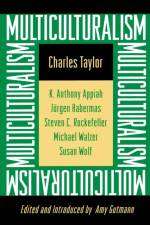
A new edition of the highly acclaimed book Multiculturalism and "e;The Politics of Recognition,"e; this paperback brings together an even wider range of leading philosophers and social scientists to probe the political controversy surrounding multiculturalism. Charles Taylor's initial inquiry, which considers whether the institutions of liberal democratic government make room--or should make room--for recognizing the worth of distinctive cultural traditions, remains the centerpiece of this discussion. It is now joined by Jurgen Habermas's extensive essay on the issues of recognition and the democratic constitutional state and by K. Anthony Appiah's commentary on the tensions between personal and collective identities, such as those shaped by religion, gender, ethnicity, race, and sexuality, and on the dangerous tendency of multicultural politics to gloss over such tensions. These contributions are joined by those of other well-known thinkers, who further relate the demand for recognition to issues of multicultural education, feminism, and cultural separatism. Praise for the previous edition:
The emergence and evolution of Egyptian feminism is an integral, but previously untold, part of the history of modern Egypt. Drawing upon a wide range of women's sources--memoirs, letters, essays, journalistic articles, fiction, treatises, and extensive oral histories--Margot Badran shows how Egyptian women assumed agency and in so doing subverted and refigured the conventional patriarchal order. Unsettling a common claim that "e;feminism is Western"e; and dismantling the alleged opposition between feminism and Islam, the book demonstrates how the Egyptian feminist movement in the first half of this century both advanced the nationalist cause and worked within the parameters of Islam.
Controversies about abortion, the environment, pornography, AIDS, and similar issues naturally lead to the question of whether there are any values that can be ultimately justified, or whether values are simply conventional. John Kekes argues that the present moral and political uncertainties are due to a deep change in our society from a dogmatic to a pluralistic view of values. Dogmatism is committed to there being only one justifiable system of values. Pluralism recognizes many such systems, and yet it avoids a chaotic relativism according to which all values are in the end arbitrary. Maintaining that good lives must be reasonable, but denying that they must conform to one true pattern, Kekes develops and justifies a pluralistic account of good lives and values, and works out its political, moral, and personal implications.
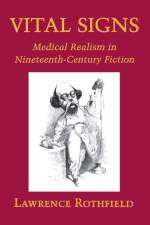
Vital Signs offers both a compelling reinterpretation of the nineteenth-century novel and a methodological challenge to literary historians. Rejecting theories that equate realism with representation, Lawrence Rothfield argues that literary history forms a subset of the history of discourses and their attendant practices. He shows how clinical medicine provided Balzac, Flaubert, Eliot, and others with narrative strategies, epistemological assumptions, and models of professional authority. He also traces the linkages between medicine's eventual decline in scientific and social status and realism's displacement by naturalism, detective fiction, and modernism.
To obtain sacred relics, medieval monks plundered tombs, avaricious merchants raided churches, and relic-mongers scoured the Roman catacombs. In a revised edition of Furta Sacra, Patrick Geary considers the social and cultural context for these acts, asking how the relics were perceived and why the thefts met with the approval of medieval Christians.
Washington's Farewell Address comprises various aspects of American political thinking. It reaches beyond any period limited in time and reveals the basic issue of the American attitude toward foreign policy: the tension between Idealism and Realism. Settled by men who looked for gain and by men who sought freedom, born into independence in a century of enlightened thinking and of power politics, America has wavered in her foreign policy between Idealism and Realism, and her great historical moments have occurred when both were combined. Thus the history of the Farwell Address forms only part of the wider, endless, urgent problem. Felix Gilbert analyzes the diverse intellectual trends which went into the making of the Farwell Address, and sheds light on its beginnings.
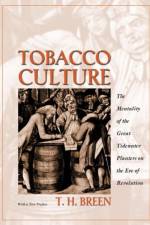
The great Tidewater planters of mid-eighteenth-century Virginia were fathers of the American Revolution. Perhaps first and foremost, they were also anxious tobacco farmers, harried by a demanding planting cycle, trans-Atlantic shipping risks, and their uneasy relations with English agents. George Washington, Thomas Jefferson, and their contemporaries lived in a world that was dominated by questions of debt from across an ocean but also one that stressed personal autonomy. T. H. Breen's study of this tobacco culture focuses on how elite planters gave meaning to existence. He examines the value-laden relationships--found in both the fields and marketplaces--that led from tobacco to politics, from agrarian experience to political protest, and finally to a break with the political and economic system that they believed threatened both personal independence and honor.
In 1942, Lt. Herman H. Goldstine, a former mathematics professor, was stationed at the Moore School of Electrical Engineering at the University of Pennsylvania. It was there that he assisted in the creation of the ENIAC, the first electronic digital computer. The ENIAC was operational in 1945, but plans for a new computer were already underway. The principal source of ideas for the new computer was John von Neumann, who became Goldstine's chief collaborator. Together they developed EDVAC, successor to ENIAC. After World War II, at the Institute for Advanced Study, they built what was to become the prototype of the present-day computer. Herman Goldstine writes as both historian and scientist in this first examination of the development of computing machinery, from the seventeenth century through the early 1950s. His personal involvement lends a special authenticity to his narrative, as he sprinkles anecdotes and stories liberally through his text.
Biological evolution is a fact--but the many conflicting theories of evolution remain controversial even today. In 1966, simple Darwinism, which holds that evolution functions primarily at the level of the individual organism, was threatened by opposing concepts such as group selection, a popular idea stating that evolution acts to select entire species rather than individuals. George Williams's famous argument in favor of the Darwinists struck a powerful blow to those in opposing camps. His Adaptation and Natural Selection, now a classic of science literature, is a thorough and convincing essay in defense of Darwinism; its suggestions for developing effective principles for dealing with the evolution debate and its relevance to many fields outside biology ensure the timelessness of this critical work.
In the current resurgence of interest in the biological basis of animal behavior and social organization, the ideas and questions pursued by Charles Darwin remain fresh and insightful. This is especially true of The Descent of Man and Selection in Relation to Sex, Darwin's second most important work. This edition is a facsimile reprint of the first printing of the first edition (1871), not previously available in paperback. The work is divided into two parts. Part One marshals behavioral and morphological evidence to argue that humans evolved from other animals. Darwin shoes that human mental and emotional capacities, far from making human beings unique, are evidence of an animal origin and evolutionary development. Part Two is an extended discussion of the differences between the sexes of many species and how they arose as a result of selection. Here Darwin lays the foundation for much contemporary research by arguing that many characteristics of animals have evolved not in response to the selective pressures exerted by their physical and biological environment, but rather to confer an advantage in sexual competition. These two themes are drawn together in two final chapters on the role of sexual selection in humans. In their Introduction, Professors Bonner and May discuss the place of The Descent in its own time and relation to current work in biology and other disciplines.
For over seventy-five years Edward S. Corwin's text has been a basic reference in the study of U.S. Constitutional Law. The 14th edition, the first new edition since 1973, brings the volume up to date through 1977. In this classic work, historian Edward Corwin presented the text of the U.S. Constitution along with his own commentary on its articles, sections, clauses, and amendments. Corwin was a renowned authority on constitutional law and jurisprudence, and was hired at Princeton University by Woodrow Wilson in 1905. Far from being an impersonal textbook, Corwin's edition was full of opinion. Not afraid to express his own strong views of the development of American law, Corwin offered piquant descriptions of the debates about the meaning of clauses, placing recent decisions of the court "e;in the familiar setting of his own views."e; The favor of his style is evident in his comments on judicial review ("e;American democracy's way of covering its bet"e;) and the cabinet ("e;an administrative anachronism"e; that should be replaced by a legislative council "e;whose daily salt does not come from the Presidential table"e;). Corwin periodically revised the book for nearly forty years, incorporating into each new edition his views of new Supreme Court rulings and other changes in American law. Although Corwin intended his book for the general public, his interpretations always gained the attention of legal scholars and practitioners. The prefaces he wrote to the revised editions were often controversial for the views he offered on the latest developments of constitutional law, and the book only grew in stature and recognition. After his death in 1963, other scholars prepared subsequent editions, fourteen in all.
This full-scale sequential reading of Thucydides' history of the Peloponnesian War will be invaluable to the specialist and also to those in search of an introduction and companion to the Histories. Moving beyond other studies by its focus on the reader's role in giving meaning to the text, it reveals Thucydides' use of objectivity not so much as a standard for the proper presentation of his subject matter as a method for communicating with his readers and involving them in the complexity and suffering of the Peloponnesian War. W. Robert Connor shows that as Thucydides' themes and ideas are reintroduced and developed, the initial reactions of the reader are challenged, subverted, and eventually made to contribute to a deeper understanding of the war.
This book describes a major literary culture caught in the act of becoming minor. In 1939, Virginia Woolf wrote in her diary, "e;Civilisation has shrunk."e; Her words captured not only the onset of World War II, but also a longer-term reversal of national fortune. The first comprehensive account of modernism and imperialism in England, A Shrinking Island tracks the joint eclipse of modernist aesthetics and British power from the literary experiments of the 1930s through the rise of cultural studies in the 1950s. Jed Esty explores the effects of declining empire on modernist form--and on the very meaning of Englishness. He ranges from canonical figures (T. S. Eliot and Virginia Woolf) to influential midcentury intellectuals (J. M. Keynes and J.R.R. Tolkien), from cultural studies pioneers (Raymond Williams and E. P. Thompson) to postwar migrant writers (George Lamming and Doris Lessing). Focusing on writing that converts the potential energy of the contracting British state into the language of insular integrity, he argues that an anthropological ethos of cultural holism came home to roost in late-imperial England. Esty's interpretation challenges popular myths about the death of English literature. It portrays the survivors of the modernist generation not as aesthetic dinosaurs, but as participants in the transition from empire to welfare state, from metropolitan art to national culture. Mixing literary criticism with postcolonial theory, his account of London modernism's end-stages and after-lives provides a fresh take on major works while redrawing the lines between modernism and postmodernism.
Why, alone among industrial democracies, does the United States not have national health insurance? While many books have addressed this question, Dead on Arrival is the first to do so based on original archival research for the full sweep of the twentieth century. Drawing on a wide range of political, reform, business, and labor records, Colin Gordon traces a complex and interwoven story of political failure and private response. He examines, in turn, the emergence of private, work-based benefits; the uniquely American pursuit of "e;social insurance"e;; the influence of race and gender on the health care debate; and the ongoing confrontation between reformers and powerful economic and health interests. Dead on Arrival stands alone in accounting for the failure of national or universal health policy from the early twentieth century to the present. As importantly, it also suggests how various interests (doctors, hospitals, patients, workers, employers, labor unions, medical reformers, and political parties) confronted the question of health care--as a private responsibility, as a job-based benefit, as a political obligation, and as a fundamental right. Using health care as a window onto the logic of American politics and American social provision, Gordon both deepens and informs the contemporary debate. Fluidly written and deftly argued, Dead on Arrival is thus not only a compelling history of the health care quandary but a fascinating exploration of the country's political economy and political culture through "e;the American century,"e; of the role of private interests and private benefits in the shaping of social policy, and, ultimately, of the ways the American welfare state empowers but also imprisons its citizens.
Locking up men who beat their partners sounds like a tremendous improvement over the days when men could hit women with impunity and women fearing for their lives could expect no help from authorities. But does our system of requiring the arrest, prosecution, and incarceration of abusers lessen domestic violence or help battered women? In this already controversial but vitally important book, we learn that the criminal justice system may actually be making the problem of domestic violence worse. Looking honestly at uncomfortable facts, Linda Mills makes the case for a complete overhaul and presents a promising alternative. The evidence turns up some surprising facts about the complexities of intimate abuse, facts that run against mainstream assumptions: The current system robs battered women of what power they do hold. Perhaps as many as half of women in abusive relationships stay in them for strong cultural, economic, religious, or emotional reasons. Jailing their partners often makes their situations worse. Women are at least as physically violent and emotionally aggressive as are men toward women, and women's aggression is often central to the dynamic of intimate abuse. Informed by compelling evidence, personal experience, and what abused women themselves say about their needs, Mills proposes no less than a fundamentally new system. Addressing the real dynamics of intimate abuse and incorporating proven methods of restorative justice, Mills's approach focuses on healing and transformation rather than shame or punishment. Already the subject of heated controversy, Insult to Injury offers a desperately needed and powerful means for using what we know to reduce violence in our homes.
Jean-Paul Sartre's famous question, "e;For whom do we write?"e; strikes close to home for francophone writers from the Maghreb. Do these writers address their compatriots, many of whom are illiterate or read no French, or a broader audience beyond Algeria, Morocco, and Tunisia? In Experimental Nations, Reda Bensmaia argues powerfully against the tendency to view their works not as literary creations worth considering for their innovative style or language but as "e;ethnographic"e; texts and to appraise them only against the "e;French literary canon."e; He casts fresh light on the original literary strategies many such writers have deployed to reappropriate their cultural heritage and "e;reconfigure"e; their nations in the decades since colonialism. Tracing the move from the anticolonial, nationalist, and arabist literature of the early years to the relative cosmopolitanism and diversity of Maghrebi francophone literature today, Bensmaia draws on contemporary literary and postcolonial theory to "e;deterritorialize"e; its study. Whether in Assia Djebar's novels and films, Abdelkebir Khatabi's prose poems or critical essays, or the novels of Nabile Fares, Abdelwahab Meddeb, or Mouloud Feraoun, he raises the veil that hides the intrinsic richness of these artists' works from the eyes of even an attentive audience. Bensmaia shows us how such Maghrebi writers have opened their nations as territories to rediscover and stake out, to invent, while creating a new language. In presenting this masterful account of "e;virtual"e; but veritable nations, he sets forth a new and fertile topography for francophone literature.
What if our strongest urges could be divested of their power to compel yet retain their power to fascinate us? What if our most basic appetites could be translated from the realm of bodily necessity to the sphere of artistic freedom? Jeff Nunokawa traces the variety of social pressures that inspired Oscar Wilde's lifelong effort to concoct forms of desire that thrill without menacing us, as well as the alchemies by which he sought to do so. Assigning Wilde a place of honor in a heady company of thinkers drawn from the ranks of philosophy, sociology, economics, psychoanalysis, and contemporary queer theory--Kant, Marx, Simmel, Weber, Freud, Hannah Arendt, Albert O. Hirschman, Erving Goffman, Judith Butler, Eve Sedgwick, and, of course, Michel Foucault--this is the first book to recognize Wilde not only as a blatant symptom of a familiar understanding of modern sexuality, but also as a grand theorist of the subject in his own right. The result is a wholly original portrait of the artist as a social critic who, in the midst of his humor, labored to illuminate and amend the book of love.
The Syntax of Class explores the literary expression of the crisis of social classification that occupied U.S. public discourse in the wake of the European revolutions of 1848. Lacking a native language for expressing class differences, American writers struggled to find social taxonomies able to capture--and manage--increasingly apparent inequalities of wealth and power. As new social types emerged at midcentury and, with them, new narratives of success and failure, police and reformers alarmed the public with stories of the rise and proliferation of the "e;dangerous classes."e; At the same time, novelists as different as Maria Cummins, Nathaniel Hawthorne, Frank Webb, Elizabeth Stuart Phelps, and Horatio Alger Jr. focused their attention on dense engagements across the lines of class. Turning to the middle-class idea of "e;home"e; as a figure for social harmony and to the lexicons of race and gender in their effort to devise a syntax for the representation of class, these writers worked to solve the puzzle of inequity in their putatively classless nation. This study charts the kaleidoscopic substitution of terms through which they rendered class distinctions and follows these renderings as they circulated in and through a wider cultural discourse about the dangers of class conflict. This welcome book is a finely achieved study of the operation of class in nineteenth-century American fiction--and of its entanglements with the languages of race and gender.
Avihu Zakai analyzes Jonathan Edwards's redemptive mode of historical thought in the context of the Enlightenment. As theologian and philosopher, Edwards has long been a towering figure in American intellectual history. Nevertheless, and despite Edwards's intense engagement with the nature of time and the meaning of history, there has been no serious attempt to explore his philosophy of history. Offering the first such exploration, Zakai considers Edwards's historical thought as a reaction, in part, to the varieties of Enlightenment historical narratives and their growing disregard for theistic considerations. Zakai analyzes the ideological origins of Edwards's insistence that the process of history depends solely on God's redemptive activity in time as manifested in a series of revivals throughout history, reading this doctrine as an answer to the threat posed to the Christian theological teleology of history by the early modern emergence of a secular conception of history and the modern legitimation of historical time. In response to the Enlightenment refashioning of secular, historical time and its growing emphasis on human agency, Edwards strove to re-establish God's preeminence within the order of time. Against the de-Christianization of history and removal of divine power from the historical process, he sought to re-enthrone God as the author and lord of history--and thus to re-enchant the historical world. Placing Edwards's historical thought in its broadest context, this book will be welcomed by those who study early modern history, American history, or religious culture and experience in America.
Platonic Noise brings classical and contemporary writings into conversation to enrich our experience of modern life and politics. Drawing on writers as diverse as Plato, Homer, Nietzsche, Borges, Don DeLillo, and Philip Roth, Peter Euben shows us the relevance of both popular literature and ancient Greek thought to current questions of loss, mourning, and democracy--all while arguing for the redeeming qualities of political and intellectual work and making an original case against presentism. Juxtaposing ancient and contemporary texts, politics, and culture, Euben reflects on a remarkable range of recent issues and controversies. He discusses Stoic cosmopolitanism and globalization, takes a critical look at Nietzsche's own efforts to make the Greeks speak to the issues of his day, examines a Greek tragedy through Hannah Arendt's eyes, compares the role of comedy in ancient Athens and contemporary America, analyzes political theory as a reaction to an acute sense of loss, and considers questions of agency and morality. Platonic Noise makes a case for reading political theory and politics through literature. Working as much through example as through explicit argument, Euben casts the literary memory of Athenian democracy as a crucial cultural resource and a presence in contemporary political and theoretical debates. In so doing, he reasserts the moral value of what we used to call participatory democracy and the practical value of seeing ourselves with the help of insights from long-gone Greeks.
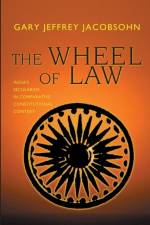
How can religious liberty be guaranteed in societies where religion pervades everyday life? In The Wheel of Law, Gary Jacobsohn addresses this dilemma by examining the constitutional development of secularism in India within an unprecedented cross-national framework that includes Israel and the United States. He argues that a country's particular constitutional theory and practice must be understood within its social and political context. The experience of India, where religious life is in profound tension with secular democratic commitment, offers a valuable perspective not only on questions of jurisprudence and political theory arising in countries where religion permeates the fabric of society, but also on the broader task of ensuring religious liberty in constitutional polities. India's social structure is so entwined with religion, Jacobsohn emphasizes, that meaningful social reform presupposes state intervention in the spiritual domain. Hence India's "e;ameliorative"e; model of secular constitutionalism, designed to ameliorate the disabling effects of the caste system and other religiously based practices. Jacobsohn contrasts this with the "e;visionary"e; secularism of Israel, where the state identifies itself with a particular religion, and with America's "e;assimilative"e; secularism. Constitutional globalization is as much a reality as economic globalization, Jacobsohn concludes, and within this phenomenon the place of religion in liberal democracy is among the most vexing challenges confronting us today. A richly textured account of the Indian experience with secularism, developed in a broad comparative framework, this book is for all those seeking ways to respond to this challenge.
In his 1996 State of the Union Address, President Bill Clinton announced that the "e;age of big government is over."e; Some Republicans accused him of cynically appropriating their themes, while many Democrats thought he was betraying the principles of the New Deal and the Great Society. Mark Tushnet argues that Clinton was stating an observed fact: the emergence of a new constitutional order in which the aspiration to achieve justice directly through law has been substantially chastened. Tushnet argues that the constitutional arrangements that prevailed in the United States from the 1930s to the 1990s have ended. We are now in a new constitutional order--one characterized by divided government, ideologically organized parties, and subdued constitutional ambition. Contrary to arguments that describe a threatened return to a pre-New Deal constitutional order, however, this book presents evidence that our current regime's animating principle is not the old belief that government cannot solve any problems but rather that government cannot solve any more problems. Tushnet examines the institutional arrangements that support the new constitutional order as well as Supreme Court decisions that reflect it. He also considers recent developments in constitutional scholarship, focusing on the idea of minimalism as appropriate to a regime with chastened ambitions. Tushnet discusses what we know so far about the impact of globalization on domestic constitutional law, particularly in the areas of international human rights and federalism. He concludes with predictions about the type of regulation we can expect from the new order. This is a major new analysis of the constitutional arrangements in the United States. Though it will not be received without controversy, it offers real explanatory and predictive power and provides important insights to both legal theorists and political scientists.
How did the United States, founded as colonies with explicitly religious aspirations, come to be the first modern state whose commitment to the separation of church and state was reflected in its constitution? Frank Lambert explains why this happened, offering in the process a synthesis of American history from the first British arrivals through Thomas Jefferson's controversial presidency. Lambert recognizes that two sets of spiritual fathers defined the place of religion in early America: what Lambert calls the Planting Fathers, who brought Old World ideas and dreams of building a "e;City upon a Hill,"e; and the Founding Fathers, who determined the constitutional arrangement of religion in the new republic. While the former proselytized the "e;one true faith,"e; the latter emphasized religious freedom over religious purity. Lambert locates this shift in the mid-eighteenth century. In the wake of evangelical revival, immigration by new dissenters, and population expansion, there emerged a marketplace of religion characterized by sectarian competition, pluralism, and widened choice. During the American Revolution, dissenters found sympathetic lawmakers who favored separating church and state, and the free marketplace of religion gained legal status as the Founders began the daunting task of uniting thirteen disparate colonies. To avoid discord in an increasingly pluralistic and contentious society, the Founders left the religious arena free of government intervention save for the guarantee of free exercise for all. Religious people and groups were also free to seek political influence, ensuring that religion's place in America would always be a contested one, but never a state-regulated one. An engaging and highly readable account of early American history, this book shows how religious freedom came to be recognized not merely as toleration of dissent but as a natural right to be enjoyed by all Americans.
Is everything in a university for sale if the price is right? In this book, one of America's leading educators cautions that the answer is all too often "e;yes."e; Taking the first comprehensive look at the growing commercialization of our academic institutions, Derek Bok probes the efforts on campus to profit financially not only from athletics but increasingly, from education and research as well. He shows how such ventures are undermining core academic values and what universities can do to limit the damage. Commercialization has many causes, but it could never have grown to its present state had it not been for the recent, rapid growth of money-making opportunities in a more technologically complex, knowledge-based economy. A brave new world has now emerged in which university presidents, enterprising professors, and even administrative staff can all find seductive opportunities to turn specialized knowledge into profit. Bok argues that universities, faced with these temptations, are jeopardizing their fundamental mission in their eagerness to make money by agreeing to more and more compromises with basic academic values. He discusses the dangers posed by increased secrecy in corporate-funded research, for-profit Internet companies funded by venture capitalists, industry-subsidized educational programs for physicians, conflicts of interest in research on human subjects, and other questionable activities. While entrepreneurial universities may occasionally succeed in the short term, reasons Bok, only those institutions that vigorously uphold academic values, even at the cost of a few lucrative ventures, will win public trust and retain the respect of faculty and students. Candid, evenhanded, and eminently readable, Universities in the Marketplace will be widely debated by all those concerned with the future of higher education in America and beyond.
This book compares two challenges made to American public school curricula in the 1980s and 1990s. It identifies striking similarities between proponents of Afrocentrism and creationism, accounts for their differential outcomes, and draws important conclusions for the study of culture, organizations, and social movements. Amy Binder gives a brief history of both movements and then describes how their challenges played out in seven school districts. Despite their very different constituencies--inner-city African American cultural essentialists and predominately white suburban Christian conservatives--Afrocentrists and creationists had much in common. Both made similar arguments about oppression and their children's well-being, both faced skepticism from educators about their factual claims, and both mounted their challenges through bureaucratic channels. In each case, challenged school systems were ultimately able to minimize or reject challengers' demands, but the process varied by case and type of challenge. Binder finds that Afrocentrists were more successful in advancing their cause than were creationists because they appeared to offer a solution to the real problem of urban school failure, met with more administrative sympathy toward their complaints of historic exclusion, sought to alter lower-prestige curricula (history, not science), and faced opponents who lacked a legal remedy comparable to the rule of church-state separation invoked by creationism's opponents. Binder's analysis yields several lessons for social movements research, suggesting that researchers need to pay greater attention to how movements seek to influence bureaucratic decision making, often from within. It also demonstrates the benefits of examining discursive, structural, and institutional factors in concert.
Abonner på vårt nyhetsbrev og få rabatter og inspirasjon til din neste leseopplevelse.
Ved å abonnere godtar du vår personvernerklæring.