


















Gjør som tusenvis av andre bokelskere
Abonner på vårt nyhetsbrev og få rabatter og inspirasjon til din neste leseopplevelse.
Ved å abonnere godtar du vår personvernerklæring.Du kan når som helst melde deg av våre nyhetsbrev.

Does a novel focus on one life or many? Alex Woloch uses this simple question to develop a powerful new theory of the realist novel, based on how narratives distribute limited attention among a crowded field of characters. His argument has important implications for both literary studies and narrative theory. Characterization has long been a troubled and neglected problem within literary theory. Through close readings of such novels as Pride and Prejudice, Great Expectations, and Le Pere Goriot, Woloch demonstrates that the representation of any character takes place within a shifting field of narrative attention and obscurity. Each individual--whether the central figure or a radically subordinated one--emerges as a character only through his or her distinct and contingent space within the narrative as a whole. The "e;character-space,"e; as Woloch defines it, marks the dramatic interaction between an implied person and his or her delimited position within a narrative structure. The organization of, and clashes between, many character-spaces within a single narrative totality is essential to the novel's very achievement and concerns, striking at issues central to narrative poetics, the aesthetics of realism, and the dynamics of literary representation. Woloch's discussion of character-space allows for a different history of the novel and a new definition of characterization itself. By making the implied person indispensable to our understanding of literary form, this book offers a forward-looking avenue for contemporary narrative theory.
Since its publication in the mid-eighteenth century, Hume's discussion of miracles has been the target of severe and often ill-tempered attacks. In this book, one of our leading historians of philosophy offers a systematic response to these attacks. Arguing that these criticisms have--from the very start--rested on misreadings, Robert Fogelin begins by providing a narrative of the way Hume's argument actually unfolds. What Hume's critics (and even some of his defenders) have failed to see is that Hume's primary argument depends on fixing the appropriate standards of evaluating testimony presented on behalf of a miracle. Given the definition of a miracle, Hume quite reasonably argues that the standards for evaluating such testimony must be extremely high. Hume then argues that, as a matter of fact, no testimony on behalf of a religious miracle has even come close to meeting the appropriate standards for acceptance. Fogelin illustrates that Hume's critics have consistently misunderstood the structure of this argument--and have saddled Hume with perfectly awful arguments not found in the text. He responds first to some early critics of Hume's argument and then to two recent critics, David Johnson and John Earman. Fogelin's goal, however, is not to "e;bash the bashers,"e; but rather to show that Hume's treatment of miracles has a coherence, depth, and power that makes it still the best work on the subject.
Written by one of America's leading political thinkers, this is a book about the good, the bad, and the ugly of identity politics.Amy Gutmann rises above the raging polemics that often characterize discussions of identity groups and offers a fair-minded assessment of the role they play in democracies. She addresses fundamental questions of timeless urgency while keeping in focus their relevance to contemporary debates: Do some identity groups undermine the greater democratic good and thus their own legitimacy in a democratic society? Even if so, how is a democracy to fairly distinguish between groups such as the KKK on the one hand and the NAACP on the other? Should democracies exempt members of some minorities from certain legitimate or widely accepted rules, such as Canada's allowing Sikh members of the Royal Canadian Mounted Police to wear turbans instead of Stetsons? Do voluntary groups like the Boy Scouts have a right to discriminate on grounds of sexual preference, gender, or race? Identity-group politics, Gutmann shows, is not aberrant but inescapable in democracies because identity groups represent who people are, not only what they want--and who people are shapes what they demand from democratic politics. Rather than trying to abolish identity politics, Gutmann calls upon us to distinguish between those demands of identity groups that aid and those that impede justice. Her book does justice to identity groups, while recognizing that they cannot be counted upon to do likewise to others. Clear, engaging, and forcefully argued, Amy Gutmann's Identity in Democracy provides the fractious world of multicultural and identity-group scholarship with a unifying work that will sustain it for years to come.
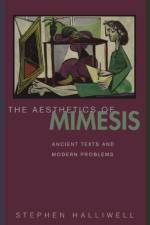
Mimesis is one of the oldest, most fundamental concepts in Western aesthetics. This book offers a new, searching treatment of its long history at the center of theories of representational art: above all, in the highly influential writings of Plato and Aristotle, but also in later Greco-Roman philosophy and criticism, and subsequently in many areas of aesthetic controversy from the Renaissance to the twentieth century. Combining classical scholarship, philosophical analysis, and the history of ideas--and ranging across discussion of poetry, painting, and music--Stephen Halliwell shows with a wealth of detail how mimesis, at all stages of its evolution, has been a more complex, variable concept than its conventional translation of "e;imitation"e; can now convey. Far from providing a static model of artistic representation, mimesis has generated many different models of art, encompassing a spectrum of positions from realism to idealism. Under the influence of Platonist and Aristotelian paradigms, mimesis has been a crux of debate between proponents of what Halliwell calls "e;world-reflecting"e; and "e;world-simulating"e; theories of representation in both the visual and musico-poetic arts. This debate is about not only the fraught relationship between art and reality but also the psychology and ethics of how we experience and are affected by mimetic art. Moving expertly between ancient and modern traditions, Halliwell contends that the history of mimesis hinges on problems that continue to be of urgent concern for contemporary aesthetics.
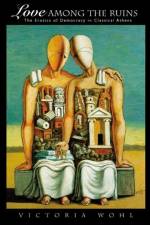
Classical Athenian literature often speaks of democratic politics in sexual terms. Citizens are urged to become lovers of the polis, and politicians claim to be lovers of the people. Victoria Wohl argues that this was no dead metaphor. Exploring the intersection between eros and politics in democratic Athens, Wohl traces the private desires aroused by public ideology and the political consequences of citizens' most intimate longings. Love among the Ruins analyzes the civic fantasies that lay beneath (but not necessarily parallel to) Athens's political ideology. It shows how desire can disrupt politics and provides a deeper--at times disturbing--insight into the democratic unconscious of ancient Athens. The Athenians imagined the perfect citizen as a noble and manly lover. But this icon conceals a multitude of other possible figures: sexy tyrants, potent pathics, and seductive perverts. Through critical re-readings of canonical texts, Wohl investigates these fantasies, which seem so antithetical to Athens's manifest ideals. She examines the interrelation of patriotism and narcissism, the trope of politics as prostitution, the elite suspicion of political pleasure, and the status of perversion within Athens's sexual and political norms. She also discusses the morbid drive that propelled Athenian imperialism, as well as democratic Athens's paradoxical fascination with the joys of tyranny. Drawing on contemporary critical theory in original ways, Wohl sketches the relationship between citizen psyche and political life to illuminate the complex, frequently contradictory passions that structure democracy, ancient and modern.
The modeling of stochastic dependence is fundamental for understanding random systems evolving in time. When measured through linear correlation, many of these systems exhibit a slow correlation decay--a phenomenon often referred to as long-memory or long-range dependence. An example of this is the absolute returns of equity data in finance. Selfsimilar stochastic processes (particularly fractional Brownian motion) have long been postulated as a means to model this behavior, and the concept of selfsimilarity for a stochastic process is now proving to be extraordinarily useful. Selfsimilarity translates into the equality in distribution between the process under a linear time change and the same process properly scaled in space, a simple scaling property that yields a remarkably rich theory with far-flung applications. After a short historical overview, this book describes the current state of knowledge about selfsimilar processes and their applications. Concepts, definitions and basic properties are emphasized, giving the reader a road map of the realm of selfsimilarity that allows for further exploration. Such topics as noncentral limit theory, long-range dependence, and operator selfsimilarity are covered alongside statistical estimation, simulation, sample path properties, and stochastic differential equations driven by selfsimilar processes. Numerous references point the reader to current applications. Though the text uses the mathematical language of the theory of stochastic processes, researchers and end-users from such diverse fields as mathematics, physics, biology, telecommunications, finance, econometrics, and environmental science will find it an ideal entry point for studying the already extensive theory and applications of selfsimilarity.
Recognizing that robust decision making is vital in risk management, this book provides concepts and algorithms for computing the best decision in view of the worst-case scenario. The main tool used is minimax, which ensures robust policies with guaranteed optimal performance that will improve further if the worst case is not realized. The applications considered are drawn from finance, but the design and algorithms presented are equally applicable to problems of economic policy, engineering design, and other areas of decision making. Critically, worst-case design addresses not only Armageddon-type uncertainty. Indeed, the determination of the worst case becomes nontrivial when faced with numerous--possibly infinite--and reasonably likely rival scenarios. Optimality does not depend on any single scenario but on all the scenarios under consideration. Worst-case optimal decisions provide guaranteed optimal performance for systems operating within the specified scenario range indicating the uncertainty. The noninferiority of minimax solutions--which also offer the possibility of multiple maxima--ensures this optimality. Worst-case design is not intended to necessarily replace expected value optimization when the underlying uncertainty is stochastic. However, wise decision making requires the justification of policies based on expected value optimization in view of the worst-case scenario. Conversely, the cost of the assured performance provided by robust worst-case decision making needs to be evaluated relative to optimal expected values. Written for postgraduate students and researchers engaged in optimization, engineering design, economics, and finance, this book will also be invaluable to practitioners in risk management.
Based on a highly regarded lecture course at Moscow State University, this is a clear and systematic introduction to gauge field theory. It is unique in providing the means to master gauge field theory prior to the advanced study of quantum mechanics. Though gauge field theory is typically included in courses on quantum field theory, many of its ideas and results can be understood at the classical or semi-classical level. Accordingly, this book is organized so that its early chapters require no special knowledge of quantum mechanics. Aspects of gauge field theory relying on quantum mechanics are introduced only later and in a graduated fashion--making the text ideal for students studying gauge field theory and quantum mechanics simultaneously. The book begins with the basic concepts on which gauge field theory is built. It introduces gauge-invariant Lagrangians and describes the spectra of linear perturbations, including perturbations above nontrivial ground states. The second part focuses on the construction and interpretation of classical solutions that exist entirely due to the nonlinearity of field equations: solitons, bounces, instantons, and sphalerons. The third section considers some of the interesting effects that appear due to interactions of fermions with topological scalar and gauge fields. Mathematical digressions and numerous problems are included throughout. An appendix sketches the role of instantons as saddle points of Euclidean functional integral and related topics. Perfectly suited as an advanced undergraduate or beginning graduate text, this book is an excellent starting point for anyone seeking to understand gauge fields.
For hundreds of years, the study of elliptic curves has played a central role in mathematics. The past century in particular has seen huge progress in this study, from Mordell's theorem in 1922 to the work of Wiles and Taylor-Wiles in 1994. Nonetheless, there remain many fundamental questions where we do not even know what sort of answers to expect. This book explores two of them: What is the average rank of elliptic curves, and how does the rank vary in various kinds of families of elliptic curves? Nicholas Katz answers these questions for families of ''big'' twists of elliptic curves in the function field case (with a growing constant field). The monodromy-theoretic methods he develops turn out to apply, still in the function field case, equally well to families of big twists of objects of all sorts, not just to elliptic curves. The leisurely, lucid introduction gives the reader a clear picture of what is known and what is unknown at present, and situates the problems solved in this book within the broader context of the overall study of elliptic curves. The book's technical core makes use of, and explains, various advanced topics ranging from recent results in finite group theory to the machinery of l-adic cohomology and monodromy. Twisted L-Functions and Monodromy is essential reading for anyone interested in number theory and algebraic geometry.
Available in English for the first time, Imperfect Garden is both an approachable intellectual history and a bracing treatise on how we should understand and experience our lives. In it, one of France's most prominent intellectuals explores the foundations, limits, and possibilities of humanist thinking. Through his critical but sympathetic excavation of humanism, Tzvetan Todorov seeks an answer to modernity's fundamental challenge: how to maintain our hard-won liberty without paying too dearly in social ties, common values, and a coherent and responsible sense of self. Todorov reads afresh the works of major humanists--primarily Montaigne, Rousseau, and Constant, but also Descartes, Montesquieu, and Toqueville. Each chapter considers humanism's approach to one major theme of human existence: liberty, social life, love, self, morality, and expression. Discussing humanism in dialogue with other systems, Todorov finds a response to the predicament of modernity that is far more instructive than any offered by conservatism, scientific determinism, existential individualism, or humanism's other contemporary competitors. Humanism suggests that we are members of an intelligent and sociable species who can act according to our will while connecting the well-being of other members with our own. It is through this understanding of free will, Todorov argues, that we can use humanism to rescue universality and reconcile human liberty with solidarity and personal integrity. Placing the history of ideas at the service of a quest for moral and political wisdom, Todorov's compelling and no doubt controversial rethinking of humanist ideas testifies to the enduring capacity of those ideas to meditate on--and, if we are fortunate, cultivate--the imperfect garden in which we live.
Challenging the modern assumption that ancient Athens is best understood as a polis, Edward Cohen boldly recasts our understanding of Athenian political and social life. Cohen demonstrates that ancient sources referred to Athens not only as a polis, but also as a "e;nation"e; (ethnos), and that Athens did encompass the characteristics now used to identify a "e;nation."e; He argues that in Athens economic, religious, sexual, and social dimensions were no less significant than political and juridical considerations, and accordingly rejects prevailing scholarship's equation of Athens with its male citizen body. In fact, Cohen shows that the categories of "e;citizen"e; and "e;noncitizen"e; were much more fluid than is often assumed, and that some noncitizens exercised considerable power. He explores such subjects as the economic importance of businesswomen and wealthy slaves; the authority exercised by enslaved public functionaries; the practical egalitarianism of erotic relations and the broad and meaningful protections against sexual abuse of both free persons and slaves, and especially of children; the wide involvement of all sectors of the population in significant religious and local activities. All this emerges from the use of fresh legal, economic, and archaeological evidence and analysis that reveal the social complexity of Athens, and the demographic and geographic factors giving rise to personal anonymity and limiting personal contacts--leading to the creation of an "e;imagined community"e; with a mutually conceptualized identity, a unified economy, and national "e;myths"e; set in historical fabrication.
Breaking off the ordinary flow of experience, the passions create a state of exception. In their suddenness and intensity, they map a personal world, fix and qualify our attention, and impel our actions. Outraged anger drives us to write laws that will later be enforced by impersonal justice. Intense grief at the death of someone in our life discloses the contours of that life to us. Wonder spurs scientific inquiry. The strong current of Western thought that idealizes a dispassionate world has ostracized the passions as quaint, even dangerous. Intense states have come to be seen as symptoms of pathology. A fondness for irony along with our civic ideal of tolerance lead us to prefer the diluted emotional life of feelings and moods. Demonstrating enormous intellectual originality and generosity, Philip Fisher meditates on whether this victory is permanent-and how it might diminish us. From Aristotle to Hume to contemporary biology, Fisher finds evidence that the passions have defined a core of human nature no less important than reason or desire. Traversing the Iliad, King Lear, Moby Dick, and other great works, he discerns the properties of the high-spirited states we call the passions. Are vehement states compatible with a culture that values private, selectively shared experiences? How do passions differ from emotions? Does anger have an opposite? Do the passions give scale, shape, and significance to our experience of time? Is a person incapable of anger more dangerous than someone who is irascible? In reintroducing us to our own vehemence, Fisher reminds us that it is only through our strongest passions that we feel the contours of injustice, mortality, loss, and knowledge. It is only through our personal worlds that we can know the world.
For Danielle Allen, punishment is more a window onto democratic Athens' fundamental values than simply a set of official practices. From imprisonment to stoning to refusal of burial, instances of punishment in ancient Athens fueled conversations among ordinary citizens and political and literary figures about the nature of justice. Re-creating in vivid detail the cultural context of this conversation, Allen shows that punishment gave the community an opportunity to establish a shining myth of harmony and cleanliness: that the city could be purified of anger and social struggle, and perfect order achieved. Each member of the city--including notably women and slaves--had a specific role to play in restoring equilibrium among punisher, punished, and society. The common view is that democratic legal processes moved away from the "e;emotional and personal"e; to the "e;rational and civic,"e; but Allen shows that anger, honor, reciprocity, spectacle, and social memory constantly prevailed in Athenian law and politics. Allen draws upon oratory, tragedy, and philosophy to present the lively intellectual climate in which punishment was incurred, debated, and inflicted by Athenians. Broad in scope, this book is one of the first to offer both a full account of punishment in antiquity and an examination of the political stakes of democratic punishment. It will engage classicists, political theorists, legal historians, and anyone wishing to learn more about the relations between institutions and culture, normative ideas and daily events, punishment and democracy.
In The Afterlife of Property, Jeff Nunokawa investigates the conviction passed on by the Victorian novel that a woman's love is the only fortune a man can count on to last. Taking for his example four texts, Charles Dickens's Little Dorrit and Dombey and Son, and George Eliot's Daniel Deronda and Silas Marner, Nunokawa studies the diverse ways that the Victorian novel imagines women as property removed from the uncertainties of the marketplace. Along the way, he notices how the categories of economics, gender, sexuality, race, and fiction define one another in the Victorian novel. If the novel figures women as safe property, Nunokawa argues, the novel figures safe property as a woman. And if the novel identifies the angel of the house, the desexualized subject of Victorian fantasies of ideal womanhood, as safe property, it identifies various types of fiction, illicit sexualities, and foreign races with the enemy of such property: the commodity form. Nunokawa shows how these convergences of fiction, sexuality, and race with the commodity form are part of a scapegoat scenario, in which the otherwise ubiquitous instabilities of the marketplace can be contained and expunged, clearing the way for secure possession. The Afterlife of Property addresses literary and cultural theory, gender studies, and gay and lesbian studies.
Today's top financial-risk professionals have come to rely on ever-more sophisticated mathematics in their attempts to come to grips with financial risk. But this excessive reliance on quantitative precision is misleading--and it puts us all at risk. This is the case that Riccardo Rebonato makes in Plight of the Fortune Tellers--and coming from someone who is both an experienced market professional and an academic, this heresy is worth listening to. Rebonato forcefully argues that we must restore genuine decision making to our financial planning, and he shows us how to do it using probability, experimental psychology, and decision theory. This is the only way to effectively manage financial risk in a manner congruent with how human beings actually react to chance. Rebonato challenges us to rethink the standard wisdom about probability in financial-risk management. Risk managers have become obsessed with measuring risk and believe that these quantitative results by themselves can guide sound financial choices--but they can't. In this book, Rebonato offers a radical yet surprisingly commonsense solution, one that seeks to remind us that managing risk comes down to real people making decisions under uncertainty.Plight of the Fortune Tellers is not only a book for the decision makers of Wall Street, it's a must-read for anyone concerned about how today's financial markets are run. The stakes have never been higher--can you risk it?
A crisis is looming for baby boomers and anyone else who hopes to retire in the coming years. In When I'm Sixty-Four, Teresa Ghilarducci, the nation's leading authority on the economics of retirement, explains how to confront this crisis head-on, revealing the causes behind the increasingly precarious economics of old age in America and proposing a bold plan to guarantee retirement security for every working citizen. Retirement is one of the hallmarks of a prosperous, civilized market economy. Yet in America today Social Security is on the ropes. Government and employers are dismantling pension security, forcing older people to work longer. The federal government spends billions in exemptions for 401(k)s and other voluntary retirement accounts, yet retirement savings for most workers is falling. Ghilarducci takes an unflinching look at the eroding economic structure of retirement in America--and what she finds is alarming. She exposes the failures of pension regulators and the false hopes of privatized Social Security. She tells the ugly truth about risky 401(k) plans, do-it-yourself retirement schemes, and companies like Enron that have left employees without any retirement savings. Ghilarducci puts forward a sweeping plan to revive the retirement-income system, a plan that will ensure that, after forty years of work, every American will receive 70 percent of their preretirement earnings, guaranteed for life. No other book makes such a persuasive case for overhauling the pension and Social Security system in order to provide older Americans with the financial stability they have earned and deserve.
Even as the evidence of global warming mounts, the international response to this serious threat is coming unraveled. The United States has formally withdrawn from the 1997 Kyoto Protocol; other key nations are facing difficulty in meeting their Kyoto commitments; and developing countries face no limit on their emissions of the gases that cause global warming. In this clear and cogent book-reissued in paperback with an afterword that comments on recent events--David Victor explains why the Kyoto Protocol was never likely to become an effective legal instrument. He explores how its collapse offers opportunities to establish a more realistic alternative. Global warming continues to dominate environmental news as legislatures worldwide grapple with the process of ratification of the December 1997 Kyoto Protocol. The collapse of the November 2000 conference at the Hague showed clearly how difficult it will be to bring the Kyoto treaty into force. Yet most politicians, policymakers, and analysts hailed it as a vital first step in slowing greenhouse warming. David Victor was not among them. Kyoto's fatal flaw, Victor argues, is that it can work only if emissions trading works. The Protocol requires industrialized nations to reduce their emissions of greenhouse gases to specific targets. Crucially, the Protocol also provides for so-called "e;emissions trading,"e; whereby nations could offset the need for rapid cuts in their own emissions by buying emissions credits from other countries. But starting this trading system would require creating emission permits worth two trillion dollars--the largest single invention of assets by voluntary international treaty in world history. Even if it were politically possible to distribute such astronomical sums, the Protocol does not provide for adequate monitoring and enforcement of these new property rights. Nor does it offer an achievable plan for allocating new permits, which would be essential if the system were expanded to include developing countries. The collapse of the Kyoto Protocol--which Victor views as inevitable--will provide the political space to rethink strategy. Better alternatives would focus on policies that control emissions, such as emission taxes. Though economically sensible, however, a pure tax approach is impossible to monitor in practice. Thus, the author proposes a hybrid in which governments set targets for both emission quantities and tax levels. This offers the important advantages of both emission trading and taxes without the debilitating drawbacks of each. Individuals at all levels of environmental science, economics, public policy, and politics-from students to professionals--and anyone else hoping to participate in the debate over how to slow global warming will want to read this book.
In this book, Sara Monoson challenges the longstanding and widely held view that Plato is a virulent opponent of all things democratic. She does not, however, offer in its place the equally mistaken idea that he is somehow a partisan of democracy. Instead, she argues that we should attend more closely to Plato's suggestion that democracy is horrifying and exciting, and she seeks to explain why he found it morally and politically intriguing. Monoson focuses on Plato's engagement with democracy as he knew it: a cluster of cultural practices that reach into private and public life, as well as a set of governing institutions. She proposes that while Plato charts tensions between the claims of democratic legitimacy and philosophical truth, he also exhibits a striking attraction to four practices central to Athenian democratic politics: intense antityrantism, frank speaking, public funeral oratory, and theater-going. By juxtaposing detailed examination of these aspects of Athenian democracy with analysis of the figurative language, dramatic structure, and arguments of the dialogues, she shows that Plato systematically links democratic ideals and activities to philosophic labor. Monoson finds that Plato's political thought exposes intimate connections between Athenian democratic politics and the practice of philosophy. Situating Plato's political thought in the context of the Athenian democratic imaginary, Monoson develops a new, textured way of thinking of the relationship between Plato's thought and the politics of his city.
Robert Gibbs presents here an ambitious new theory of ethics. Drawing on a striking combination of intellectual traditions, including Jewish thought, continental philosophy, and American pragmatism, Gibbs argues that ethics is primarily concerned with responsibility and is not--as philosophers have often assumed--principally a matter of thinking about the right thing to do and acting in accordance with the abstract dictates of reason or will. More specifically, ethics is concerned with attending to others' questions and bearing responsibility for what they do. Gibbs builds this innovative case by exploring the implicit responsibilities in a broad range of human interactions, paying especially close attention to the signs that people give and receive as they relate to each other. Why Ethics? starts by examining the simple actions of listening and speaking, reading and writing, and by focusing on the different responsibilities that each action entails. The author discusses what he describes as the mutual responsibilities implicit in the actions of reasoning, mediating, and judging. He assesses the relationships among ethics, pragmatics, and Jewish philosophy. The book concludes by looking at the relation of memory and the immemorial, emphasizing the need to respond for past actions by confessing, seeking forgiveness, and making reconciliations. In format, Gibbs adopts a Talmudic approach, interweaving brief citations from primary texts with his commentary. He draws these texts from diverse thinkers and sources, including Levinas, Derrida, Habermas, Rosenzweig, Luhmann, Peirce, James, Royce, Benjamin, Maimonides, the Bible, and the Talmud. Ranging over philosophy, literary theory, social theory, and historiography, this is an ambitious and provocative work that holds profound lessons for how we think about ethics and how we seek to live responsibly.
This is a time of far-reaching change and debate in American education and social policy, spurred in part by a rediscovery that civil-society institutions are often better than government at meeting human needs. As Charles Glenn shows in this book, faith-based schools and social agencies have been particularly effective, especially in meeting the needs of the most vulnerable. However, many oppose providing public funds for religious institutions, either on the grounds that it would threaten the constitutional separation of church and state or from concern it might dilute or secularize the distinctive character of the institutions themselves. Glenn tackles these arguments head on. He builds a uniquely comprehensive and persuasive case for faith-based organizations playing a far more active role in American schools and social agencies. And, most importantly, he shows that they could do so both while receiving public funds and while striking a workable balance between accountability and autonomy. Glenn is ideally placed to make this argument. A leading expert on international education policies, he was for many years the director of urban education and civil rights for the Massachusetts Department of Education, and also serves as an Associate Minister of inner-city churches in Boston. Glenn draws on all his varied experience here as he reviews the policies and practices of governments in the United States and Europe as they have worked with faith-based schools and also with such social agencies as the Salvation Army and Teen Challenge. He seeks to answer key theoretical and practical questions: Why should government make greater use of faith-based providers? How could they do so without violating First Amendment limits? What working relationships protect the goals and standards both of government and of the organizations that the government funds? Glenn shows that, with appropriate forms of accountability and a strong commitment to a distinctive vision of service, faith-based organizations can collaborate safely with government, to their mutual benefit and that of those they serve. This is a major contribution to one of the most important topics in political and social debate today.
What does economics have to do with law? Suppose legislators propose that armed robbers receive life imprisonment. Editorial pages applaud them for getting tough on crime. Constitutional lawyers raise the issue of cruel and unusual punishment. Legal philosophers ponder questions of justness. An economist, on the other hand, observes that making the punishment for armed robbery the same as that for murder encourages muggers to kill their victims. This is the cut-to-the-chase quality that makes economics not only applicable to the interpretation of law, but beneficial to its crafting. Drawing on numerous commonsense examples, in addition to his extensive knowledge of Chicago-school economics, David D. Friedman offers a spirited defense of the economic view of law. He clarifies the relationship between law and economics in clear prose that is friendly to students, lawyers, and lay readers without sacrificing the intellectual heft of the ideas presented. Friedman is the ideal spokesman for an approach to law that is controversial not because it overturns the conclusions of traditional legal scholars--it can be used to advocate a surprising variety of political positions, including both sides of such contentious issues as capital punishment--but rather because it alters the very nature of their arguments. For example, rather than viewing landlord-tenant law as a matter of favoring landlords over tenants or tenants over landlords, an economic analysis makes clear that a bad law injures both groups in the long run. And unlike traditional legal doctrines, economics offers a unified approach, one that applies the same fundamental ideas to understand and evaluate legal rules in contract, property, crime, tort, and every other category of law, whether in modern day America or other times and places--and systems of non-legal rules, such as social norms, as well. This book will undoubtedly raise the discourse on the increasingly important topic of the economics of law, giving both supporters and critics of the economic perspective a place to organize their ideas.
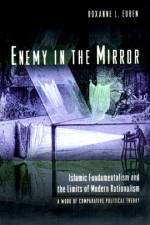
A firm grasp of Islamic fundamentalism has often eluded Western political observers, many of whom view it in relation to social and economic upheaval or explain it away as an irrational reaction to modernity. Here Roxanne Euben makes new sense of this belief system by revealing it as a critique of and rebuttal to rationalist discourse and post-Enlightenment political theories. Euben draws on political, postmodernist, and critical theory, as well as Middle Eastern studies, Islamic thought, comparative politics, and anthropology, to situate Islamic fundamentalist thought within a transcultural theoretical context. In so doing, she illuminates an unexplored dimension of the Islamist movement and holds a mirror up to anxieties within contemporary Western political thought about the nature and limits of modern rationalism--anxieties common to Christian fundamentalists, postmodernists, conservatives, and communitarians. A comparison between Islamic fundamentalism and various Western critiques of rationalism yields formerly uncharted connections between Western and Islamic political thought, allowing the author to reclaim an understanding of political theory as inherently comparative. Her arguments bear on broad questions about the methods Westerners employ to understand movements and ideas that presuppose nonrational, transcendent truths. Euben finds that first, political theory can play a crucial role in understanding concrete political phenomena often considered beyond its jurisdiction; second, the study of such phenomena tests the scope of Western rationalist categories; and finally, that Western political theory can be enriched by exploring non-Western perspectives on fundamental debates about coexistence.
John Stuart Mill is one of the hallowed figures of the liberal tradition, revered for his defense of liberal principles and expansive personal liberty. By examining Mill's arguments in On Liberty in light of his other writings, however, Joseph Hamburger reveals a Mill very different from the "e;saint of rationalism"e; so central to liberal thought. He shows that Mill, far from being an advocate of a maximum degree of liberty, was an advocate of liberty and control--indeed a degree of control ultimately incompatible with liberal ideals. Hamburger offers this powerful challenge to conventional scholarship by presenting Mill's views on liberty in the context of his ideas about, in particular, religion and historical development. The book draws on the whole range of Mill's philosophical writings and on his correspondence with, among others, Harriet Taylor Mill, Auguste Comte, and Alexander Bain to show that Mill's underlying goal was to replace the traditional religious basis of society with a form of secular religion that would rest on moral authority, individual restraint, and social control. Hamburger argues that Mill was not self-contradictory in thus championing both control and liberty. Rather, liberty and control worked together in Mill's thought as part of a balanced, coherent program of social and moral reform that was neither liberal nor authoritarian. Based on a lifetime's study of nineteenth-century political thought, this clearly written and forcefully argued book is a major reinterpretation of Mill's ideas and intellectual legacy.
In a 1968 speech on British immigration policy, Enoch Powell insisted that although a black man may be a British citizen, he can never be an Englishman. This book explains why such a claim was possible to advance and impossible to defend. Ian Baucom reveals how "e;Englishness"e; emerged against the institutions and experiences of the British Empire, rendering English culture subject to local determinations and global negotiations. In his view, the Empire was less a place where England exerted control than where it lost command of its own identity.Analyzing imperial crisis zones--including the Indian Mutiny of 1857, the Morant Bay uprising of 1865, the Amritsar massacre of 1919, and the Brixton riots of 1981--Baucom asks if the building of the empire completely refashioned England's narratives of national identity. To answer this question, he draws on a surprising range of sources: Victorian and imperial architectural theory, colonial tourist manuals, lexicographic treatises, domestic and imperial cricket culture, country house fetishism, and the writings of Ruskin, Kipling, Ford Maddox Ford, Forster, Rhys, C.L.R. James, Naipaul, and Rushdie--and representations of urban riot on television, in novels, and in parliamentary sessions. Emphasizing the English preoccupation with place, he discusses some crucial locations of Englishness that replaced the rural sites of Wordsworthian tradition: the Morant Bay courthouse, Bombay's Gothic railway station, the battle grounds of the 1857 uprising in India, colonial cricket fields, and, last but not least, urban riot zones.
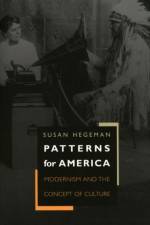
In recent decades, historians and social theorists have given much thought to the concept of "e;culture,"e; its origins in Western thought, and its usefulness for social analysis. In this book, Susan Hegeman focuses on the term's history in the United States in the first half of the twentieth century. She shows how, during this period, the term "e;culture"e; changed from being a technical term associated primarily with anthropology into a term of popular usage. She shows the connections between this movement of "e;culture"e; into the mainstream and the emergence of a distinctive "e;American culture,"e; with its own patterns, values, and beliefs. Hegeman points to the significant similarities between the conceptions of culture produced by anthropologists Franz Boas, Edward Sapir, Ruth Benedict, and Margaret Mead, and a diversity of other intellectuals, including Randolph Bourne, Van Wyck Brooks, Waldo Frank, and Dwight Macdonald. Hegeman reveals how relativist anthropological ideas of human culture--which stressed the distance between modern centers and "e;primitive"e; peripheries--came into alliance with the evaluating judgments of artists and critics. This anthropological conception provided a spatial awareness that helped develop the notion of a specifically American "e;culture."e; She also shows the connections between this new view of "e;culture"e; and the artistic work of the period by, among others, Sherwood Anderson, Jean Toomer, Thomas Hart Benton, Nathanael West, and James Agee and depicts in a new way the richness and complexity of the modernist milieu in the United States.
The Earth's human population is expected to pass eight billion by the year 2025, while rapid growth in the global economy will spur ever increasing demands for natural resources. The world will consequently face growing scarcities of such vital renewable resources as cropland, fresh water, and forests. Thomas Homer-Dixon argues in this sobering book that these environmental scarcities will have profound social consequences--contributing to insurrections, ethnic clashes, urban unrest, and other forms of civil violence, especially in the developing world. Homer-Dixon synthesizes work from a wide range of international research projects to develop a detailed model of the sources of environmental scarcity. He refers to water shortages in China, population growth in sub-Saharan Africa, and land distribution in Mexico, for example, to show that scarcities stem from the degradation and depletion of renewable resources, the increased demand for these resources, and/or their unequal distribution. He shows that these scarcities can lead to deepened poverty, large-scale migrations, sharpened social cleavages, and weakened institutions. And he describes the kinds of violence that can result from these social effects, arguing that conflicts in Chiapas, Mexico and ongoing turmoil in many African and Asian countries, for instance, are already partly a consequence of scarcity. Homer-Dixon is careful to point out that the effects of environmental scarcity are indirect and act in combination with other social, political, and economic stresses. He also acknowledges that human ingenuity can reduce the likelihood of conflict, particularly in countries with efficient markets, capable states, and an educated populace. But he argues that the violent consequences of scarcity should not be underestimated--especially when about half the world's population depends directly on local renewables for their day-to-day well-being. In the next decades, he writes, growing scarcities will affect billions of people with unprecedented severity and at an unparalleled scale and pace. Clearly written and forcefully argued, this book will become the standard work on the complex relationship between environmental scarcities and human violence.
The impact of technology-enhanced mass death in the twentieth century, argues Zachary Braiterman, has profoundly affected the future shape of religious thought. In his provocative book, the author shows how key Jewish theologians faced the memory of Auschwitz by rejecting traditional theodicy, abandoning any attempt to justify and vindicate the relationship between God and catastrophic suffering. The author terms this rejection "e;Antitheodicy,"e; the refusal to accept that relationship. It finds voice in the writings of three particular theologians: Richard Rubenstein, Eliezer Berkovits, and Emil Fackenheim. This book is the first to bring postmodern philosophical and literary approaches into conversation with post-Holocaust Jewish thought. Drawing on the work of Mieke Bal, Harold Bloom, Jacques Derrida, Umberto Eco, Michel Foucault, and others, Braiterman assesses how Jewish intellectuals reinterpret Bible and Midrash to re-create religious thought for the age after Auschwitz. In this process, he provides a model for reconstructing Jewish life and philosophy in the wake of the Holocaust. His work contributes to the postmodern turn in contemporary Jewish studies and today's creative theology.
Is it ever legitimate to redraw electoral districts on the basis of race? In its long struggle with this question, the U.S. Supreme Court has treated race-conscious redistricting either as a requirement of political fairness or as an exercise in corrosive racial quotas. Cutting through these contradictory positions, Keith Bybee examines the theoretical foundations of the Court's decisions and the ideological controversy those decisions have engendered. He uncovers erroneous assumptions about political identity on both sides of the debate and formulates new terms on which minority representation can be pursued. As Bybee shows, the Court has for the last twenty years encouraged a division between individualist and group concepts of political identity. He demonstrates convincingly that both individualist and group proponents share the misguided notion that political identity is formed prior to and apart from politics itself. According to Bybee, this "e;mistaken identity"e; should be abandoned for a more flexible, politically informed understanding of who the "e;people"e; really are. Thus, a misdirected debate will be replaced by a more considered discussion in which the people can speak for themselves, even as the Court speaks on their behalf. Engaged in the politics of minority representation, the Court will be able to help citizens articulate and achieve more fruitful forms of political community.
The economics literature is replete with examples of monotone comparative statics; that is, scenarios where optimal decisions or equilibria in a parameterized collection of models vary monotonically with the parameter. Most of these examples are manifestations of complementarity, with a common explicit or implicit theoretical basis in properties of a super-modular function on a lattice. Supermodular functions yield a characterization for complementarity and extend the notion of complementarity to a general setting that is a natural mathematical context for studying complementarity and monotone comparative statics. Concepts and results related to supermodularity and monotone comparative statics constitute a new and important formal step in the long line of economics literature on complementarity. This monograph links complementarity to powerful concepts and results involving supermodular functions on lattices and focuses on analyses and issues related to monotone comparative statics. Don Topkis, who is known for his seminal contributions to this area, here presents a self-contained and up-to-date view of this field, including many new results, to scholars interested in economic theory and its applications as well as to those in related disciplines. The emphasis is on methodology. The book systematically develops a comprehensive, integrated theory pertaining to supermodularity, complementarity, and monotone comparative statics. It then applies that theory in the analysis of many diverse economic models formulated as decision problems, noncooperative games, and cooperative games.
How can women create a meaningful and joyous life for themselves? Is it enough to be equal with men? In this provocative and wide-ranging book, Drucilla Cornell argues that women should transcend the quest for equality and focus on what she shows is a far more radical project: achieving freedom. Cornell takes us on a highly original exploration of what it would mean for women politically, legally, and culturally, if we took this ideal of freedom seriously--if, in her words, we recognized that "e;hearts starve as well as bodies."e; She takes forceful and sometimes surprising stands on such subjects as abortion, prostitution, pornography, same-sex marriage, international human rights, and the rights and obligations of fathers. She also engages with what it means to be free on a theoretical level, drawing on the ideas of such thinkers as Kant, Rawls, Ronald Dworkin, Hegel, and Lacan. Cornell begins by discussing what she believes lies at the heart of freedom: the ability for all individuals to pursue happiness in their own way, especially in matters of love and sex. This is only possible, she argues, if we protect the "e;imaginary domain"e;--a psychic and moral space in which individuals can explore their own sources of happiness. She writes that equality with men does not offer such protection, in part because men themselves are not fully free. Instead, women must focus on ensuring that individuals face minimal interference from the state and from oppressive cultural norms. They must also respect some controversial individual choices. Cornell argues in favor of permitting same-sex couples to marry and adopt children, for example. She presses for access to abortion and for universal day care. She also justifies lifestyles that have not always been supported by other feminists, ranging from staying at home as a primary caregiver to engaging in prostitution. She argues that men should have similar freedoms--thus returning feminism to its promise that freedom for women would mean freedom for all. Challenging, passionate, and powerfully argued, Cornell's book will have a major impact on the course of feminist thought.
Abonner på vårt nyhetsbrev og få rabatter og inspirasjon til din neste leseopplevelse.
Ved å abonnere godtar du vår personvernerklæring.