

























Gjør som tusenvis av andre bokelskere
Abonner på vårt nyhetsbrev og få rabatter og inspirasjon til din neste leseopplevelse.
Ved å abonnere godtar du vår personvernerklæring.Du kan når som helst melde deg av våre nyhetsbrev.

In Nonplussed!, popular-math writer Julian Havil delighted readers with a mind-boggling array of implausible yet true mathematical paradoxes. Now Havil is back with Impossible?, another marvelous medley of the utterly confusing, profound, and unbelievable-and all of it mathematically irrefutable.Whenever Forty-second Street in New York is temporarily closed, traffic doesn't gridlock but flows more smoothly-why is that? Or consider that cities that build new roads can experience dramatic increases in traffic congestion-how is this possible? What does the game show Let's Make A Deal reveal about the unexpected hazards of decision-making? What can the game of cricket teach us about the surprising behavior of the law of averages? These are some of the counterintuitive mathematical occurrences that readers encounter in Impossible?Havil ventures further than ever into territory where intuition can lead one astray. He gathers entertaining problems from probability and statistics along with an eclectic variety of conundrums and puzzlers from other areas of mathematics, including classics of abstract math like the Banach-Tarski paradox. These problems range in difficulty from easy to highly challenging, yet they can be tackled by anyone with a background in calculus. And the fascinating history and personalities associated with many of the problems are included with their mathematical proofs. Impossible? will delight anyone who wants to have their reason thoroughly confounded in the most astonishing and unpredictable ways.
Religion has been a powerful political force throughout American history. When race enters the mix the results have been some of our greatest triumphs as a nation--and some of our most shameful failures. In this important book, Mark Noll, one of the most influential historians of American religion writing today, traces the explosive political effects of the religious intermingling with race. Noll demonstrates how supporters and opponents of slavery and segregation drew equally on the Bible to justify the morality of their positions. He shows how a common evangelical heritage supported Jim Crow discrimination and contributed powerfully to the black theology of liberation preached by Martin Luther King Jr. In probing such connections, Noll takes readers from the 1830 slave revolt of Nat Turner through Reconstruction and the long Jim Crow era, from the civil rights movement of the 1950s and 1960s to "e;values"e; voting in recent presidential elections. He argues that the greatest transformations in American political history, from the Civil War through the civil rights revolution and beyond, constitute an interconnected narrative in which opposing appeals to Biblical truth gave rise to often-contradictory religious and moral complexities. And he shows how this heritage remains alive today in controversies surrounding stem-cell research and abortion as well as civil rights reform. God and Race in American Politics is a panoramic history that reveals the profound role of religion in American political history and in American discourse on race and social justice.
Rules for the Global Economy is a timely examination of the conditions under which international rules of globalization come into existence, enabling world economic and financial systems to function and stabilize. Horst Siebert, a leading figure in international economics, explains that these institutional arrangements, such as the ones that govern banking, emerge when countries fail to solve economic problems on their own and cede part of their sovereignty to an international order. Siebert demonstrates that the rules result from a trial-and-error process--and usually after a crisis--in order to prevent pointless transaction costs and risks. Using an accessible and nonmathematical approach, Siebert links the rules to four areas: international trade relations, factor movements, financial flows, and the environment. He looks at the international division of labor in the trade of goods and services; flow of capital; diffusion of technology; migration of people, including labor and human capital; protection of the global environment; and stability of the monetary-financial system. He discusses the role of ethical norms and human rights in defining international regulations, and argues that the benefits of any rules system should be direct and visible. Comprehensively supporting rules-based interactions among international players, the book considers future issues of the global rules system.
Many political theorists today deny that citizenship can be defended on liberal grounds alone. Cosmopolitans claim that loyalty to a particular state is incompatible with universal liberal principles, which hold that we have equal duties of justice to persons everywhere, while nationalist theorists justify civic obligations only by reaching beyond liberal principles and invoking the importance of national culture. In Liberal Loyalty, Anna Stilz challenges both views by defending a distinctively liberal understanding of citizenship. Drawing on Kant, Rousseau, and Habermas, Stilz argues that we owe civic obligations to the state if it is sufficiently just, and that constitutionally enshrined principles of justice in themselves--rather than territory, common language, or shared culture--are grounds for obedience to our particular state and for democratic solidarity with our fellow citizens. She demonstrates that specifying what freedom and equality mean among a particular people requires their democratic participation together as a group. Justice, therefore, depends on the authority of the democratic state because there is no way equal freedom can be defined or guaranteed without it. Yet, as Stilz shows, this does not mean that each of us should entertain some vague loyalty to democracy in general. Citizens are politically obligated to their own state and to each other, because within their particular democracy they define and ultimately guarantee their own civil rights. Liberal Loyalty is a persuasive defense of citizenship on purely liberal grounds.
The project of twentieth-century sociology and political science--to create predictive scientific theory--resulted in few full-scale theories that can be taken off the shelf and successfully applied to empirical puzzles. Yet focused "e;theory frames"e; that formulate problems and point to relevant causal factors and conditions have produced vibrant, insightful, and analytically oriented empirical research. While theory frames alone cannot offer explanation or prediction, they guide empirical theory formation and give direction to inferences from empirical evidence. They are also responsible for much of the progress in the social sciences. In Usable Theory, distinguished sociologist Dietrich Rueschemeyer shows graduate students and researchers how to construct theory frames and use them to develop valid empirical hypotheses in the course of empirical social and political research. Combining new ideas as well as analytic tools derived from classic and recent theoretical traditions, the book enlarges the rationalist model of action by focusing on knowledge, norms, preferences, and emotions, and it discusses larger social formations that shape elementary forms of action. Throughout, Usable Theory seeks to mobilize the implicit theoretical social knowledge used in everyday life. Offers tools for theory building in social and political research Complements the rationalist model of action with discussions of knowledge, norms, preferences, and emotions Relates theoretical ideas to problems of methodology Situates elementary forms of action in relation to larger formations Combines new ideas with themes from classic and more recent theories
Political analyst Mark Smith offers the most original and compelling explanation yet of why America has swung to the right in recent decades. How did the GOP transform itself from a party outgunned and outmaneuvered into one that defines the nation's most important policy choices? Conventional wisdom attributes the Republican resurgence to a political bait and switch--the notion that conservatives win elections on social issues like abortion and religious expression, but once in office implement far-reaching policies on the economic issues downplayed during campaigns. Smith illuminates instead the eye-opening reality that economic matters have become more central, not less, to campaigns and the public agenda. He analyzes a half century of speeches, campaign advertisements, party platforms, and intellectual writings, systematically showing how Republican politicians and conservative intellectuals increasingly gave economic justifications for policies they once defended through appeals to freedom. He explains how Democrats similarly conceived economic justifications for their own policies, but unlike Republicans they changed positions on issues rather than simply offering new arguments and thus helped push the national discourse inexorably to the right. The Right Talk brings clarity, reason, and hard-nosed evidence to a contentious subject. Certain to enrich the debate about the conservative ascendancy in America, this book will provoke discussions and reactions for years to come.
Many historical processes exhibit recurrent patterns of change. Century-long periods of population expansion come before long periods of stagnation and decline; the dynamics of prices mirror population oscillations; and states go through strong expansionist phases followed by periods of state failure, endemic sociopolitical instability, and territorial loss. Peter Turchin and Sergey Nefedov explore the dynamics and causal connections between such demographic, economic, and political variables in agrarian societies and offer detailed explanations for these long-term oscillations--what the authors call secular cycles. Secular Cycles elaborates and expands upon the demographic-structural theory first advanced by Jack Goldstone, which provides an explanation of long-term oscillations. This book tests that theory's specific and quantitative predictions by tracing the dynamics of population numbers, prices and real wages, elite numbers and incomes, state finances, and sociopolitical instability. Turchin and Nefedov study societies in England, France, and Russia during the medieval and early modern periods, and look back at the Roman Republic and Empire. Incorporating theoretical and quantitative history, the authors examine a specific model of historical change and, more generally, investigate the utility of the dynamical systems approach in historical applications. An indispensable and groundbreaking resource for a wide variety of social scientists, Secular Cycles will interest practitioners of economic history, historical sociology, complexity studies, and demography.
How do ordinary people come to know or believe what they do? We need an account of this process to help explain why people act as they do. You might think I am acting irrationally--against my interest or my purpose--until you realize that what you know and what I know differ significantly. My actions, given my knowledge, might make eminently good sense. Of course, this pushes our problem back one stage to assess why someone knows or believes what they do. That is the focus of this book. Russell Hardin supposes that people are not usually going to act knowingly against their interests or other purposes. To try to understand how they have come to their knowledge or beliefs is therefore to be charitable in assessing their rationality. Hardin insists on such a charitable stance in the effort to understand others and their sometimes objectively perverse actions. Hardin presents an essentially economic account of what an individual can come to know and then applies this account to many areas of ordinary life: political participation, religious beliefs, popular knowledge of science, liberalism, culture, extremism, moral beliefs, and institutional knowledge. All of these can be enlightened by the supposition that people are attempting reasonable actions under the severe constraints of acquiring better knowledge when they face demands that far outstretch their possibilities.
Increasingly today nation-states are entering into agreements that involve the sharing or surrendering of parts of their sovereign powers and often leave the cession of authority incomplete or vague. But until now, we have known surprisingly little about how international actors design and implement these mixed-sovereignty arrangements. Contracting States uses the concept of "e;incomplete contracts"e;--agreements that are intentionally ambiguous and subject to future renegotiation--to explain how states divide and transfer their sovereign territory and functions, and demonstrate why some of these arrangements offer stable and lasting solutions while others ultimately collapse. Building on important advances in economics and law, Alexander Cooley and Hendrik Spruyt develop a highly original, interdisciplinary approach and apply it to a broad range of cases involving international sovereign political integration and disintegration. The authors reveal the importance of incomplete contracting in the decolonization of territories once held by Europe and the Soviet Union; U.S. overseas military basing agreements with host countries; and in regional economic-integration agreements such as the European Union. Cooley and Spruyt examine contemporary problems such as the Arab-Israeli dispute over water resources, and show why the international community inadequately prepared for Kosovo's independence. Contracting States provides guidance to international policymakers about how states with equally legitimate claims on the same territory or asset can create flexible, durable solutions and avoid violent conflict.
Over millions of years, terrestrial plants have competed for limited resources, defended themselves against herbivores, and resisted a myriad of environmental stresses. These struggles have helped generate more than a quarter million terrestrial plant species, each possessing a unique strategy for success. Yet, as Resource Strategies of Wild Plants demonstrates, the constraints on plant growth are universal enough that a few survival strategies hold true for all seed-producing plants. This book describes the five major strategies of growth for terrestrial plants, details how plants succeed when resources are scarce, delves into the history of research into plant strategies, and resets the foundational understanding of ecological processes. Drawing from recent findings in plant-herbivore interactions, ecosystem ecology, and evolutionary ecology, Joseph Craine explains how plants attain available nutrients, withstand the immense stresses of drying soils, and flourish in the race for light. He shows that the competition for resources has shaped plant evolution in newly discovered ways, while the scarcity of such resources has affected how plants interact with herbivores, wind, fire, and frost. An understanding of the major resource strategies of wild plants remains central to learning about the ecology of plant communities, global changes in the biosphere, methods for species conservation, and the evolution of life on earth.
Is socialism desirable? Is it even possible? In this concise book, one of the world's leading political philosophers presents with clarity and wit a compelling moral case for socialism and argues that the obstacles in its way are exaggerated. There are times, G. A. Cohen notes, when we all behave like socialists. On a camping trip, for example, campers wouldn't dream of charging each other to use a soccer ball or for fish that they happened to catch. Campers do not give merely to get, but relate to each other in a spirit of equality and community. Would such socialist norms be desirable across society as a whole? Why not? Whole societies may differ from camping trips, but it is still attractive when people treat each other with the equal regard that such trips exhibit. But, however desirable it may be, many claim that socialism is impossible. Cohen writes that the biggest obstacle to socialism isn't, as often argued, intractable human selfishness--it's rather the lack of obvious means to harness the human generosity that is there. Lacking those means, we rely on the market. But there are many ways of confining the sway of the market: there are desirable changes that can move us toward a socialist society in which, to quote Albert Einstein, humanity has "e;overcome and advanced beyond the predatory stage of human development."e;
When are people willing to sacrifice for the common good? What are the benefits of friendship? How do communities deal with betrayal? And what are the costs and benefits of being in a diverse community? Using the life histories of more than forty thousand Civil War soldiers, Dora Costa and Matthew Kahn answer these questions and uncover the vivid stories, social influences, and crucial networks that influenced soldiers' lives both during and after the war. Drawing information from government documents, soldiers' journals, and one of the most extensive research projects about Union Army soldiers ever undertaken, Heroes and Cowards demonstrates the role that social capital plays in people's decisions. The makeup of various companies--whether soldiers were of the same ethnicity, age, and occupation--influenced whether soldiers remained loyal or whether they deserted. Costa and Kahn discuss how the soldiers benefited from friendships, what social factors allowed some to survive the POW camps while others died, and how punishments meted out for breaking codes of conduct affected men after the war. The book also examines the experience of African-American soldiers and makes important observations about how their comrades shaped their lives. Heroes and Cowards highlights the inherent tensions between the costs and benefits of community diversity, shedding light on how groups and societies behave and providing valuable lessons for the present day.
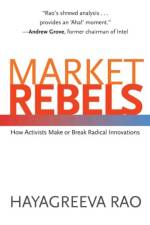
Great individuals are assumed to cause the success of radical innovations--thus Henry Ford is depicted as the one who established the automobile industry in America. Hayagreeva Rao tells a different story, one that will change the way you think about markets forever. He explains how "e;market rebels"e;--activists who defy authority and convention--are the real force behind the success or failure of radical innovations. Rao shows how automobile enthusiasts were the ones who established the new automobile industry by staging highly publicized reliability races and lobbying governments to enact licensing laws. Ford exploited the popularity of the car by using new mass-production technologies. Rao argues that market rebels also establish new niches and new cultural styles. If it were not for craft brewers who crusaded against "e;industrial beer"e; and proliferated brewpubs, there would be no specialty beers in America. But for nouvelle cuisine activists who broke the stranglehold of Escoffier's classical cuisine in France, there would have been little hybridization and experimentation in modern cooking. Market rebels also thwart radical innovation. Rao demonstrates how consumer activists have faced down chain stores and big box retailers, and how anti-biotechnology activists in Germany penetrated pharmaceutical firms and delayed the commercialization of patents. Read Market Rebels to learn how activists succeed when they construct "e;hot causes"e; that arouse intense emotions, and exploit "e;cool mobilization"e;--unconventional techniques that engage audiences in collective action. You will realize how the hands that move markets are the joined hands of market rebels.Some images inside the book are unavailable due to digital copyright restrictions.
Was George W. Bush the true heir of Woodrow Wilson, the architect of liberal internationalism? Was the Iraq War a result of liberal ideas about America's right to promote democracy abroad? In this timely book, four distinguished scholars of American foreign policy discuss the relationship between the ideals of Woodrow Wilson and those of George W. Bush. The Crisis of American Foreign Policy exposes the challenges resulting from Bush's foreign policy and ponders America's place in the international arena. Led by John Ikenberry, one of today's foremost foreign policy thinkers, this provocative collection examines the traditions of liberal internationalism that have dominated American foreign policy since the end of World War II. Tony Smith argues that Bush and the neoconservatives followed Wilson in their commitment to promoting democracy abroad. Thomas Knock and Anne-Marie Slaughter disagree and contend that Wilson focused on the building of a collaborative and rule-centered world order, an idea the Bush administration actively resisted. The authors ask if the United States is still capable of leading a cooperative effort to handle the pressing issues of the new century, or if the country will have to go it alone, pursuing policies without regard to the interests of other governments. Addressing current events in the context of historical policies, this book considers America's position on the global stage and what future directions might be possible for the nation in the post-Bush era.
The Global Commonwealth of Citizens critically examines the prospects for cosmopolitan democracy as a viable and humane response to the challenges of globalization. Arising after the collapse of the Soviet Union and the decisive affirmation of Western-style democracy, cosmopolitan democracy envisions a world politics in which democratic participation by citizens is not constrained by national borders, and where democracy spreads through dialogue and incentives, not coercion and war. This is an incisive and thought-provoking book by one of the world's leading proponents of cosmopolitan democracy. Daniele Archibugi looks at all aspects of cosmopolitan democracy in theory and practice. Is democracy beyond nation-states feasible? Is it possible to inform global governance with democratic norms and values, and if so, how? Archibugi carefully answers questions like these and forcefully responds to skeptics and critics. He argues that democracy can be extended to the global political arena by strengthening and reforming existing international organizations and creating new ones, and he calls for dramatic changes in the foreign policies of nations to make them compatible with global public interests. Archibugi advocates giving voice to new global players such as social movements, cultural communities, and minorities. He proposes building institutional channels across borders to address common problems, and encourages democratic governance at the local, national, regional, and global levels. The Global Commonwealth of Citizens is an accessible introduction to the subject that will be of interest to students and scholars in political science, international relations, international law, and human rights.
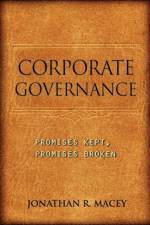
Even in the wake of the biggest financial crash of the postwar era, the United States continues to rely on Securities and Exchange Commission oversight and the Sarbanes-Oxley Act, which set tougher rules for boards, management, and public accounting firms to protect the interests of shareholders. Such reliance is badly misplaced. In Corporate Governance, Jonathan Macey argues that less government regulation--not more--is what's needed to ensure that managers of public companies keep their promises to investors. Macey tells how heightened government oversight has put a stranglehold on what is the best protection against malfeasance by self-serving management: the market itself. Corporate governance, he shows, is about keeping promises to shareholders; failure to do so results in diminished investor confidence, which leads to capital flight and other dire economic consequences. Macey explains the relationship between corporate governance and the various market and nonmarket institutions and mechanisms used to control public corporations; he discusses how nonmarket corporate governance devices such as boards and whistle-blowers are highly susceptible to being co-opted by management and are generally guided more by self-interest and personal greed than by investor interests. In contrast, market-driven mechanisms such as trading and takeovers represent more reliable solutions to the problem of corporate governance. Inefficient regulations are increasingly hampering these important and truly effective corporate controls. Macey examines a variety of possible means of corporate governance, including shareholder voting, hedge funds, and private equity funds. Corporate Governance reveals why the market is the best guardian of shareholder interests.
During the past quarter century, free-market capitalism was recognized not merely as a successful system of wealth creation, but as the key determinant of the health of political and cultural democracy. Now, renowned British journalist and historian Godfrey Hodgson takes aim at this popular view in a book that promises to become one of the most important political histories of our time. More Equal Than Others looks back on twenty-five years of what Hodgson calls "e;the conservative ascendancy"e; in America, demonstrating how it has come to dominate American politics. Hodgson disputes the notion that the rise of conservatism has spread affluence and equality to the American people. Quite the contrary, he writes, the most distinctive feature of American society in the closing years of the twentieth century was its great and growing inequality. He argues that the combination of conservative ideology and corporate power and dominance by mass media obsessed with lifestyle and celebrity have caused America to abandon much of what was best in its past. In fact, he writes, income and wealth inequality have become so extreme that America now resembles the class-stratified societies of early twentieth-century Europe. More Equal Than Others addresses a broad range of issues, with chapters on politics, the new economy, immigration, technology, women, race, and foreign policy, among others. A fitting sequel to the author's critically acclaimed America In Our Time, More Equal Than Others is not only an outstanding synthesis of history, but a trenchant commentary on the state of the American Dream.
Should laws about sex and pornography be based on social conventions about what is disgusting? Should felons be required to display bumper stickers or wear T-shirts that announce their crimes? This powerful and elegantly written book, by one of America's most influential philosophers, presents a critique of the role that shame and disgust play in our individual and social lives and, in particular, in the law. Martha Nussbaum argues that we should be wary of these emotions because they are associated in troubling ways with a desire to hide from our humanity, embodying an unrealistic and sometimes pathological wish to be invulnerable. Nussbaum argues that the thought-content of disgust embodies "e;magical ideas of contamination, and impossible aspirations to purity that are just not in line with human life as we know it."e; She argues that disgust should never be the basis for criminalizing an act, or play either the aggravating or the mitigating role in criminal law it currently does. She writes that we should be similarly suspicious of what she calls "e;primitive shame,"e; a shame "e;at the very fact of human imperfection,"e; and she is harshly critical of the role that such shame plays in certain punishments. Drawing on an extraordinarily rich variety of philosophical, psychological, and historical references--from Aristotle and Freud to Nazi ideas about purity--and on legal examples as diverse as the trials of Oscar Wilde and the Martha Stewart insider trading case, this is a major work of legal and moral philosophy.
The elegy flared into existence, commanded the cultural stage for several decades, then went extinct. This book accounts for the swift rise and sudden decline of a genre whose life span was incredibly brief relative to its impact. Examining every major poet from Catullus to Ovid, Subjecting Verses presents the first comprehensive history of Latin erotic elegy since Georg Luck's. Paul Allen Miller harmoniously weds close readings of the poetry with insights from theoreticians as diverse as Jameson, Foucault, Lacan, and Zizek. In welcome contrast to previous, thematic studies of elegy--efforts that have become bogged down in determining whether particular themes and poets were pro- or anti-Augustan--Miller offers a new, "e;symptomatic"e; history. He asks two obvious but rarely posed questions: what historical conditions were necessary to produce elegy, and what provoked its decline? Ultimately, he argues that elegiac poetry arose from a fundamental split in the nature of subjectivity that occurred in the late first century--a split symptomatic of the historical changes taking place at the time. Subjecting Verses is a major interpretive feat whose influence will reach across classics and literary studies. Linking the rise of elegy with changes in how Romans imagined themselves within a rapidly changing society, it offers a new model of literary theory that neither reduces the poems to a reflection of their context nor examines them in a vacuum.
What should we expect from democracy, and how likely is it that democracies will live up to those expectations? In The State of Democratic Theory, Ian Shapiro offers a critical assessment of contemporary answers to these questions, lays out his distinctive alternative, and explores its implications for policy and political action. Some accounts of democracy's purposes focus on aggregating preferences; others deal with collective deliberation in search of the common good. Shapiro reveals the shortcomings of both, arguing instead that democracy should be geared toward minimizing domination throughout society. He contends that Joseph Schumpeter's classic defense of competitive democracy is a useful starting point for achieving this purpose, but that it stands in need of radical supplementation--both with respect to its operation in national political institutions and in its extension to other forms of collective association. Shapiro's unusually wide-ranging discussion also deals with the conditions that make democracy's survival more and less likely, with the challenges presented by ethnic differences and claims for group rights, and with the relations between democracy and the distribution of income and wealth. Ranging over politics, philosophy, constitutional law, economics, sociology, and psychology, this book is written in Shapiro's characteristic lucid style--a style that engages practitioners within the field while also opening up the debate to newcomers.
Reproducing Athens examines the role of romantic comedy, particularly the plays of Menander, in defending democratic culture and transnational polis culture against various threats during the initial and most fraught period of the Hellenistic Era. Menander's romantic comedies--which focus on ordinary citizens who marry for love--are most often thought of as entertainments devoid of political content. Against the view, Susan Lape argues that Menander's comedies are explicitly political. His nationalistic comedies regularly conclude by performing the laws of democratic citizen marriage, thereby promising the generation of new citizens. His transnational comedies, on the other hand, defend polis life against the impinging Hellenistic kingdoms, either by transforming their representatives into proper citizen-husbands or by rendering them ridiculous, romantic losers who pose no real threat to citizen or city. In elaborating the political work of romantic comedy, this book also demonstrates the importance of gender, kinship, and sexuality to the making of democratic civic ideology. Paradoxically, by championing democratic culture against various Hellenistic outsiders, comedy often resists the internal status and gender boundaries on which democratic culture was based. Comedy's ability to reproduce democratic culture in scandalous fashion exposes the logic of civic inclusion produced by the contradictions in Athens's desperately politicized gender system. Combining careful textual analysis with an understanding of the context in which Menander wrote, Reproducing Athens profoundly changes the way we read his plays and deepens our understanding of Athenian democratic culture.
The discipline of anthropology is, at its best, characterized by turbulence, self-examination, and inventiveness. In recent decades, new thinking and practice within the field has certainly reflected this pattern, as shown for example by numerous fruitful ventures into the "e;politics and poetics"e; of anthropology. Surprisingly little attention, however, has been given to the simple insight that anthropology is composed of claims, whether tacit or explicit, about anthropos and about logos--and the myriad ways in which these two Greek nouns have been, might be, and should be, connected. Anthropos Today represents a pathbreaking effort to fill this gap. Paul Rabinow brings together years of distinguished work in this magisterial volume that seeks to reinvigorate the human sciences. Specifically, he assembles a set of conceptual tools--"e;modern equipment"e;--to assess how intellectual work is currently conducted and how it might change. Anthropos Today crystallizes Rabinow's previous ethnographic inquiries into the production of truth about life in the world of biotechnology and genome mapping (and his invention of new ways of practicing this pursuit), and his findings on how new practices of life, labor, and language have emerged and been institutionalized. Here, Rabinow steps back from empirical research in order to reflect on the conceptual and ethical resources available today to conduct such inquiries. Drawing richly on Foucault and many other thinkers including Weber and Dewey, Rabinow concludes that a "e;contingent practice"e; must be developed that focuses on "e;events of problematization."e; Brilliantly synthesizing insights from American, French, and German traditions, he offers a lucid, deeply learned, original discussion of how one might best think about anthropos today.
In the late eighteenth century, an array of European political thinkers attacked the very foundations of imperialism, arguing passionately that empire-building was not only unworkable, costly, and dangerous, but manifestly unjust. Enlightenment against Empire is the first book devoted to the anti-imperialist political philosophies of an age often regarded as affirming imperial ambitions. Sankar Muthu argues that thinkers such as Denis Diderot, Immanuel Kant, and Johann Gottfried Herder developed an understanding of humans as inherently cultural agents and therefore necessarily diverse. These thinkers rejected the conception of a culture-free "e;natural man."e; They held that moral judgments of superiority or inferiority could be made neither about entire peoples nor about many distinctive cultural institutions and practices. Muthu shows how such arguments enabled the era's anti-imperialists to defend the freedom of non-European peoples to order their own societies. In contrast to those who praise "e;the Enlightenment"e; as the triumph of a universal morality and critics who view it as an imperializing ideology that denigrated cultural pluralism, Muthu argues instead that eighteenth-century political thought included multiple Enlightenments. He reveals a distinctive and underappreciated strand of Enlightenment thinking that interweaves commitments to universal moral principles and incommensurable ways of life, and that links the concept of a shared human nature with the idea that humans are fundamentally diverse. Such an intellectual temperament, Muthu contends, can broaden our own perspectives about international justice and the relationship between human unity and diversity.
The Federal Clean Air Act of 1970 is widely seen as a revolutionary legal response to the failures of the earlier common law regime, which had governed air pollution in the United States for more than a century. Noga Morag-Levine challenges this view, highlighting striking continuities between the assumptions governing current air pollution regulation in the United States and the principles that had guided the earlier nuisance regime. Most importantly, this continuity is evident in the centrality of risk-based standards within contemporary American air pollution regulatory policy. Under the European approach, by contrast, the feasibility-based technology standard is the regulatory instrument of choice. Through historical analysis of the evolution of Anglo-American air pollution law and contemporary case studies of localized pollution disputes, Chasing the Wind argues for an overhaul in U.S. air pollution policy. This reform, following the European model, would forgo the unrealizable promise of complete, perfectly tailored protection--a hallmark of both nuisance law and the Clean Air Act--in favor of incremental, across-the-board pollution reductions. The author argues that prevailing critiques of technology standards as inefficient and undemocratic instruments of "e;command and control"e; fit with a longstanding pattern of American suspicion of civil law modeled interventions. This distrust, she concludes, has impeded the development of environmental regulation that would be less adversarial in process and more equitable in outcome.
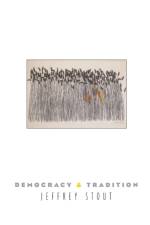
Do religious arguments have a public role in the post-9/11 world? Can we hold democracy together despite fractures over moral issues? Are there moral limits on the struggle against terror? Asking how the citizens of modern democracy can reason with one another, this book carves out a controversial position between those who view religious voices as an anathema to democracy and those who believe democratic society is a moral wasteland because such voices are not heard. Drawing inspiration from Whitman, Dewey, and Ellison, Jeffrey Stout sketches the proper role of religious discourse in a democracy. He discusses the fate of virtue, the legacy of racism, the moral issues implicated in the war on terrorism, and the objectivity of ethical norms. Against those who see no place for religious reasoning in the democratic arena, Stout champions a space for religious voices. But against increasingly vocal antiliberal thinkers, he argues that modern democracy can provide a moral vision and has made possible such moral achievements as civil rights precisely because it allows a multitude of claims to be heard. Stout's distinctive pragmatism reconfigures the disputed area where religious thought, political theory, and philosophy meet. Charting a path beyond the current impasse between secular liberalism and the new traditionalism, Democracy and Tradition asks whether we have the moral strength to continue as a democratic people as it invigorates us to retrieve our democratic virtues from very real threats to their practice.
In an era of heightened concern about injustice in relations of identity and difference, political theorists often prescribe equal recognition as a remedy for the ills of subordination. Drawing on the philosophy of Hegel, they envision a system of reciprocal knowledge and esteem, in which the affirming glance of others lets everyone be who they really are. This book challenges the equation of recognition with justice. Patchen Markell mines neglected strands of the concept's genealogy and reconstructs an unorthodox interpretation of Hegel, who, in the unexpected company of Sophocles, Aristotle, Arendt, and others, reveals why recognition's promised satisfactions are bound to disappoint, and even to stifle. Written with exceptional clarity, the book develops an alternative account of the nature and sources of identity-based injustice in which the pursuit of recognition is part of the problem rather than the solution. And it articulates an alternative conception of justice rooted not in the recognition of identity of the other but in the acknowledgment of our own finitude in the face of a future thick with surprise. Moving deftly among contemporary political philosophers (including Taylor and Kymlicka), the close interpretation of ancient and modern texts (Hegel's Phenomenology, Aristotle's Poetics, and more), and the exploration of rich case studies drawn from literature (Antigone), history (Jewish emancipation in nineteenth-century Prussia), and modern politics (official multiculturalism), Bound by Recognition is at once a sustained treatment of the problem of recognition and a sequence of virtuoso studies.
Welfare and the Constitution defends a largely forgotten understanding of the U.S. Constitution: the positive or "e;welfarist"e; view of Abraham Lincoln and the Federalist Papers. Sotirios Barber challenges conventional scholarship by arguing that the government has a constitutional duty to pursue the well-being of all the people. He shows that James Madison was right in saying that the "e;real welfare"e; of the people must be the "e;supreme object"e; of constitutional government. With conceptual rigor set in fluid prose, Barber opposes the shared view of America's Right and Left: that the federal constitutional duties of public officials are limited to respecting negative liberties and maintaining processes of democratic choice. Barber contends that no historical, scientific, moral, or metaethical argument can favor today's negative constitutionalism over Madison's positive understanding. He urges scholars to develop a substantive account of constitutional ends for use in critiquing Supreme Court decisions, the policies of elected officials, and the attitudes of the larger public. He defends the philosophical possibility of such theories while also offering a theory of his own as a starting point for the discussion the book will provoke. This theory holds, for example, that voucher schemes which drain resources from secular public schools to schools that would train citizens to submit to religious authority are unconstitutional; First Amendment issues aside, such schemes defeat what is undeniably an element of the "e;real welfare"e; of the people, individually and collectively: the capacity to think critically for oneself.
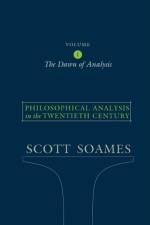
This is a major, wide-ranging history of analytic philosophy since 1900, told by one of the tradition's leading contemporary figures. The first volume takes the story from 1900 to mid-century. The second brings the history up to date. As Scott Soames tells it, the story of analytic philosophy is one of great but uneven progress, with leading thinkers making important advances toward solving the tradition's core problems. Though no broad philosophical position ever achieved lasting dominance, Soames argues that two methodological developments have, over time, remade the philosophical landscape. These are (1) analytic philosophers' hard-won success in understanding, and distinguishing the notions of logical truth, a priori truth, and necessary truth, and (2) gradual acceptance of the idea that philosophical speculation must be grounded in sound prephilosophical thought. Though Soames views this history in a positive light, he also illustrates the difficulties, false starts, and disappointments endured along the way. As he engages with the work of his predecessors and contemporaries--from Bertrand Russell and Ludwig Wittgenstein to Donald Davidson and Saul Kripke--he seeks to highlight their accomplishments while also pinpointing their shortcomings, especially where their perspectives were limited by an incomplete grasp of matters that have now become clear. Soames himself has been at the center of some of the tradition's most important debates, and throughout writes with exceptional ease about its often complex ideas. His gift for clear exposition makes the history as accessible to advanced undergraduates as it will be important to scholars. Despite its centrality to philosophy in the English-speaking world, the analytic tradition in philosophy has had very few synthetic histories. This will be the benchmark against which all future accounts will be measured.
etienne Balibar has been one of Europe's most important philosophical and political thinkers since the 1960s. His work has been vastly influential on both sides of the Atlantic throughout the humanities and the social sciences. In We, the People of Europe?, he expands on themes raised in his previous works to offer a trenchant and eloquently written analysis of "e;transnational citizenship"e; from the perspective of contemporary Europe. Balibar moves deftly from state theory, national sovereignty, and debates on multiculturalism and European racism, toward imagining a more democratic and less state-centered European citizenship. Although European unification has progressively divorced the concepts of citizenship and nationhood, this process has met with formidable obstacles. While Balibar seeks a deep understanding of this critical conjuncture, he goes beyond theoretical issues. For example, he examines the emergence, alongside the formal aspects of European citizenship, of a "e;European apartheid,"e; or the reduplication of external borders in the form of "e;internal borders"e; nurtured by dubious notions of national and racial identity. He argues for the democratization of how immigrants and minorities in general are treated by the modern democratic state, and the need to reinvent what it means to be a citizen in an increasingly multicultural, diversified world. A major new work by a renowned theorist, We, the People of Europe? offers a far-reaching alternative to the usual framing of multicultural debates in the United States while also engaging with these debates.
This is a major, wide-ranging history of analytic philosophy since 1900, told by one of the tradition's leading contemporary figures. The first volume takes the story from 1900 to mid-century. The second brings the history up to date. As Scott Soames tells it, the story of analytic philosophy is one of great but uneven progress, with leading thinkers making important advances toward solving the tradition's core problems. Though no broad philosophical position ever achieved lasting dominance, Soames argues that two methodological developments have, over time, remade the philosophical landscape. These are (1) analytic philosophers' hard-won success in understanding, and distinguishing the notions of logical truth, a priori truth, and necessary truth, and (2) gradual acceptance of the idea that philosophical speculation must be grounded in sound prephilosophical thought. Though Soames views this history in a positive light, he also illustrates the difficulties, false starts, and disappointments endured along the way. As he engages with the work of his predecessors and contemporaries--from Bertrand Russell and Ludwig Wittgenstein to Donald Davidson and Saul Kripke--he seeks to highlight their accomplishments while also pinpointing their shortcomings, especially where their perspectives were limited by an incomplete grasp of matters that have now become clear. Soames himself has been at the center of some of the tradition's most important debates, and throughout writes with exceptional ease about its often complex ideas. His gift for clear exposition makes the history as accessible to advanced undergraduates as it will be important to scholars. Despite its centrality to philosophy in the English-speaking world, the analytic tradition in philosophy has had very few synthetic histories. This will be the benchmark against which all future accounts will be measured.
Abonner på vårt nyhetsbrev og få rabatter og inspirasjon til din neste leseopplevelse.
Ved å abonnere godtar du vår personvernerklæring.