























Gjør som tusenvis av andre bokelskere
Abonner på vårt nyhetsbrev og få rabatter og inspirasjon til din neste leseopplevelse.
Ved å abonnere godtar du vår personvernerklæring.Du kan når som helst melde deg av våre nyhetsbrev.

In recent years, interest-rate modeling has developed rapidly in terms of both practice and theory. The academic and practitioners' communities, however, have not always communicated as productively as would have been desirable. As a result, their research programs have often developed with little constructive interference. In this book, Riccardo Rebonato draws on his academic and professional experience, straddling both sides of the divide to bring together and build on what theory and trading have to offer. Rebonato begins by presenting the conceptual foundations for the application of the LIBOR market model to the pricing of interest-rate derivatives. Next he treats in great detail the calibration of this model to market prices, asking how possible and advisable it is to enforce a simultaneous fitting to several market observables. He does so with an eye not only to mathematical feasibility but also to financial justification, while devoting special scrutiny to the implications of market incompleteness. Much of the book concerns an original extension of the LIBOR market model, devised to account for implied volatility smiles. This is done by introducing a stochastic-volatility, displaced-diffusion version of the model. The emphasis again is on the financial justification and on the computational feasibility of the proposed solution to the smile problem. This book is must reading for quantitative researchers in financial houses, sophisticated practitioners in the derivatives area, and students of finance.
Socrates in the Boardroom argues that world-class scholars, not administrators, make the best leaders of research universities. Amanda Goodall cuts through the rhetoric and misinformation swirling around this contentious issue--such as the assertion that academics simply don't have the managerial expertise needed to head the world's leading schools--using hard evidence and careful, dispassionate analysis. She shows precisely why experts need leaders who are experts like themselves. Goodall draws from the latest data on the world's premier research universities along with in-depth interviews with top university leaders both past and present, including University of Pennsylvania President Amy Gutmann; Derek Bok and Lawrence Summers, former presidents of Harvard University; John Hood, former vice chancellor of the University of Oxford; Cornell University President David Skorton; and many others. Goodall explains why the most effective leaders are those who have deep expertise in what their organizations actually do. Her findings carry broad implications for the management of higher education, and she demonstrates that the same fundamental principle holds true for other important business sectors as well. Experts, not managers, make the best leaders. Read Socrates in the Boardroom and learn why.
In this book, David MacDougall, one of the leading ethnographic filmmakers and film scholars of his generation, builds upon the ideas from his widely praised Transcultural Cinema and argues for a new conception of how visual images create human knowledge in a world in which the value of seeing has often been eclipsed by words. In ten chapters, MacDougall explores the relations between photographic images and the human body-the body of the viewer and the body behind the camera as well as the body as seen in ethnography, cinema, and photography. In a landmark piece, he discusses the need for a new field of social aesthetics, further elaborated in his reflections on filming at an elite boys' school in northern India. The theme of the school is taken up as well in his discussion of fiction and nonfiction films of childhood. The book's final section presents a radical view of the history of visual anthropology as a maverick anthropological practice that was always at odds with the anthropology of words. In place of the conventional wisdom, he proposes a new set of principles for visual anthropology. These are essays in the classical sense--speculative, judicious, lucidly written, and mercifully jargon-free. The Corporeal Image presents the latest ideas from one of our foremost thinkers on the role of vision and visual representation in contemporary social thought.
What does it mean to live during wartime away from the battle zone? What is it like for citizens to go about daily routines while their country sends soldiers to kill and be killed across the globe? Timely and thought-provoking, War at a Distance considers how those left on the home front register wars and wartime in their everyday lives, particularly when military conflict remains removed from immediate perception, available only through media forms. Looking back over two centuries, Mary Favret locates the origins of modern wartime in the Napoleonic era and describes how global military operations affected the British populace, as the nation's army and navy waged battles far from home for decades. She reveals that the literature and art produced in Britain during the late eighteenth and early nineteenth centuries obsessively cultivated means for feeling as much as understanding such wars, and established forms still relevant today. Favret examines wartime literature and art as varied as meditations on the Iliad, the history of meteorology, landscape painting in India, and popular poetry in newspapers and periodicals; she locates the embedded sense of war and dislocation in works ranging from Austen, Coleridge, and Wordsworth to Woolf, Stevens, and Sebald; and she contemplates how literature provides the public with methods for responding to violent calamities happening elsewhere. Bringing to light Romanticism's legacy in reflections on modern warfare, this book shows that war's absent presence affects home in deep and irrevocable ways.
Taking Wittgenstein at His Word is an experiment in reading organized around a central question: What kind of interpretation of Wittgenstein's later philosophy emerges if we adhere strictly to his claims that he is not in the business of presenting and defending philosophical theses and that his only aim is to expose persistent conceptual misunderstandings that lead to deep philosophical perplexities? Robert Fogelin draws out the therapeutic aspects of Wittgenstein's later work by closely examining his account of rule-following and how he applies the idea in the philosophy of mathematics. The first of the book's two parts focuses on rule-following, Wittgenstein's "e;paradox of interpretation,"e; and his naturalistic response to this paradox, all of which are persistent and crucial features of his later philosophy. Fogelin offers a corrective to the frequent misunderstanding that the paradox of interpretation is a paradox about meaning, and he emphasizes the importance of Wittgenstein's often undervalued appeals to natural responses. The second half of the book examines how Wittgenstein applies his reflections on rule-following to the status of mathematical propositions, proofs, and objects, leading to remarkable, demystifying results. Taking Wittgenstein at His Word shows that what Wittgenstein claims to be doing and what he actually does are much closer than is often recognized. In doing so, the book underscores fundamental--but frequently underappreciated--insights about Wittgenstein's later philosophy.
Against the backdrop of today's increasingly multicultural society, are America's elite colleges admitting and successfully educating a diverse student body? No Longer Separate, Not Yet Equal pulls back the curtain on the selective college experience and takes a rigorous and comprehensive look at how race and social class impact each stage--from application and admission, to enrollment and student life on campus. Arguing that elite higher education contributes to both social mobility and inequality, the authors investigate such areas as admission advantages for minorities, academic achievement gaps tied to race and class, unequal burdens in paying for tuition, and satisfaction with college experiences. The book's analysis is based on data provided by the National Survey of College Experience, collected from more than nine thousand students who applied to one of ten selective colleges between the early 1980s and late 1990s. The authors explore the composition of applicant pools, factoring in background and "e;selective admission enhancement strategies"e;--including AP classes, test-prep courses, and extracurriculars--to assess how these strengthen applications. On campus, the authors examine roommate choices, friendship circles, and degrees of social interaction, and discover that while students from different racial and class circumstances are not separate in college, they do not mix as much as one might expect. The book encourages greater interaction among student groups and calls on educational institutions to improve access for students of lower socioeconomic status. No Longer Separate, Not Yet Equal offers valuable insights into the intricate workings of America's elite higher education system.
Despite the worldwide prestige of America's doctoral programs in the humanities, all is not well in this area of higher education and hasn't been for some time. The content of graduate programs has undergone major changes, while high rates of student attrition, long times to degree, and financial burdens prevail. In response, the Andrew W. Mellon Foundation in 1991 launched the Graduate Education Initiative (GEI), the largest effort ever undertaken to improve doctoral programs in the humanities and related social sciences. The only book to focus exclusively on the current state of doctoral education in the humanities, Educating Scholars reports on the GEI's success in reducing attrition and times to degree, the positive changes implemented by specific graduate programs, and the many challenges still to be addressed. Over a ten-year period, the Foundation devoted almost eighty-five million dollars through the GEI to provide support for doctoral programs and student aid in fifty-four departments at ten leading universities. The authors examine data that tracked the students in these departments and in control departments, as well as information gathered from a retrospective survey of students. They reveal that completion and attrition rates depend upon financial support, the quality of advising, clarity of program requirements, and each department's expectations regarding the dissertation. The authors consider who earns doctoral degrees, what affects students' chances of finishing their programs, and how successful they are at finding academic jobs. Answering some of the most important questions being raised about American doctoral programs today, Educating Scholars will interest all those concerned about our nation's intellectual future.
Bright gamma-ray flares observed from sources far beyond our Milky Way Galaxy are best explained if enormous amounts of energy are liberated by black holes. The highest- energy particles in nature--the ultra-high-energy cosmic rays--cannot be confined by the Milky Way's magnetic field, and must originate from sources outside our Galaxy. Understanding these energetic radiations requires an extensive theoretical framework involving the radiation physics and strong-field gravity of black holes. In High Energy Radiation from Black Holes, Charles Dermer and Govind Menon present a systematic exposition of black-hole astrophysics and general relativity in order to understand how gamma rays, cosmic rays, and neutrinos are produced by black holes. Beginning with Einstein's special and general theories of relativity, the authors give a detailed mathematical description of fundamental astrophysical radiation processes, including Compton scattering of electrons and photons, synchrotron radiation of particles in magnetic fields, photohadronic interactions of cosmic rays with photons, gamma-ray attenuation, Fermi acceleration, and the Blandford-Znajek mechanism for energy extraction from rotating black holes. The book provides a basis for graduate students and researchers in the field to interpret the latest results from high-energy observatories, and helps resolve whether energy released by rotating black holes powers the highest-energy radiations in nature. The wide range of detail will make High Energy Radiation from Black Holes a standard reference for black-hole research.
Originally published in 2003, Mathematical Techniques in Finance has become a standard textbook for master's-level finance courses containing a significant quantitative element while also being suitable for finance PhD students. This fully revised second edition continues to offer a carefully crafted blend of numerical applications and theoretical grounding in economics, finance, and mathematics, and provides plenty of opportunities for students to practice applied mathematics and cutting-edge finance. Ales Cerny mixes tools from calculus, linear algebra, probability theory, numerical mathematics, and programming to analyze in an accessible way some of the most intriguing problems in financial economics. The textbook is the perfect hands-on introduction to asset pricing, optimal portfolio selection, risk measurement, and investment evaluation. The new edition includes the most recent research in the area of incomplete markets and unhedgeable risks, adds a chapter on finite difference methods, and thoroughly updates all bibliographic references. Eighty figures, over seventy examples, twenty-five simple ready-to-run computer programs, and several spreadsheets enhance the learning experience. All computer codes have been rewritten using MATLAB and online supplementary materials have been completely updated. A standard textbook for graduate finance courses Introduction to asset pricing, portfolio selection, risk measurement, and investment evaluation Detailed examples and MATLAB codes integrated throughout the text Exercises and summaries of main points conclude each chapter
In One Economics, Many Recipes, leading economist Dani Rodrik argues that neither globalizers nor antiglobalizers have got it right. While economic globalization can be a boon for countries that are trying to dig out of poverty, success usually requires following policies that are tailored to local economic and political realities rather than obeying the dictates of the international globalization establishment. A definitive statement of Rodrik's original and influential perspective on economic growth and globalization, One Economics, Many Recipes shows how successful countries craft their own unique strategies--and what other countries can learn from them. To most proglobalizers, globalization is a source of economic salvation for developing nations, and to fully benefit from it nations must follow a universal set of rules designed by organizations such as the World Bank, the International Monetary Fund, and the World Trade Organization and enforced by international investors and capital markets. But to most antiglobalizers, such global rules spell nothing but trouble, and the more poor nations shield themselves from them, the better off they are. Rodrik rejects the simplifications of both sides, showing that poor countries get rich not by copying what Washington technocrats preach or what others have done, but by overcoming their own highly specific constraints. And, far from conflicting with economic science, this is exactly what good economics teaches.
This self-contained textbook is an informal introduction to optimization through the use of numerous illustrations and applications. The focus is on analytically solving optimization problems with a finite number of continuous variables. In addition, the authors provide introductions to classical and modern numerical methods of optimization and to dynamic optimization. The book's overarching point is that most problems may be solved by the direct application of the theorems of Fermat, Lagrange, and Weierstrass. The authors show how the intuition for each of the theoretical results can be supported by simple geometric figures. They include numerous applications through the use of varied classical and practical problems. Even experts may find some of these applications truly surprising. A basic mathematical knowledge is sufficient to understand the topics covered in this book. More advanced readers, even experts, will be surprised to see how all main results can be grounded on the Fermat-Lagrange theorem. The book can be used for courses on continuous optimization, from introductory to advanced, for any field for which optimization is relevant.
The standard theory of decision making under uncertainty advises the decision maker to form a statistical model linking outcomes to decisions and then to choose the optimal distribution of outcomes. This assumes that the decision maker trusts the model completely. But what should a decision maker do if the model cannot be trusted? Lars Hansen and Thomas Sargent, two leading macroeconomists, push the field forward as they set about answering this question. They adapt robust control techniques and apply them to economics. By using this theory to let decision makers acknowledge misspecification in economic modeling, the authors develop applications to a variety of problems in dynamic macroeconomics. Technical, rigorous, and self-contained, this book will be useful for macroeconomists who seek to improve the robustness of decision-making processes.
The last fifteen years have witnessed an explosion in the popularity, creativity, and productiveness of economic sociology, an approach that traces its roots back to Max Weber. This important new text offers a comprehensive and up-to-date overview of economic sociology. It also advances the field theoretically by highlighting, in one analysis, the crucial economic roles of both interests and social relations. Richard Swedberg describes the field's critical insights into economic life, giving particular attention to the effects of culture on economic phenomena and the ways that economic actions are embedded in social structures. He examines the full range of economic institutions and explicates the relationship of the economy to politics, law, culture, and gender. Swedberg notes that sociologists too often fail to properly emphasize the role that self-interested behavior plays in economic decisions, while economists frequently underestimate the importance of social relations. Thus, he argues that the next major task for economic sociology is to develop a theoretical and empirical understanding of how interests and social relations work in combination to affect economic action. Written by an author whose name is synonymous with economic sociology, this text constitutes a sorely needed advanced synthesis--and a blueprint for the future of this burgeoning field.
The growth of technological and scientific knowledge in the past two centuries has been the overriding dynamic element in the economic and social history of the world. Its result is now often called the knowledge economy. But what are the historical origins of this revolution and what have been its mechanisms? In The Gifts of Athena, Joel Mokyr constructs an original framework to analyze the concept of "e;useful"e; knowledge. He argues that the growth explosion in the modern West in the past two centuries was driven not just by the appearance of new technological ideas but also by the improved access to these ideas in society at large--as made possible by social networks comprising universities, publishers, professional sciences, and kindred institutions. Through a wealth of historical evidence set in clear and lively prose, he shows that changes in the intellectual and social environment and the institutional background in which knowledge was generated and disseminated brought about the Industrial Revolution, followed by sustained economic growth and continuing technological change. Mokyr draws a link between intellectual forces such as the European enlightenment and subsequent economic changes of the nineteenth century, and follows their development into the twentieth century. He further explores some of the key implications of the knowledge revolution. Among these is the rise and fall of the "e;factory system"e; as an organizing principle of modern economic organization. He analyzes the impact of this revolution on information technology and communications as well as on the public's state of health and the structure of households. By examining the social and political roots of resistance to new knowledge, Mokyr also links growth in knowledge to political economy and connects the economic history of technology to the New Institutional Economics. The Gifts of Athena provides crucial insights into a matter of fundamental concern to a range of disciplines including economics, economic history, political economy, the history of technology, and the history of science.
The individual risks faced by banks, insurers, and marketers are less well understood than aggregate risks such as market-price changes. But the risks incurred or carried by individual people, companies, insurance policies, or credit agreements can be just as devastating as macroevents such as share-price fluctuations. A comprehensive introduction, The Econometrics of Individual Risk is the first book to provide a complete econometric methodology for quantifying and managing this underappreciated but important variety of risk. The book presents a course in the econometric theory of individual risk illustrated by empirical examples. And, unlike other texts, it is focused entirely on solving the actual individual risk problems businesses confront today. Christian Gourieroux and Joann Jasiak emphasize the microeconometric aspect of risk analysis by extensively discussing practical problems such as retail credit scoring, credit card transaction dynamics, and profit maximization in promotional mailing. They address regulatory issues in sections on computing the minimum capital reserve for coverage of potential losses, and on the credit-risk measure CreditVar. The book will interest graduate students in economics, business, finance, and actuarial studies, as well as actuaries and financial analysts.
Corporate finance and corporate strategy have long been seen as different sides of the same coin. Though both focus on the same broad problem, investment decision-making, the gap between the two sides--and between theory and practice--remains embarrassingly large. This book synthesizes cutting-edge developments in corporate finance and related fields--in particular, real options and game theory--to help bridge this gap. In clear, straightforward exposition and through numerous examples and applications from various industries, Han Smit and Lenos Trigeorgis set forth an extended valuation framework for competitive strategies. The book follows a problem-solving approach that synthesizes ideas from game theory, real options, and strategy. Thinking in terms of options-games can help managers address questions such as: When is it best to invest early to preempt competitive entry, and when to wait? Should a firm compete in R&D or adopt an accommodating stance? How does one value growth options or infrastructure investments? The authors provide a wide range of valuation examples, such as acquisition strategies, R&D investment in high-tech sectors, joint research ventures, product introductions in consumer electronics, infrastructure, and oil exploration investment. Representing a major step beyond standard real options or strategy analysis, and extending the power of real options and strategic thinking in a rigorous fashion, Strategic Investment will be an indispensable guide and resource for corporate managers, MBA students, and academics alike.
From George Washington's decision to buy time for the new nation by signing the less-than-ideal Jay Treaty with Great Britain in 1795 to George W. Bush's order of a military intervention in Iraq in 2003, the matter of who is president of the United States is of the utmost importance. In this book, Fred Greenstein examines the leadership styles of the earliest presidents, men who served at a time when it was by no means certain that the American experiment in free government would succeed. In his groundbreaking book The Presidential Difference, Greenstein evaluated the personal strengths and weaknesses of the modern presidents since Franklin D. Roosevelt. Here, he takes us back to the very founding of the republic to apply the same yardsticks to the first seven presidents from Washington to Andrew Jackson, giving his no-nonsense assessment of the qualities that did and did not serve them well in office. For each president, Greenstein provides a concise history of his life and presidency, and evaluates him in the areas of public communication, organizational capacity, political skill, policy vision, cognitive style, and emotional intelligence. Washington, for example, used his organizational prowess--honed as a military commander and plantation owner--to lead an orderly administration. In contrast, John Adams was erudite but emotionally volatile, and his presidency was an organizational disaster. Inventing the Job of President explains how these early presidents and their successors shaped the American presidency we know today and helped the new republic prosper despite profound challenges at home and abroad.
Responding to the enemy's innovation in war presents problems to soldiers and societies of all times. This book traces Napoleon's victory over Prussia in 1806 and Prussia's effort to recover from defeat to show how in one particular historical episode operational analyses together with institutional and political decisions eventually turned defeat to victory. The author moves from a comparative study of French and Prussian forces to campaign narrative and strategic analysis. He examines processes of change in institutions and doctrine, as well as their dependence on social and political developments, and interprets works of art and literature as indicators of popular and elite attitudes toward war, which influence the conduct of war and the kind and extent of military innovation. In the concluding chapter he addresses the impact of 1806 on two men who fought on opposing sides in the campaign and sought a new theoretical understanding of war--Henri Jomini and Carl von Clausewitz. Fields of history that are often kept separate are brought together in this book, which seeks to replicate the links between different areas of thought and action as they exist in reality and shape events.
Drawing on a large body of empirical evidence, former Harvard President Derek Bok examines how much progress college students actually make toward widely accepted goals of undergraduate education. His conclusions are sobering. Although most students make gains in many important respects, they improve much less than they should in such important areas as writing, critical thinking, quantitative skills, and moral reasoning. Large majorities of college seniors do not feel that they have made substantial progress in speaking a foreign language, acquiring cultural and aesthetic interests, or learning what they need to know to become active and informed citizens. Overall, despite their vastly increased resources, more powerful technology, and hundreds of new courses, colleges cannot be confident that students are learning more than they did fifty years ago. Looking further, Bok finds that many important college courses are left to the least experienced teachers and that most professors continue to teach in ways that have proven to be less effective than other available methods. In reviewing their educational programs, however, faculties typically ignore this evidence. Instead, they spend most of their time discussing what courses to require, although the lasting impact of college will almost certainly depend much more on how the courses are taught. In his final chapter, Bok describes the changes that faculties and academic leaders can make to help students accomplish more. Without ignoring the contributions that America's colleges have made, Bok delivers a powerful critique--one that educators will ignore at their peril.
Muslim Lives in Eastern Europe examines how gender identities were reconfigured in a Bulgarian Muslim community following the demise of Communism and an influx of international aid from the Islamic world. Kristen Ghodsee conducted extensive ethnographic research among a small population of Pomaks, Slavic Muslims living in the remote mountains of southern Bulgaria. After Communism fell in 1989, Muslim minorities in Bulgaria sought to rediscover their faith after decades of state-imposed atheism. But instead of returning to their traditionally heterodox roots, isolated groups of Pomaks embraced a distinctly foreign type of Islam, which swept into their communities on the back of Saudi-financed international aid to Balkan Muslims, and which these Pomaks believe to be a more correct interpretation of their religion. Ghodsee explores how gender relations among the Pomaks had to be renegotiated after the collapse of both Communism and the region's state-subsidized lead and zinc mines. She shows how mosques have replaced the mines as the primary site for jobless and underemployed men to express their masculinity, and how Muslim women have encouraged this as a way to combat alcoholism and domestic violence. Ghodsee demonstrates how women's embrace of this new form of Islam has led them to adopt more conservative family roles, and how the Pomaks' new religion remains deeply influenced by Bulgaria's Marxist-Leninist legacy, with its calls for morality, social justice, and human solidarity.
While the great medieval philosopher, theologian, and physician Maimonides is acknowledged as a leading Jewish thinker, his intellectual contacts with his surrounding world are often described as related primarily to Islamic philosophy. Maimonides in His World challenges this view by revealing him to have wholeheartedly lived, breathed, and espoused the rich Mediterranean culture of his time. Sarah Stroumsa argues that Maimonides is most accurately viewed as a Mediterranean thinker who consistently interpreted his own Jewish tradition in contemporary multicultural terms. Maimonides spent his entire life in the Mediterranean region, and the religious and philosophical traditions that fed his thought were those of the wider world in which he lived. Stroumsa demonstrates that he was deeply influenced not only by Islamic philosophy but by Islamic culture as a whole, evidence of which she finds in his philosophy as well as his correspondence and legal and scientific writings. She begins with a concise biography of Maimonides, then carefully examines key aspects of his thought, including his approach to religion and the complex world of theology and religious ideas he encountered among Jews, Christians, Muslims, and even heretics; his views about science; the immense and unacknowledged impact of the Almohads on his thought; and his vision of human perfection. This insightful cultural biography restores Maimonides to his rightful place among medieval philosophers and affirms his central relevance to the study of medieval Islam.
This anthology gathers Giuseppe Mazzini's most important essays on democracy, nation building, and international relations, including some that have never before been translated into English. These neglected writings remind us why Mazzini was one of the most influential political thinkers of the nineteenth century--and why there is still great benefit to be derived from a careful analysis of what he had to say. Mazzini (1805-1872) is best known today as the inspirational leader of the Italian Risorgimento. But, as this book demonstrates, he also made a vital contribution to the development of modern democratic and liberal internationalist thought. In fact, Stefano Recchia and Nadia Urbinati make the case that Mazzini ought to be recognized as the founding figure of what has come to be known as liberal Wilsonianism. The writings collected here show how Mazzini developed a sophisticated theory of democratic nation building--one that illustrates why democracy cannot be successfully imposed through military intervention from the outside. He also speculated, much more explicitly than Immanuel Kant, about how popular participation and self-rule within independent nation-states might result in lasting peace among democracies. In short, Mazzini believed that universal aspirations toward human freedom, equality, and international peace could best be realized through independent nation-states with homegrown democratic institutions. He thus envisioned what one might today call a genuine cosmopolitanism of nations.
This textbook equips graduate students and advanced undergraduates with the necessary theoretical tools for applying algebraic geometry to information theory, and it covers primary applications in coding theory and cryptography. Harald Niederreiter and Chaoping Xing provide the first detailed discussion of the interplay between nonsingular projective curves and algebraic function fields over finite fields. This interplay is fundamental to research in the field today, yet until now no other textbook has featured complete proofs of it. Niederreiter and Xing cover classical applications like algebraic-geometry codes and elliptic-curve cryptosystems as well as material not treated by other books, including function-field codes, digital nets, code-based public-key cryptosystems, and frameproof codes. Combining a systematic development of theory with a broad selection of real-world applications, this is the most comprehensive yet accessible introduction to the field available. Introduces graduate students and advanced undergraduates to the foundations of algebraic geometry for applications to information theory Provides the first detailed discussion of the interplay between projective curves and algebraic function fields over finite fields Includes applications to coding theory and cryptography Covers the latest advances in algebraic-geometry codes Features applications to cryptography not treated in other books
Since the crime explosion of the 1960s, the prison population in the United States has multiplied fivefold, to one prisoner for every hundred adults--a rate unprecedented in American history and unmatched anywhere in the world. Even as the prisoner head count continues to rise, crime has stopped falling, and poor people and minorities still bear the brunt of both crime and punishment. When Brute Force Fails explains how we got into the current trap and how we can get out of it: to cut both crime and the prison population in half within a decade. Mark Kleiman demonstrates that simply locking up more people for lengthier terms is no longer a workable crime-control strategy. But, says Kleiman, there has been a revolution--largely unnoticed by the press--in controlling crime by means other than brute-force incarceration: substituting swiftness and certainty of punishment for randomized severity, concentrating enforcement resources rather than dispersing them, communicating specific threats of punishment to specific offenders, and enforcing probation and parole conditions to make community corrections a genuine alternative to incarceration. As Kleiman shows, "e;zero tolerance"e; is nonsense: there are always more offenses than there is punishment capacity. But, it is possible--and essential--to create focused zero tolerance, by clearly specifying the rules and then delivering the promised sanctions every time the rules are broken. Brute-force crime control has been a costly mistake, both socially and financially. Now that we know how to do better, it would be immoral not to put that knowledge to work.
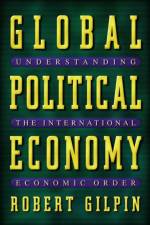
This book is the eagerly awaited successor to Robert Gilpin's 1987 The Political Economy of International Relations, the classic statement of the field of international political economy that continues to command the attention of students, researchers, and policymakers. The world economy and political system have changed dramatically since the 1987 book was published. The end of the Cold War has unleashed new economic and political forces, and new regionalisms have emerged. Computing power is increasingly an impetus to the world economy, and technological developments have changed and are changing almost every aspect of contemporary economic affairs. Gilpin's Global Political Economy considers each of these developments. Reflecting a lifetime of scholarship, it offers a masterful survey of the approaches that have been used to understand international economic relations and the problems faced in the new economy. Gilpin focuses on the powerful economic, political, and technological forces that have transformed the world. He gives particular attention to economic globalization, its real and alleged implications for economic affairs, and the degree to which its nature, extent, and significance have been exaggerated and misunderstood. Moreover, he demonstrates that national policies and domestic economies remain the most critical determinants of economic affairs. The book also stresses the importance of economic regionalism, multinational corporations, and financial upheavals. Gilpin integrates economic and political analysis in his discussion of "e;global political economy."e; He employs the conventional theory of international trade, insights from the theory of industrial organization, and endogenous growth theory. In addition, ideas from political science, history, and other disciplines are employed to enrich understanding of the new international economic order. This wide-ranging book is destined to become a landmark in the field.
Christmas is a time of seasonal cheer, family get-togethers, holiday parties, and-gift giving. Lots and lots--and lots--of gift giving. It's hard to imagine any Christmas without this time-honored custom. But let's stop to consider the gifts we receive--the rooster sweater from Grandma or the singing fish from Uncle Mike. How many of us get gifts we like? How many of us give gifts not knowing what recipients want? Did your cousin really look excited about that jumping alarm clock? Lively and informed, Scroogenomics illustrates how our consumer spending generates vast amounts of economic waste--to the shocking tune of eighty-five billion dollars each winter. Economist Joel Waldfogel provides solid explanations to show us why it's time to stop the madness and think twice before buying gifts for the holidays. When we buy for ourselves, every dollar we spend produces at least a dollar in satisfaction, because we shop carefully and purchase items that are worth more than they cost. Gift giving is different. We make less-informed choices, max out on credit to buy gifts worth less than the money spent, and leave recipients less than satisfied, creating what Waldfogel calls "e;deadweight loss."e; Waldfogel indicates that this waste isn't confined to Americans--most major economies share in this orgy of wealth destruction. While recognizing the difficulties of altering current trends, Waldfogel offers viable gift-giving alternatives. By reprioritizing our gift-giving habits, Scroogenomics proves that we can still maintain the economy without gouging our wallets, and reclaim the true spirit of the holiday season.
Many prominent critics regard the international financial system as the dark side of globalization, threatening disadvantaged nations near and far. But in The Next Great Globalization, eminent economist Frederic Mishkin argues the opposite: that financial globalization today is essential for poor nations to become rich. Mishkin argues that an effectively managed financial globalization promises benefits on the scale of the hugely successful trade and information globalizations of the nineteenth and twentieth centuries. This financial revolution can lift developing nations out of squalor and increase the wealth and stability of emerging and industrialized nations alike. By presenting an unprecedented picture of the potential benefits of financial globalization, and by showing in clear and hard-headed terms how these gains can be realized, Mishkin provides a hopeful vision of the next phase of globalization. Mishkin draws on historical examples to caution that mismanagement of financial globalization, often aided and abetted by rich elites, can wreak havoc in developing countries, but he uses these examples to demonstrate how better policies can help poor nations to open up their economies to the benefits of global investment. According to Mishkin, the international community must provide incentives for developing countries to establish effective property rights, banking regulations, accounting practices, and corporate governance--the institutions necessary to attract and manage global investment. And the West must be a partner in integrating the financial systems of rich and poor countries--to the benefit of both. The Next Great Globalization makes the case that finance will be a driving force in the twenty-first-century economy, and demonstrates how this force can and should be shaped to the benefit of all, especially the disadvantaged nations most in need of growth and prosperity.
This is the classic work upon which modern-day game theory is based. What began more than sixty years ago as a modest proposal that a mathematician and an economist write a short paper together blossomed, in 1944, when Princeton University Press published Theory of Games and Economic Behavior. In it, John von Neumann and Oskar Morgenstern conceived a groundbreaking mathematical theory of economic and social organization, based on a theory of games of strategy. Not only would this revolutionize economics, but the entirely new field of scientific inquiry it yielded--game theory--has since been widely used to analyze a host of real-world phenomena from arms races to optimal policy choices of presidential candidates, from vaccination policy to major league baseball salary negotiations. And it is today established throughout both the social sciences and a wide range of other sciences. This sixtieth anniversary edition includes not only the original text but also an introduction by Harold Kuhn, an afterword by Ariel Rubinstein, and reviews and articles on the book that appeared at the time of its original publication in the New York Times, tthe American Economic Review, and a variety of other publications. Together, these writings provide readers a matchless opportunity to more fully appreciate a work whose influence will yet resound for generations to come.
Investors have too often extrapolated from recent experience. In the 1950s, who but the most rampant optimist would have dreamt that over the next fifty years the real return on equities would be 9% per year? Yet this is what happened in the U.S. stock market. The optimists triumphed. However, as Don Marquis observed, an optimist is someone who never had much experience. The authors of this book extend our experience across regions and across time. They present a comprehensive and consistent analysis of investment returns for equities, bonds, bills, currencies and inflation, spanning sixteen countries, from the end of the nineteenth century to the beginning of the twenty-first. This is achieved in a clear and simple way, with over 130 color diagrams that make comparison easy. Crucially, the authors analyze total returns, including reinvested income. They show that some historical indexes overstate long-term performance because they are contaminated by survivorship bias and that long-term stock returns are in most countries seriously overestimated, due to a focus on periods that with hindsight are known to have been successful. The book also provides the first comprehensive evidence on the long-term equity risk premium--the reward for bearing the risk of common stocks. The authors reveal whether the United States and United Kingdom have had unusually high stock market returns compared to other countries. The book covers the U.S., the U.K., Japan, France, Germany, Canada, Italy, Spain, Switzerland, Australia, the Netherlands, Sweden, Belgium, Ireland, Denmark, and South Africa. Triumph of the Optimists is required reading for investment professionals, financial economists, and investors. It will be the definitive reference in the field and consulted for years to come.
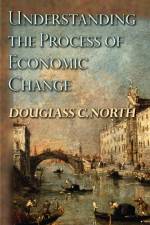
In this landmark work, a Nobel Prize-winning economist develops a new way of understanding the process by which economies change. Douglass North inspired a revolution in economic history a generation ago by demonstrating that economic performance is determined largely by the kind and quality of institutions that support markets. As he showed in two now classic books that inspired the New Institutional Economics (today a subfield of economics), property rights and transaction costs are fundamental determinants. Here, North explains how different societies arrive at the institutional infrastructure that greatly determines their economic trajectories. North argues that economic change depends largely on "e;adaptive efficiency,"e; a society's effectiveness in creating institutions that are productive, stable, fair, and broadly accepted--and, importantly, flexible enough to be changed or replaced in response to political and economic feedback. While adhering to his earlier definition of institutions as the formal and informal rules that constrain human economic behavior, he extends his analysis to explore the deeper determinants of how these rules evolve and how economies change. Drawing on recent work by psychologists, he identifies intentionality as the crucial variable and proceeds to demonstrate how intentionality emerges as the product of social learning and how it then shapes the economy's institutional foundations and thus its capacity to adapt to changing circumstances. Understanding the Process of Economic Change accounts not only for past institutional change but also for the diverse performance of present-day economies. This major work is therefore also an essential guide to improving the performance of developing countries.
Abonner på vårt nyhetsbrev og få rabatter og inspirasjon til din neste leseopplevelse.
Ved å abonnere godtar du vår personvernerklæring.