

























Gjør som tusenvis av andre bokelskere
Abonner på vårt nyhetsbrev og få rabatter og inspirasjon til din neste leseopplevelse.
Ved å abonnere godtar du vår personvernerklæring.Du kan når som helst melde deg av våre nyhetsbrev.

For over half a century, financial experts have regarded the movements of markets as a random walk--unpredictable meanderings akin to a drunkard's unsteady gait--and this hypothesis has become a cornerstone of modern financial economics and many investment strategies. Here Andrew W. Lo and A. Craig MacKinlay put the Random Walk Hypothesis to the test. In this volume, which elegantly integrates their most important articles, Lo and MacKinlay find that markets are not completely random after all, and that predictable components do exist in recent stock and bond returns. Their book provides a state-of-the-art account of the techniques for detecting predictabilities and evaluating their statistical and economic significance, and offers a tantalizing glimpse into the financial technologies of the future. The articles track the exciting course of Lo and MacKinlay's research on the predictability of stock prices from their early work on rejecting random walks in short-horizon returns to their analysis of long-term memory in stock market prices. A particular highlight is their now-famous inquiry into the pitfalls of "e;data-snooping biases"e; that have arisen from the widespread use of the same historical databases for discovering anomalies and developing seemingly profitable investment strategies. This book invites scholars to reconsider the Random Walk Hypothesis, and, by carefully documenting the presence of predictable components in the stock market, also directs investment professionals toward superior long-term investment returns through disciplined active investment management.
Dry Bones Rattling offers the first in-depth treatment of how to rebuild the social capital of America's communities while promoting racially inclusive, democratic participation. The Industrial Areas Foundation (IAF) network in Texas and the Southwest is gaining national attention as a model for reviving democratic life in the inner city--and beyond. This richly drawn study shows how the IAF network works with religious congregations and other community-based institutions to cultivate the participation and leadership of Americans most left out of our elite-centered politics. Interfaith leaders from poor communities of color collaborate with those from more affluent communities to build organizations with the power to construct affordable housing, create job-training programs, improve schools, expand public services, and increase neighborhood safety. In clear and accessible prose, Mark Warren argues that the key to revitalizing democracy lies in connecting politics to community institutions and the values that sustain them. By doing so, the IAF network builds an organized, multiracial constituency with the power to advance desperately needed social policies. While Americans are most aware of the religious right, Warren documents the growth of progressive faith-based politics in America. He offers a realistic yet hopeful account of how this rising trend can transform the lives of people in our most troubled neighborhoods. Drawing upon six years of original fieldwork, Dry Bones Rattling proposes new answers to the problems of American democracy, community life, race relations, and the urban crisis.
Recent decades have witnessed an explosion of theoretical and empirical studies of sex allocation, transforming how we understand the allocation of resources to male and female reproduction in vertebrates, invertebrates, protozoa, and plants. In this landmark book, Stuart West synthesizes the vast literature on sex allocation, providing the conceptual framework the field has been lacking and demonstrating how sex-allocation studies can shed light on broader questions in evolutionary and behavioral biology. West clarifies fundamental misconceptions in the application of theory to empirical data. He examines the field's successes and failures, and describes the research areas where much important work is yet to be done. West reveals how a shared underlying theoretical framework unites findings of sex-ratio variation across a huge range of life forms, from malarial parasites and hermaphroditic worms to sex-changing fish and mammals. He shows how research on sex allocation has been central to many critical questions and controversies in evolutionary and behavioral biology, and he argues that sex-allocation research serves as a key testing ground for different theoretical approaches and can help resolve debates about social evolution, parent-offspring conflict, genomic conflict, and levels of selection. Certain to become the defining book on the subject for the next generation of researchers, Sex Allocation explains why the study of sex allocation provides an ideal model system for advancing our understanding of the constraints on adaptation among all living things in the natural world.
This is the first major work in English to explore at length the meaning, context, aims, and vital importance of Thomas Hobbes's concepts of the law of nature and the right of nature. Hobbes remains one of the most challenging and controversial of early modern philosophers, and debates persist about the interpretation of many of his ideas, particularly his views about natural law and natural right. In this book, Perez Zagorin argues that these two concepts are the twin foundations of the entire structure of Hobbes's moral and political thought. Zagorin clears up numerous misconceptions about Hobbes and his relation to earlier natural law thinkers, in particular Hugo Grotius, and he reasserts the often overlooked role of the Hobbesian law of nature as a moral standard from which even sovereign power is not immune. Because Hobbes is commonly thought to be primarily a theorist of sovereignty, political absolutism, and unitary state power, the significance of his moral philosophy is often underestimated and widely assumed to depend entirely on individual self-interest. Zagorin reveals Hobbes's originality as a moral philosopher and his importance as a thinker who subverted and transformed the idea of natural law. Hobbes and the Law of Nature is a major contribution to our understanding of Hobbes's moral, legal, and political philosophy, and a book rich in interpretive and critical insights into Hobbes's writing and thought.
According to conventional wisdom in American legal culture, the 1870s to 1920s was the age of legal formalism, when judges believed that the law was autonomous and logically ordered, and that they mechanically deduced right answers in cases. In the 1920s and 1930s, the story continues, the legal realists discredited this view by demonstrating that the law is marked by gaps and contradictions, arguing that judges construct legal justifications to support desired outcomes. This often-repeated historical account is virtually taken for granted today, and continues to shape understandings about judging. In this groundbreaking book, esteemed legal theorist Brian Tamanaha thoroughly debunks the formalist-realist divide. Drawing from extensive research into the writings of judges and scholars, Tamanaha shows how, over the past century and a half, jurists have regularly expressed a balanced view of judging that acknowledges the limitations of law and of judges, yet recognizes that judges can and do render rule-bound decisions. He reveals how the story about the formalist age was an invention of politically motivated critics of the courts, and how it has led to significant misunderstandings about legal realism. Beyond the Formalist-Realist Divide traces how this false tale has distorted studies of judging by political scientists and debates among legal theorists. Recovering a balanced realism about judging, this book fundamentally rewrites legal history and offers a fresh perspective for theorists, judges, and practitioners of law.
Timely and pathbreaking, Securing the Peace is the first book to explore the complete spectrum of civil war terminations, including negotiated settlements, military victories by governments and rebels, and stalemates and ceasefires. Examining the outcomes of all civil war terminations since 1940, Monica Toft develops a general theory of postwar stability, showing how third-party guarantees may not be the best option. She demonstrates that thorough security-sector reform plays a critical role in establishing peace over the long term. Much of the thinking in this area has centered on third parties presiding over the maintenance of negotiated settlements, but the problem with this focus is that fewer than a quarter of recent civil wars have ended this way. Furthermore, these settlements have been precarious, often resulting in a recurrence of war. Toft finds that military victory, especially victory by rebels, lends itself to a more durable peace. She argues for the importance of the security sector--the police and military--and explains that victories are more stable when governments can maintain order. Toft presents statistical evaluations and in-depth case studies that include El Salvador, Sudan, and Uganda to reveal that where the security sector remains robust, stability and democracy are likely to follow. An original and thoughtful reassessment of civil war terminations, Securing the Peace will interest all those concerned about resolving our world's most pressing conflicts.
When Princeton anthropologist John Borneman arrived in Syria's second-largest city in 2004 as a visiting Fulbright professor, he took up residence in what many consider a "e;rogue state"e; on the frontline of a "e;clash of civilizations"e; between the Orient and the West. Hoping to understand intimate interactions of religious, political, and familial authority in this secular republic, Borneman spent much time among different men, observing and becoming part of their everyday lives. Syrian Episodes is the striking result. Recounting his experience of living and lecturing in Aleppo, Syria's second-largest city, John Borneman offers deft, first-person stories of the longings and discontents expressed by Syrian sons and fathers, as well as a prescient analysis of the precarious power held by the regime, its relation to domestic authority, and the conditions of its demise. Combining literary imagination and anthropological insight, the book's discrete narratives converge in an unforgettable portrait of contemporary culture in Aleppo. We read of romantic seductions, rumors of spying, the play of light in rooms, the bargaining of tourists in bazaars, and an attack of wild dogs. With unflinching honesty and frequent humor, Borneman describes his encounters with students and teachers, customers and merchants, and women and families, many of whom are as intrigued with the anthropologist as he is with them. Refusing to patronize those he meets or to minimize his differences with them, Borneman provokes his interlocutors, teasing out unexpected confidences, comic responses, and mutual misunderstandings. He engages the curiosity and desire of encounter and the possibility of ethical conduct that is willing to expose cultural differences. Combining literary imagination and anthropological insight, Syrian Episodes offers an unforgettable portrait of contemporary culture in Aleppo.
The Epicureans, Skeptics, and Stoics practiced philosophy not as a detached intellectual discipline but as a worldly art of grappling with issues of daily and urgent human significance. In this classic work, Martha Nussbaum maintains that these Hellenistic schools have been unjustly neglected in recent philosophic accounts of what the classical "e;tradition"e; has to offer. By examining texts of philosophers such as Epicurus, Lucretius, and Seneca, she recovers a valuable source for current moral and political thought and encourages us to reconsider philosophical argument as a technique through which to improve lives. Written for general readers and specialists, The Therapy of Desire addresses compelling issues ranging from the psychology of human passion through rhetoric to the role of philosophy in public and private life.
Outer billiards is a basic dynamical system defined relative to a convex shape in the plane. B. H. Neumann introduced this system in the 1950s, and J. Moser popularized it as a toy model for celestial mechanics. All along, the so-called Moser-Neumann question has been one of the central problems in the field. This question asks whether or not one can have an outer billiards system with an unbounded orbit. The Moser-Neumann question is an idealized version of the question of whether, because of small disturbances in its orbit, the Earth can break out of its orbit and fly away from the Sun. In Outer Billiards on Kites, Richard Schwartz presents his affirmative solution to the Moser-Neumann problem. He shows that an outer billiards system can have an unbounded orbit when defined relative to any irrational kite. A kite is a quadrilateral having a diagonal that is a line of bilateral symmetry. The kite is irrational if the other diagonal divides the quadrilateral into two triangles whose areas are not rationally related. In addition to solving the basic problem, Schwartz relates outer billiards on kites to such topics as Diophantine approximation, the modular group, self-similar sets, polytope exchange maps, profinite completions of the integers, and solenoids--connections that together allow for a fairly complete analysis of the dynamical system.
Winner of the prestigious Paul A. Samuelson Award for scholarly writing on lifelong financial security, John Cochrane's Asset Pricing now appears in a revised edition that unifies and brings the science of asset pricing up to date for advanced students and professionals. Cochrane traces the pricing of all assets back to a single idea--price equals expected discounted payoff--that captures the macro-economic risks underlying each security's value. By using a single, stochastic discount factor rather than a separate set of tricks for each asset class, Cochrane builds a unified account of modern asset pricing. He presents applications to stocks, bonds, and options. Each model--consumption based, CAPM, multifactor, term structure, and option pricing--is derived as a different specification of the discounted factor. The discount factor framework also leads to a state-space geometry for mean-variance frontiers and asset pricing models. It puts payoffs in different states of nature on the axes rather than mean and variance of return, leading to a new and conveniently linear geometrical representation of asset pricing ideas. Cochrane approaches empirical work with the Generalized Method of Moments, which studies sample average prices and discounted payoffs to determine whether price does equal expected discounted payoff. He translates between the discount factor, GMM, and state-space language and the beta, mean-variance, and regression language common in empirical work and earlier theory. The book also includes a review of recent empirical work on return predictability, value and other puzzles in the cross section, and equity premium puzzles and their resolution. Written to be a summary for academics and professionals as well as a textbook, this book condenses and advances recent scholarship in financial economics.
What turns rich nations into great powers? How do wealthy countries begin extending their influence abroad? These questions are vital to understanding one of the most important sources of instability in international politics: the emergence of a new power. In From Wealth to Power, Fareed Zakaria seeks to answer these questions by examining the most puzzling case of a rising power in modern history--that of the United States. If rich nations routinely become great powers, Zakaria asks, then how do we explain the strange inactivity of the United States in the late nineteenth century? By 1885, the U.S. was the richest country in the world. And yet, by all military, political, and diplomatic measures, it was a minor power. To explain this discrepancy, Zakaria considers a wide variety of cases between 1865 and 1908 when the U.S. considered expanding its influence in such diverse places as Canada, the Dominican Republic, and Iceland. Consistent with the realist theory of international relations, he argues that the President and his administration tried to increase the country's political influence abroad when they saw an increase in the nation's relative economic power. But they frequently had to curtail their plans for expansion, he shows, because they lacked a strong central government that could harness that economic power for the purposes of foreign policy. America was an unusual power--a strong nation with a weak state. It was not until late in the century, when power shifted from states to the federal government and from the legislative to the executive branch, that leaders in Washington could mobilize the nation's resources for international influence. Zakaria's exploration of this tension between national power and state structure will change how we view the emergence of new powers and deepen our understanding of America's exceptional history.
In this book, two of America's leading economists provide the first integrated treatment of the conceptual, practical, and empirical foundations for credit risk pricing and risk measurement. Masterfully applying theory to practice, Darrell Duffie and Kenneth Singleton model credit risk for the purpose of measuring portfolio risk and pricing defaultable bonds, credit derivatives, and other securities exposed to credit risk. The methodological rigor, scope, and sophistication of their state-of-the-art account is unparalleled, and its singularly in-depth treatment of pricing and credit derivatives further illuminates a problem that has drawn much attention in an era when financial institutions the world over are revising their credit management strategies. Duffie and Singleton offer critical assessments of alternative approaches to credit-risk modeling, while highlighting the strengths and weaknesses of current practice. Their approach blends in-depth discussions of the conceptual foundations of modeling with extensive analyses of the empirical properties of such credit-related time series as default probabilities, recoveries, ratings transitions, and yield spreads. Both the "e;structura"e; and "e;reduced-form"e; approaches to pricing defaultable securities are presented, and their comparative fits to historical data are assessed. The authors also provide a comprehensive treatment of the pricing of credit derivatives, including credit swaps, collateralized debt obligations, credit guarantees, lines of credit, and spread options. Not least, they describe certain enhancements to current pricing and management practices that, they argue, will better position financial institutions for future changes in the financial markets. Credit Risk is an indispensable resource for risk managers, traders or regulators dealing with financial products with a significant credit risk component, as well as for academic researchers and students.
An understanding of risk and how to deal with it is an essential part of modern economics. Whether liability litigation for pharmaceutical firms or an individual's having insufficient wealth to retire, risk is something that can be recognized, quantified, analyzed, treated--and incorporated into our decision-making processes. This book represents a concise summary of basic multiperiod decision-making under risk. Its detailed coverage of a broad range of topics is ideally suited for use in advanced undergraduate and introductory graduate courses either as a self-contained text, or the introductory chapters combined with a selection of later chapters can represent core reading in courses on macroeconomics, insurance, portfolio choice, or asset pricing. The authors start with the fundamentals of risk measurement and risk aversion. They then apply these concepts to insurance decisions and portfolio choice in a one-period model. After examining these decisions in their one-period setting, they devote most of the book to a multiperiod context, which adds the long-term perspective most risk management analyses require. Each chapter concludes with a discussion of the relevant literature and a set of problems. The book presents a thoroughly accessible introduction to risk, bridging the gap between the traditionally separate economics and finance literatures.
This is a thoroughly updated edition of Dynamic Asset Pricing Theory, the standard text for doctoral students and researchers on the theory of asset pricing and portfolio selection in multiperiod settings under uncertainty. The asset pricing results are based on the three increasingly restrictive assumptions: absence of arbitrage, single-agent optimality, and equilibrium. These results are unified with two key concepts, state prices and martingales. Technicalities are given relatively little emphasis, so as to draw connections between these concepts and to make plain the similarities between discrete and continuous-time models. Readers will be particularly intrigued by this latest edition's most significant new feature: a chapter on corporate securities that offers alternative approaches to the valuation of corporate debt. Also, while much of the continuous-time portion of the theory is based on Brownian motion, this third edition introduces jumps--for example, those associated with Poisson arrivals--in order to accommodate surprise events such as bond defaults. Applications include term-structure models, derivative valuation, and hedging methods. Numerical methods covered include Monte Carlo simulation and finite-difference solutions for partial differential equations. Each chapter provides extensive problem exercises and notes to the literature. A system of appendixes reviews the necessary mathematical concepts. And references have been updated throughout. With this new edition, Dynamic Asset Pricing Theory remains at the head of the field.
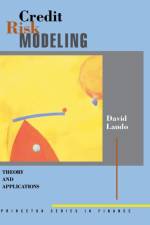
Credit risk is today one of the most intensely studied topics in quantitative finance. This book provides an introduction and overview for readers who seek an up-to-date reference to the central problems of the field and to the tools currently used to analyze them. The book is aimed at researchers and students in finance, at quantitative analysts in banks and other financial institutions, and at regulators interested in the modeling aspects of credit risk. David Lando considers the two broad approaches to credit risk analysis: that based on classical option pricing models on the one hand, and on a direct modeling of the default probability of issuers on the other. He offers insights that can be drawn from each approach and demonstrates that the distinction between the two approaches is not at all clear-cut. The book strikes a fruitful balance between quickly presenting the basic ideas of the models and offering enough detail so readers can derive and implement the models themselves. The discussion of the models and their limitations and five technical appendixes help readers expand and generalize the models themselves or to understand existing generalizations. The book emphasizes models for pricing as well as statistical techniques for estimating their parameters. Applications include rating-based modeling, modeling of dependent defaults, swap- and corporate-yield curve dynamics, credit default swaps, and collateralized debt obligations.
Machiavelli's Ethics challenges the most entrenched understandings of Machiavelli, arguing that he was a moral and political philosopher who consistently favored the rule of law over that of men, that he had a coherent theory of justice, and that he did not defend the "e;Machiavellian"e; maxim that the ends justify the means. By carefully reconstructing the principled foundations of his political theory, Erica Benner gives the most complete account yet of Machiavelli's thought. She argues that his difficult and puzzling style of writing owes far more to ancient Greek sources than is usually recognized, as does his chief aim: to teach readers not how to produce deceptive political appearances and rhetoric, but how to see through them. Drawing on a close reading of Greek authors--including Thucydides, Xenophon, Plato, and Plutarch--Benner identifies a powerful and neglected key to understanding Machiavelli. This important new interpretation is based on the most comprehensive study of Machiavelli's writings to date, including a detailed examination of all of his major works: The Prince, The Discourses, The Art of War, and Florentine Histories. It helps explain why readers such as Bacon and Rousseau could see Machiavelli as a fellow moral philosopher, and how they could view The Prince as an ethical and republican text. By identifying a rigorous structure of principles behind Machiavelli's historical examples, the book should also open up fresh debates about his relationship to later philosophers, including Rousseau, Hobbes, and Kant.
Ten Hills Farm tells the powerful saga of five generations of slave owners in colonial New England. Settled in 1630 by John Winthrop--who would later become governor of the Massachusetts Bay Colony--Ten Hills Farm was a six-hundred-acre estate just north of Boston. Winthrop, famous for envisioning his 'city on the hill' and lauded as a paragon of justice, owned slaves on that ground and passed the first law in North America condoning slavery. In this mesmerizing narrative, C. S. Manegold exposes how the fates of the land and the families that lived on it were bound to America's most tragic and tainted legacy. Challenging received ideas about America and the Atlantic world, Ten Hills Farm digs deep to bring the story of slavery in the North full circle--from concealment to recovery. Manegold follows the compelling tale from the early seventeenth to the early twenty-first century, from New England, through the South, to the sprawling slave plantations of the Caribbean. John Winthrop, famous for envisioning his "e;city on the hill"e; and lauded as a paragon of justice, owned slaves on that ground and passed the first law in North America condoning slavery. Each successive owner of Ten Hills Farm--from John Usher, who was born into money, to Isaac Royall, who began as a humble carpenter's son and made his fortune in Antigua--would depend upon slavery's profits until the 1780s, when Massachusetts abolished the practice. In time, the land became a city, its questionable past discreetly buried, until now. Challenging received ideas about America and the Atlantic world, Ten Hills Farm digs deep to bring the story of slavery in the North full circle--from concealment to recovery.
An earthquake can strike without warning and wreak horrific destruction and death, whether it's the cataclysmic 2008 Sichuan quake in China that killed tens of thousands or a future great earthquake on the San Andreas Fault in California, which scientists know is inevitable. Yet despite rapid advances in earthquake science, seismologists still can't predict when the Big One will hit. Predicting the Unpredictable is the first book to explain why, exploring the fact and fiction behind the science--and pseudoscience--of earthquake prediction. Susan Hough traces the continuing quest by seismologists to forecast the time, location, and magnitude of future quakes--a quest fraught with controversies, spectacular failures, and occasional apparent successes. She brings readers into the laboratory and out into the field with the pioneers who have sought to develop reliable methods based on observable phenomena such as small earthquake patterns and electromagnetic signals. Hough describes attempts that have raised hopes only to collapse under scrutiny, as well as approaches that seem to hold future promise. She recounts stories of strange occurrences preceding massive quakes, such as changes in well water levels and mysterious ground fogs. She also ventures to the fringes of pseudoscience to consider ideas outside the scientific mainstream, from the enduring belief that animals can sense impending earthquakes to amateur YouTube videos purporting to show earthquake lights prior to large quakes. This book is an entertaining and accessible foray into the world of earthquake prediction, one that illuminates the unique challenges of predicting the unpredictable.
Terror in Chechnya is the definitive account of Russian war crimes in Chechnya. Emma Gilligan provides a comprehensive history of the second Chechen conflict of 1999 to 2005, revealing one of the most appalling human rights catastrophes of the modern era--one that has yet to be fully acknowledged by the international community. Drawing upon eyewitness testimony and interviews with refugees and key political and humanitarian figures, Gilligan tells for the first time the full story of the Russian military's systematic use of torture, disappearances, executions, and other punitive tactics against the Chechen population. In Terror in Chechnya, Gilligan challenges Russian claims that civilian casualties in Chechnya were an unavoidable consequence of civil war. She argues that racism and nationalism were substantial factors in Russia's second war against the Chechens and the resulting refugee crisis. She does not ignore the war crimes committed by Chechen separatists and pro-Moscow forces. Gilligan traces the radicalization of Chechen fighters and sheds light on the Dubrovka and Beslan hostage crises, demonstrating how they undermined the separatist movement and in turn contributed to racial hatred against Chechens in Moscow. A haunting testament of modern-day crimes against humanity, Terror in Chechnya also looks at the international response to the conflict, focusing on Europe's humanitarian and human rights efforts inside Chechnya.
In the popular misconception fostered by blockbuster action movies and best-selling thrillers--not to mention conventional explanations by social scientists--violence is easy under certain conditions, like poverty, racial or ideological hatreds, or family pathologies. Randall Collins challenges this view in Violence, arguing that violent confrontation goes against human physiological hardwiring. It is the exception, not the rule--regardless of the underlying conditions or motivations. Collins gives a comprehensive explanation of violence and its dynamics, drawing upon video footage, cutting-edge forensics, and ethnography to examine violent situations up close as they actually happen--and his conclusions will surprise you. Violence comes neither easily nor automatically. Antagonists are by nature tense and fearful, and their confrontational anxieties put up a powerful emotional barrier against violence. Collins guides readers into the very real and disturbing worlds of human discord--from domestic abuse and schoolyard bullying to muggings, violent sports, and armed conflicts. He reveals how the fog of war pervades all violent encounters, limiting people mostly to bluster and bluff, and making violence, when it does occur, largely incompetent, often injuring someone other than its intended target. Collins shows how violence can be triggered only when pathways around this emotional barrier are presented. He explains why violence typically comes in the form of atrocities against the weak, ritualized exhibitions before audiences, or clandestine acts of terrorism and murder--and why a small number of individuals are competent at violence. Violence overturns standard views about the root causes of violence and offers solutions for confronting it in the future.
The analysis of how institutions are formed, how they operate and change, and how they influence behavior in society has become a major subject of inquiry in politics, sociology, and economics. A leader in applying game theory to the understanding of institutional analysis, Elinor Ostrom provides in this book a coherent method for undertaking the analysis of diverse economic, political, and social institutions.Understanding Institutional Diversity explains the Institutional Analysis and Development (IAD) framework, which enables a scholar to choose the most relevant level of interaction for a particular question. This framework examines the arena within which interactions occur, the rules employed by participants to order relationships, the attributes of a biophysical world that structures and is structured by interactions, and the attributes of a community in which a particular arena is placed.The book explains and illustrates how to use the IAD in the context of both field and experimental studies. Concentrating primarily on the rules aspect of the IAD framework, it provides empirical evidence about the diversity of rules, the calculation process used by participants in changing rules, and the design principles that characterize robust, self-organized resource governance institutions.
"e;Luck egalitarianism"e;--the idea that justice requires correcting disadvantages resulting from brute luck--has gained ground in recent years and is now the main rival to John Rawls's theory of distributive justice. Health, Luck, and Justice is the first attempt to systematically apply luck egalitarianism to the just distribution of health and health care. Challenging Rawlsian approaches to health policy, Shlomi Segall develops an account of just health that is sensitive to considerations of luck and personal responsibility, arguing that people's health and the health care they receive are just only when society works to neutralize the effects of bad luck. Combining philosophical analysis with a discussion of real-life public health issues, Health, Luck, and Justice addresses key questions: What is owed to patients who are in some way responsible for their own medical conditions? Could inequalities in health and life expectancy be just even when they are solely determined by the "e;natural lottery"e; of genes and other such factors? And is it just to allow political borders to affect the quality of health care and the distribution of health? Is it right, on the one hand, to break up national health care systems in multicultural societies? And, on the other hand, should our obligation to curb disparities in health extend beyond the nation-state? By focusing on the ways health is affected by the moral arbitrariness of luck, Health, Luck, and Justice provides an important new perspective on the ethics of national and international health policy.
Whether dealing with contracts, tort actions, or government regulations, lawyers are more likely to be successful if they are conversant in economics. Economics for Lawyers provides the essential tools to understand the economic basis of law. Through rigorous analysis illustrated with simple graphs and a wide range of legal examples, Richard Ippolito focuses on a few key concepts and shows how they play out in numerous applications. There are everyday problems: What is the social cost of legislation enforcing below-market prices, minimum wages, milk regulation, and noncompetitive pricing? Why are matinee movies cheaper than nighttime showings? And then there are broader questions: What is the patent system's role in the market for intellectual property rights? How does one think about externalities like airport noise? Is the free market, a regulated solution, or tort law the best way to deliver the "e;efficient amount of harm"e; in the workplace? What is the best approach to the question of economic compensation due to a person falsely imprisoned? Along the way, readers learn what economists mean when they talk about sorting, signaling, reputational assets, lemons markets, moral hazard, and adverse selection. They will learn a new vocabulary and a whole new way of thinking about the world they live in, and will be more productive in their professions.
Written by one of the leading experts in the field, this book focuses on the interplay between model specification, data collection, and econometric testing of dynamic asset pricing models. The first several chapters provide an in-depth treatment of the econometric methods used in analyzing financial time-series models. The remainder explores the goodness-of-fit of preference-based and no-arbitrage models of equity returns and the term structure of interest rates; equity and fixed-income derivatives prices; and the prices of defaultable securities. Singleton addresses the restrictions on the joint distributions of asset returns and other economic variables implied by dynamic asset pricing models, as well as the interplay between model formulation and the choice of econometric estimation strategy. For each pricing problem, he provides a comprehensive overview of the empirical evidence on goodness-of-fit, with tables and graphs that facilitate critical assessment of the current state of the relevant literatures. As an added feature, Singleton includes throughout the book interesting tidbits of new research. These range from empirical results (not reported elsewhere, or updated from Singleton's previous papers) to new observations about model specification and new econometric methods for testing models. Clear and comprehensive, the book will appeal to researchers at financial institutions as well as advanced students of economics and finance, mathematics, and science.
The 1990s saw global flows of foreign direct investment increase some sevenfold, spurring economists to explore FDI from a micro- or trade-based perspective. Foreign Direct Investment is one of the first books to analyze the macroeconomics of FDI, treating FDI as a unique form of international capital flow between specific pairs of countries. By examining the determinants of the aggregate flows of FDI at the bilateral, source-host-country level, Assaf Razin and Efraim Sadka present the first systematic global analysis of the singular features of FDI flows. Drawing on a wealth of fresh data, they provide new theoretical models and empirical techniques that illuminate the vital country-pair characteristics that drive these flows. Uniquely, Foreign Direct Investment examines FDI between developed and developing countries, and not just between developed countries. Among many other insights, the book shows that tax competition vis-a-vis FDI need not lead to a "e;race to the bottom."e; Foreign Direct Investment is an essential resource for graduate students, academics, and policy professionals.
Curiously, economists, whose discipline has much to do with human well-being, have shied away from factoring the study of happiness into their work. Happiness, they might say, is an ''unscientific'' concept. This is the first book to establish empirically the link between happiness and economics--and between happiness and democracy. Two respected economists, Bruno S. Frey and Alois Stutzer, integrate insights and findings from psychology, where attempts to measure quality of life are well-documented, as well as from sociology and political science. They demonstrate how micro- and macro-economic conditions in the form of income, unemployment, and inflation affect happiness. The research is centered on Switzerland, whose varying degrees of direct democracy from one canton to another, all within a single economy, allow for political effects to be isolated from economic effects. Not surprisingly, the authors confirm that unemployment and inflation nurture unhappiness. Their most striking revelation, however, is that the more developed the democratic institutions and the degree of local autonomy, the more satisfied people are with their lives. While such factors as rising income increase personal happiness only minimally, institutions that facilitate more individual involvement in politics (such as referendums) have a substantial effect. For countries such as the United States, where disillusionment with politics seems to be on the rise, such findings are especially significant. By applying econometrics to a real-world issue of general concern and yielding surprising results, Happiness and Economics promises to spark healthy debate over a wide range of the social sciences.
The subprime mortgage crisis has already wreaked havoc on the lives of millions of people and now it threatens to derail the U.S. economy and economies around the world. In this trenchant book, best-selling economist Robert Shiller reveals the origins of this crisis and puts forward bold measures to solve it. He calls for an aggressive response--a restructuring of the institutional foundations of the financial system that will not only allow people once again to buy and sell homes with confidence, but will create the conditions for greater prosperity in America and throughout the deeply interconnected world economy. Shiller blames the subprime crisis on the irrational exuberance that drove the economy's two most recent bubbles--in stocks in the 1990s and in housing between 2000 and 2007. He shows how these bubbles led to the dangerous overextension of credit now resulting in foreclosures, bankruptcies, and write-offs, as well as a global credit crunch. To restore confidence in the markets, Shiller argues, bailouts are needed in the short run. But he insists that these bailouts must be targeted at low-income victims of subprime deals. In the longer term, the subprime solution will require leaders to revamp the financial framework by deploying an ambitious package of initiatives to inhibit the formation of bubbles and limit risks, including better financial information; simplified legal contracts and regulations; expanded markets for managing risks; home equity insurance policies; income-linked home loans; and new measures to protect consumers against hidden inflationary effects. This powerful book is essential reading for anyone who wants to understand how we got into the subprime mess--and how we can get out.
From cell phones to Web portals, advances in information and communications technology have thrust society into an information age that is far-reaching, fast-moving, increasingly complex, and yet essential to modern life. Now, renowned scholar and author David Luenberger has produced Information Science, a text that distills and explains the most important concepts and insights at the core of this ongoing revolution. The book represents the material used in a widely acclaimed course offered at Stanford University. Drawing concepts from each of the constituent subfields that collectively comprise information science, Luenberger builds his book around the five "e;E's"e; of information: Entropy, Economics, Encryption, Extraction, and Emission. Each area directly impacts modern information products, services, and technology--everything from word processors to digital cash, database systems to decision making, marketing strategy to spread spectrum communication. To study these principles is to learn how English text, music, and pictures can be compressed, how it is possible to construct a digital signature that cannot simply be copied, how beautiful photographs can be sent from distant planets with a tiny battery, how communication networks expand, and how producers of information products can make a profit under difficult market conditions. The book contains vivid examples, illustrations, exercises, and points of historic interest, all of which bring to life the analytic methods presented: Presents a unified approach to the field of information science Emphasizes basic principles Includes a wide range of examples and applications Helps students develop important new skills Suggests exercises with solutions in an instructor's manual
In this novel introduction to modern microeconomic theory, Samuel Bowles returns to the classical economists' interest in the wealth and poverty of nations and people, the workings of the institutions of capitalist economies, and the coevolution of individual preferences and the structures of markets, firms, and other institutions. Using recent advances in evolutionary game theory, contract theory, behavioral experiments, and the modeling of dynamic processes, he develops a theory of how economic institutions shape individual behavior, and how institutions evolve due to individual actions, technological change, and chance events. Topics addressed include institutional innovation, social preferences, nonmarket social interactions, social capital, equilibrium unemployment, credit constraints, economic power, generalized increasing returns, disequilibrium outcomes, and path dependency. Each chapter is introduced by empirical puzzles or historical episodes illuminated by the modeling that follows, and the book closes with sets of problems to be solved by readers seeking to improve their mathematical modeling skills. Complementing standard mathematical analysis are agent-based computer simulations of complex evolving systems that are available online so that readers can experiment with the models. Bowles concludes with the time-honored challenge of "e;getting the rules right,"e; providing an evaluation of markets, states, and communities as contrasting and yet sometimes synergistic structures of governance. Must reading for students and scholars not only in economics but across the behavioral sciences, this engagingly written and compelling exposition of the new microeconomics moves the field beyond the conventional models of prices and markets toward a more accurate and policy-relevant portrayal of human social behavior.
March 29, 1900, is considered by many to be the day mathematical finance was born. On that day a French doctoral student, Louis Bachelier, successfully defended his thesis Theorie de la Speculation at the Sorbonne. The jury, while noting that the topic was "e;far away from those usually considered by our candidates,"e; appreciated its high degree of originality. This book provides a new translation, with commentary and background, of Bachelier's seminal work. Bachelier's thesis is a remarkable document on two counts. In mathematical terms Bachelier's achievement was to introduce many of the concepts of what is now known as stochastic analysis. His purpose, however, was to give a theory for the valuation of financial options. He came up with a formula that is both correct on its own terms and surprisingly close to the Nobel Prize-winning solution to the option pricing problem by Fischer Black, Myron Scholes, and Robert Merton in 1973, the first decisive advance since 1900. Aside from providing an accurate and accessible translation, this book traces the twin-track intellectual history of stochastic analysis and financial economics, starting with Bachelier in 1900 and ending in the 1980s when the theory of option pricing was substantially complete. The story is a curious one. The economic side of Bachelier's work was ignored until its rediscovery by financial economists more than fifty years later. The results were spectacular: within twenty-five years the whole theory was worked out, and a multibillion-dollar global industry of option trading had emerged.
Abonner på vårt nyhetsbrev og få rabatter og inspirasjon til din neste leseopplevelse.
Ved å abonnere godtar du vår personvernerklæring.